 TikTok Ads
What if you handed your TikTok report to the person making the next video and they still could not tell what to film? Views, clicks, spend and attributed purchases are all there. A top video is named. The recommendation is “fresh creative”.
The figures could be accurate and the producer still has no useful brief. They need to know what the next asset should explain, or why the previous one deserves another version.
Reporting earns its place when it connects observations to a decision. Explain the creative’s role, the commercial route it supported and what you still do not know. Then production and investment have something to work with.
Say which customer question each asset addresses
Give important assets stable references and a short explanation of their argument. Showing how storage works tackles a different communication problem from transforming a room or explaining a configuration.
Group related edits without hiding meaningful differences. Changing a soundtrack and changing the product argument are different kinds of variation. Preserve that distinction so the team can see what it has actually compared.
Every new file does not amount to a new concept. The label shapes the learning claim. Related edits can be useful operationally while telling you little about alternative reasons a customer might consider the product.
Put the opportunity beside the outcome
Show enough delivery context to understand each asset’s opportunity to produce evidence. Differences in spend and delivery can limit a comparison, especially where a video received little exposure. A result needs its circumstances.
Include meaningful changes in stock, offer and destination. When a configuration becomes unavailable, the route changes even if the video does not. Account for that before deciding the creative argument has lost its appeal.
Keep the context concise. You do not need a diary of every routine action. You need conditions that could change the interpretation or next decision. A brief operating note can prevent a misleading conclusion that an elaborate chart would otherwise make look convincing.
Ask whether attention led towards a suitable purchase
Use attention observations to investigate whether people understand and retain the premise. Connect those observations with available product exploration, enquiries and commercial outcomes. Engagement alone is an incomplete definition of success.
A demonstration can be popular with people who enjoy watching but do not need the product. That does not make it useless. It means the report needs to explain how the response matters to the objective you set.
Equally, an information asset may help quieter research without attracting many visible reactions. Do not dismiss it on that basis alone. Judge the evidence you can support, rather than assuming any single metric always reveals purchase intent for a considered product.
Agree what the commercial numbers include
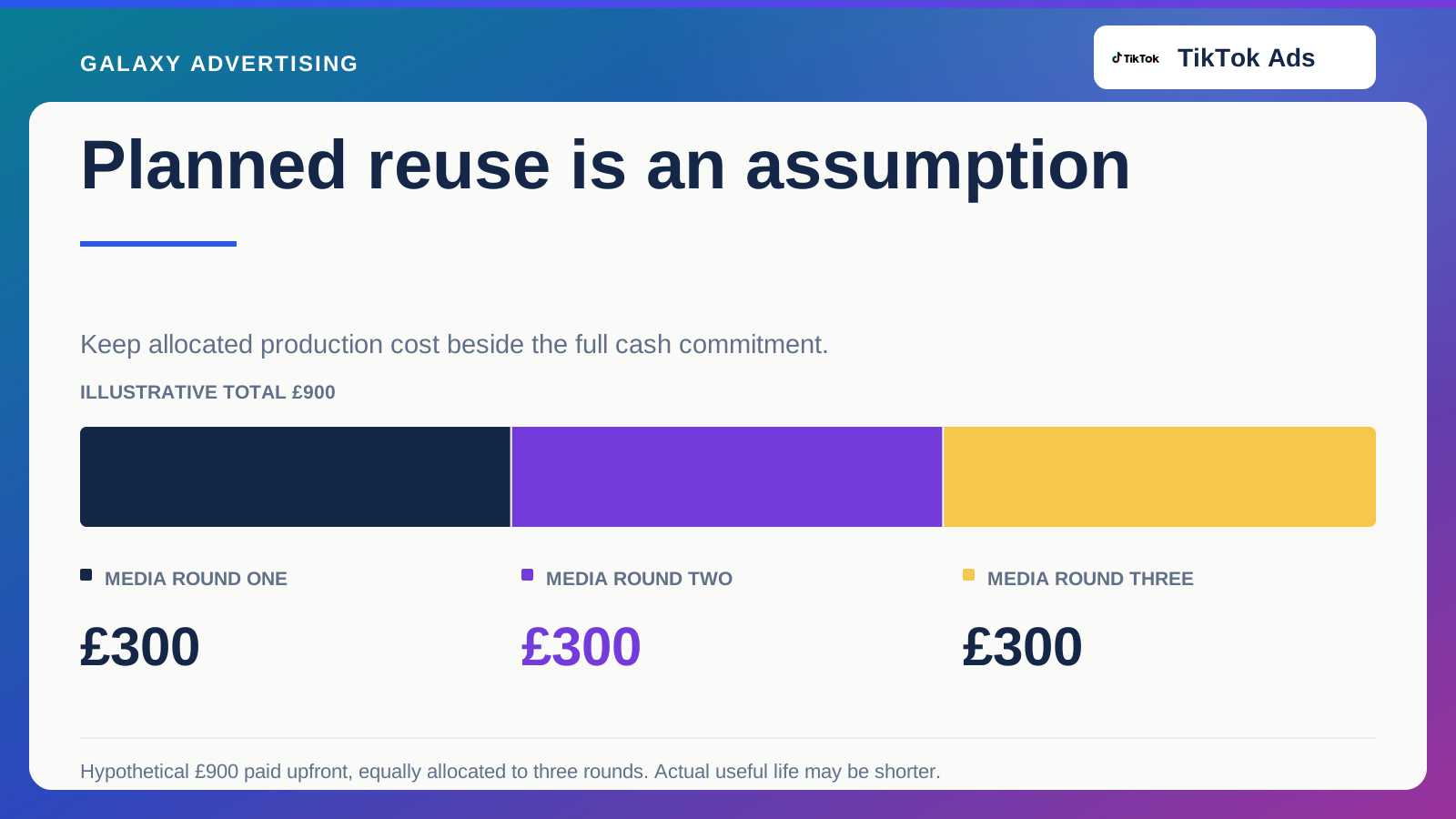
State the revenue and cost definitions. Distinguish media spend from relevant production expenditure and explain how reusable assets are treated in the commercial calculation. Otherwise comparisons can quietly change basis from one review to another.
Where you have order outcomes, include relevant refunds and cancellations. An initial transaction is not necessarily an equivalent final result. Keep estimates visible and avoid suggesting that you have precisely measured every operational cost.
Count each commercial order once. Attributed revenue, revenue a reporting system credits to advertising interactions, can overlap across systems. Adding those reports together does not establish total sales. Explain the advertising observations separately, with their attribution limits, so the investment discussion rests on an intelligible basis.
Turn a real question into a brief somebody can use
Look through recurring enquiries and comments for unclear parts of the offer. They provide clues to investigate. They are not a complete survey of everyone you reached.
Translate a verified gap into a specific production request. If people ask about scale, specify the configuration, reference and view that would clarify it. “Make it more exciting” leaves the person filming to guess at the problem.
Check whether the website needs the correction first. If a relevant measurement is absent from the product page, another advert could repeat the same avoidable ambiguity. Reporting should bring departments together around the question, rather than automatically sending every problem to production.
Make a decision about the important weak results
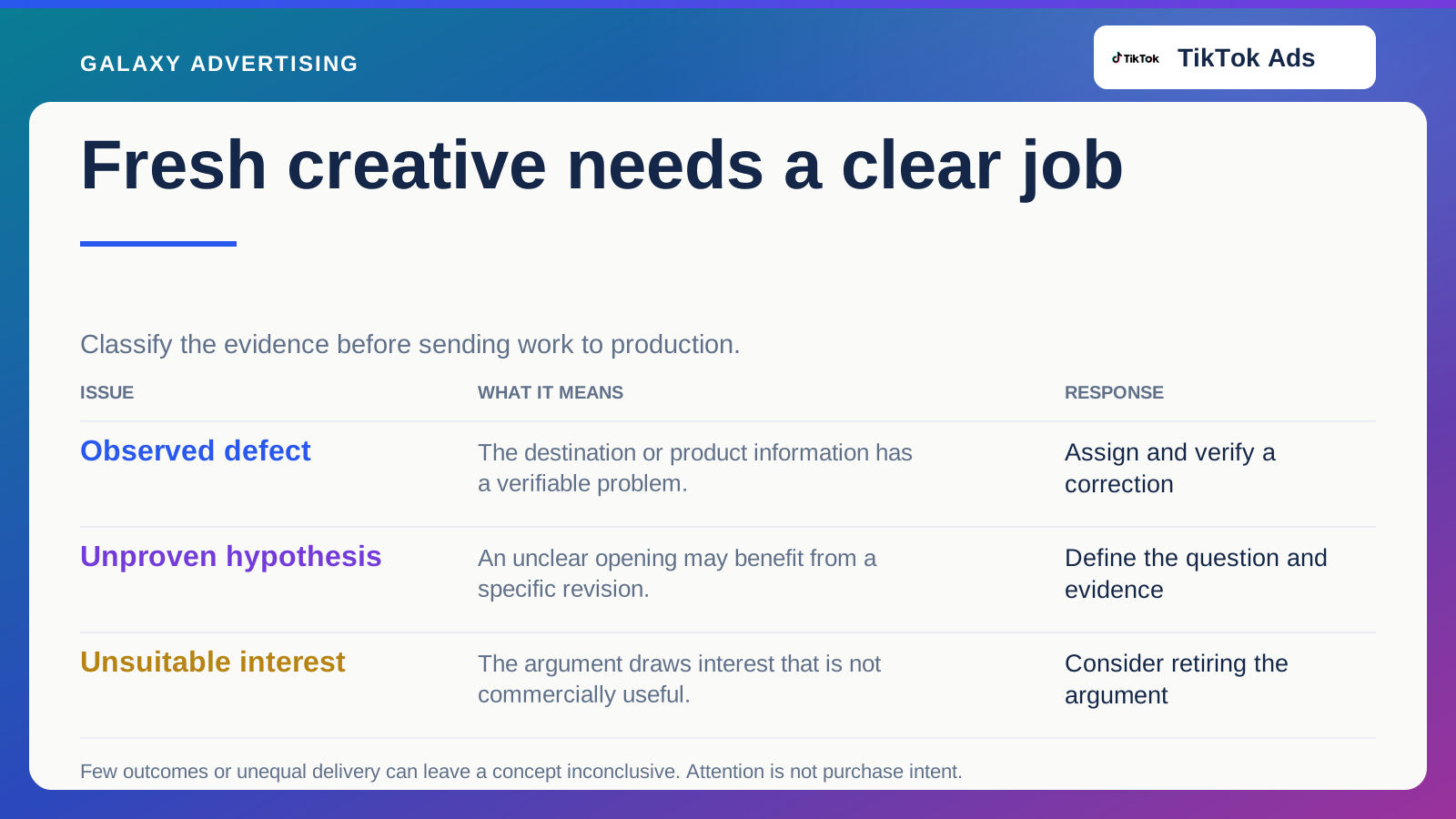
Separate an observed defect, an unproven hypothesis and a commercially unsuitable outcome. A broken destination needs repair. An unclear opening may need revision. An argument drawing the wrong interest may deserve retirement. Each calls for different work.
Explain the evidence for your classification. A falling number alone does not establish creative fatigue or justify an identical refresh. The next brief should follow an interpretation that someone can examine and challenge.
Say when a finding is inconclusive. Unequal delivery or few outcomes can limit what you can conclude about the concept. You can still make a practical operational recommendation without presenting that limited observation as proof of a broad customer preference.
Keep a short record of the previous review’s decisions and check implementation. If you agreed to film a clearer size reference, was it produced, approved and used in the intended route? Otherwise the next review could assume customers saw a correction that never reached them. This connects decisions with action without filling the report with routine tasks.
Leave the next person with a clear job
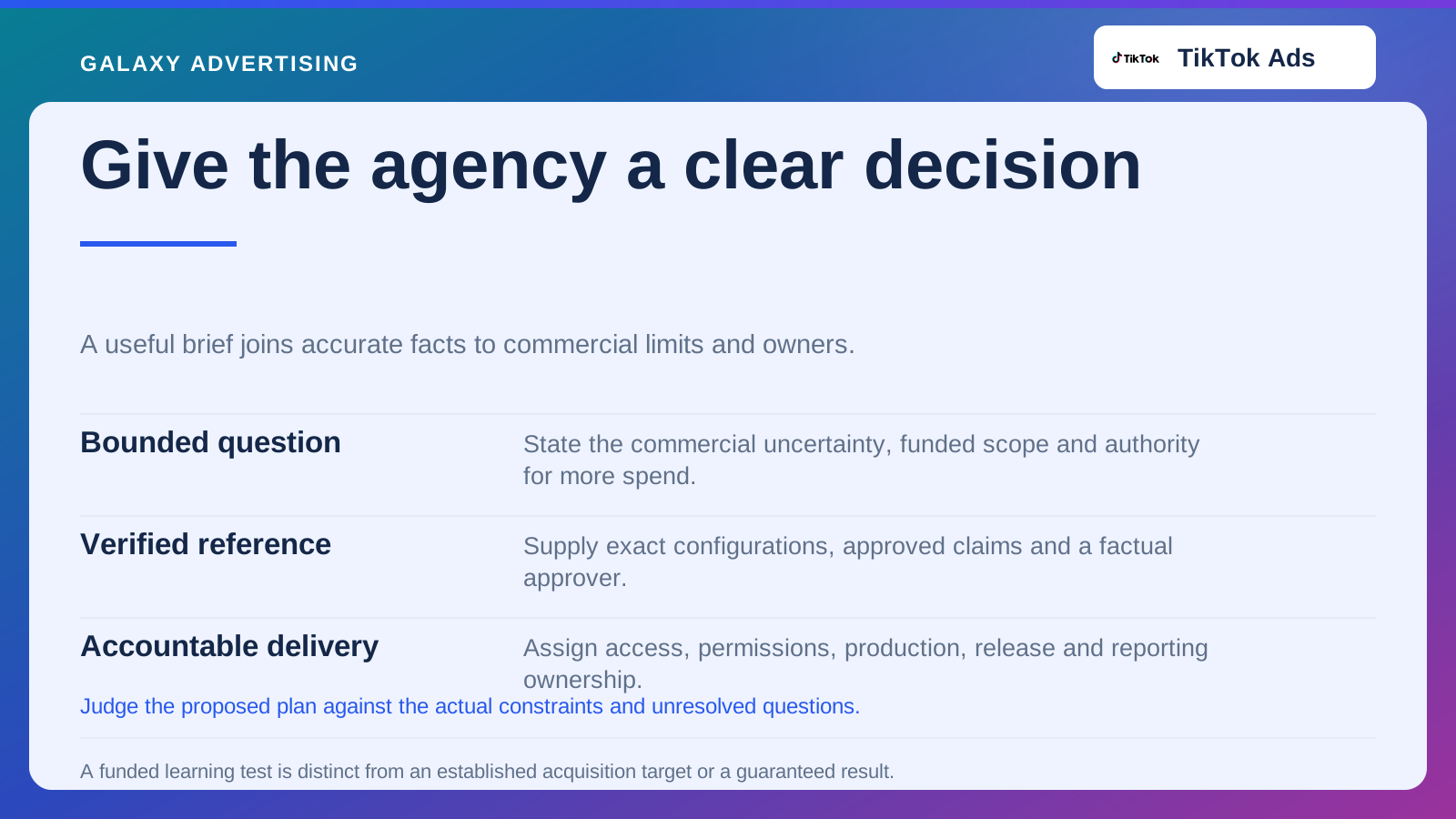
State the next production question, the evidence the new asset needs to show and who will approve it. Connect the task to its intended destination and any product dependencies. The brief should make the route understandable as well as the video.
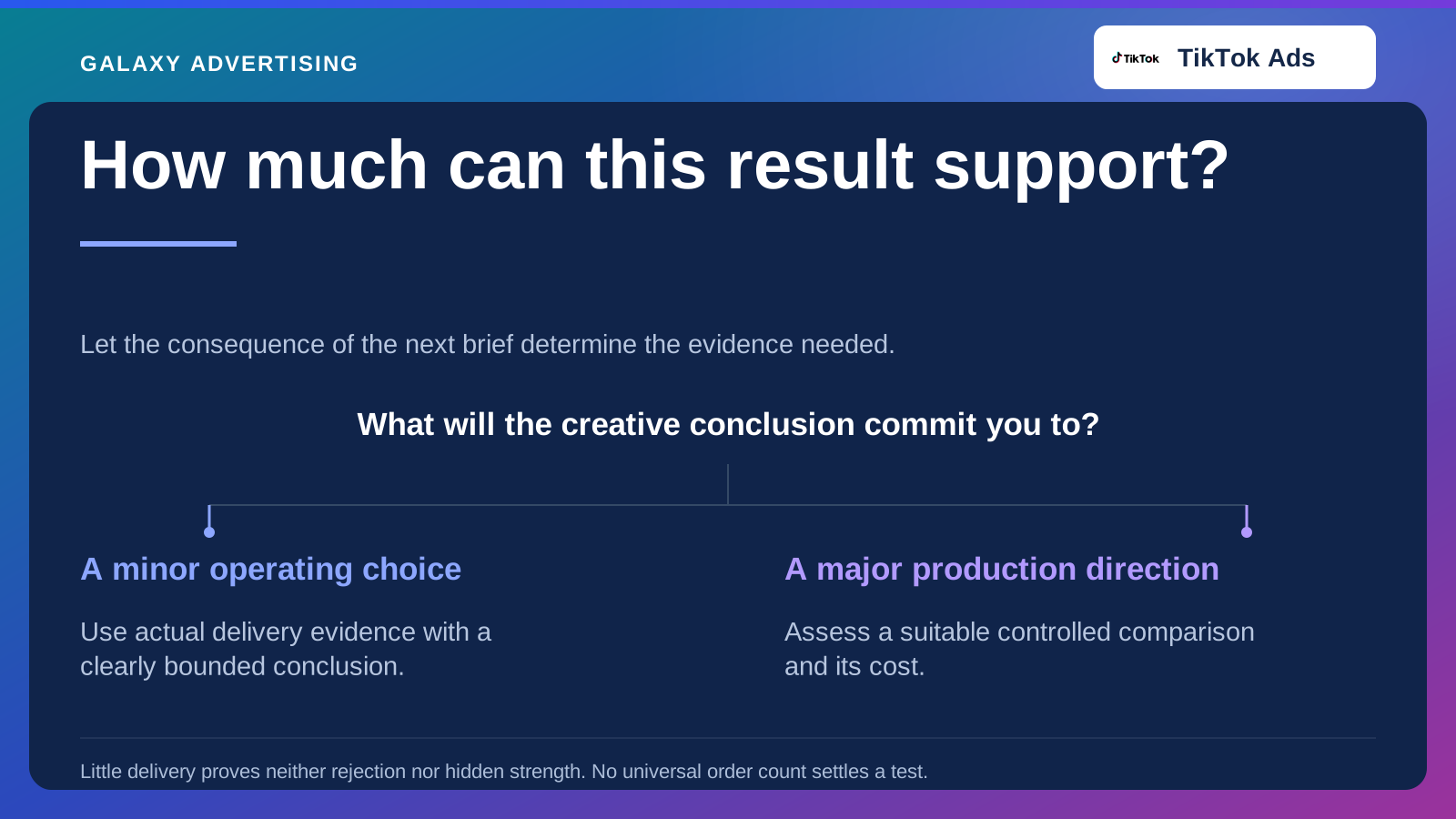
Then make the requested investment explicit. Continuing a bounded test, correcting something specific and expanding substantially require different confidence and operational readiness. Say which commitment you are asking the business to make.
A useful report preserves learning and makes its limits understandable enough to act on. The next producer should be clearer about what to explain, and the next investment should have a purpose you can defend. Completed slides are pleasant. A more precise next decision is what the business needs.