One appearance in an AI answer does not establish that your brand now ranks in AI search. A screenshot of a garden furniture material answer records an observation. It doesn't tell you how often that answer appears or whether it brings useful visits.
It's understandable that a favourable mention gets shared. But another customer may receive a different response, and the screenshot alone cannot settle that.
Give the observation a method. A repeatable visibility sample helps you investigate what customers might encounter while respecting what the evidence can show. You can value a mention without turning it into a permanent position.
Choose the questions before looking for good answers
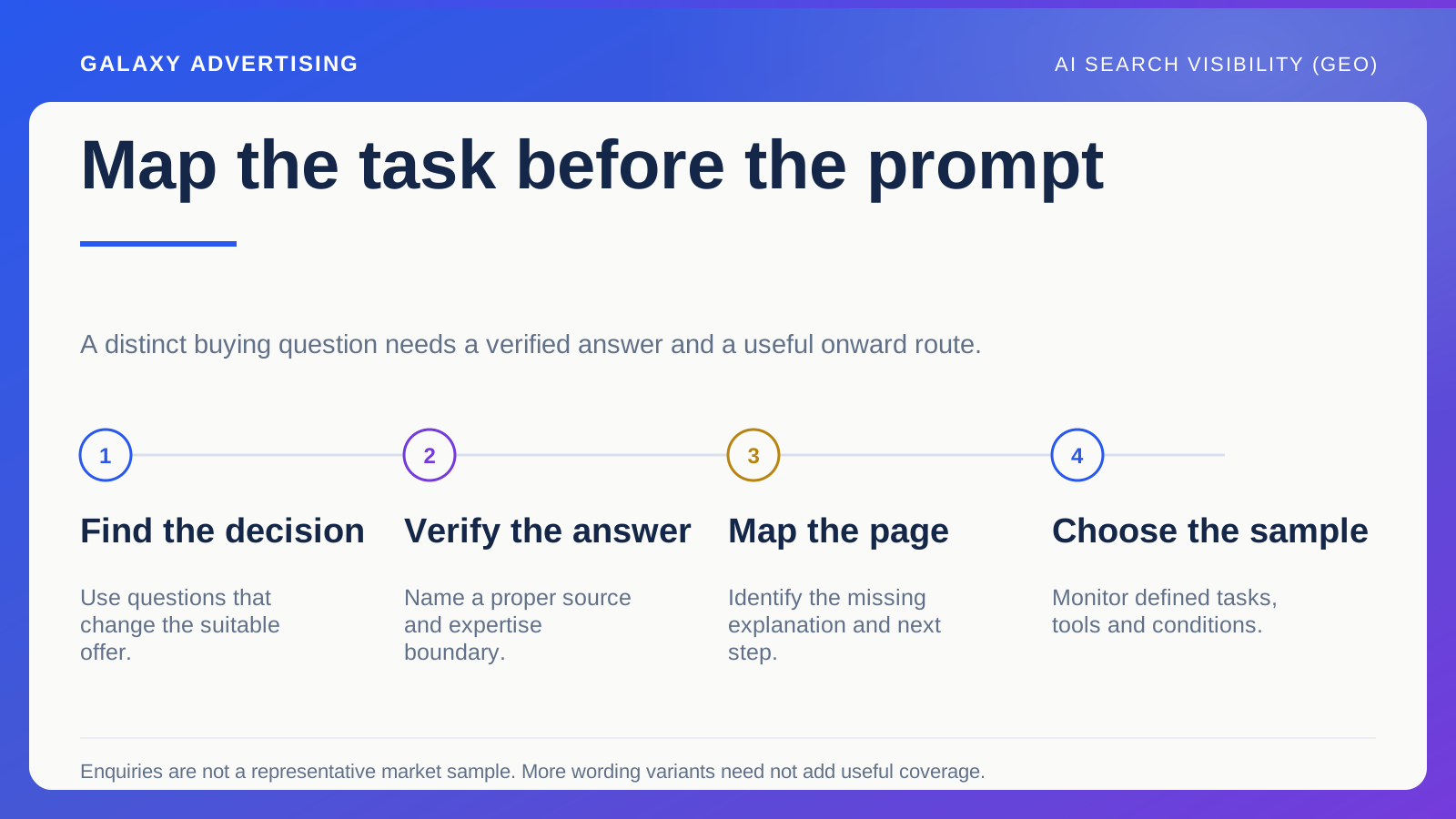
Start with a small set of questions tied to real product decisions. A garden furniture retailer could investigate material care, storage, available space, replacement cushions and differences between configurations. Those are distinct tasks worth understanding.
Don't fill the sample with questions already naming your brand. They help assess how the business is described. They answer a different question from whether an unfamiliar customer discovers you during research.
Separate broad discovery, category comparison and brand specific checks. Record why each question belongs. A longer list isn't necessarily more representative when it mainly repeats the same intent with small wording changes. The sample needs useful differences, rather than volume that makes the report feel more substantial.
Make the check understandable to somebody else
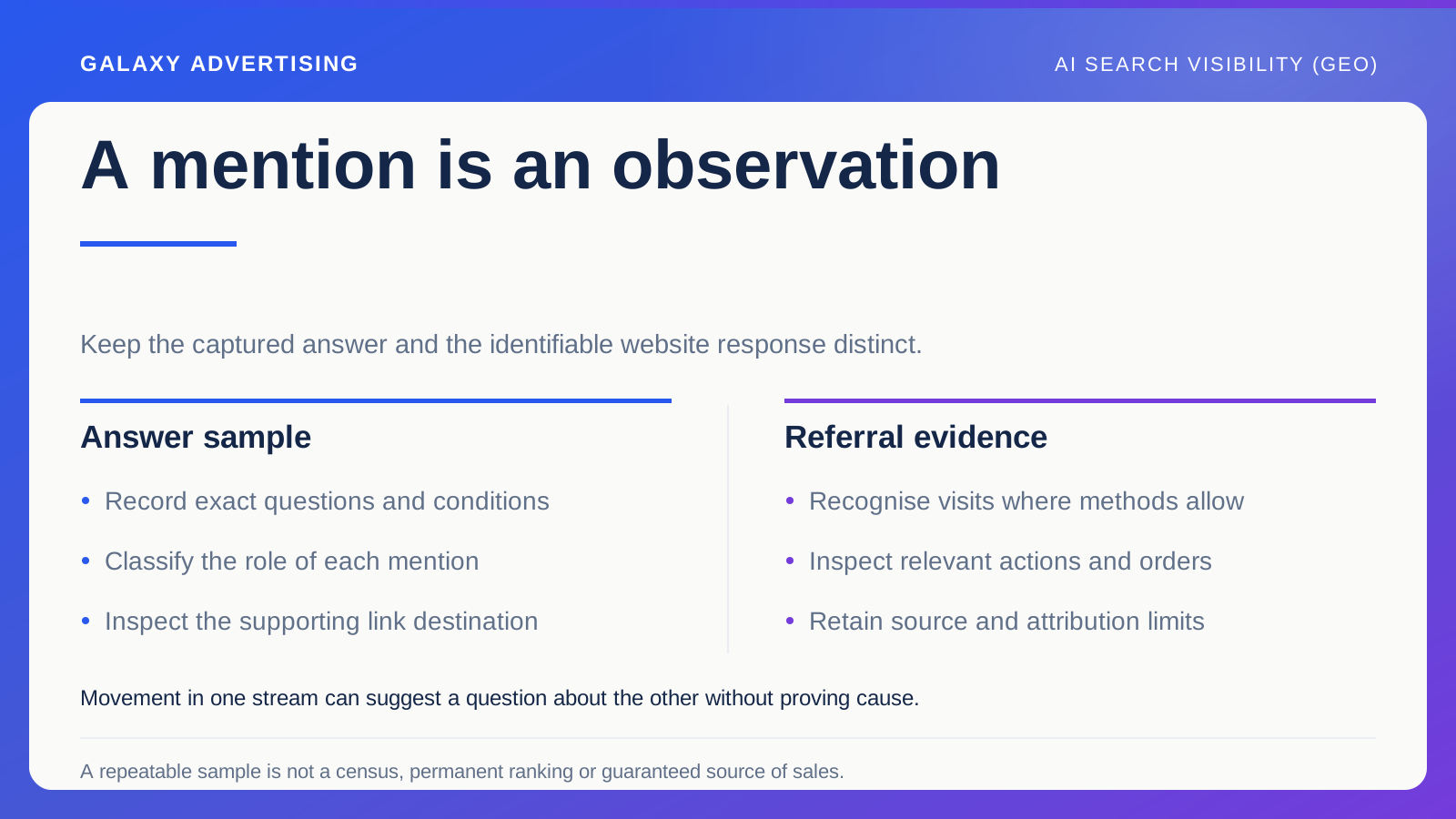
Specify the tool, exact question and conditions you can reasonably control. Record the answer, brand mention and any visible supporting link. Keep a private observation log that a later reviewer can inspect, rather than relying on selected screenshots.
Be precise enough for another person to understand the conditions and interpret the comparison. That helps reduce inconsistency introduced by the team itself and gives later observations a usable context.
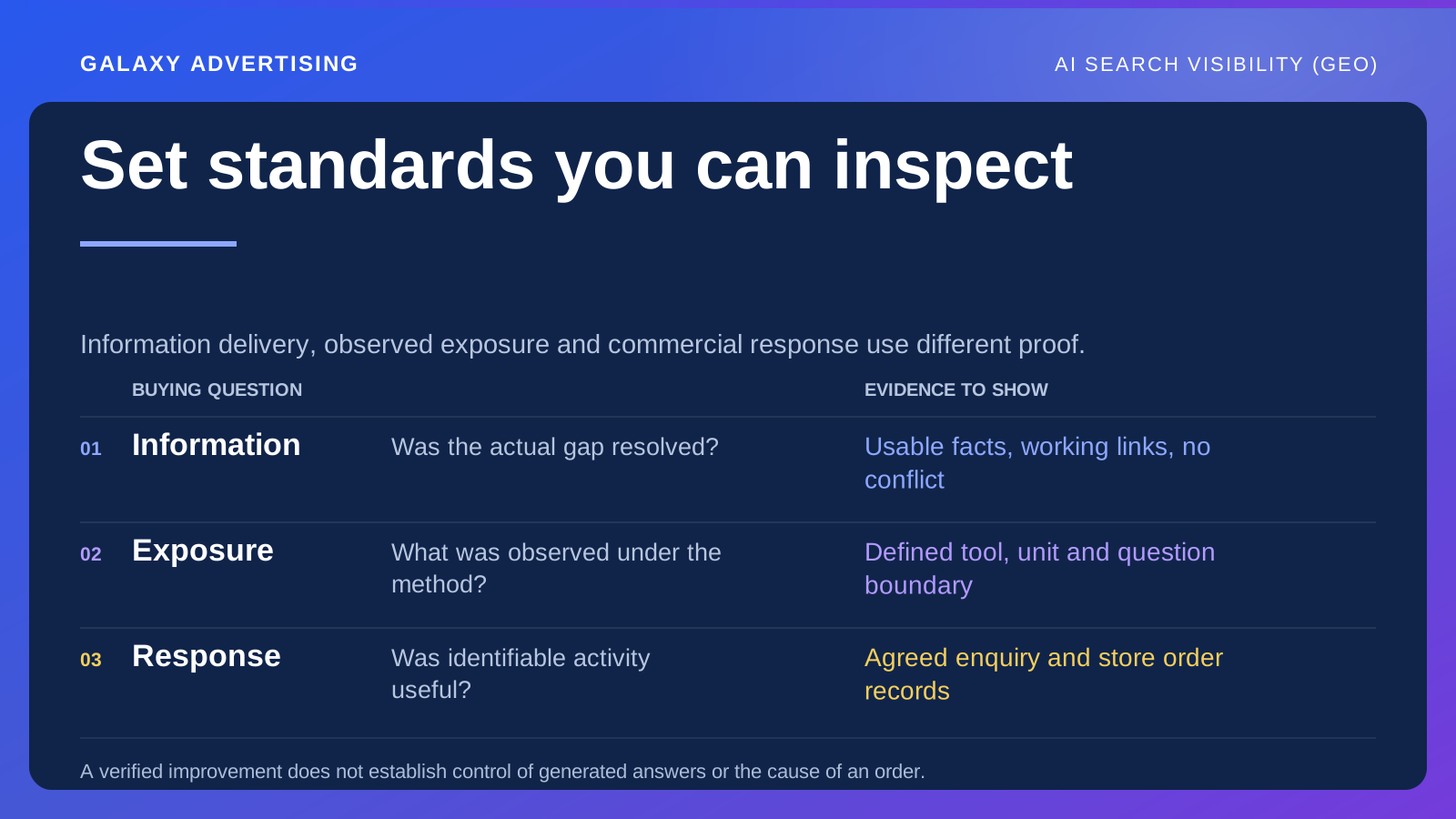
Treat a change as an observation before treating it as an explanation. Platform behaviour, available web information and query conditions can all differ. A repeatable procedure reduces avoidable variation. It doesn't turn your sample into a census of every possible response or prove what caused an answer to change.
Describe what the mention actually does
Your brand might appear as an example, source, comparison option or subject of a question. Those aren't equivalent outcomes. Calling them all visibility can hide the distinction that matters to a customer.
If there's a link, inspect the destination. Is it useful, and does it support the statement beside it? A favourable sounding mention leading somewhere irrelevant is different from a source link that helps somebody investigate the product.
Use a clear classification with an explanation. Don't add unrelated observations into a universal score or a percentage with a denominator nobody can defend. A simpler description can make the result more meaningful, even if it looks less impressive at first glance.
Improve the information customers need
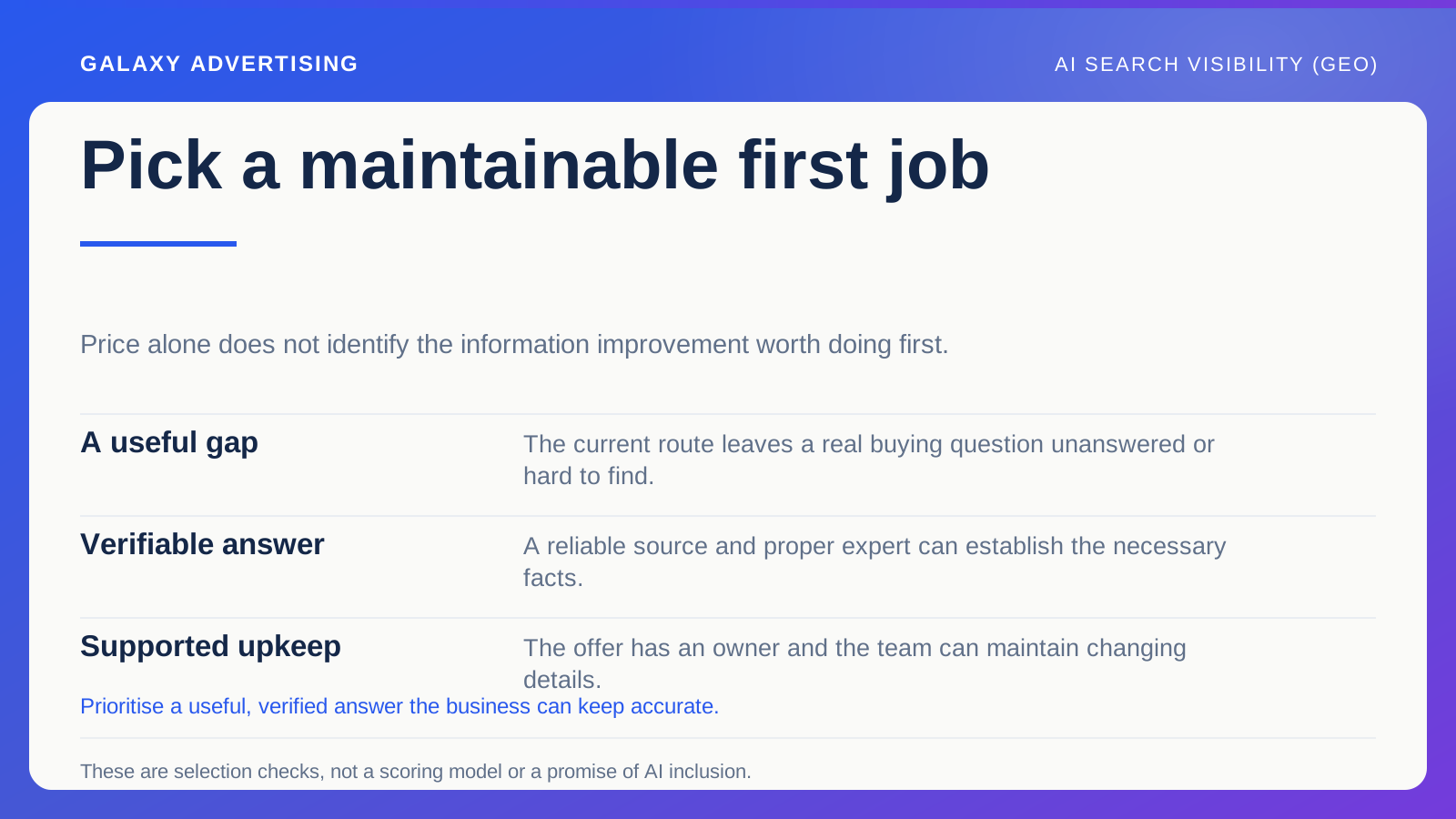
Use the sample to find factual gaps and unclear explanations. If your website explains a furniture material poorly, improve that page because customers need the answer. Don't write around the hope that a particular phrase triggers a recommendation.
Make important facts accessible and connect related pages. Keep visible content consistent with relevant structured information, the information supplied in a format systems can read. Google's guidance says established SEO practices remain relevant to its AI search features. It doesn't require special AI schema or promise inclusion after an optimisation task.
Give product accuracy an owner. Material care, dimensions and stock need reliable business or manufacturer sources. They shouldn't be invented by a writer trying to complete an attractive answer. Better prose cannot establish a missing product fact.
Put referrals beside the sample, rather than inside it
Where analytics identifies AI referrals, inspect their destinations and subsequent actions. Review useful product exploration, enquiries or completed orders on a consistent basis. These observations tell you something different from a sampled answer.
No identifiable referral doesn't prove the brand had no influence. Equally, the gap doesn't justify claiming revenue you cannot observe. Keep visibility sampling and observed referral performance as separate evidence streams.
Movement in one can suggest a question about the other without proving a relationship. If a guide gains more relevant visits, inspect the page and traffic source. Don't assign every movement to the visibility screenshot simply because both appeared in the same period.
Keep a record somebody can challenge
Include the question, conditions, captured response and exact category assigned. If you call the result a recommendation, keep the wording supporting that interpretation. For a source link, record its destination and whether it supports the accompanying statement.
Note wrong product facts and omitted qualifications. An error can become a concrete information review task. It doesn't mean editing one page will necessarily change a later answer. Keep the corrective work and that uncertainty together.
Have a second person inspect a small selection of classifications. Disagreement can expose vague definitions, especially around mentions and recommendations. Improve those definitions before expanding the sample. Don't manufacture agreement by choosing easier questions. The record should let a reader understand and, where appropriate, challenge the conclusion. That's what gives the process a basis beyond the team's enthusiasm for a favourable response.
Report the boundary beside the result
Name the question set, explain the observation method and describe what changed. Separate corrections to your website from changes in sampled answers. They are related activities, but different kinds of evidence.
Include unfavourable and unchanged observations. Selecting only successful answers gives you examples rather than a credible monitoring process. Keep the sample small enough to review thoughtfully, expanding when it adds different buying questions rather than simply enlarging the report.
The commercial question is whether better information helps suitable customers discover, understand and choose your offer. A brand mention can inform that investigation. Give it its proper weight without inflating it into guaranteed recommendations, a permanent ranking or sales you cannot observe. You can still choose concrete information improvements while leaving the uncertainty visible.