 ChatGPT Ads
You send your agency a website link and a proposed monthly budget, ready to get ChatGPT Ads moving. They can inspect the public offer. They can't read the stock exceptions, cost assumptions or approval responsibilities that exist inside your business.
That gap matters before anyone recommends a launch. An agency also needs to understand your experience with similar enquiries, rather than guessing what a suitable response looks like.
A useful brief makes the facts that change decisions accessible. You don't have to prescribe campaign settings. You do have to give the specialist enough commercial context to judge the scope, and explain which claims, changes and commitments still need your judgement.
Tell them which decision needs help
Explain why you're considering the channel. You might want suitable first customers for a particular range or a new source of relevant enquiries. Asking broadly for growth leaves too many objectives competing for attention at once.
Share what you know and what remains uncertain. Existing campaign results, recurring customer questions and operational constraints can help shape a useful test. They don't prove in advance that this new route will work.
Keep a fixed activity list separate from the objective. The agency may recommend narrowing the range, correcting a destination or delaying an unsupported proposition. Your brief should allow that judgement. If it rewards only agreement with a predetermined launch, you make it harder for the specialist to give you a responsible recommendation.
Share the commercial facts that matter
Provide relevant product groups, contribution assumptions and fulfilment constraints through an appropriate controlled route. Contribution means the money remaining after the costs included in your calculation. Give the facts needed for the task, rather than unrelated customer or company information.
Explain what makes an order or enquiry worthwhile. Specialist delivery or substantial consultation changes how acquisition cost should be interpreted. The public website won't reveal that cost model, so don't leave the agency to discover it there.
Mark estimates clearly and name who can confirm them. A provisional return assumption shouldn't quietly become a firm spending target. Make it straightforward to resolve uncertainty with finance, merchandising or operations before a larger commitment depends on the figure. The agency needs both the assumption and its current status.
Make account ownership and access clear
Identify the business entity and people responsible for the advertising account, billing and access decisions. Arrange appropriate permissions through the platform's current supported process. Informal credential sharing shouldn't be your way of establishing access.
Separate ownership from everyday management. Understand which assets and records belong to your business and how authorised people maintain continuity when personnel change. Someone managing the account today isn't the whole continuity plan.
Ask the agency to document what access it needs and why. Don't grant broader authority merely to make setup convenient. Equally, don't make the team responsible for outcomes while withholding the specific access needed to inspect or manage the agreed work. The permissions and responsibility should fit the same scope.
Give product accuracy a person responsible
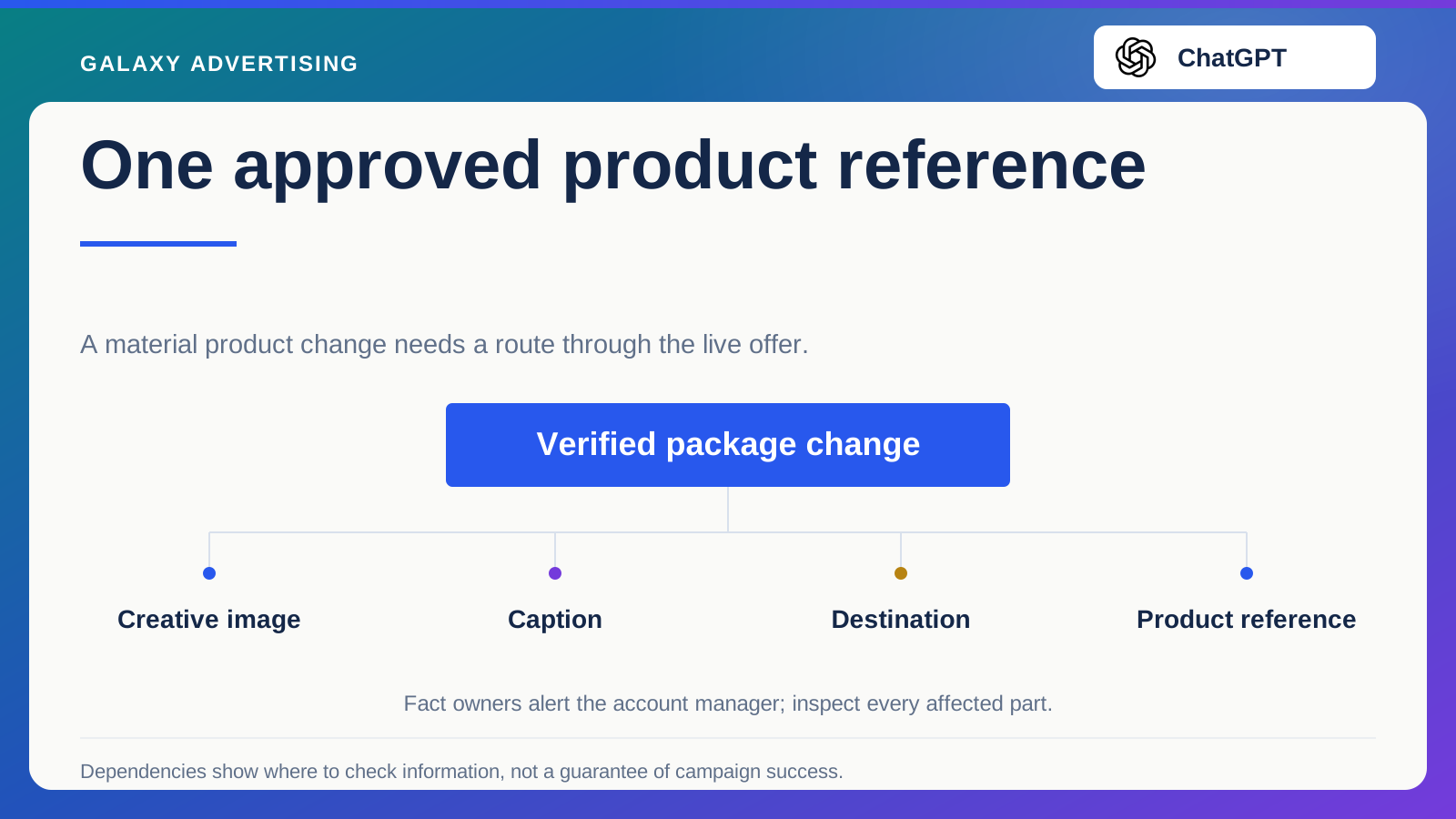
Supply approved references for the products and configurations proposed for promotion. Include package contents, availability and the actual service provided with purchase. These are facts shaping the customer promise, rather than details to fill in after creative approval.
Name who approves claims and communicates material changes. The agency can question unclear wording. It shouldn't invent a specification or delivery arrangement to complete an unfinished brief.
Agree how urgent changes reach the account manager. If a promoted model becomes unavailable, the information cannot stay in a merchandising conversation the agency never sees. Your process needs to keep the offer accurate after launch, as well as during initial approval. The reference is useful only while the people using it know when it changes.
Decide who implements and who checks
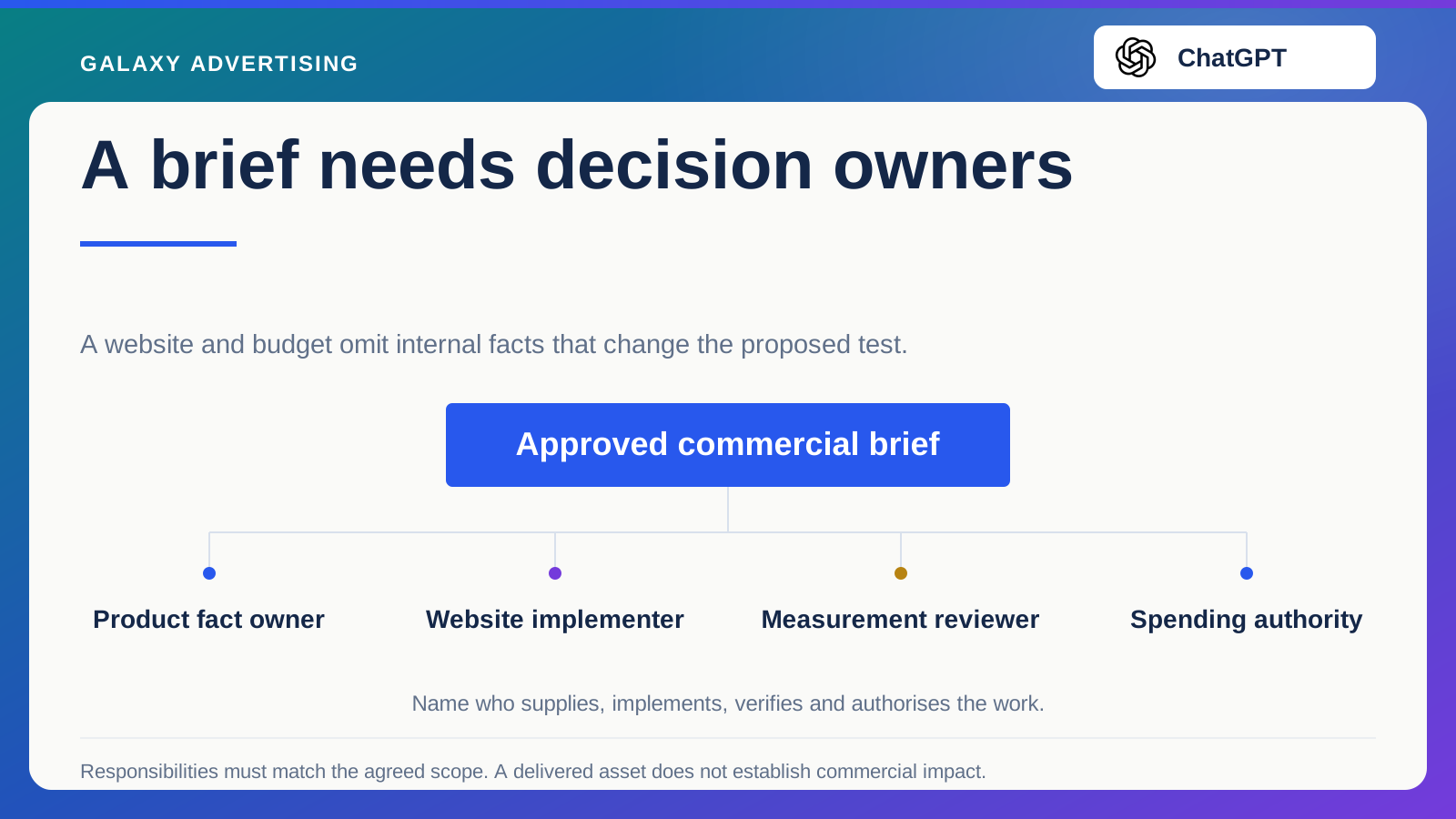
Identify who can change the website, check measurement and verify the resulting customer experience. A sound recommendation can remain unfinished when each team assumes somebody else owns implementation. Give the work somewhere definite to go.
Describe the agency's scope clearly. Copy review, development, creative production and technical installation can involve different expertise and work. Make those boundaries understandable without turning the handover into a collection of excuses for unfinished tasks.
Agree a verification step. A developer's update, an approved creative file and a functioning live customer route are different things. Name who confirms that the intended offer and measurement actually work in the version customers encounter. Completing one part shouldn't be mistaken for confirming the whole route.
Be explicit about spending and changes
Record the approved commitment and who can alter it. Separate ordinary management within the agreed scope from expanding the test, introducing another offer or materially changing the destination. Everyone should recognise when a recommendation needs a new decision.
Use practical review conditions. Requiring approval for every minor execution choice can leave simple corrections waiting indefinitely. You want accountable management with room for professional judgement, rather than a process that stalls routine work.
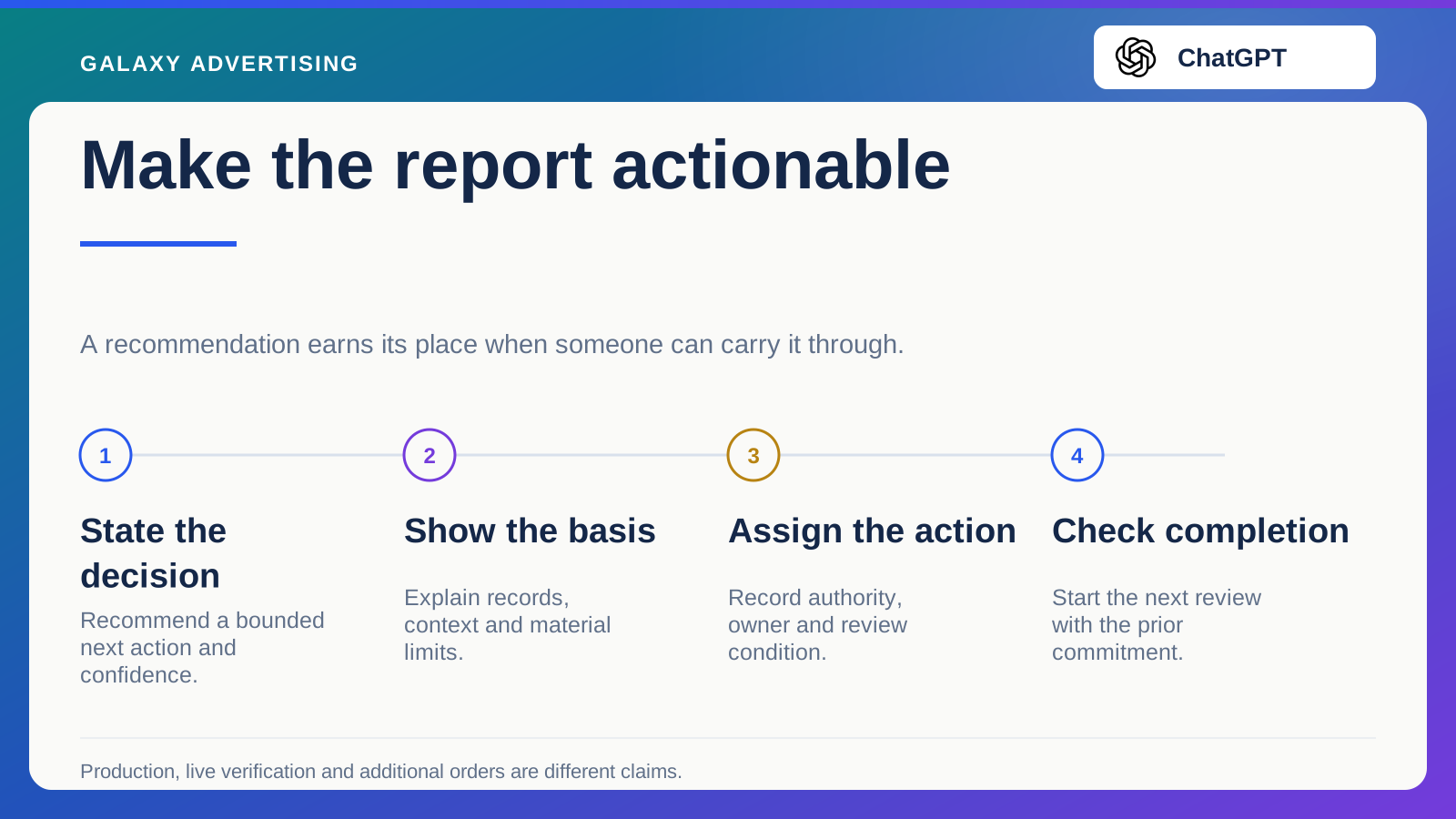
Keep significant decisions in a shared record. A useful note explains the evidence, recommendation and authorised action. That gives both parties something firmer than different memories of why the campaign changed or how much uncertainty the business agreed to fund. The record should make the accepted commitment understandable later.
Ask for a report that helps you decide again
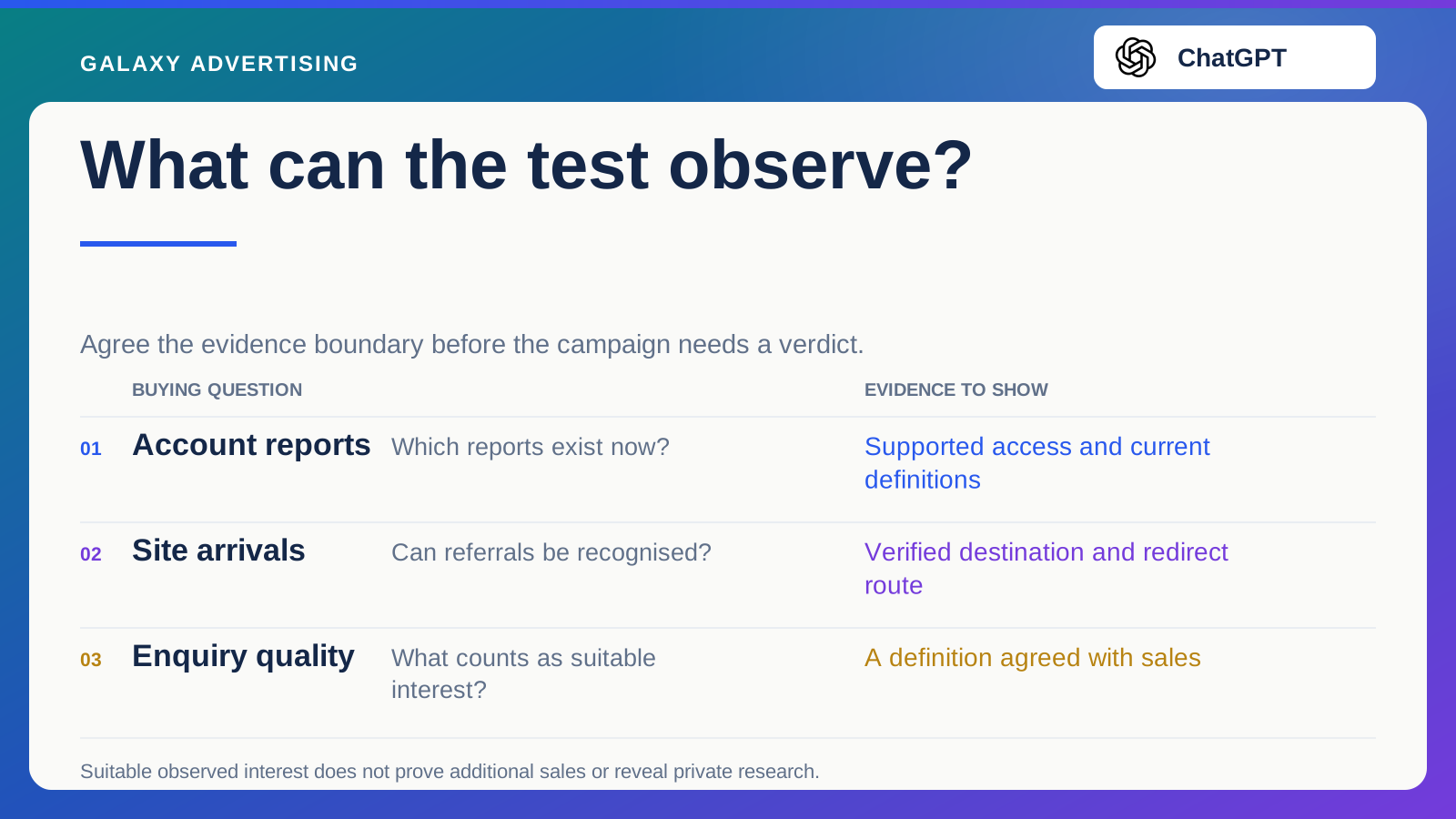
Distinguish work delivered, observations and conclusions. Publishing an asset establishes that production happened. It doesn't establish commercial impact. A platform attribution claim also needs its reporting basis explained, so credit isn't mistaken for more than the evidence supports.
Include unresolved dependencies and decisions you need to make. Attractive charts shouldn't conceal a blocked product or implementation issue. Each next action needs an owner and a reason.
Put the handover process in the brief before you need it. Agree where approved assets, product references, significant decisions and reporting definitions live. That isn't a prediction that the relationship will end badly. It protects continuity during holidays, staff changes or later transitions.
A specialist can exercise better judgement when the real offer, operational limits and decision authority are visible. Preserve that commercial memory, and the next person can make progress from what you've learned rather than repeat the same avoidable mistakes.