An initial bed package value can be accurate without representing the revenue your business eventually receives.
A component is changed, a storage option proves unclear and questions about delivery keep arriving. The campaign's encouraging revenue summary wasn't necessarily wrong. It could simply describe an earlier purchase stage than the one you need for the commercial decision.
Keep package identity and order status visible. Connect what adults understood, what the business received and which corrections mattered before choosing the next investment. An operational issue isn't automatically an advertising failure.
State which order stage you're judging
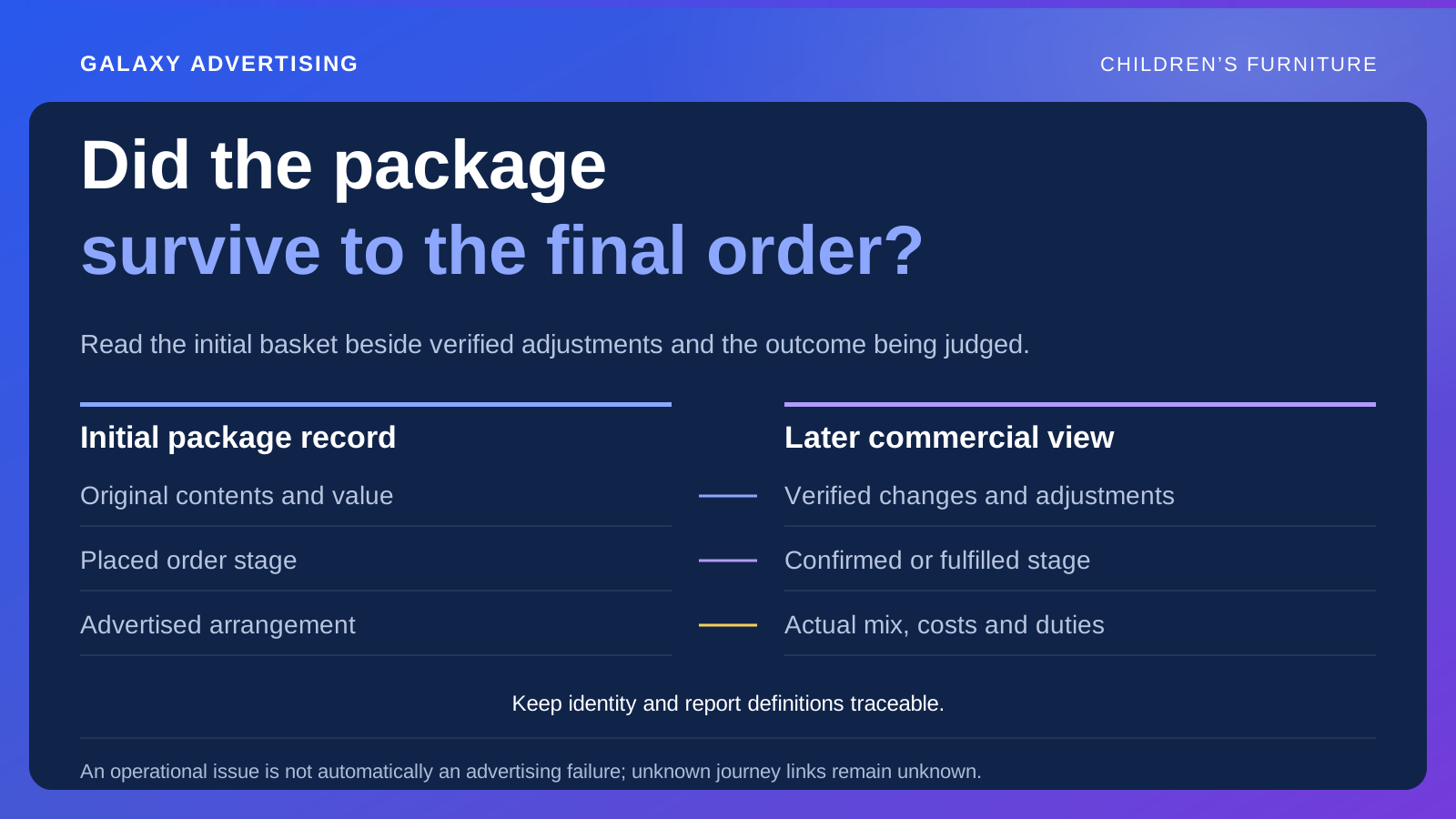
Agree whether the main view concerns placed, confirmed, fulfilled or another defined order stage. Explain treatment of material cancellations, component changes and adjustments on your reporting basis.
Keep the initial value separate from a later outcome. If an optional item is removed before completion, the earlier figure can remain a valid event record without describing eventual revenue. Readers need to know which they are looking at.
Use stable references to investigate. Similar product names make meaningful discrepancies harder to follow and encourage convenient general explanations. Precise order identities save time and let somebody inspect the actual change rather than reconstruct the purchase from fragments.
Show the package differences that change the decision
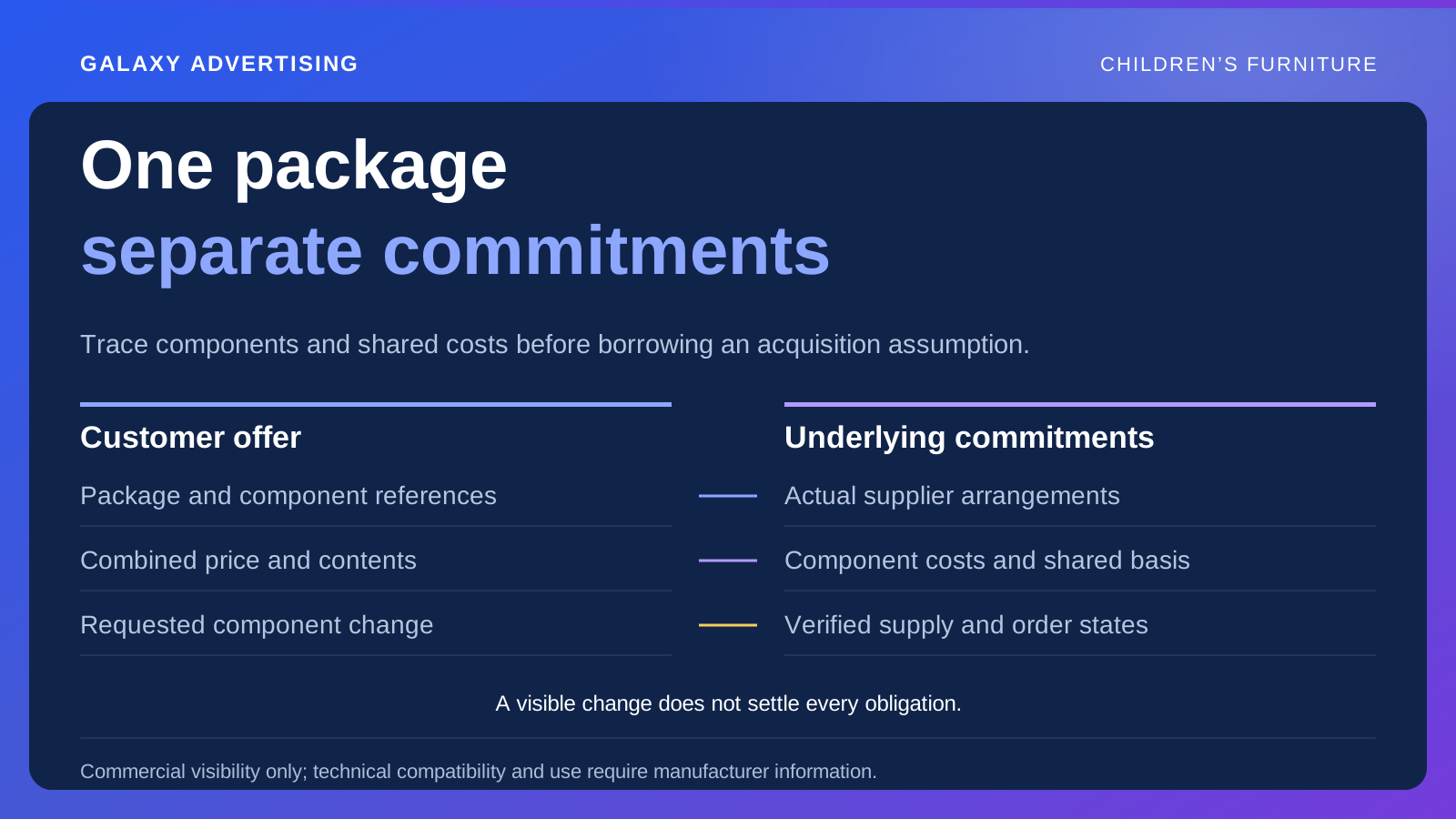
Group offers where contents, contribution or service requirements materially affect interpretation. A frame only order and a larger furniture package don't necessarily deserve the same judgement because they share a collection.
Keep the grouping manageable and explain its purpose. A table of every tiny variation can overwhelm the reader without improving the choice. Each useful distinction should support a promotion, information or operating decision.
Include availability conditions. If an important option disappeared during the period, don't imply customers were choosing from an unchanged offer. What you could supply helped shape the mix. The result needs that context before it becomes a recommendation about what to promote again.
Use customer questions as evidence, with their limits
Take a defined sample of relevant enquiries about contents, options or service. Explain selection. A few memorable conversations don't provide a complete account of everybody's behaviour.
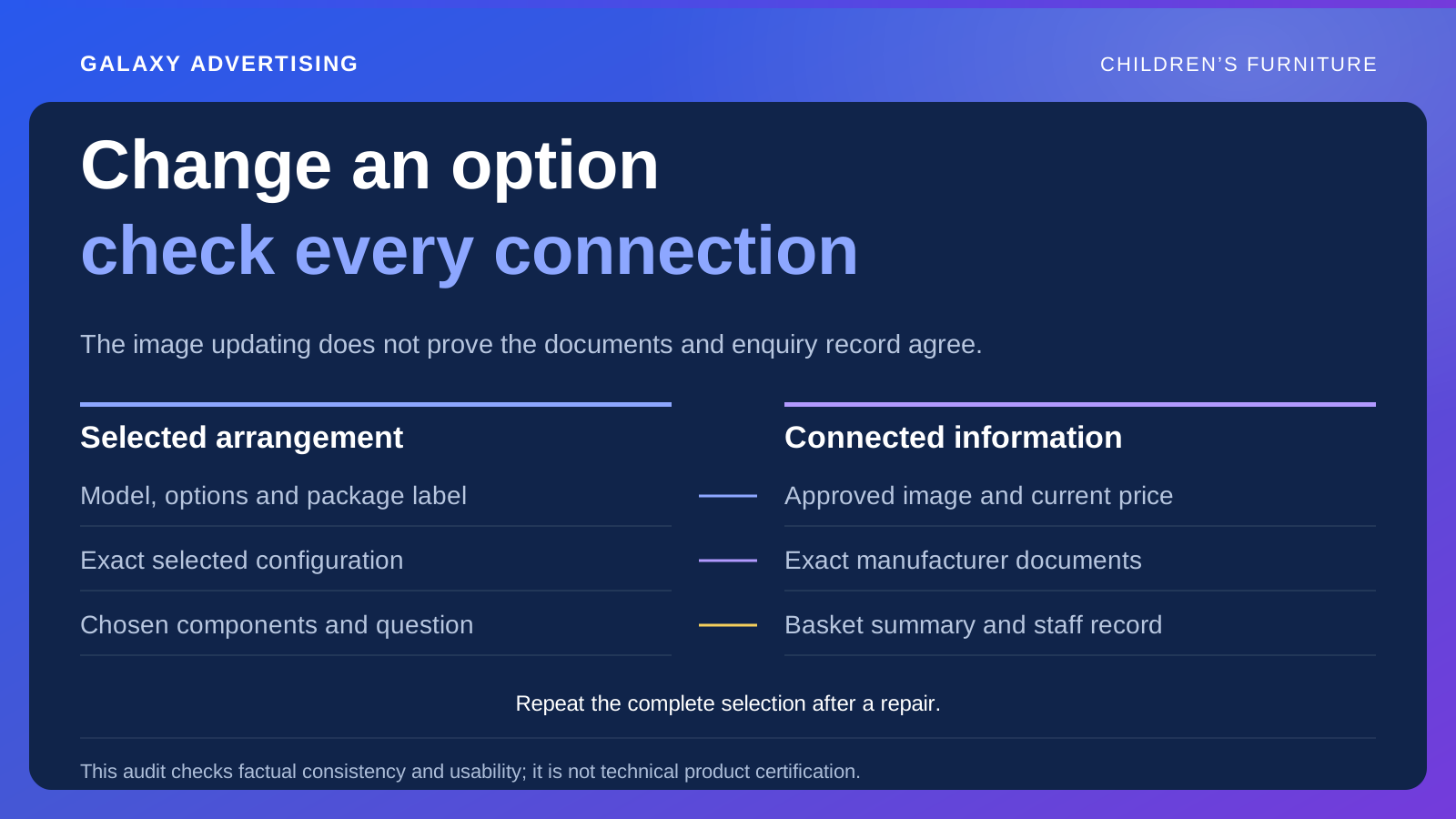
Where the record supports it, connect the question with the exact model and page version. A specific mismatch between an image and included storage gives the team something to correct. A general observation that products are confusing leaves much more interpretation behind.
Don't infer a child's circumstances from an adult's product question. You need the buying task and offer context, rather than an invented family profile. Classifying the commercial issue clearly is usually more actionable than guessing about the people involved. Keep the report focused on the information needed for the next decision.
Separate a wrong fact from a presentation idea
A verified incorrect package label or document mapping needs correction, an owner and an acceptance check. An accurate but awkward comparison could need a focused presentation review instead. Those are different pieces of work.
Keep product verification responsibilities visible. You can identify where the route needs a reliable answer without pretending marketing carried out a technical product assessment. The report should describe the evidence and role accurately.
Verify the live result. Sending a request to the website team isn't yet a corrected experience. Separate recommendation, implementation and verification so unfinished dependencies stop returning as completed optimisation. The customer encounters what reached the page, rather than what the report says the team intended to change.
Follow the mix through costs and obligations
Where you have an agreed cost basis, examine what orders leave after relevant variable costs and acquisition. Contribution is the money remaining after those included costs. Components and fulfilment work can change it while headline revenue looks favourable.
Label estimates and show uncertainties that materially affect judgement. A precise figure with undocumented assumptions isn't more useful merely because it looks settled. Give the reader enough context to decide how much confidence to place in it.
Don't blame advertising for every later cost or issue. Did the campaign attract a different mix, was the offer presented unclearly, or did an unrelated event change the order? Those explanations need different decisions. Combining them into one performance verdict loses the correction the business could actually make.
Keep credited activity distinct from actual transactions
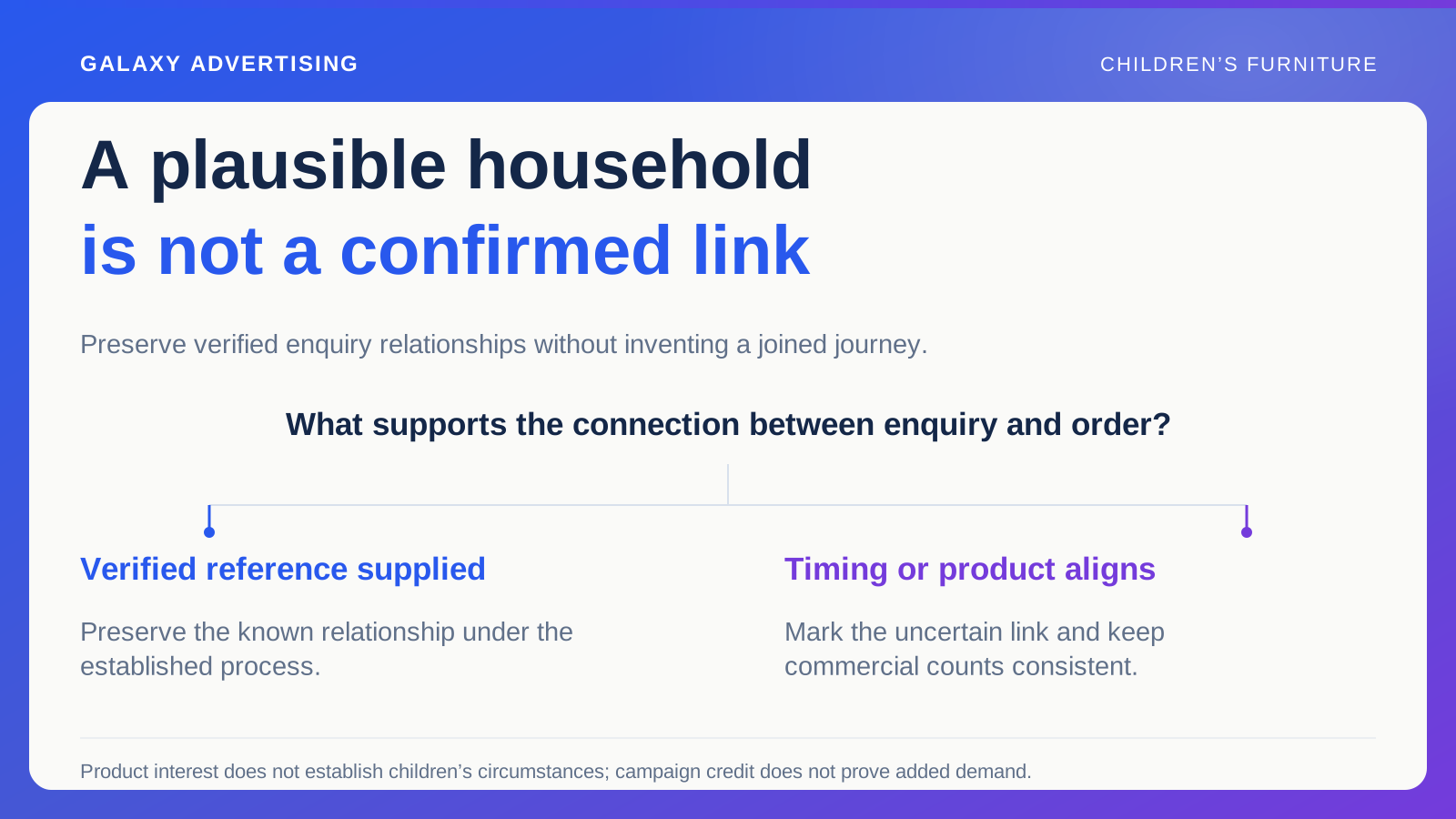
Explain how campaign credited activity relates to the retailer's transaction records. Attribution is the reporting process assigning credit to interactions. One household purchase can involve several adults or return routes that the records don't fully connect.
Count consistently and preserve known links where appropriate. Don't invent a complete journey to tidy the funnel or assign an unexplained sale to a campaign that needs a stronger result. The report should keep unknown connections unknown.
Let uncertainty shape the recommendation's scope. A small sample could justify investigating a package issue without supporting a verdict about the whole range. You still need a next action, with confidence proportionate to the evidence.
Keep an example of a resolved adjustment and its explanation. A future reviewer should be able to tell a genuine package change from an error in the original label or value. That record makes the next discrepancy easier to investigate without assuming it has the same cause.
Leave one commitment that can be checked
Name the action, owner and condition for the next review. Correcting a package summary, verifying a document relationship, preparing another offer and investigating an adjustment are different commitments. Make the chosen task specific enough to follow.
At the next meeting, check whether it happened and whether the relevant customer route changed. Repeating the same recommendation in a more polished presentation doesn't resolve the underlying issue. The operating result needs to travel with the reporting promise.
A dependable report follows the purchase far enough to explain what you actually received and where adults met avoidable ambiguity. One dashboard can't describe every part of that decision. It can help keep the package, its commercial value and the people responsible connected, so an encouraging initial basket doesn't become the last word on the order.