It's tempting to send the campaign images and assume you've given a new agency enough to get moving. The visual identity is clear, but the team still can't tell which claims are approved, which shades have dependable stock or who can authorise a product page change.
A useful brief supplies the context that changes decisions. It doesn't need every internal document. It needs accessible sources, responsibilities and unresolved questions, so the specialist can exercise judgement without guessing at the offer.
Explain the problem before prescribing the activity
Describe the range, the customer's buying task and the outcome the work needs to support. Acquiring suitable first orders is different from encouraging repeat purchases or dealing with a depleted variant range. A variant is the selected shade, size or configuration. Give the agency the actual concern.
Share the available evidence and its limits. Order records, campaign reports and recurring customer questions can all help, but they aren't automatically equally authoritative. Explain unsettled definitions rather than sending exports whose apparent certainty hides disagreement about what the numbers mean.
Avoid beginning with a long predetermined activity list. Let the specialist challenge whether the next useful action belongs in creative, product information, measurement or merchandising. If the brief permits only one answer, it can conceal the constraint the business actually needs to address. Room for challenge is part of a useful handover.
Give product facts a source people can find
Identify the source for current names, quantities, variants, packaging and approved claims. Distinguish manufacturer information, retailer descriptions and subjective customer observations. The agency needs to know which source governs a correction, rather than treating every plausible sentence as interchangeable evidence.
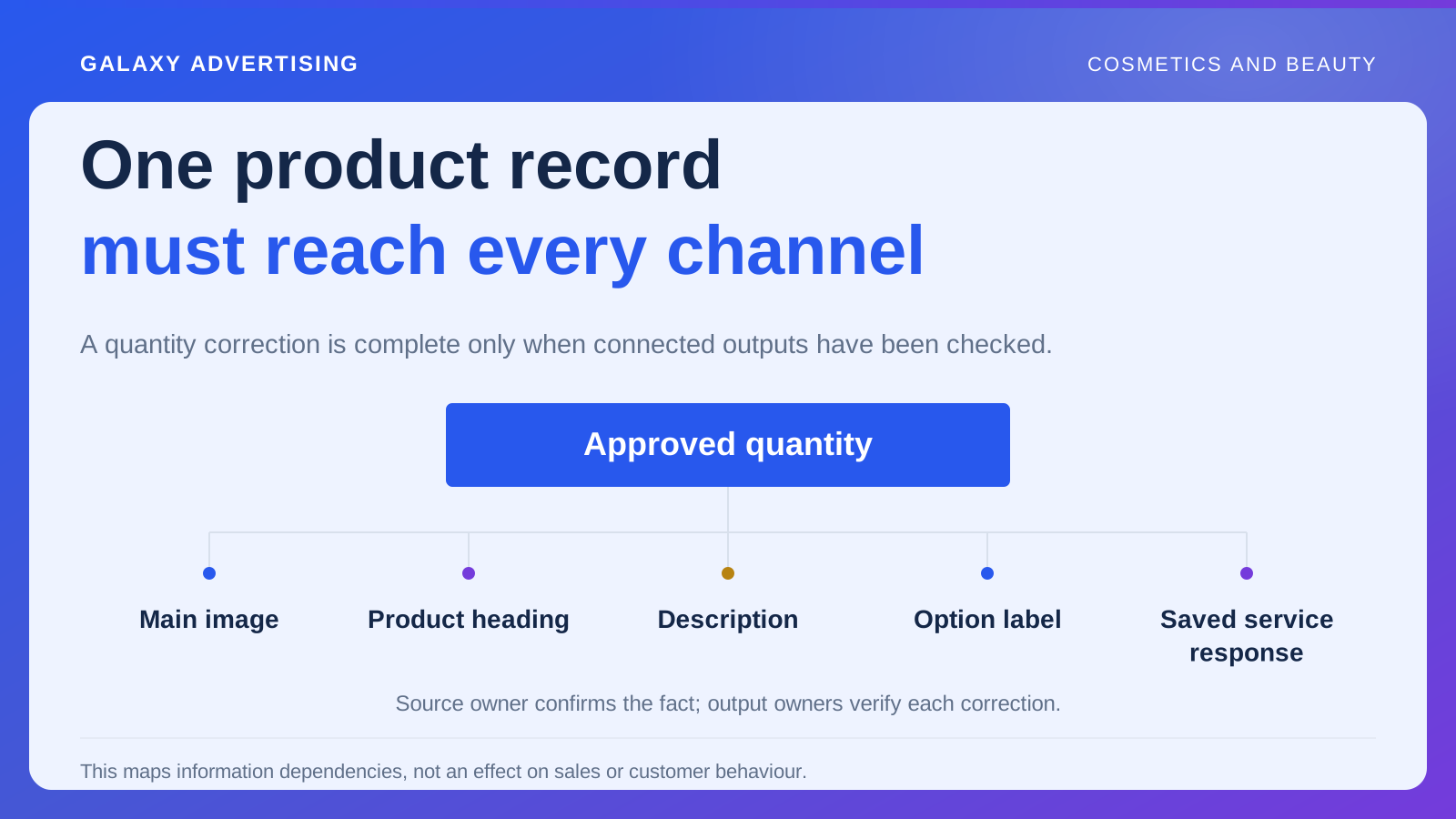
Supply item references connecting creative, product pages and store records. Similar shade names or older package images can otherwise leave everyone handling plausible files that refer to different versions.
Record unresolved facts openly. If you can't verify a claim yet, the agency shouldn't strengthen it to meet a deadline. An accurate gap gives someone a problem they can resolve. A confident sentence nobody can source gives the business a different problem altogether.
Make approval boundaries specific
Name who approves product claims, customer material, prices, promotions and final creative. Different people may hold those responsibilities. A general instruction to “get client approval” leaves too much scope for assumptions about whose approval covers which decision.
Agree how versions are identified and where final approval is kept. A comment on one video shouldn't silently authorise another with a different opening claim or package image. The approved version matters, not merely the existence of a positive comment somewhere in the conversation.
Give the team a practical escalation route. If a proposed statement goes beyond available information, name somebody who can resolve the question or authorise a narrower proposition. You're aiming for accountable judgement. A long approval chain nobody uses consistently won't give you that by itself.
Share the economics that change acquisition choices
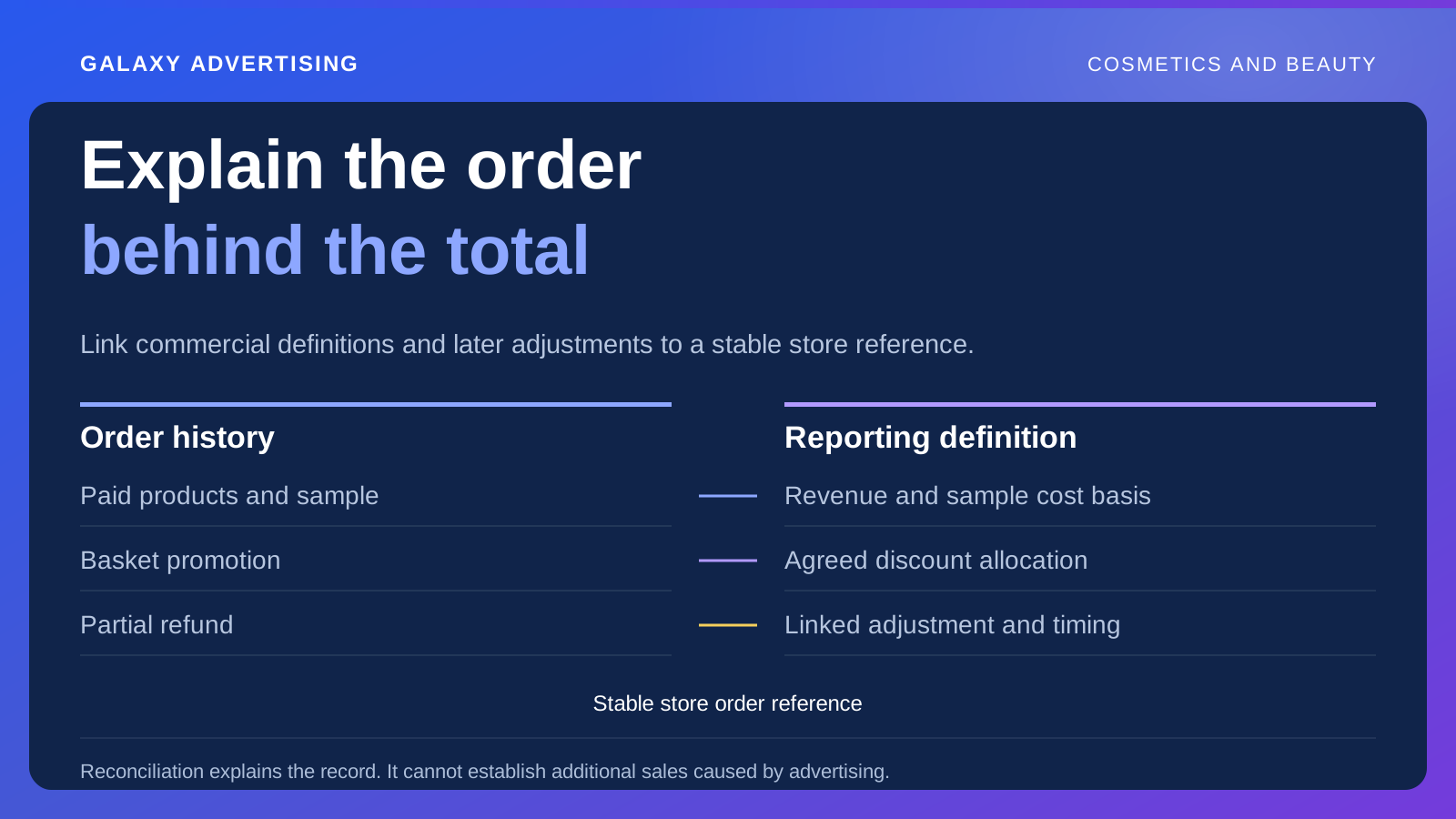
Provide agreed revenue and contribution definitions. Contribution is the money remaining after the costs included in your calculation. Explain relevant treatment of samples, discounts, fulfilment and refunds, sharing only what's necessary through the retailer's approved access arrangements. The scope needs to match the work.
A revenue target without a cost basis can encourage the wrong product mix. Give the agency enough context to explain why a campaign that looks efficient may still be commercially unattractive. Otherwise, both parties can be working earnestly towards a number that doesn't serve the business.
Name the owner who updates assumptions when supplier costs or promotional mechanics change. Establish a working source of truth rather than freezing an old spreadsheet into a permanent instruction. A target can become unsuitable while the account's reported result remains stable. The brief needs a way to reflect that change.
Explain what operations can actually support
List material availability issues, package changes and service limitations affecting promoted products. Show the agency where current information lives and how urgent changes will reach it. The promise in the advert depends on facts that may sit outside the marketing team.
Make the destination owner visible. A recommendation could require a product label, variant route or purchase condition to change without the agency controlling implementation. Assign that responsibility. Don't assume work will happen somewhere beyond the brief simply because everyone agrees it sounds sensible.
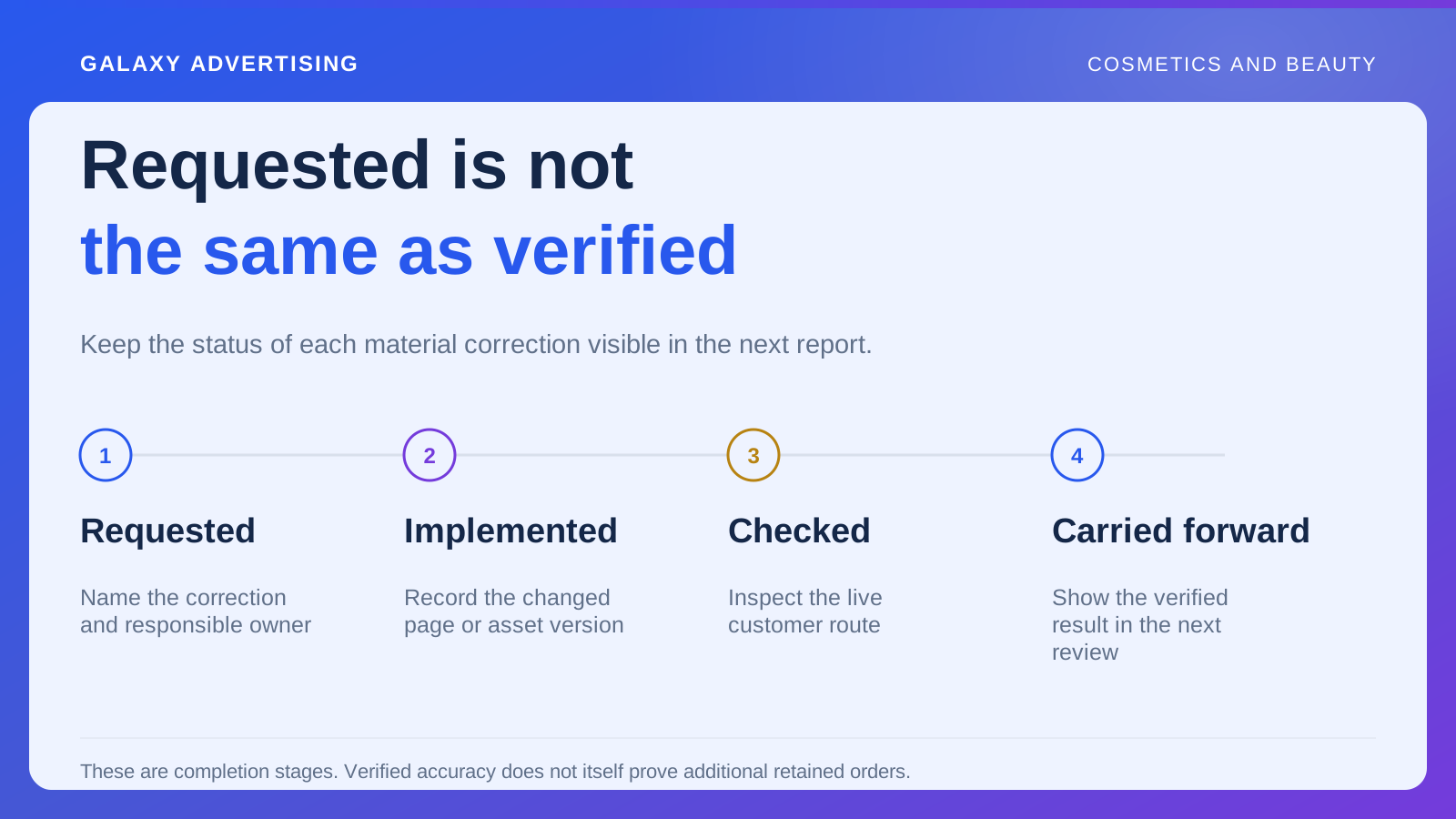
Agree how to verify corrections. Updating a source record doesn't prove that the customer sees new information. Include a way to inspect the actual page or asset version once the change reaches the live route. That makes completion something both parties can check.
Transfer the thinking behind the existing creative
Explain the buying argument each important asset was intended to investigate. Include its available result, main limitation and relevant product or promotional context. File names and performance rankings rarely preserve the reasoning the next team needs when deciding what to repeat or change.
Keep unsuccessful and inconclusive work where it can prevent repeated mistakes. Did an asset fail to explain a distinction, attract unsuitable questions or simply lack enough evidence for a conclusion? Those are different lessons, and a folder containing only winners can lose all of them.
Earlier observations shouldn't become permanent rules. Ranges and market conditions change. Give the new team enough context to question interpretations responsibly, rather than repeat them blindly or discard them without inspection.
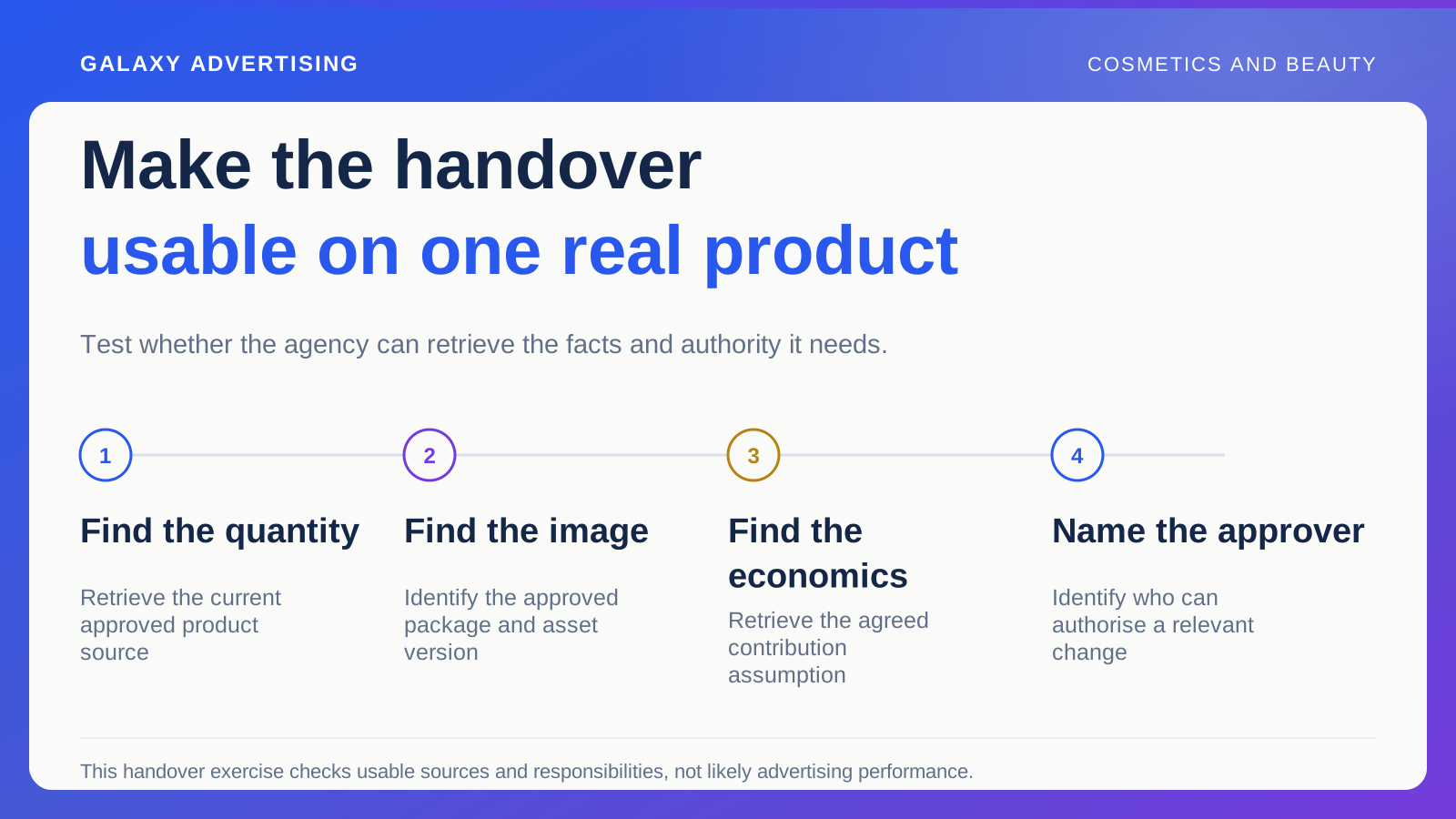
Before work starts, try a short handover exercise with one real product. Ask the agency to find its approved quantity, image version and contribution assumption, then name who can approve a change. Resolve any gaps the exercise exposes before a production deadline turns missing information into an improvised claim or avoidable approval delay. Sources need to be usable, not merely present in a folder.
Agree what the review needs to explain
Ask for completed work, commercial observations, limitations and a recommended next action in a connected report. You should be able to see which decision needs approval and why, without reconstructing the argument yourself.
Separate delivery evidence from impact evidence. Publication proves delivery, not automatically additional retained orders. Equally, uncertain attribution shouldn't erase a verified improvement in product accuracy.
A dependable agency relationship leaves specialist judgement room to work while keeping ownership of product facts, expenditure and operational promises clear. Both parties should be able to explain the decisions behind the work. A polished folder can't do that explaining for them.