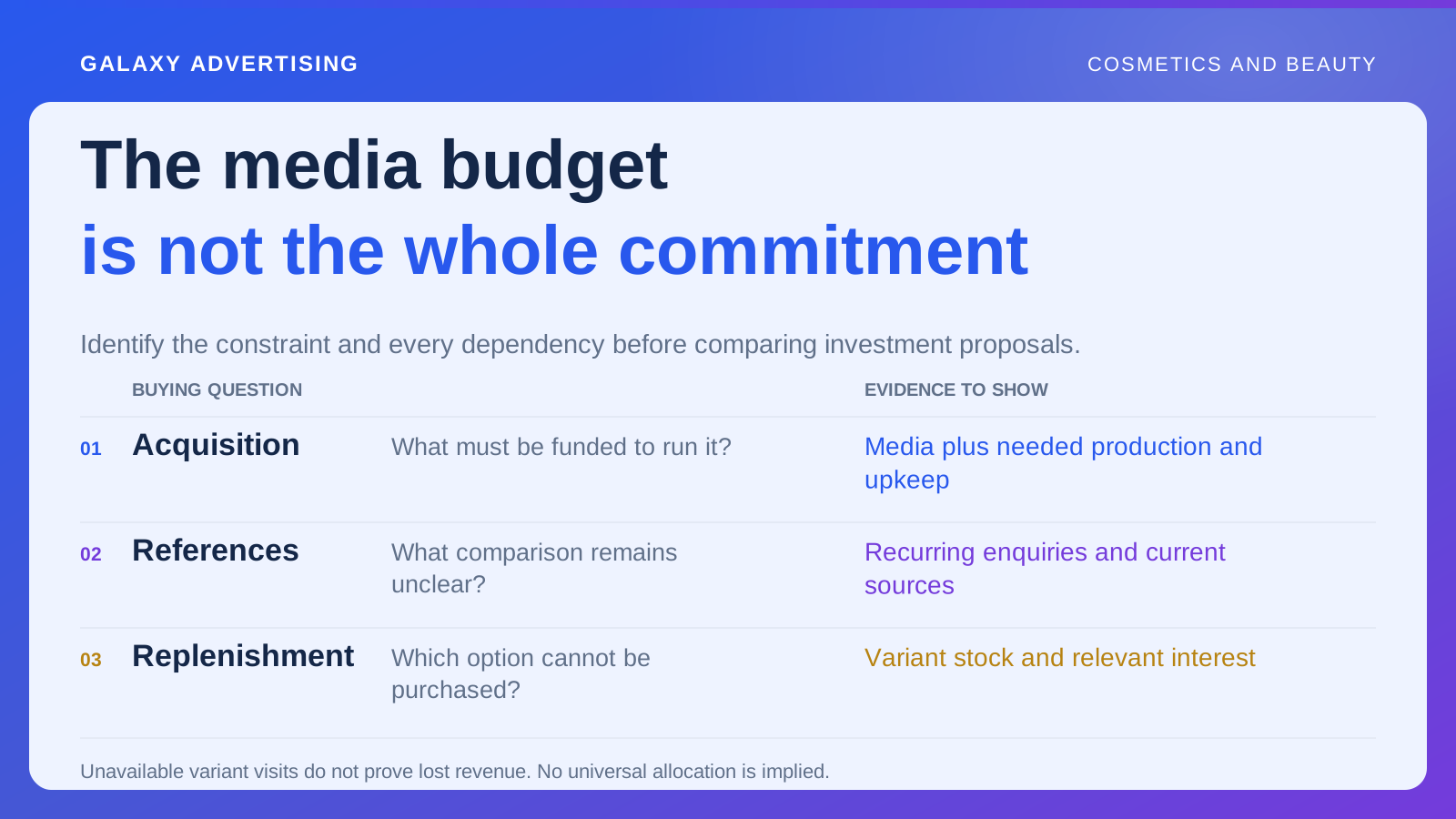
A bestseller campaign can be succeeding while its demonstrated shade is nearly out of stock and its strongest advert shows older packaging. Add customer questions about what the price includes, and an encouraging result starts to look like a more complicated expansion decision.
The first result still has value. It just doesn't establish that the same conditions can support a bigger commitment. Before asking for more demand, check what remains dependable in the offer, the evidence and the operation behind it. Readiness is about understanding those conditions well enough to fund the next step.
Establish what actually produced the first result
Record the product, variant, price, creative and destination, together with relevant stock and promotional conditions. A variant is the selected shade, size or configuration. “Bestseller” is a useful label, but it can conceal a narrow combination that won't remain available indefinitely.
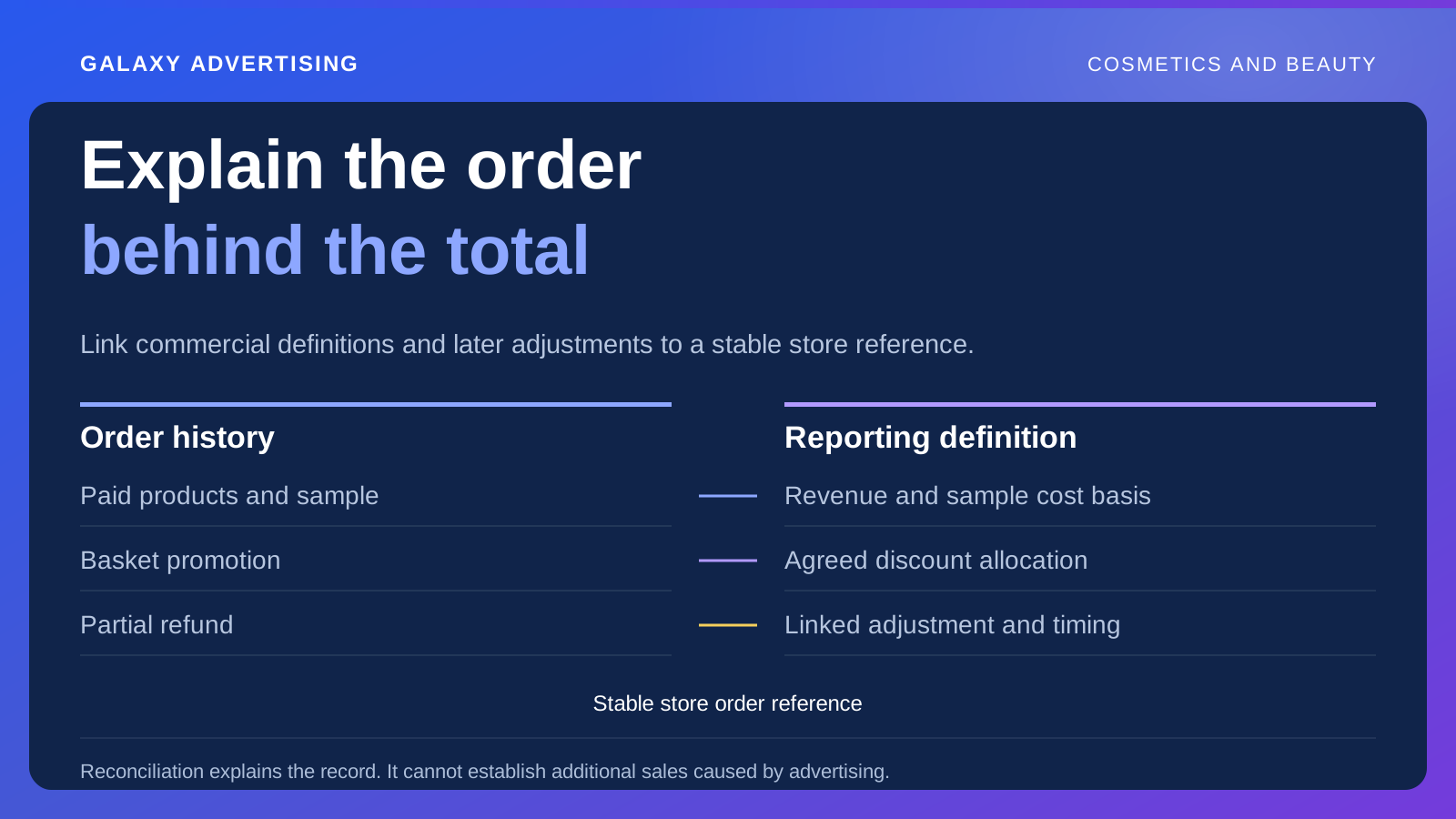
Review the outcome using your agreed commercial basis. Initial revenue isn't the same as a retained order after discounts, promotional additions and refunds. Reconcile the definition with store records before basing expansion on it. Otherwise, you could be increasing a commitment whose underlying result nobody has agreed.
Keep the claim proportionate to the evidence. A small encouraging sample can justify another step without establishing a stable long term acquisition cost. Let uncertainty shape the decision. An early average is a useful observation, not a promise about what every future customer will cost.
Inspect what the next customer can choose
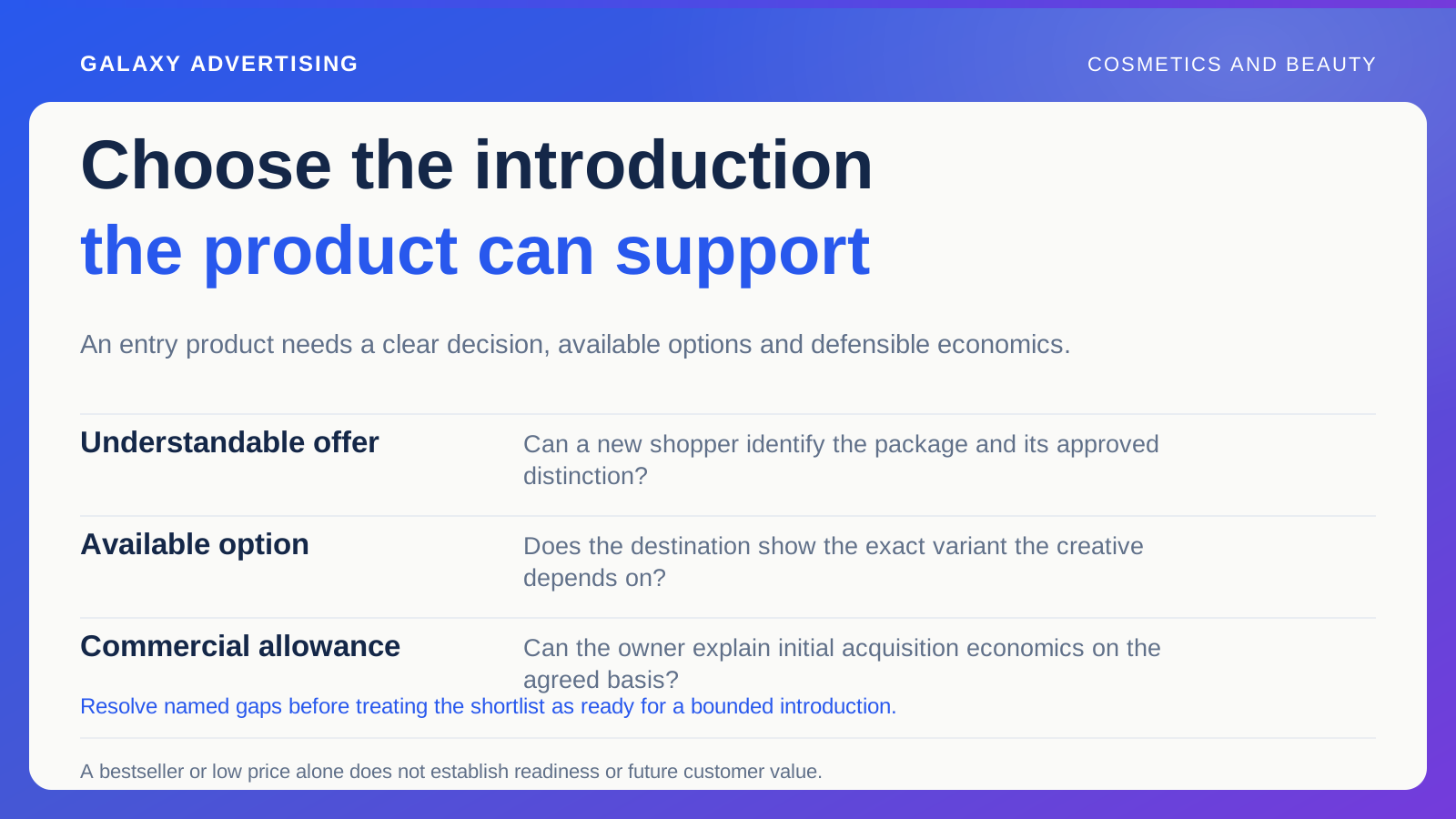
Check availability and the practical offer for shades or formats likely to receive attention. A general “in stock” status isn't enough if the demonstrated shade is nearly exhausted or useful options are missing. Look at the offer the next investment will actually expose.
Agree the response to changing availability. You might need another accurately described product, a revised destination or a pause in a particular promotion. The supported technical response depends on your real store setup, so have its owner verify what it can do. Don't let assumptions become the operating plan.
Another shade doesn't automatically inherit the first one's result. It may answer a different preference or need different imagery. Expanding across a range changes the product decision as well as the budget decision. Fund it with that distinction in view.
Check that the creative can keep doing its job
Verify package, quantity and claims against the current product. Retain approved source information and permissions for the intended uses. A strong initial asset becomes less useful if later versions can't be maintained accurately. The file needs a dependable factual basis as well as an encouraging result.
Identify the buying argument it demonstrates. An attractive asset that received favourable delivery isn't enough of a production brief. Understanding its purpose helps preserve useful evidence while the next brief investigates another genuine customer question. Know what you're carrying forward before asking for more versions.
Different backgrounds can add execution variety. They don't automatically establish more reasons to choose the product. Separate fresh arguments from adaptations of an existing one, so the production plan doesn't confuse cosmetic changes with a wider understanding of what helps customers decide.
Walk the route through ordinary changes
Follow the campaign on a phone. Inspect the selected variant, image, price and purchase conditions, then change an option or encounter an unavailable item. The route needs to make sense beyond the exact state everyone used when approving it.
Correct demonstrated mismatches before calling them weak demand. Someone arriving from a clearly labelled shade demonstration shouldn't have to identify that product among unrelated alternatives. That's a route to inspect, rather than immediate evidence that the audience isn't interested.
Keep an accurate but unattractive offer separate from a broken experience. If delivery cost is clear and shoppers reasonably decline it, the business may need an offer decision instead of another page redesign. More spend won't remove that underlying condition. Decide what kind of problem you're addressing first.
Ask the people who will fulfil the orders
Review relevant stock, packing, customer information and fulfilment dependencies with their owners. Find the actual constraints. Don't assume every increase in demand will strain the operation equally, or that every product asks the same work of the business.
A promotional sample or special package can involve work beyond an ordinary order. Include those dependencies where they materially affect capacity or cost. Operational effort doesn't become free because it isn't visible in the advertising dashboard. It still belongs in the expansion discussion.
Set a reliable handover for exceptions reaching the campaign manager. Name the information, owner and response route when the offer changes. “Keep marketing informed” is too loose to do that job by itself. A clear responsibility gives the team a practical way to maintain the promise.
Make the next commitment possible to interpret
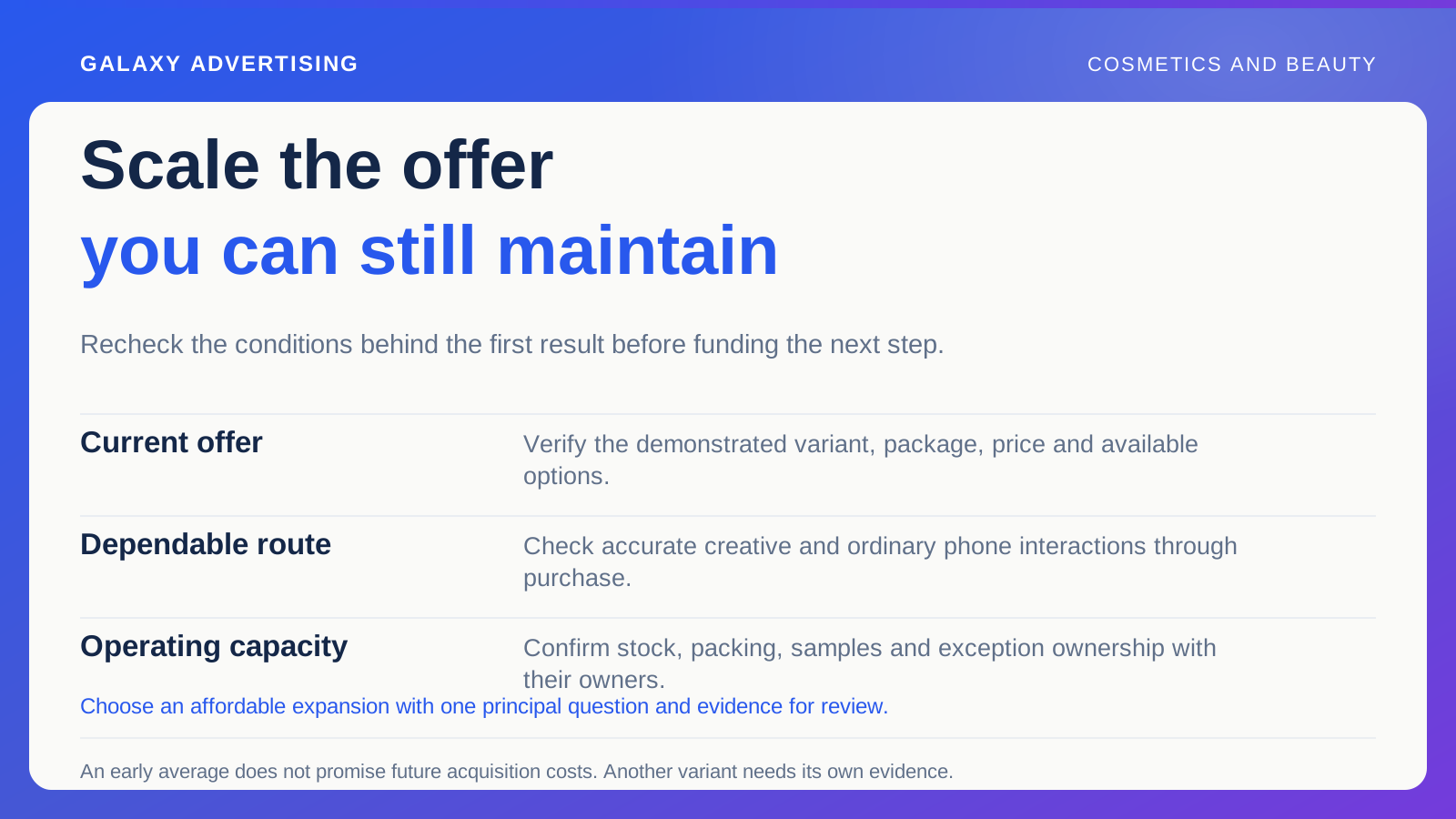
Choose an expansion you can afford and review. It could mean more investment in the existing offer, another variant or another buying argument. Combining all three makes the cause of a changed result harder to understand. Keep the next question clear enough to learn from.
Agree that principal question and the evidence needed at review. There's no responsible universal percentage increase for every account. Base the size on your economics, operating capacity and willingness to fund uncertainty, rather than a rule detached from the business.
Separate prompt fault correction from the broader commercial review. An obsolete package image needs immediate action. Judging the opportunity may require a more complete order history. Those decisions run on different evidence and shouldn't be confused.
Check for temporary advantages in the first campaign too. A launch gift or unusually strong availability may have helped define its result while creative received most of the credit. If those conditions will end, describe the revised offer explicitly. You can investigate it, but fund it as a changed proposition rather than assume the original result transfers automatically.
Let the evidence travel as far as it supports
After the next step, examine product mix, retained contribution and relevant customer questions. Contribution is the money remaining after the costs included in your calculation. Compare conditions with the original result rather than assuming the campaign stayed unchanged.
If performance weakens, investigate plausible differences before dismissing the first success as a fluke. If it strengthens, that doesn't prove every remaining variant. Use the evidence at the level it supports.
More spend commits you to the conditions behind the offer. A maintainable product promise, credible creative and an operation able to support the requested demand give that commitment something to stand on.