A £1,000 media test can require £600 of new production before it's ready to run. Compare that hypothetical commitment with a £1,000 extension using verified existing material, and the same headline advertising budget describes two different cash decisions.
Neither option is automatically better. It does explain why your next growth pound needs a wider conversation. Advertising, consistent shade references and replenishment of a frequently unavailable variant can each deserve funding. The question is which constraint is stopping you serving worthwhile demand now.
Ask what the money will change
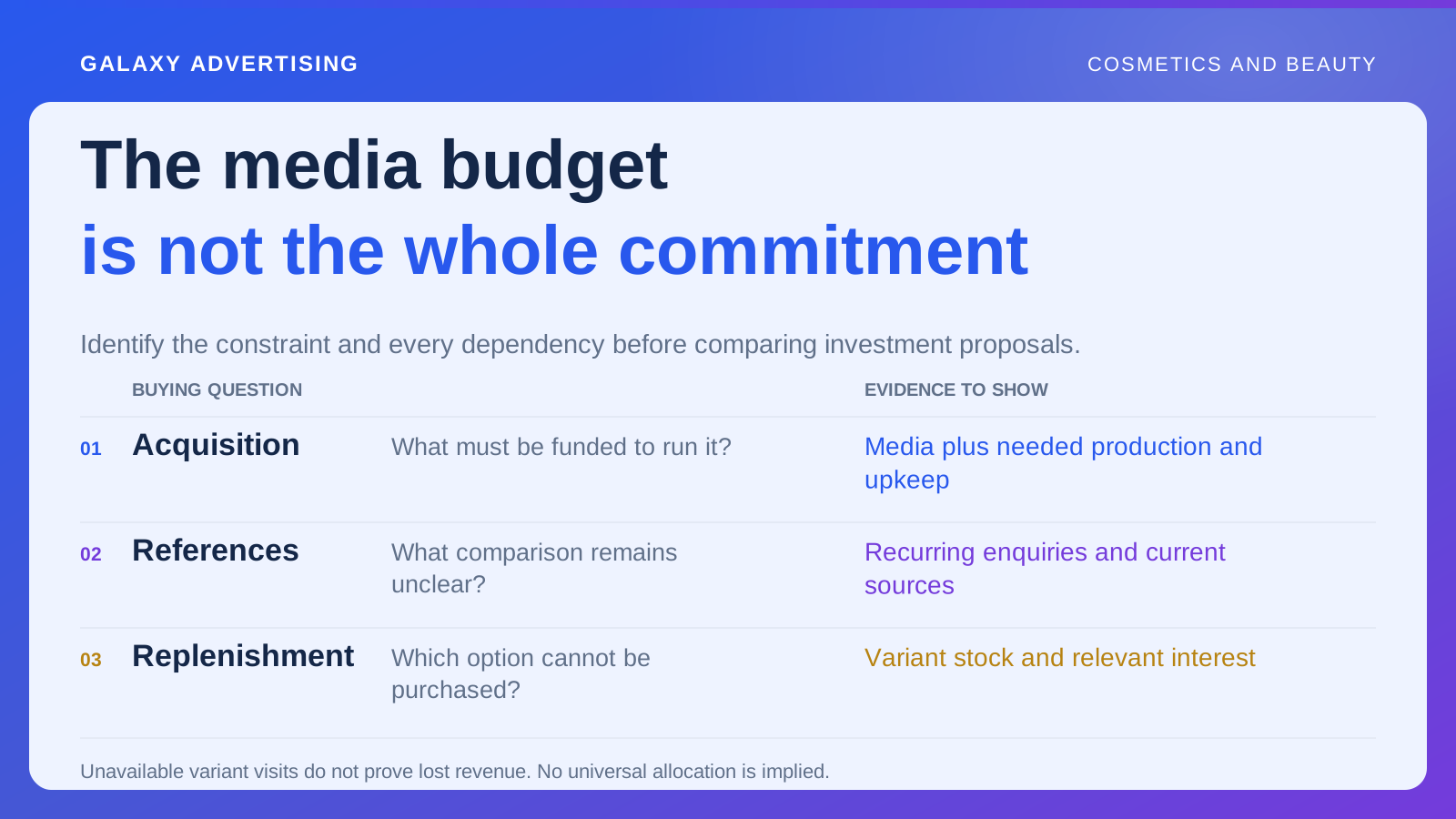
Have each proposal's owner describe a specific opportunity. Additional advertising might put a suitable product in front of more customers. A reference shoot could make an existing range easier to compare. Replenishment could restore a variant, the particular shade or configuration interested shoppers can no longer buy.
Broad departmental ambitions are difficult to compare. “More awareness” and “better content” don't give you much to judge without a product, a customer question and a commercial route. Keep the proposal bounded enough to examine what would actually happen.
Then identify its immediate dependency. If acquisition depends on the advertised shade staying available, the media proposal needs the stock decision in its assumptions. Treating the two requests as unrelated risks funding attention for an offer you can't reliably fulfil.
Check the constraint before forecasting the reward
Gather a small set of relevant evidence. Product enquiries might reveal a comparison problem that keeps returning. Availability at variant level might show a much narrower purchasable range than the overall “in stock” label suggests. Campaign and order records can show where current investment goes.
Use those observations without turning them into certain lost revenue. Visits to an unavailable shade don't establish how many people would definitely have bought it. They can justify investigating availability without proving the whole forecast behind replenishment. That distinction matters when you're committing cash.
Ask what would change your reading of the problem. If shoppers already understand shade differences, a reference shoot might add less than expected. If the unavailable variant attracts little relevant interest, there may be another case for replenishment. Examine that case separately instead of borrowing certainty from the advertising argument.
Put the full acquisition cost on the table
Include the production and maintenance costs of assets needed by an acquisition proposal. An advertising account can accept a higher budget without complaint. That doesn't mean the campaign is costless to expand or that the surrounding work has been funded.
The hypothetical £1,000 media test with £600 of new production and the £1,000 extension using verified existing material represent different cash commitments. These figures reveal the commitment without choosing the winner.
Distinguish assets that could support several future decisions from expenses tied to one offer. Shared usefulness can matter. It doesn't excuse skipping the question of whether the first intended use is worthwhile. A library of unused assets still costs money, however promising it looked in the brief.
Look at what retained orders leave behind
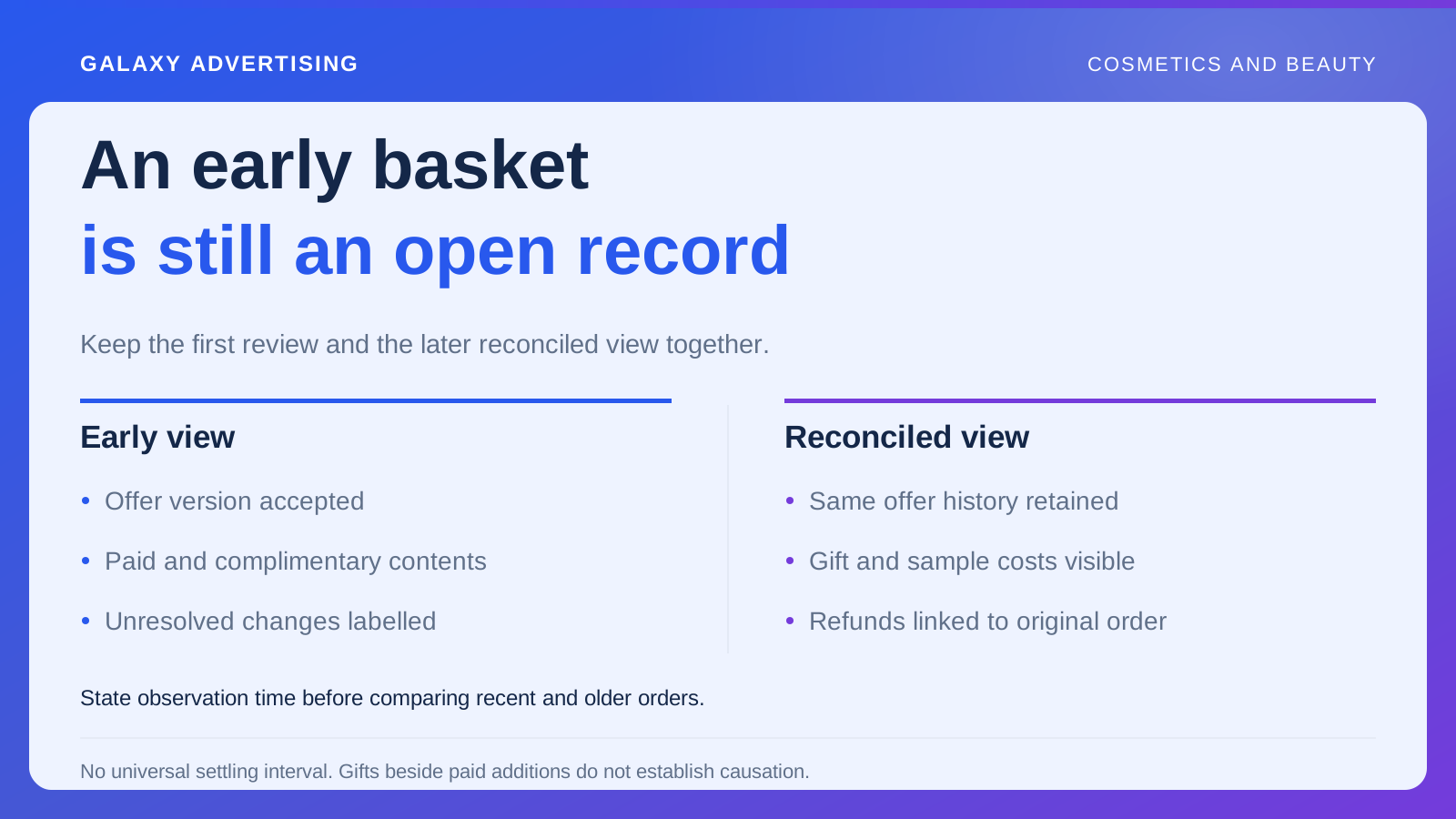
Ask how each proposal is expected to affect retained orders and relevant costs. Agree what revenue means and how you'll treat samples, discounts, fulfilment and refunds. Keep uncertain values visible rather than letting a precise looking total hide them.
Compare contribution, meaning the money left after the costs included in your calculation, rather than attractive revenue alone. A promotion could bring in more revenue but leave less contribution per order. Better product information could produce no immediate sales increase while reducing a recurring cause of unsuitable purchases.
Those outcomes need different observations and review periods. Don't force every proposal into one precise return figure when the evidence won't support it. Ranking options with clear assumptions can be more defensible than filling a spreadsheet with invented inputs. Your job is to make uncertainty comparable, not pretend it has gone away.
Name the work that needs doing first
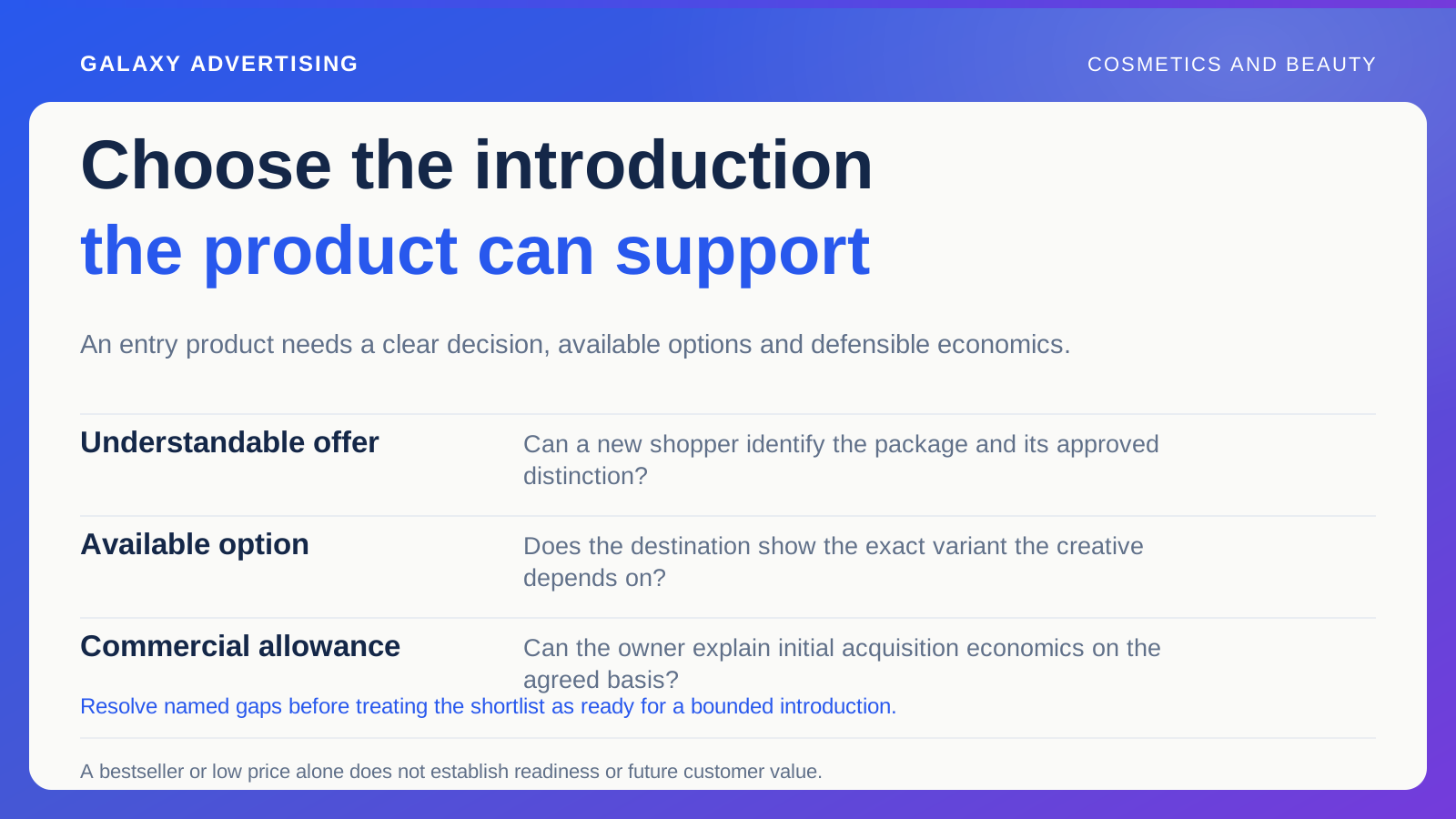
Some dependencies need resolving before you can responsibly assess an investment. An inaccurate product destination, an unverified claim or an unavailable demonstrated variant can undermine a campaign that otherwise has promise. Identify the actual problem rather than treating it as a general unease.
Give the correction an owner and a completion check. “Website needs work” can postpone acquisition decisions indefinitely. A specific mismatch can be corrected and checked in the real purchase route, which gives the business a way to move forward.
Apply the same discipline to production requests. If nobody can explain the product difference, another shoot may add assets while leaving the commercial argument unresolved. In that situation, the first useful investment may be a clear brief. More production isn't a substitute for deciding what needs explaining.
Buy a manageable amount of learning
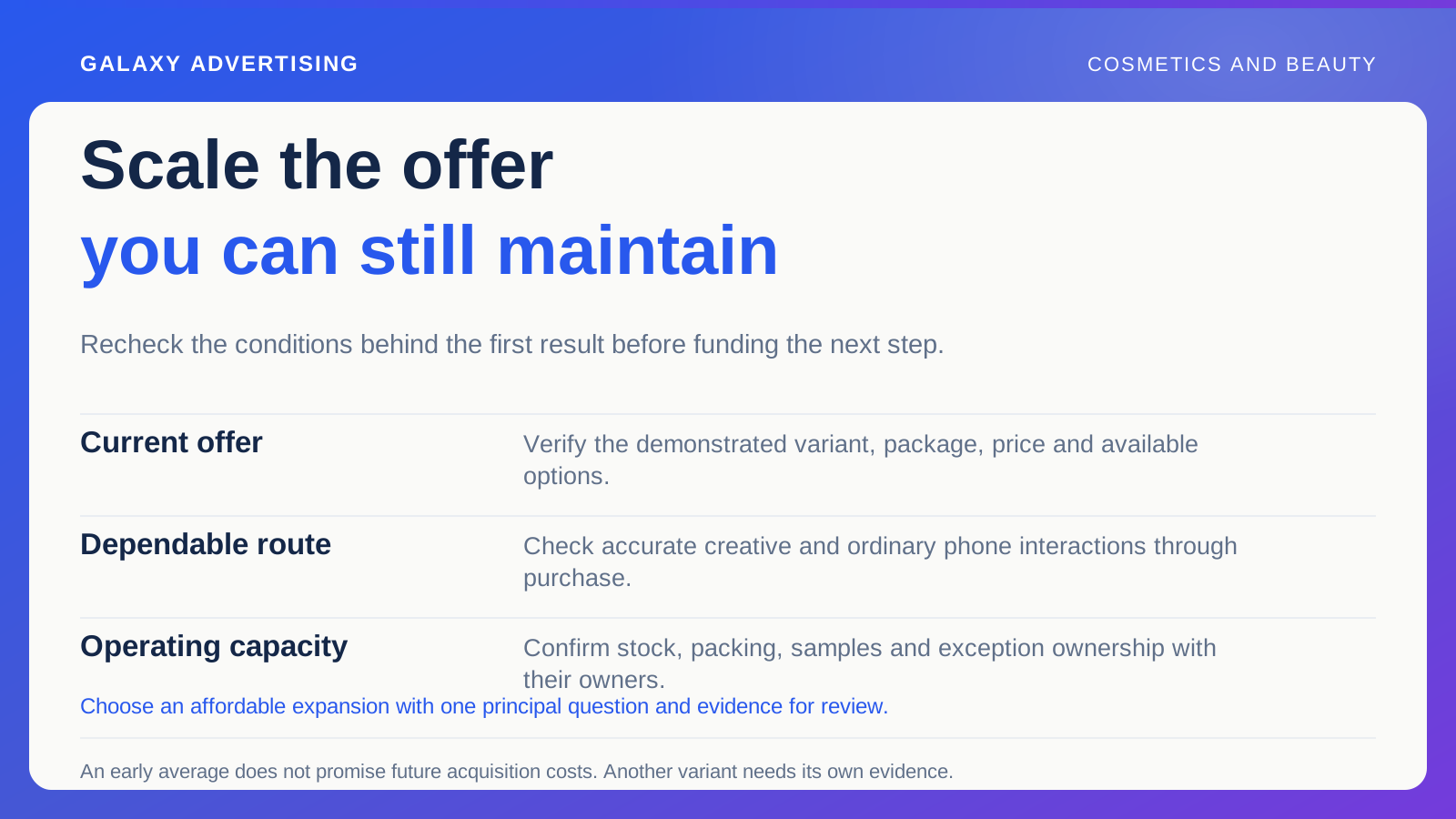
Where evidence is incomplete, choose a commitment that matches your willingness to fund uncertainty. That might be one product family, a limited reference project or an acquisition test with an agreed scope. There's no universal allocation that works for every beauty range.
Set out what the step needs to establish before you invest further. A reference project might need to show whether customers can identify and compare variants more clearly. Acquisition may need evidence about order economics and whether the destination works as intended. Keep the question attached to the commitment.
Cash timing needs its own discussion. Stock and production payments can fall due before the resulting sales arrive. An idea can look commercially attractive and still need a more careful sequence because the business can't support its immediate operating commitment. Expected contribution doesn't pay today's bill by itself.
Leave the next review a clear decision record
Write down what you funded, what you deferred and why. Keep the evidence and the condition that would make you change the decision. Otherwise, the next review can turn into another contest over which department made the most persuasive pitch.
Check whether the funded work removed the intended constraint. After replenishment, inspect availability and the resulting offer. After improving references, verify that customers can find and use them. After expanding media, review the commercial mix it produced.
Acquisition, information and supply depend on one another, but each proposal still needs to justify its part. The next pound belongs with the most useful change your business can support and evaluate. That's a more concrete ambition than simply finding somewhere to spend a bigger budget.