What if your free gift lifts average order value while costing more than the extra basket contributes? The incentive might still have a job to do, but a busier promotion isn't enough to show that it's doing it well.
A complimentary product above a spending threshold needs purchasing, packing and replenishment. Some customers would have placed a similar order anyway. Before calling the offer a success, agree which behaviour you're encouraging, what cost you'll accept and what evidence would separate useful demand from expensive generosity.
Give the extra something a clear purpose
Decide what the incentive should achieve. It might introduce an unfamiliar product, encourage a coherent larger basket, help someone compare a format or serve another defined retail objective. Different purposes need different packages and different observations. Choosing the gift comes after choosing its job.
Don't pick something solely because it's cheap or plentiful. Without a clear relationship to the offer, you could add operational cost without making the purchase more understandable or attractive to the intended customer. Spare stock isn't a customer reason to buy.
Describe the purpose in a sentence someone can challenge. A hypothetical sample could introduce the packaging and texture of an existing range. Calling it a guaranteed route to a later full size purchase goes further than the evidence. That's an outcome you'd still need to investigate.
Work out what you're committing
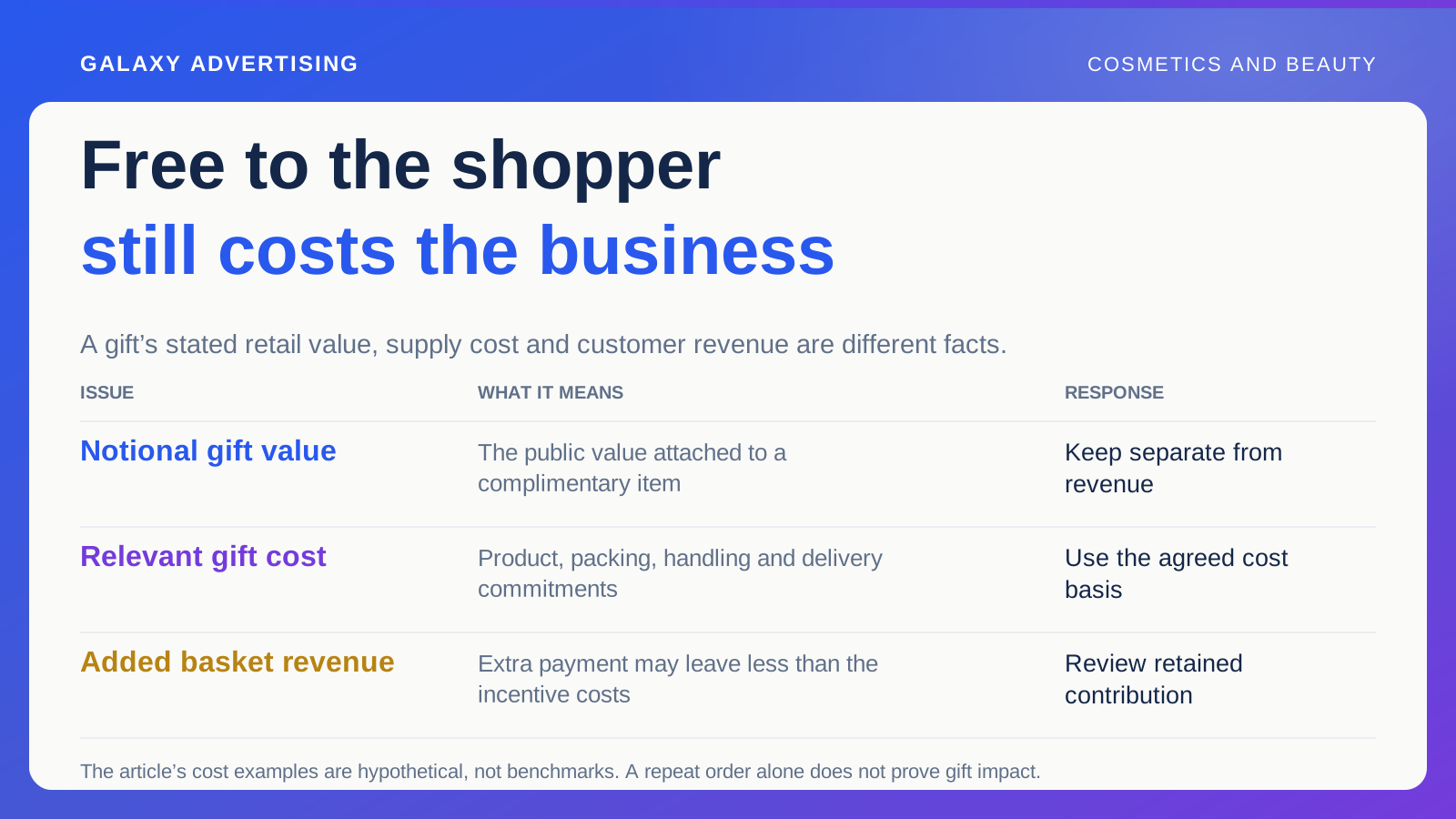
List the relevant product, packaging, handling and delivery implications using your agreed cost basis. Include preparing and maintaining the promotion where those costs change the investment decision. The commitment extends beyond buying the complimentary item.
Keep notional retail value separate from business cost and revenue. A gift described as worth £15 doesn't create £15 of customer revenue when you supply it free. Its perceived value can still matter. It simply isn't the same as money received.
Use a hypothetical basket to expose the calculation. Suppose an additional £10 of customer revenue leaves £4 before the incentive, and the gift adds £5 of relevant cost. The extra revenue alone doesn't establish an attractive incremental order. These figures illustrate the calculation; they aren't a beauty retail benchmark or a suggested threshold.
Walk through the threshold as a shopper
Look at realistic baskets close to the proposed spending threshold. Can a customer reach it with a relevant item? Or does the incentive encourage an addition they can't easily understand or use? A higher basket is only part of that decision.
Make the route understandable rather than an arithmetic puzzle. Explain which items count and which conditions apply through the systems and wording your retailer actually uses. Then verify the basket and checkout, where the customer needs the promise to make sense.
Decide what happens if the order changes. You need a clear operational account of the conditions, handled through the approved customer policy. Don't improvise the process in an advert or assume unusual cases will sort themselves out. The promotion needs an answer the business can actually carry out.
Make the promised gift identifiable
State the product, quantity and variant wherever those details matter. A variant is the selected size, shade or configuration. Showing a full size package alongside an unspecified sample can create a wrong expectation even if a small line elsewhere says “complimentary”.
If gifts vary, explain how the choice or substitution works. Don't centre the main campaign on one desirable item while most customers encounter an unexplained alternative. They need to understand the offer they'll receive, rather than discover its terms after getting interested.
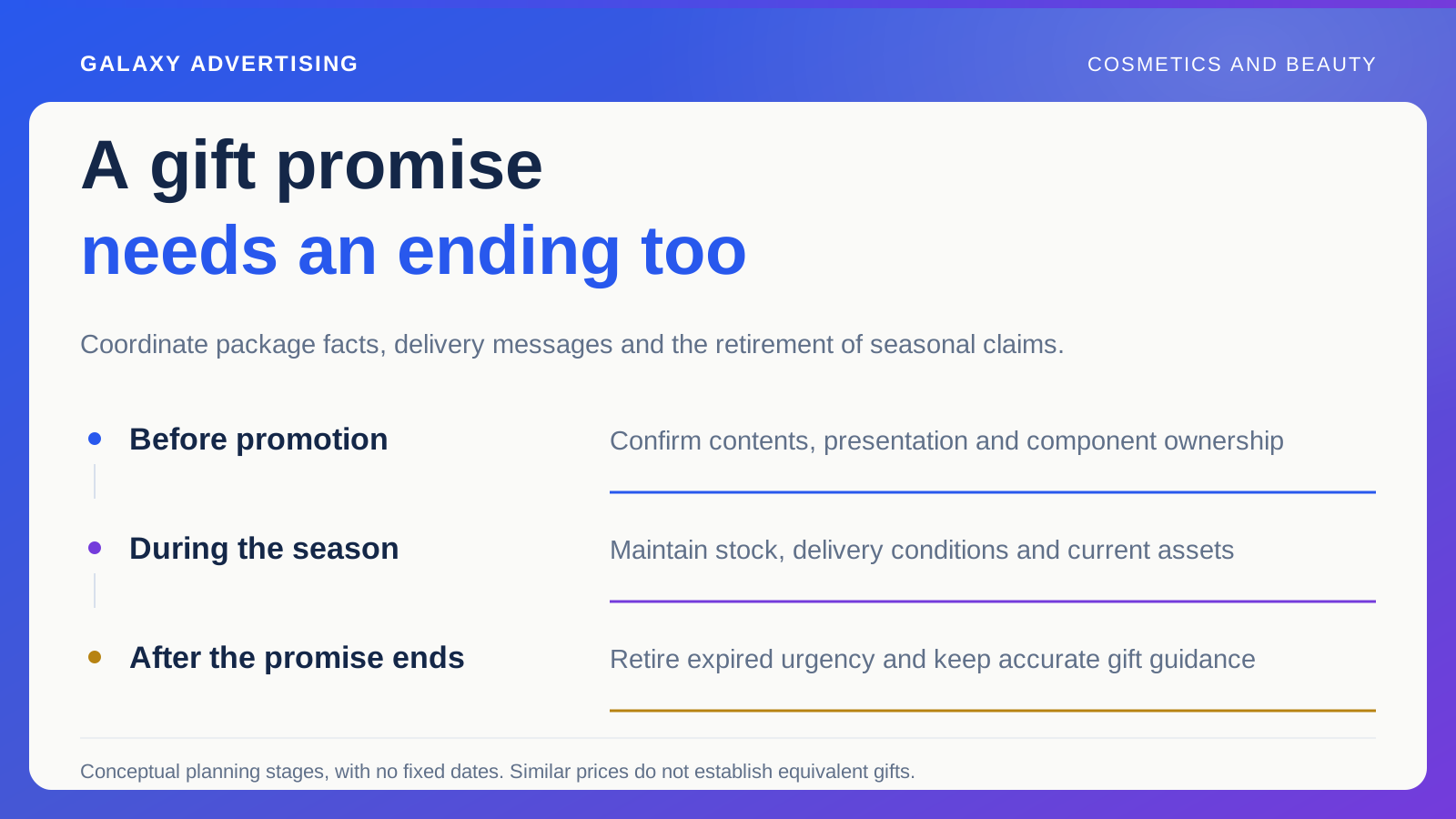
Connect promotional stock with advertising ownership. Somebody needs to know when the promised gift is unavailable and which assets or page messages need action. Demand continuing after the offer changes can turn a successful promotion into a poor experience. Stock and communication need to move together.
Compare the right alternatives
A bundle, sample and price reduction serve different purposes. A bundle can clarify a complete package. A sample can offer a limited introduction. A discount changes the customer's price. None wins automatically just because it belongs to a particular promotional category.
Choose according to the buying question and your economics. If shoppers can't identify the shade shown, a generic gift may leave that obstacle untouched. Where the package is already clear, an appropriate incentive might deserve a test with an agreed scope.
Avoid combining several mechanics in the first comparison. A new bundle, discount, free delivery and gift make it hard to tell what mattered. You may choose that combination commercially, but you can't then claim you've isolated one component's effect. A sensible commercial offer and an interpretable comparison aren't always the same thing.
Follow retained orders and later behaviour carefully
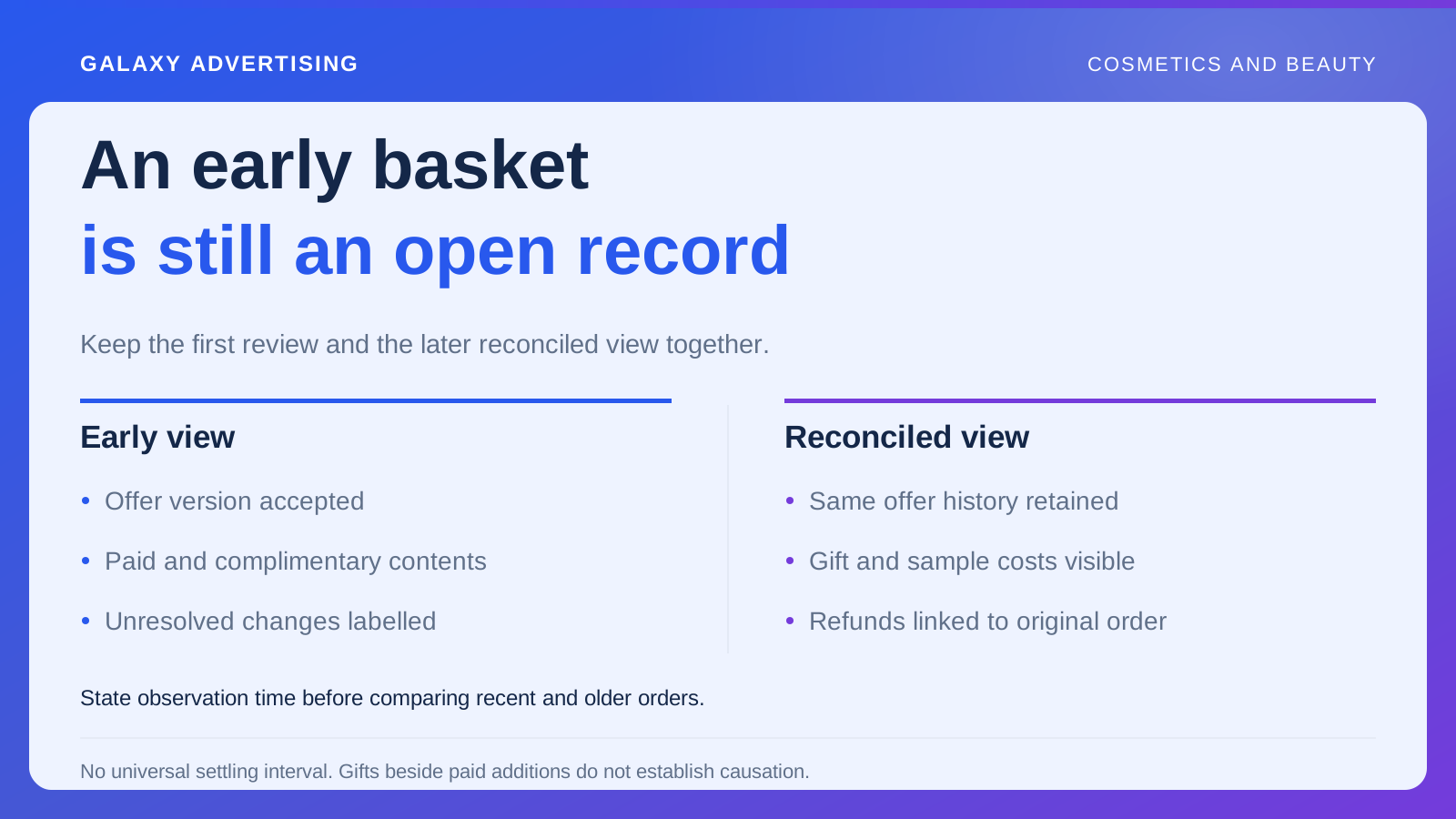
Review actual orders using the agreed treatment of refunds, promotional costs and fulfilment. Compare like with like where possible. Record material changes in availability, price and customer mix so that a changed offer or audience doesn't disappear behind the headline result.
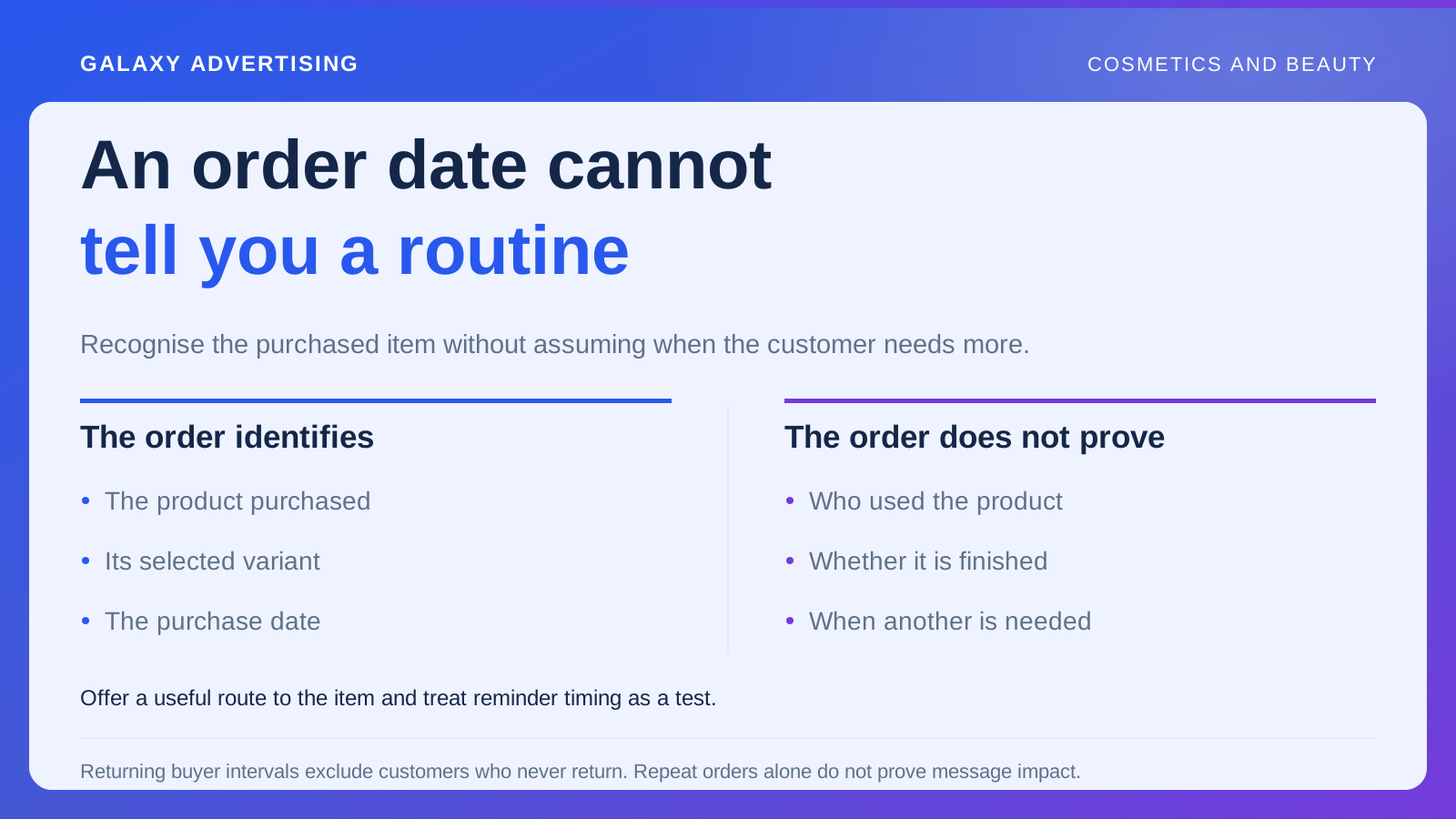
Contribution means the money left after the costs included in your calculation. If later purchases form part of the rationale, define how you'll observe them too. Don't credit a sample with the whole value of every returning customer simply because it appeared in an earlier order. Exposure and later behaviour need more careful interpretation.
Look at operational consequences. Repeated questions and packing exceptions can consume capacity that revenue doesn't show. Let those observations inform the decision without inventing exact costs you haven't established.
Check physical packing instructions against the advertised promise. A correct basket label can't rescue an ambiguous warehouse reference that results in another variant being supplied. The online purchase route and order preparation need one identifiable offer.
Give the promotion an end as well as a launch
Name the owners for launch verification, stock changes and retirement. Check that the advert, product page and basket show the same promise, and retain the approved version for review. That gives you a record of what customers actually saw.
Afterwards, record what you learned about the intended behaviour and where the evidence falls short. You might continue, narrow the offer or end it. A busy promotion doesn't have to earn permanent residency.
A useful incentive adds a reason to choose an offer that already makes sense. The customer's added value needs to connect with a cost and outcome you can explain. Extras can't do the work of making an unclear product decision clear.