Calling a beauty product premium does not explain its higher price. When two alternatives both promise to be elevated, exceptional and transformative, your shopper can recognise the intended position. They still cannot see what the additional payment buys.
That is the gap your proposition needs to close. Give the difference meaning, support it with appropriate evidence and make the actual item easy to inspect. You don’t have to establish that the most expensive option is universally superior. You do need to let someone decide whether its differences matter to them.
Check which alternative is in the conversation
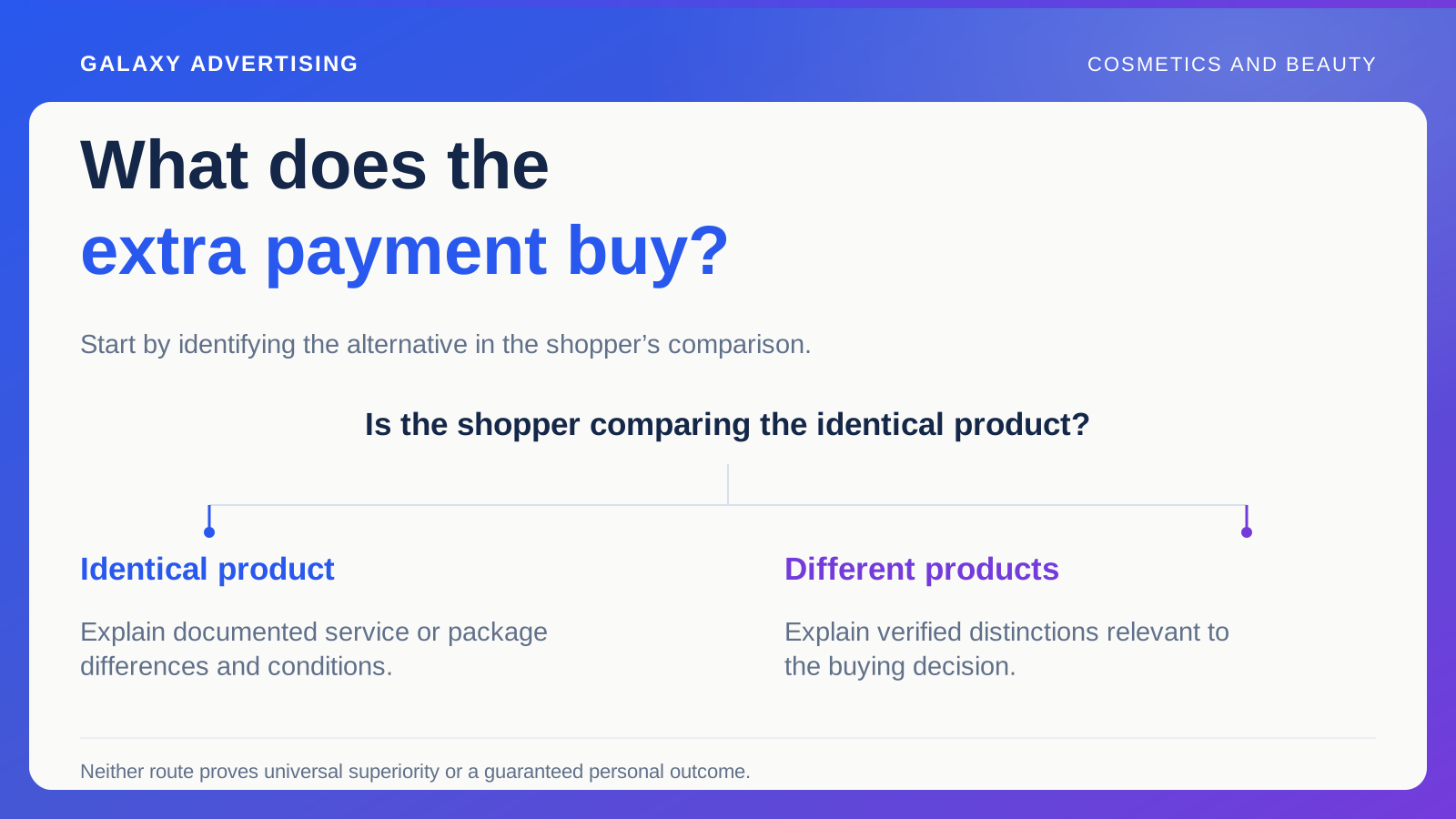
Ask which products, formats or packages customers mention. The same item sold elsewhere is a different comparison from two distinct products that happen to look similar. Establish that before writing the argument.
If it is the identical product, don’t invent a formulation or manufacturing advantage. Your distinction may sit in documented service or the package you supply. Keep the explanation attached to the real offer and its conditions.
For different products, choose verified differences that help someone understand the decision. Impressive terminology isn’t useful if nobody can explain what the buyer should take from it. Get clarification from the right product source before commissioning an advert around an uncertain claim.
Give one distinction enough room
A short asset cannot give every attribute equal attention. Choose a main argument: a clearly defined package, a documented format difference or an accurate explanation of what the offer contains. Let the viewer understand that before adding more.
Keep personal outcome claims within the evidence. A fact can help people compare without guaranteeing how each individual will experience the product. Persuasive wording shouldn’t quietly strengthen a statement whose source supports only a narrower claim.
Write the proposition plainly before polishing the visuals. If it only works with mood, music or prestigious scenery, you may not yet have an inspectable reason for the price difference. Atmosphere can sit beside evidence. It cannot supply the missing evidence itself.
Use evidence that belongs to the argument
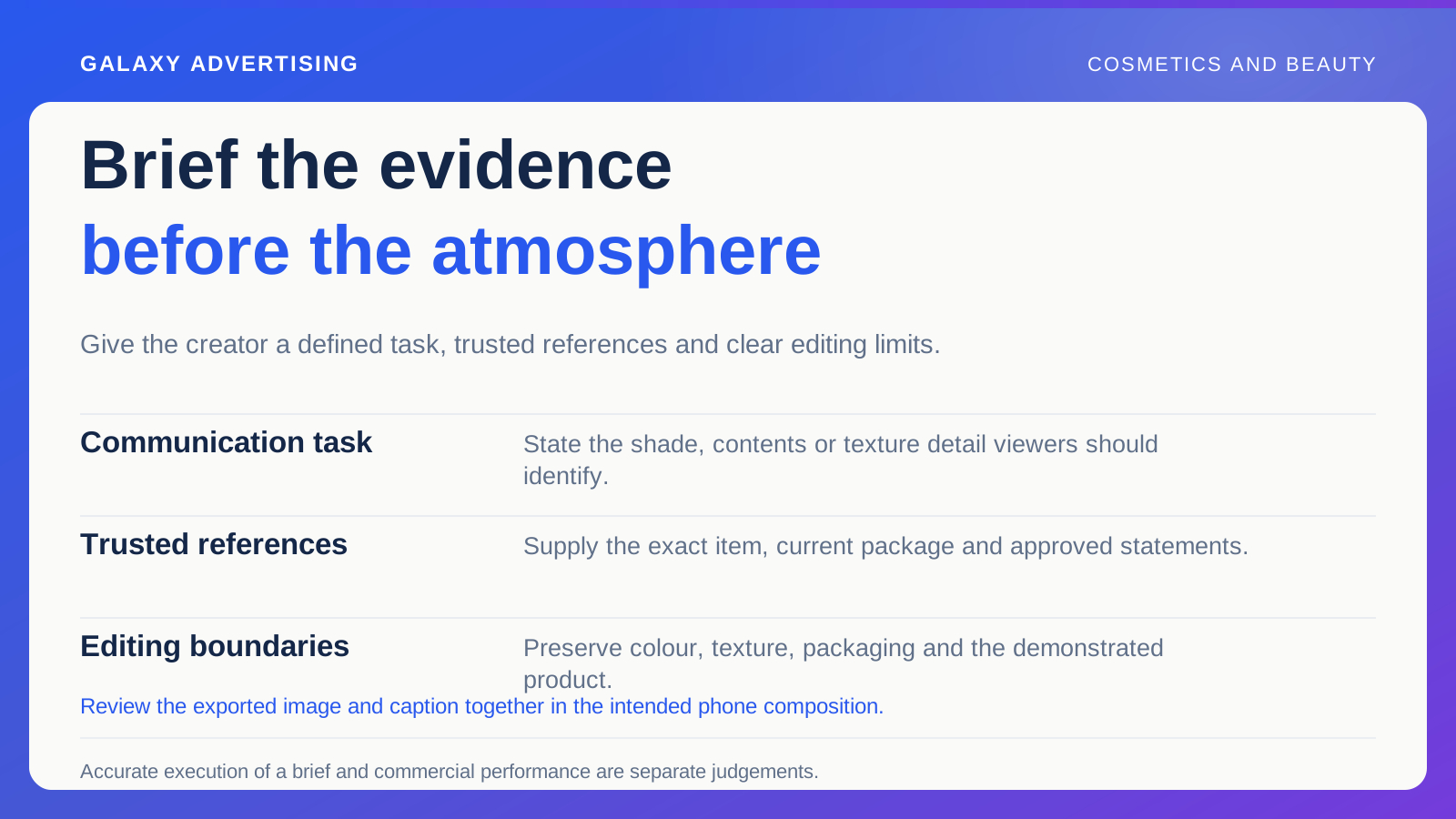
Use approved references for factual statements and accurate imagery for visible distinctions. If a package contains a particular quantity or accessory, show and label that offer. A styling arrangement can imply more than the customer will receive.
A creator’s enthusiasm communicates an individual response. It doesn’t establish every benefit you place beside their video. Keep their experience separate from the retailer’s claims and the sources supporting those claims.
Review the overall visual impression as well as the caption. Images can imply results, quantities and included components without stating them explicitly. Approval should consider what a reasonable viewer could understand from the whole communication, rather than checking words in isolation.
Put prices and quantities on a fair footing
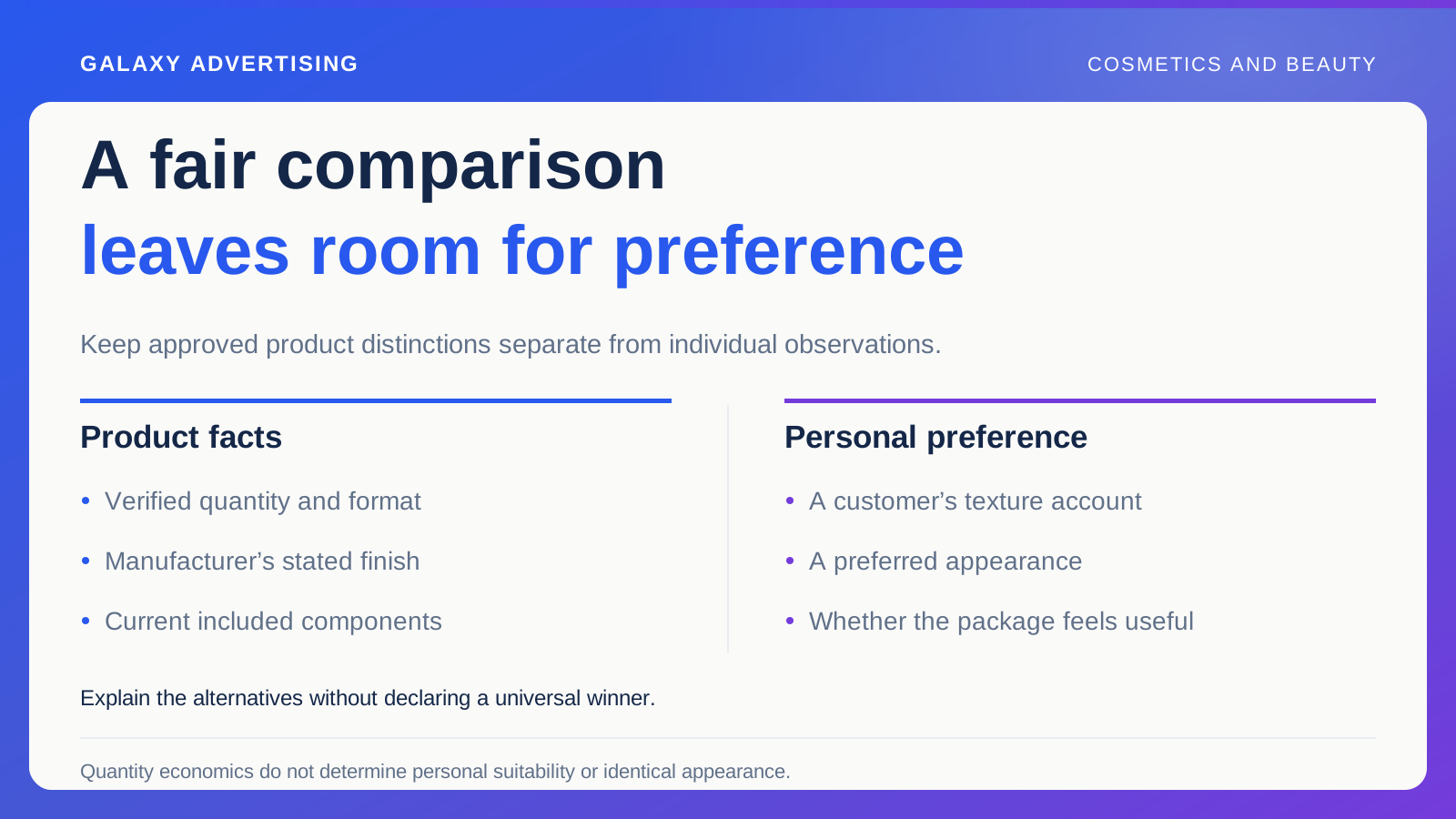
Identify the package and variant, the selected shade or configuration, behind each price. Larger quantities, bundles and optional additions can alter the comparison. A lower package price doesn’t automatically mean a lower unit price. Nor is the larger package necessarily right for every shopper.
Where arithmetic helps, show its basis and keep it separate from personal advice. A hypothetical price per millilitre comparison explains quantity economics. It cannot establish relative suitability or tell you how an individual will experience the products.
Don’t construct a daily cost claim from an invented usage schedule. It can look precise while hiding an unsupported assumption about how long the product lasts. Explaining the current offer clearly is usually a stronger basis than a dramatic calculation with uncertain inputs.
Let the page withstand a closer look
Link to the relevant item and make the advertised distinction easy to find. Put quantity, options, included components and approved information near the decision. Don’t bury the useful detail under more general promotional copy.
Where a comparison is still needed, give people a useful route to it. They shouldn’t have to restart across an unrelated catalogue just to understand the alternatives. Carry the original question into the destination.
Keep practical purchase conditions clear too. A premium story doesn’t remove the need to understand delivery, price and your stated process. The buyer is assessing a whole transaction, not just the feeling created by an opening photograph.
Answer the objection without judging the customer
Say the concern plainly: they like the product but cannot tell whether the additional cost buys something relevant. Answer using your verified distinction. Hesitation is not evidence of poor taste, and treating it that way won’t clarify the offer.
A difference can be understood and still not matter to somebody’s preferences. They may reasonably choose another format or package. That is different from failing to explain your proposition. Leave room for a considered choice that isn’t your preferred one.
Ask an unfamiliar reviewer what they think the price includes and which evidence they remember. This checks clarity rather than forecasts performance. If all they recall is adjectives, improve the factual explanation before producing another variation.
Keep the product reference intact when you shorten a detailed explanation. A close image that works on a product page may become ambiguous beside several packages in a campaign. A new viewer could attach the stated difference to the wrong item.
Review that adaptation independently. Your audience won’t have the context you have. Narrowing or relabelling a claim can preserve the persuasive idea while ensuring it still describes one identifiable offer. A shorter asset needs its own accuracy check.
Look for understanding as well as commercial value
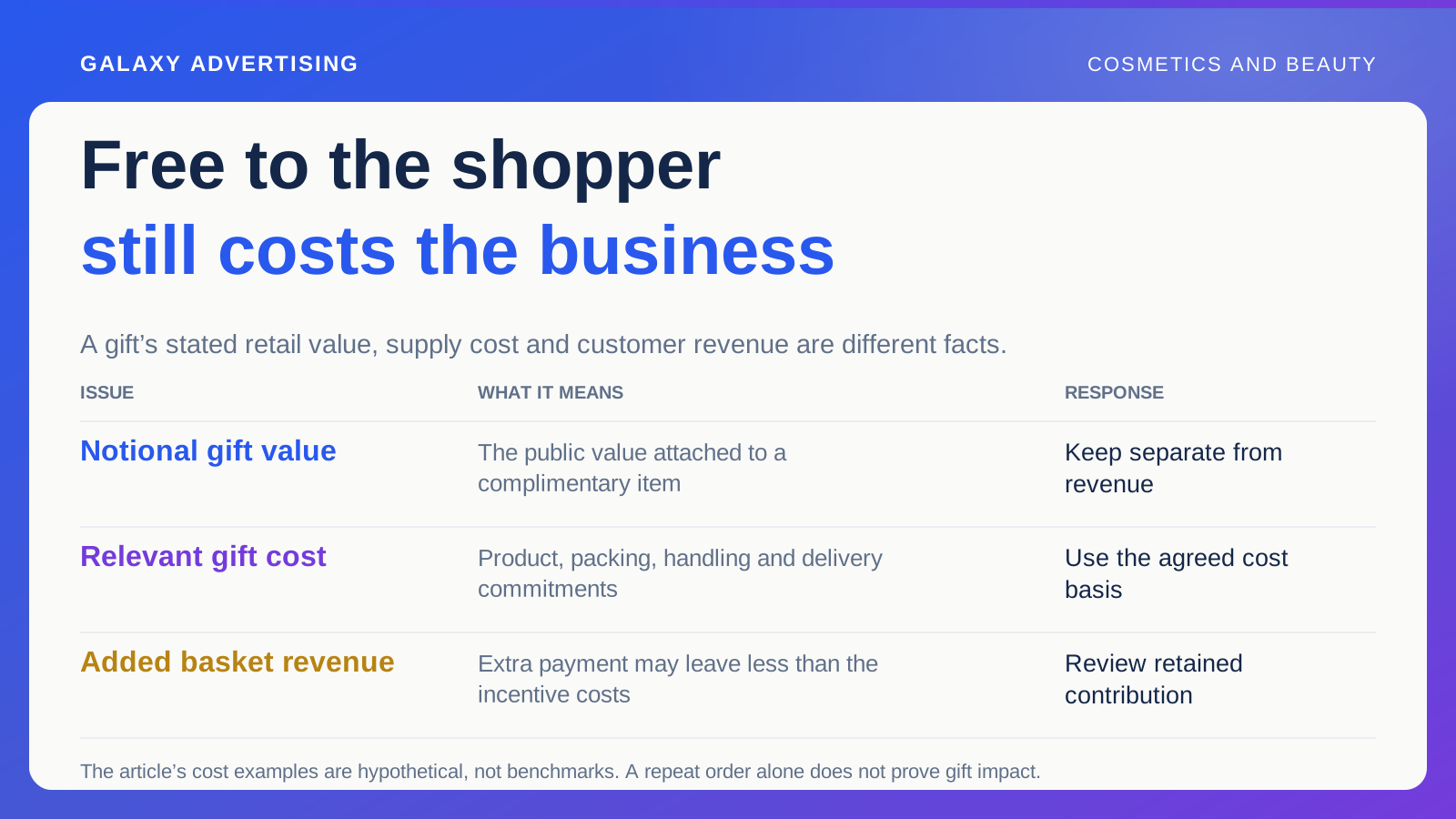
Review the available product exploration, enquiries and resulting orders. Can customers identify the promoted item? Are they asking informed questions about its distinction? Are those orders worthwhile on your agreed cost basis? Each question adds something different to the assessment.
Engagement alone doesn’t prove the price argument works commercially. Equally, a price enquiry doesn’t automatically signal failure. A clear comparison can produce a specific question the retailer is well placed to answer.
A credible premium proposition welcomes scrutiny. It tells the customer what they receive, supports the difference and respects the limits of its claims. That gives a higher price something more useful to stand on than language every alternative could repeat without changing its product.