Material, colour, size, price and availability filters can produce many combinations on a furniture site. They can also leave you maintaining pages with few products, repeated descriptions and a confusing relationship with the main collection.
It's easy to see a keyword opportunity in each combination. The harder question is whether that destination earns its place. A useful filtered landing page needs a distinct customer task, a relevant range and a technical approach that suits the wider site. Settle those decisions before creating pages at scale.
Start with a choice somebody needs to make
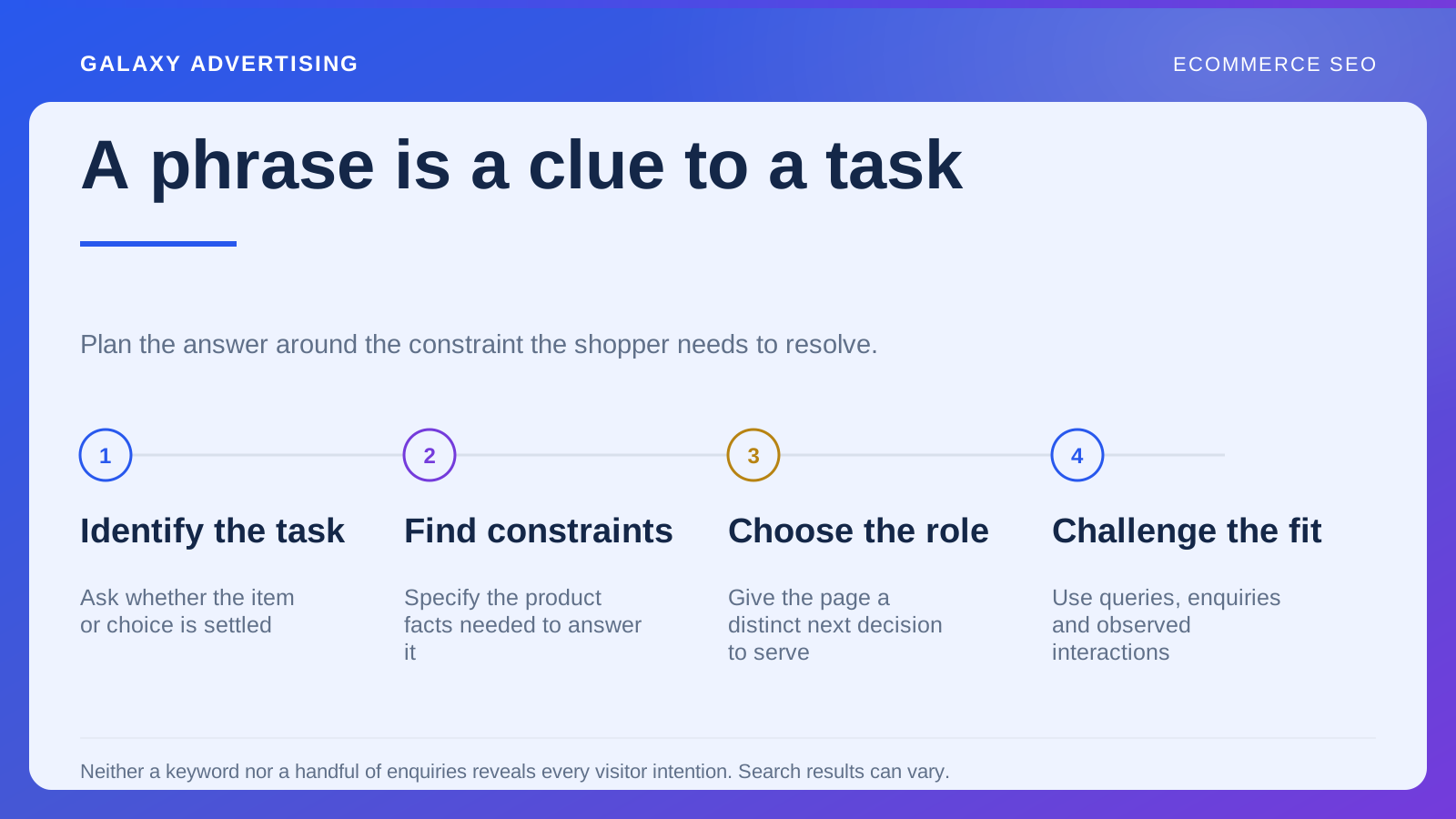
Ask why a shopper would use this particular combination. A material and size requirement might describe a meaningful product search. Another combination might simply record the sequence of filters someone clicked while browsing.
In a hypothetical dining range, a clearly defined compact table selection could help if you have suitable products and accurate attributes. Several arbitrary filters leaving one item don't necessarily offer a useful comparison.
“There is a keyword for it” isn't enough of a brief. Describe what selection the visitor can make and which facts support that choice. The page has to serve somebody, rather than merely exist for a phrase.
Look at the range behind the title
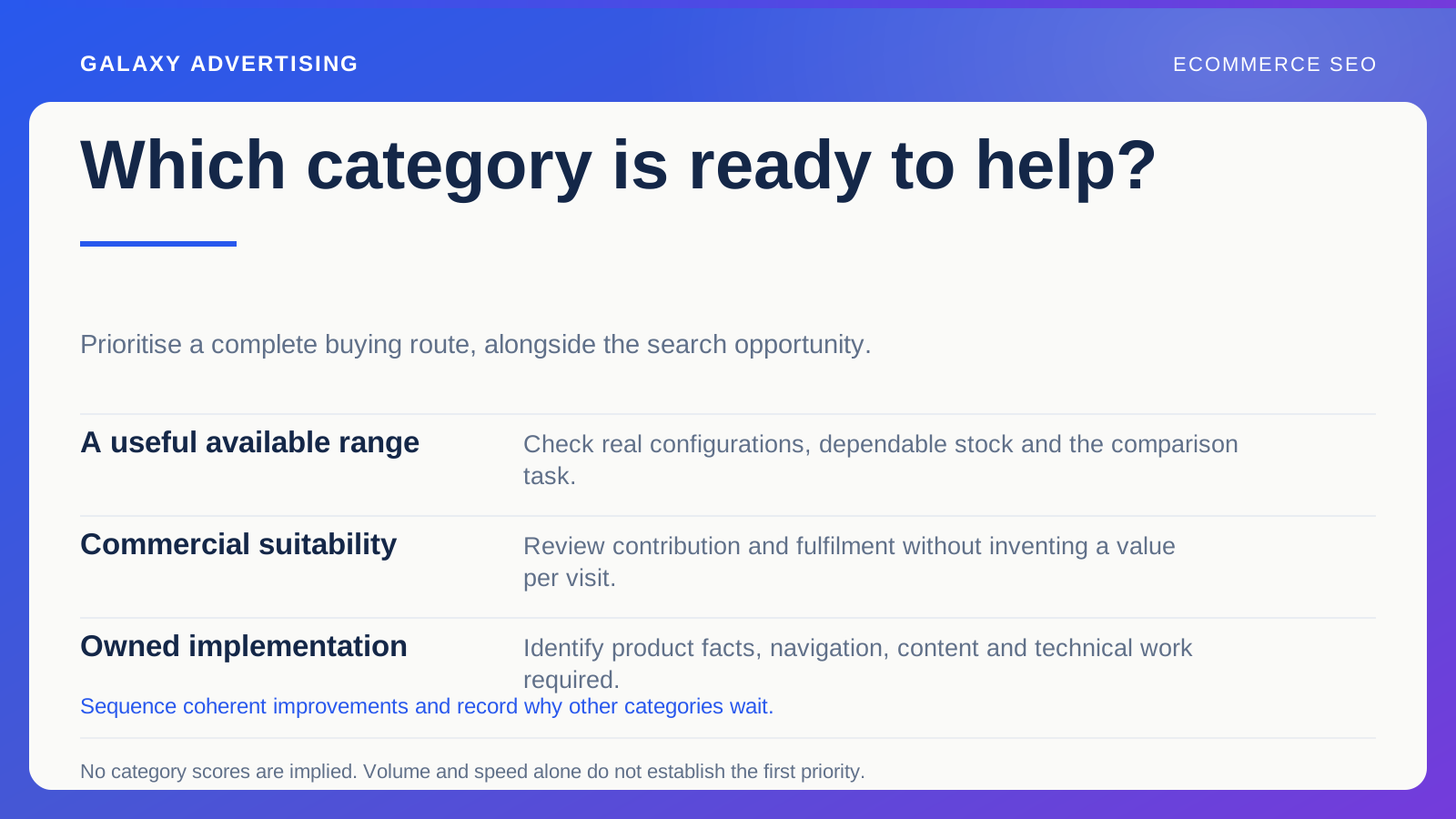
Inspect the actual eligible products and configurations. A title can suggest useful choice while stock changes leave the page empty, or almost identical to another collection.
Ask merchandising which attributes are dependable and which rest on inconsistent supplier data. A filter label cannot create a reliable product distinction when the underlying facts are absent or contradictory.
Think about maintenance too. A highly specific destination may need more attention as products leave the range. That needn't rule it out, but its expected usefulness should justify the work. Decide who will review its continuing purpose before creating a large family of fragile pages.
Separate useful filters from search landing pages
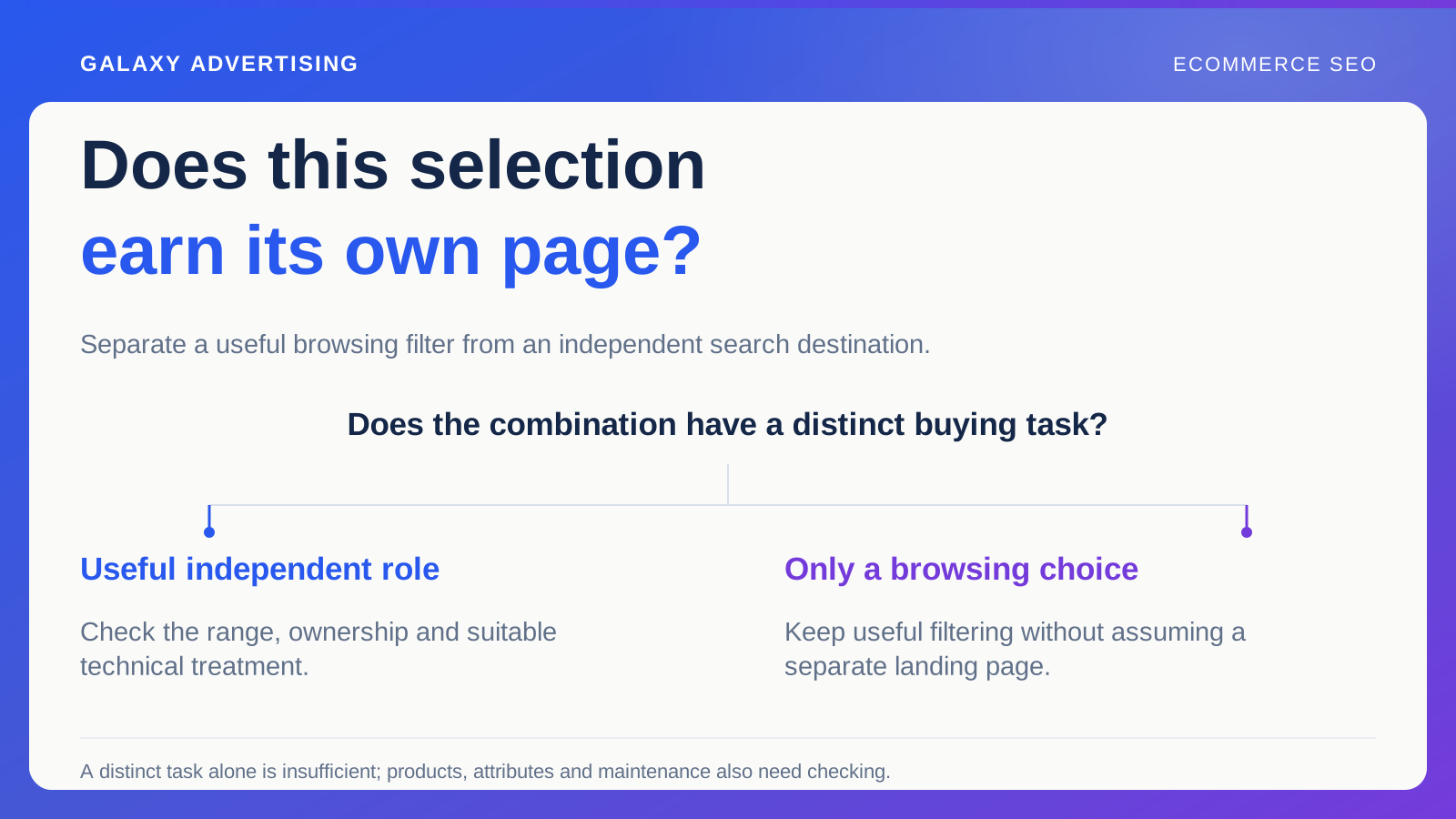
Customers may need a filter during browsing without every resulting URL being promoted as an independent destination. Those are related requirements, but they're different decisions.
Have your technical specialist review the architecture against official guidance. Google's faceted navigation documentation explains how filters can produce large numbers of potential URLs, and describes approaches according to whether those URLs need crawling and indexing.
Don't apply one technical directive indiscriminately. The business must identify which destinations have a useful independent role. The specialist can then choose an implementation appropriate to the actual system. Commercial page choices and crawler management need to inform one another; neither can be settled in isolation.
More copy won't create a different offer
A long introduction doesn't automatically make substantially similar product selections worth separate pages. The visitor still needs a meaningful difference in the task or offer.
If you need repeated generic prose to make the proposed page seem unique, revisit its role. A clear main collection and useful filter may serve the customer better than several destinations competing to do the same job.
When a distinct page is justified, keep its guidance specific to the selection. Explain the relevant differences and supply accurate product information. Don't push the products far down the page to satisfy a word target borrowed from an unrelated content plan. The extra distance has to help the customer, too.
Decide what an empty selection should say
Plan what happens when no relevant products remain. Give the customer an explanation that preserves context and helps them adjust the selection where appropriate.
Ask the implementer to verify the technical response against current primary guidance. Redirecting every empty combination to a broad collection isn't a universally suitable answer. The actual situation needs checking.
Look beyond whether the grid contains something. One unsuitable accessory doesn't make a useful range. A technically nonempty selection can still fail the page's promise. That commercial judgement matters alongside technical behaviour, especially when a large catalogue system passes attributes down through its products.
Give the approved page a clear place on the site
Decide how the justified destination relates to the main collection, relevant guides and product pages. Links should help people understand the range, rather than create a parallel classification they have to decipher.
Use labels that match the real selection. Several names for the same purpose can confuse unless the relationship stays understandable. Customers shouldn't need to learn your internal classification before finding suitable products.
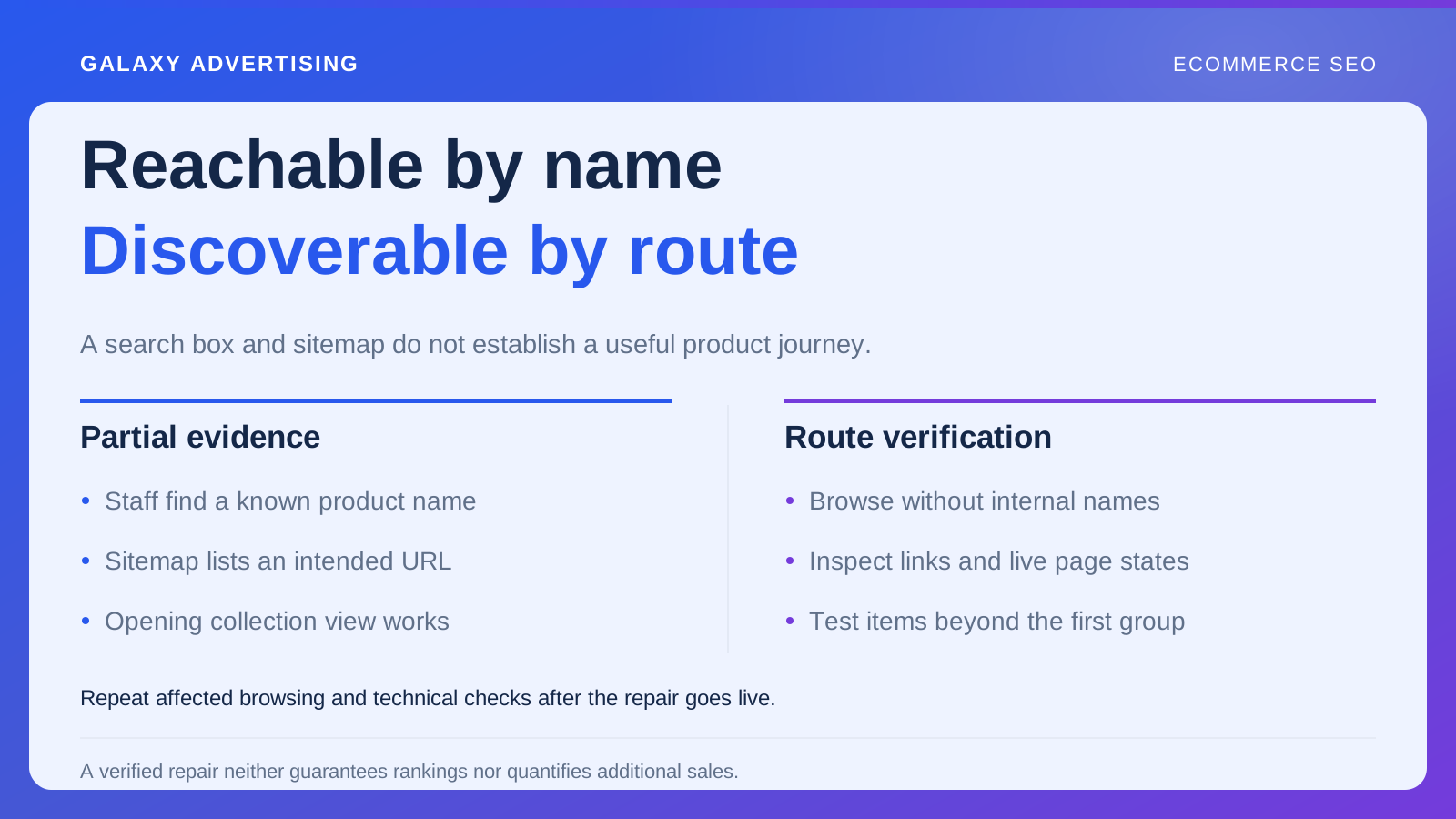
After implementation, verify the routes into the page as well as the page itself. A successfully created destination can still be hard to reach, or introduced by words describing a different offer. Include those relationships in the release check.
Put an awkward stock change into the pilot
Before expanding the pattern, ask what happens when its strongest product becomes unavailable. Does the remaining selection justify the title? Can the maintenance owner spot the issue without checking every possible combination by hand?
The answers can shape both page selection and implementation. A smaller group of meaningful destinations with an owned review process may be more dependable than a large group nobody can assess. Investigate that operating requirement during the pilot, alongside discovery observations. Creating the URLs doesn't make maintenance take care of itself.
Expand only when the purpose still holds up
Begin with a manageable group of justified pages. Examine the continuing range, query context and customer route, using available evidence to challenge the original purpose rather than defend it.
One useful combination doesn't prove all possible combinations deserve publishing. Each additional destination creates another factual and technical relationship for your business to maintain. That commitment is part of the decision.
A strong filtered landing page earns its role by helping somebody make a defined selection from an accurate range. The number of attributes in the URL and the amount of attached prose don't establish that usefulness. Keep the customer's choice visible, and you can offer flexible browsing without turning every click into another search page that needs looking after.