Search Console clicks and Google Analytics sessions can legitimately differ, according to Google's official guidance.
That's not much comfort when discovery is rising, the sessions show a smaller movement and shop revenue remains uneven. You want to know whether SEO, improving your site's organic search visibility, is working. The team keeps bringing back different numbers.
Give each source a defined job in the commercial question. A dependable plan connects them without pretending they're interchangeable, so you can recognise progress, find faults and stay honest about what caused an order.
Decide what each source helps you understand
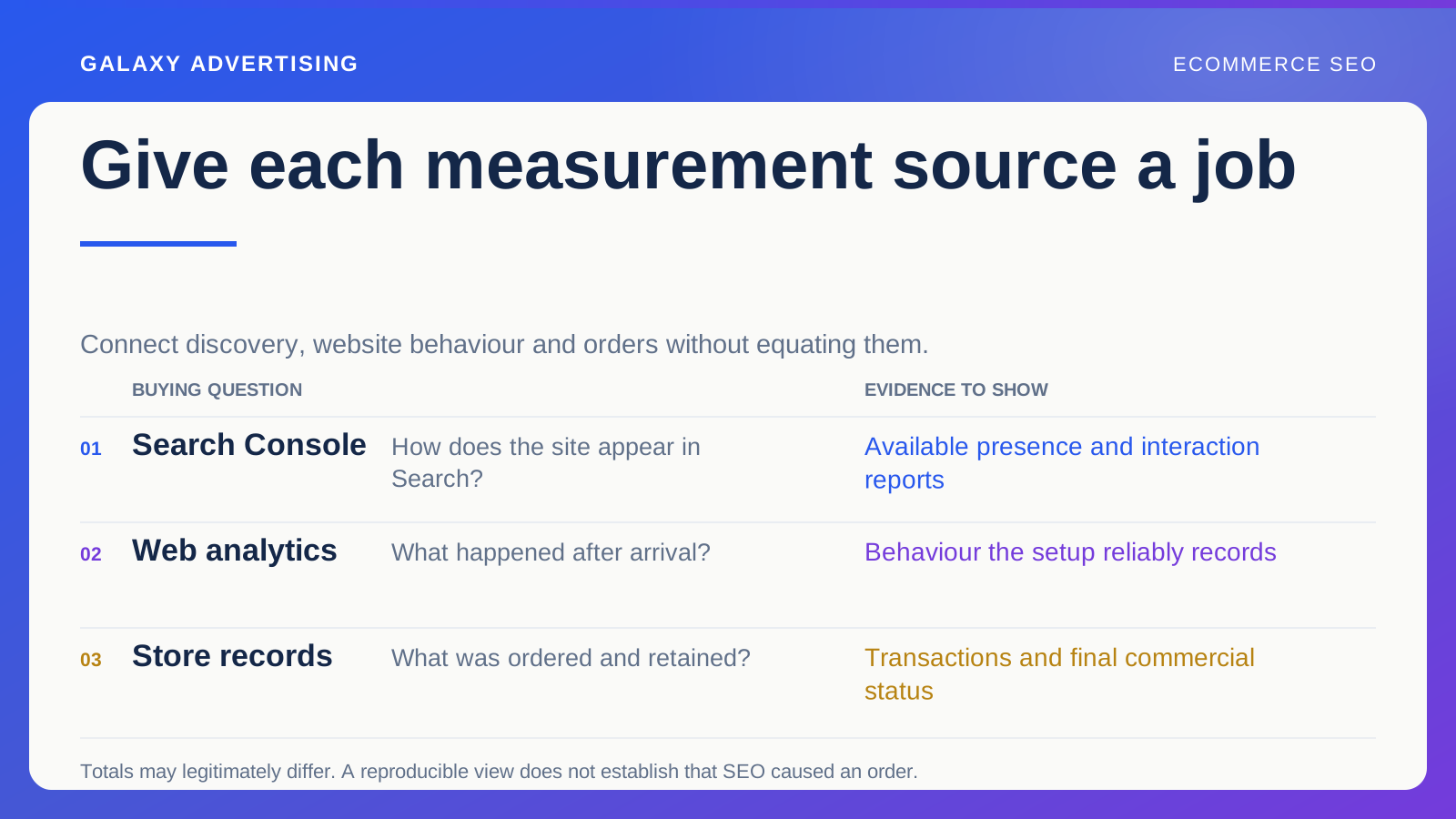
Use Search Console for available evidence about your presence and interactions in Google Search. Use website analytics for behaviour its setup can reliably record after arrival. Use store records for actual transactions and commercial status.
Those roles overlap without becoming identical. A mismatch calls for checking definitions and implementation. It isn't automatic proof that a report is wrong. The distinction saves the team arguing over totals that were never intended to describe exactly the same thing.
Write a short definitions note explaining selected reports, filters and the commercial value basis. An owner shouldn't have to infer that from a chart label or a specialist's terminology. Make the comparison understandable before asking it to support an investment decision.
Group pages by the buying task they serve
Products, collections and explanatory content can contribute differently. An overall total could hide the differences that matter to deciding what needs improving next.
Keep groups maintainable and aligned with the site as it is. A temporary offer page that becomes a general collection could need a new role classification. Don't quietly preserve a label after it stops describing the destination.
Imagine a hypothetical furniture retailer. A room measurement guide supports investigation, while a table collection supports selection. Comparing immediate order rates without those roles could encourage the team to dismiss useful information or overstate its impact. The job of the page needs to travel with its result.
Check what the website is really recording
Ask the implementer to document actions and their triggers. “Product engagement” doesn't explain enough if nobody can identify the interaction underneath the label. You need a measure you can interpret, rather than a reassuring phrase in a column.
Test important actions through the actual route and inspect received information. Keep completed orders, initiated checkouts and failed payments distinguishable. Use the agreed revenue basis rather than assuming transmitted values match the accounts.
Record material faults and corrections concisely. If measurement changes during the review period, put that context beside the result. A technical repair can move the apparent trend without changing demand. The owner needs to see which kind of movement they're being asked to judge.
Pick a comparison suited to the question
Compare like conditions where possible and explain differences. Availability, seasonal demand, promotions and other marketing can change the setting in which organic results appear.
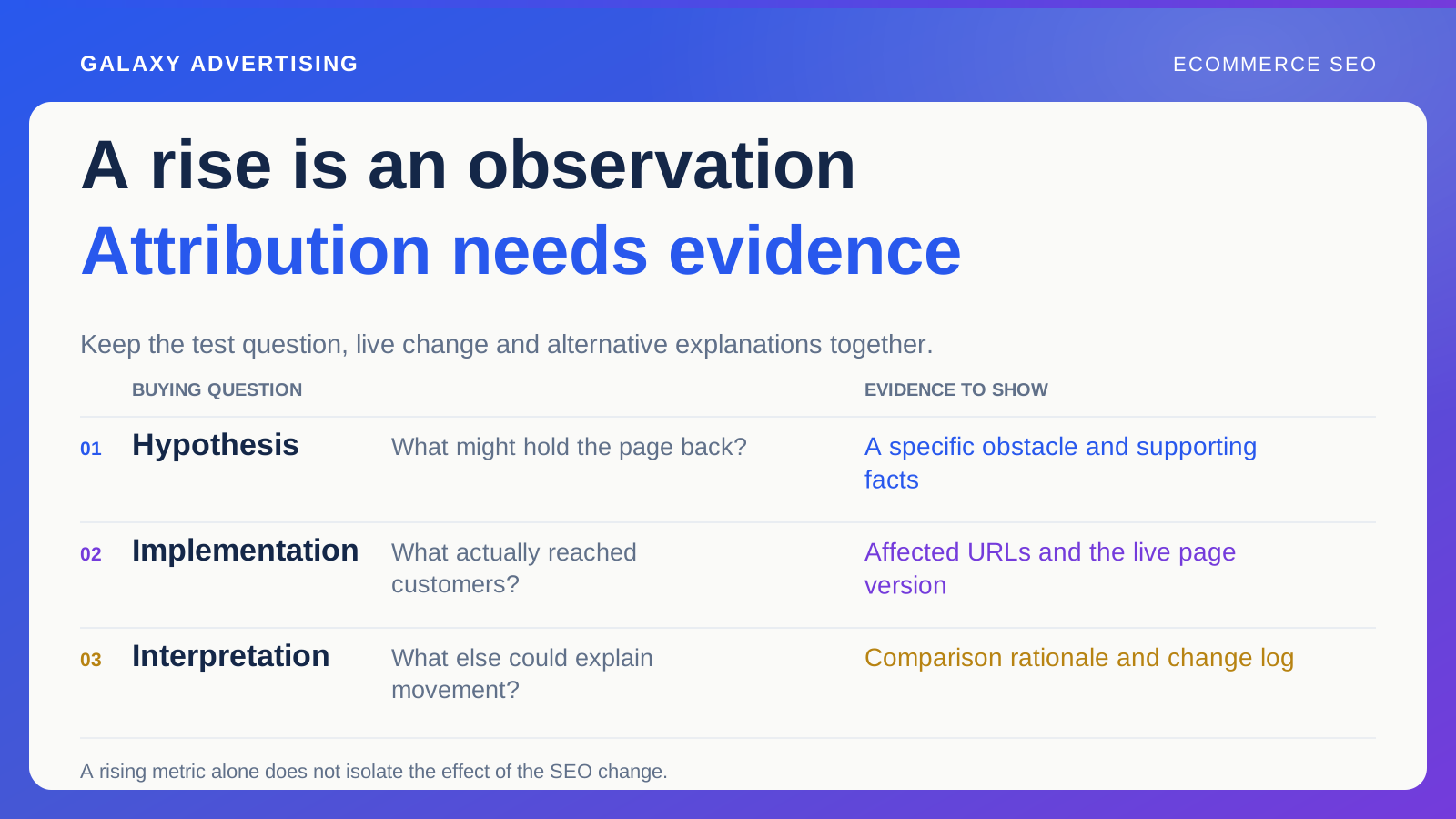
A previous period is useful context, rather than automatically a controlled account of what would otherwise have happened. An increase after publication doesn't prove the content caused it. Several things could have changed together.
Explain why you chose the comparison and what it cannot establish. That gives the business a practical interpretation without implying precision the observations don't support. You can use limited evidence responsibly when its limits remain visible to the person deciding what follows.
Read the page alongside the questions finding it
Are intended pages being discovered for questions consistent with their roles? Broader visibility can be less useful if it concerns unrelated tasks or pages unable to serve the current offer. More discovery alone doesn't tell you which improvement is needed.
Treat available query evidence as a sample, with the report's limitations. It doesn't reveal every phrase or every visitor's motive. Keep the useful pattern without turning it into complete knowledge of the audience.
Then inspect the destination. A relevant question reaching an unclear page needs a different correction from a useful page attracting unsuitable investigation. Your plan should help distinguish those cases. Reducing both to “get more traffic” leaves the actual problem unresolved.
Connect orders on an agreed commercial basis
Choose how you'll handle discounts, tax, delivery income and relevant refunds. If contribution is the objective, explain the included costs and label estimates. Contribution is the money remaining after those costs, so its definition matters alongside the revenue.
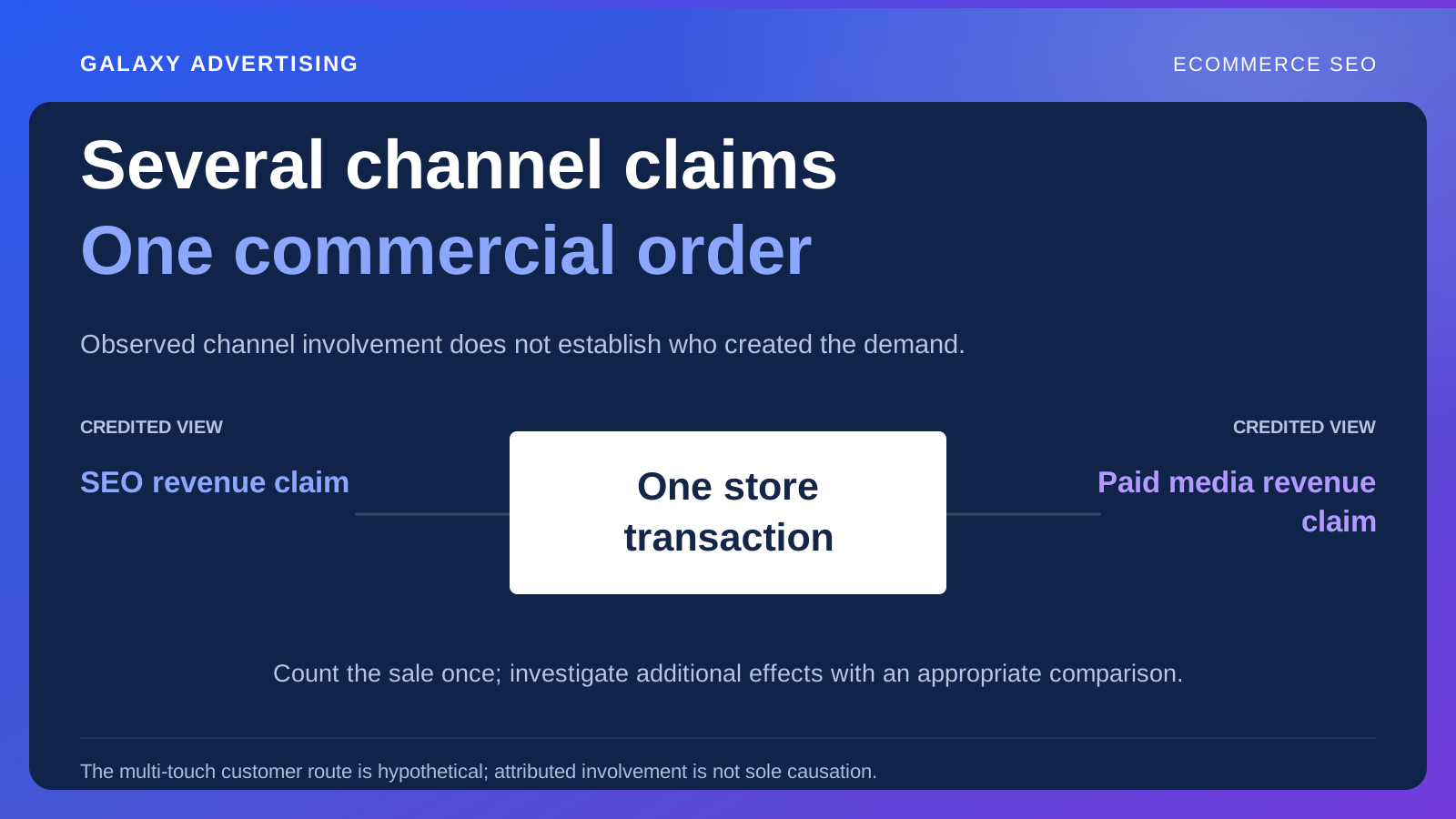
Don't add attributed revenue from several sources and call it total sales. The store records the transaction once. Channel reports describe observed or assigned relationships with it, rather than extra orders the business received.
When the summary is hard to explain, inspect a sample of important orders. It could reveal a value mismatch or unusual mix without becoming a manual audit of every customer. Keep record access proportionate to the task. You're investigating the explanation, rather than collecting everything simply because it's available.
Make the reporting view possible to recreate
Save filters, page group definitions and relevant exports behind important decisions. A screenshot might not show whether you're comparing the same search type, destination set or commercial basis.
The next reviewer should be able to reproduce the view without guessing from the old chart title. That also helps when a later discrepancy appears. You can investigate whether behaviour changed or somebody selected a different scope.
Reproducibility won't remove uncertainty about causation. It does prevent avoidable uncertainty about what was measured. That is useful ground to settle before debating the significance of the result.
Give the evidence a next step and an owner
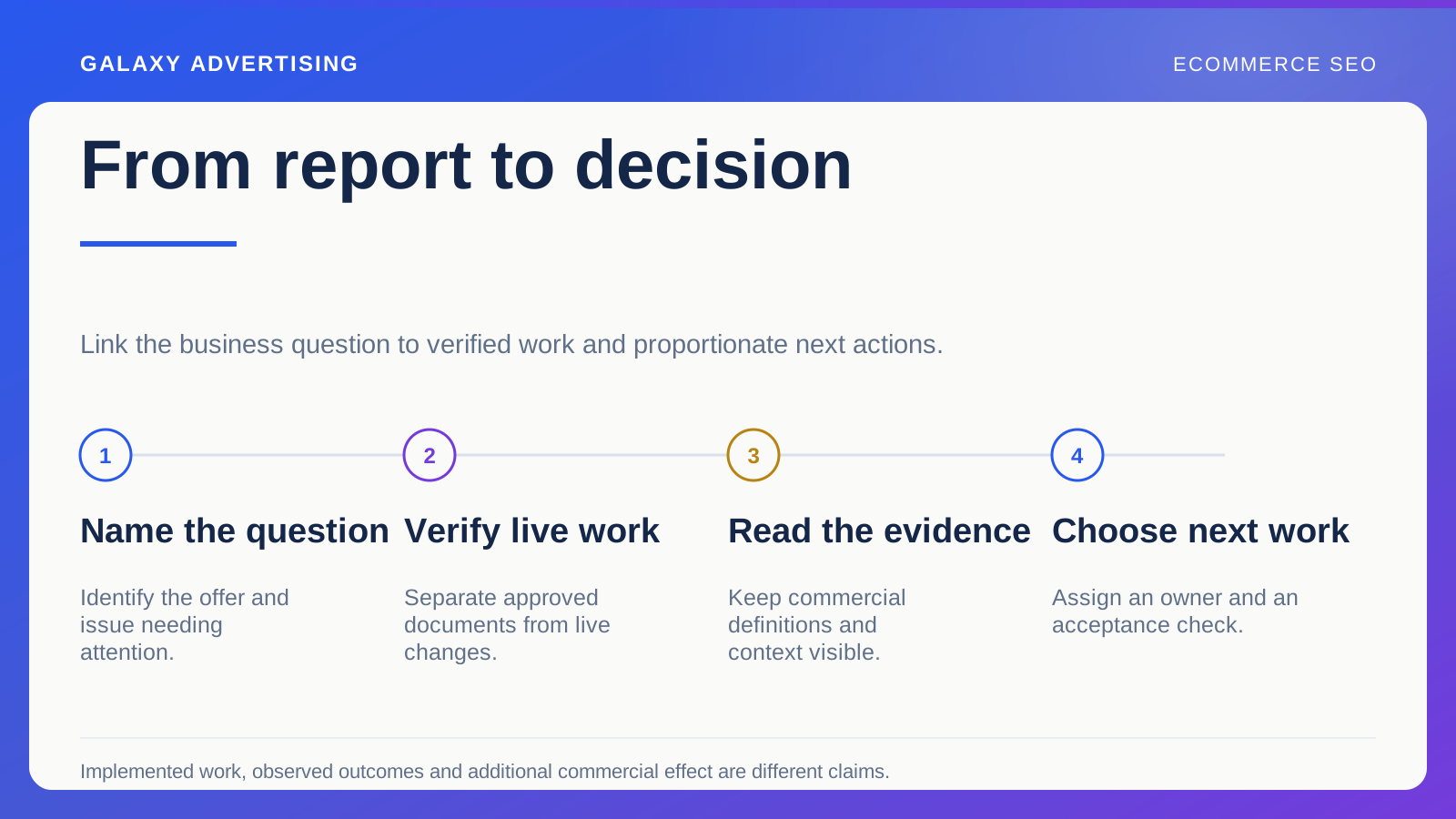
State a specific implication. You could correct a measurement fault, improve a collection's selection information or continue an editorial test within defined limits. The review needs to make the choice visible, rather than hand over another list of measures.
Choose the next observation that would change your recommendation. That tells the team what to look for and gives the business a reason to reconsider, rather than asking it to accept the same conclusion indefinitely.
Your systems don't have to produce identical totals to be useful together. They need understandable differences, verified observations and an accurate commercial reference. Improved discovery, useful website activity and additional profit can then each mean something clear, instead of being treated as different labels for the same success.