What if your cleaner new platform launches successfully, but familiar product URLs have changed, guides have lost their links and configurations no longer mean quite the same thing? The larger range is live, while your team is still discovering which buying routes disappeared.
That's why growth readiness starts with what must survive the change. A migration or catalogue expansion needs a verified map of important destinations, product identities and responsibilities. Leaving SEO until a final check after design approval can put those decisions beyond the point when they were needed.
List the routes with a job worth preserving
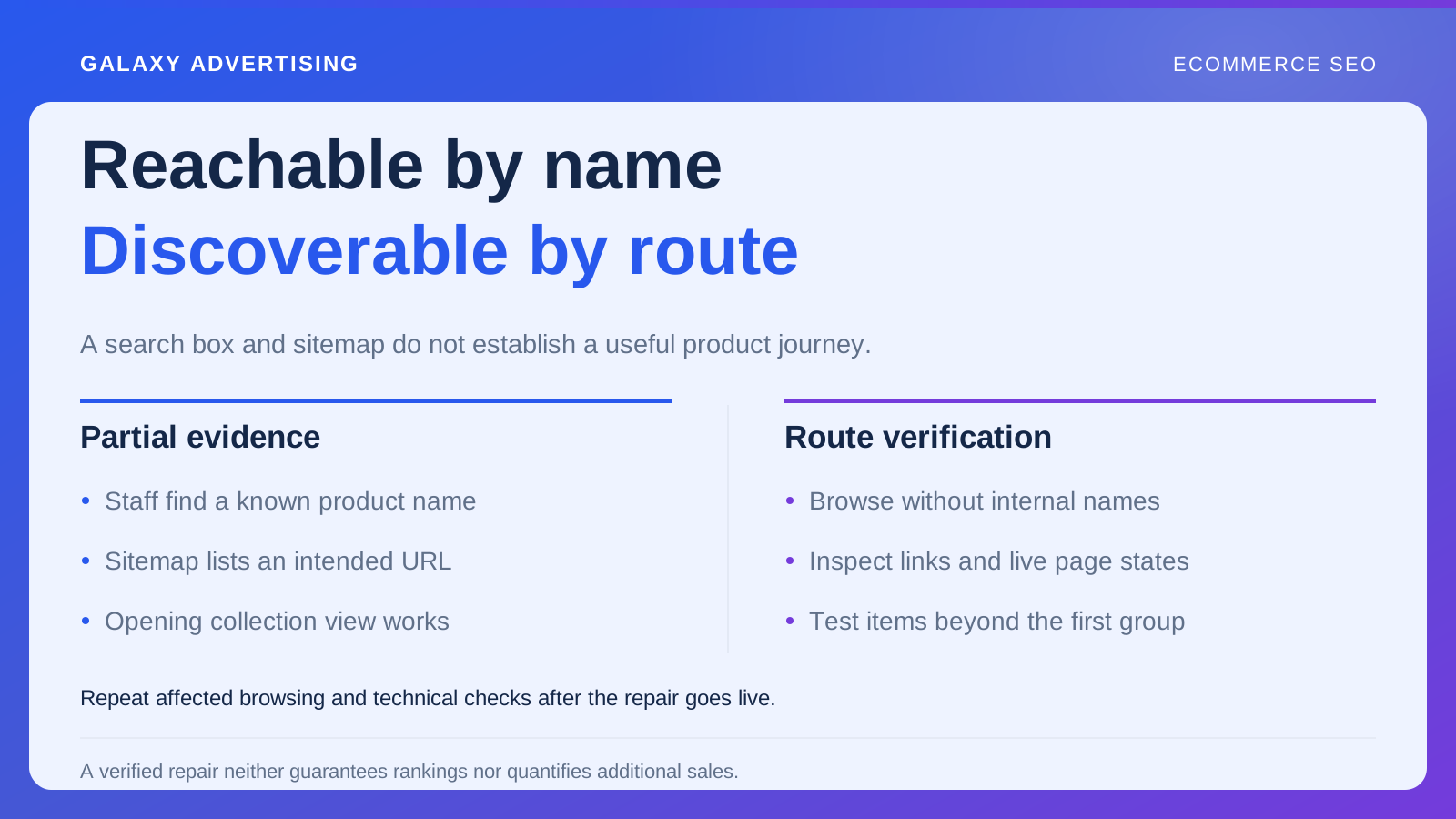
Identify current products, collections and guides that matter, and the tasks they serve. Use available search and commercial observations to inform the inventory, rather than treating the new navigation plan as the complete answer.
Include research pages alongside obvious checkout destinations. A useful comparison guide can connect customers with the range without being their final page before ordering.
This isn't an instruction to keep every old URL unchanged. The inventory gives you a basis for judgement. Some pages may merge, move or end. Make that an explicit decision connected to the customer's task, rather than something that happens accidentally during a template import.
Know which product you're moving
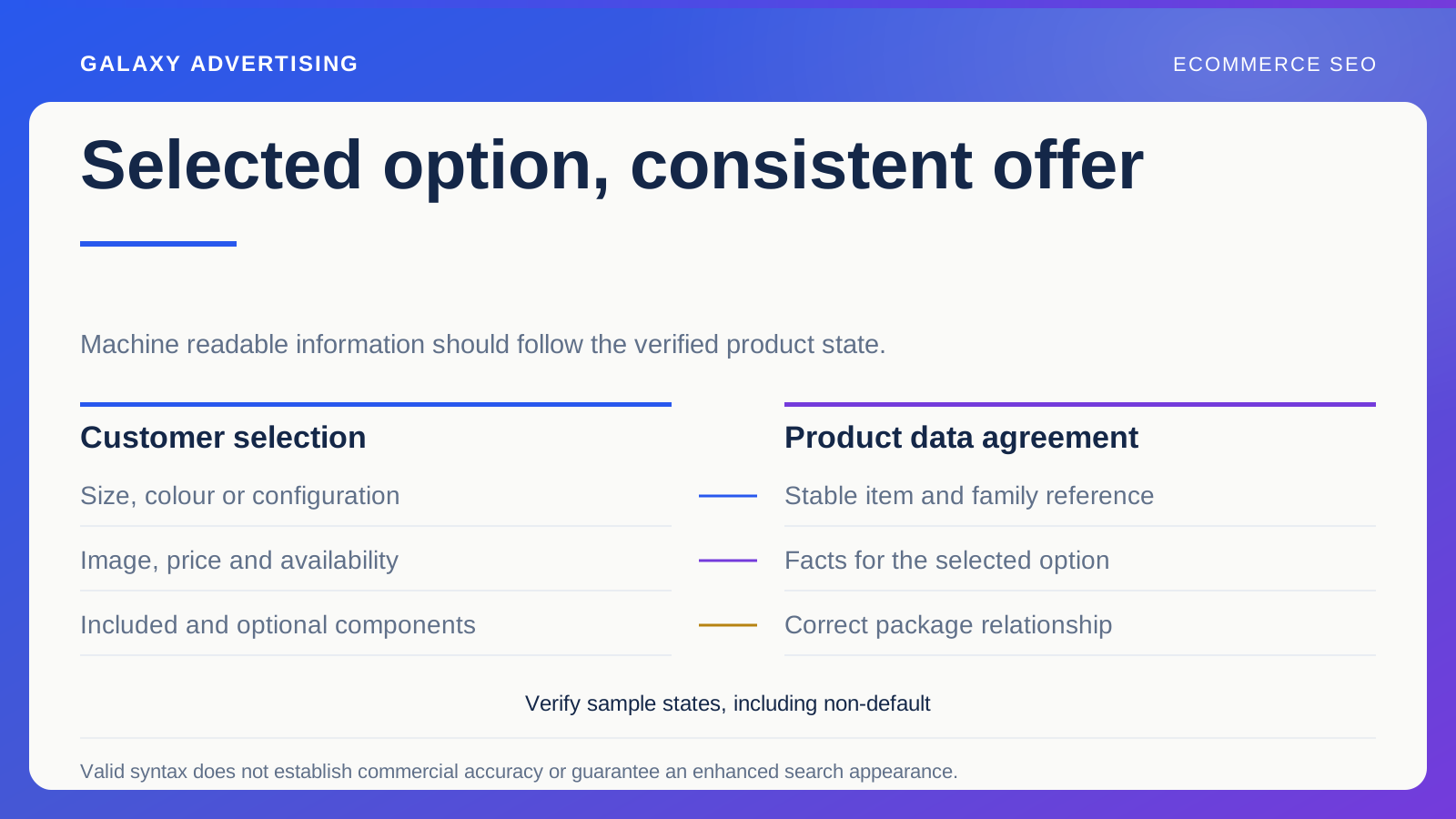
Establish how the new system represents products, variants, meaning selected sizes, colours or configurations, and packages. Similar looking pages can conceal a structural change affecting the selected configuration or information passed downstream.
Connect old and new offers with stable references. Your team should be able to identify the same purchasable item without matching photographs by eye or relying on a familiar style name.
Ask merchandising and technical owners to inspect representative exceptions, including optional components and differing availability. A simple default product might pass while a complex configuration exposes a mapping assumption affecting the wider range. That's the assumption you want to find before release.
Decide where each important old page should lead
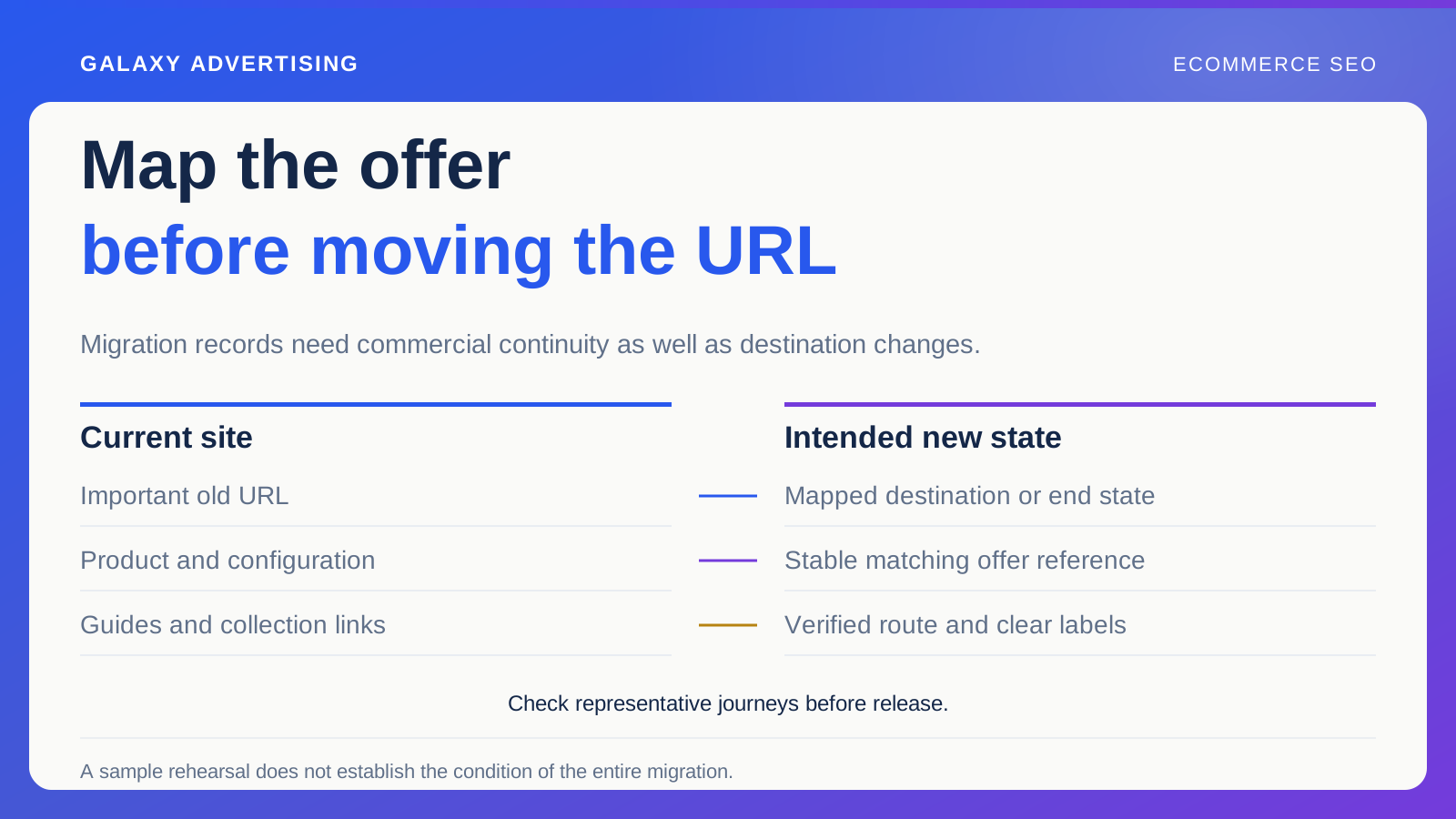
Map important old URLs explicitly to their intended new state. Identify genuine replacements accurately. For ended products, decide which useful explanation or alternative remains.
Google's site move guidance emphasises accurate URL mapping and redirect testing. The implementer should use current primary documentation suited to the actual architecture, rather than assume a broad redirect rule resolves every commercial case.
Don't send unrelated old pages to the homepage simply to make visible errors disappear. That can remove the context a visitor expected. Preserve a relevant task where you can, and give an honest end state where you cannot. A neat error count isn't the same as a useful customer route.
Check the relationships around the page
Review navigation, guide links, collection relationships and relevant product routes in the new site. A destination can survive while losing the context that helped people reach or understand it.
Labels need to describe the current offer. Old wording carried into a changed configuration can create a mismatch in meaning even though the link resolves correctly. Check the promise as well as the address.
Verify selected journeys from entry to the intended next action. That brings content and technical review together around the customer. Testing templates separately doesn't establish that a complete buying route will assemble itself from the pieces.
Agree the launch checks while there's still room to act
Choose a representative sample of important templates and known exceptions. Define what needs checking for page access, product state, relevant data and continuity of the commercial route.
Assign people according to their knowledge. A developer can check implementation behaviour; a product owner can confirm facts. Neither should have to infer the other's approval from a general announcement that the launch is ready.
Before authorising release, record material limitations. An incomplete necessary route needs an explicit business decision about its consequence and correction. Launch pressure shouldn't quietly turn an unresolved problem into an accepted state that nobody remembers approving. Make the choice visible while it can still be considered.
Keep the measurements comparable where possible
Document analytics setup, report definition and URL grouping changes that affect comparison after launch. A dashboard movement could partly reflect a different measurement route, rather than a change in demand.
Have the technical owner verify important events and values through the new journey. Copying an integration doesn't prove it still triggers at the intended point or describes the same action.
Investigate material discrepancies after launch with that context beside you. Don't promise an immediate return to every previous observation, or invent a fixed period after which uncertainty will disappear. The migration's real scale and conditions matter to the interpretation.
Rehearse an awkward mapping before release
Pick an important old product with a complicated new state. Perhaps it has ended, split into several configurations or moved to another collection. Ask the team to explain the intended customer experience and demonstrate the mapped route in the release environment.
A successful homepage test can miss the policy gap this exposes. Resolve the commercial decision before applying a bulk technical rule to similar cases. The rehearsal doesn't make a partial test representative of the whole migration. It does give you a chance to challenge an important assumption while change remains possible.
Give the period after launch clear owners
Assign responsibility for urgent defects, product corrections and broader performance investigation. Keep the categories distinguishable: a broken route needs prompt attention, while every ordinary variation needn't become a crisis.
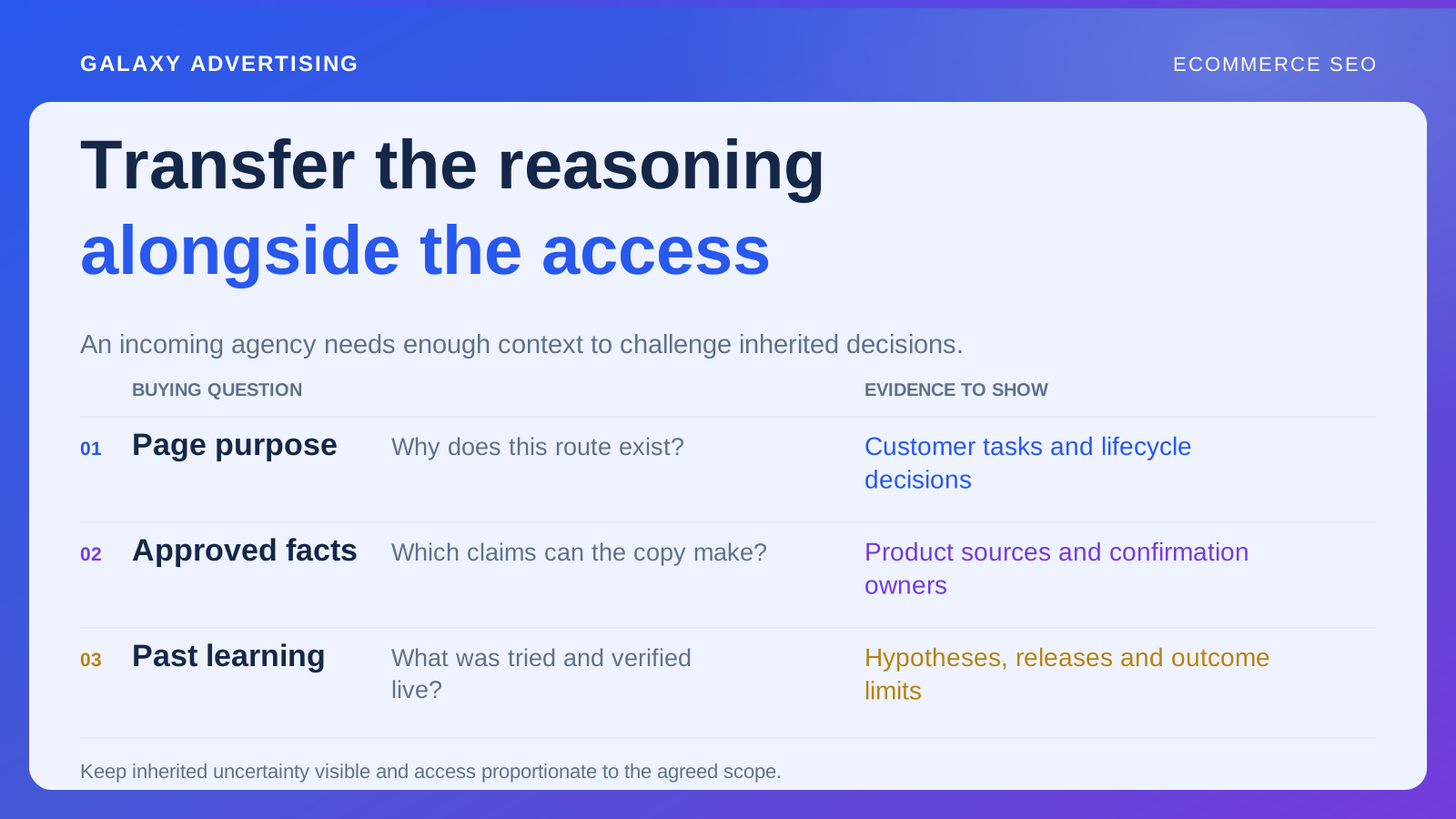
Retain mappings and release evidence so another specialist can understand why pages moved and what was checked. They shouldn't have to reconstruct important decisions from several informal conversations.
A growth project is ready when it preserves or deliberately improves the routes your customers need. Design, catalogue and technical systems have to describe the same offer, with material changes mapped and verified. The launch announcement can celebrate the new platform. The buying journeys are where you establish that it is ready to support expansion.