It's easy to ask the biggest range figure on an electric bike's specification sheet to do all the selling. A shopper sees that headline and imagines their commute, the hills on their route and how they'll use the bike. They may never notice the conditions behind the documented figure.
The mistake is understandable. A striking number is easy to advertise. But your job is to help someone judge whether the actual model suits their journey, with the qualifications they need to interpret its technical claims responsibly.
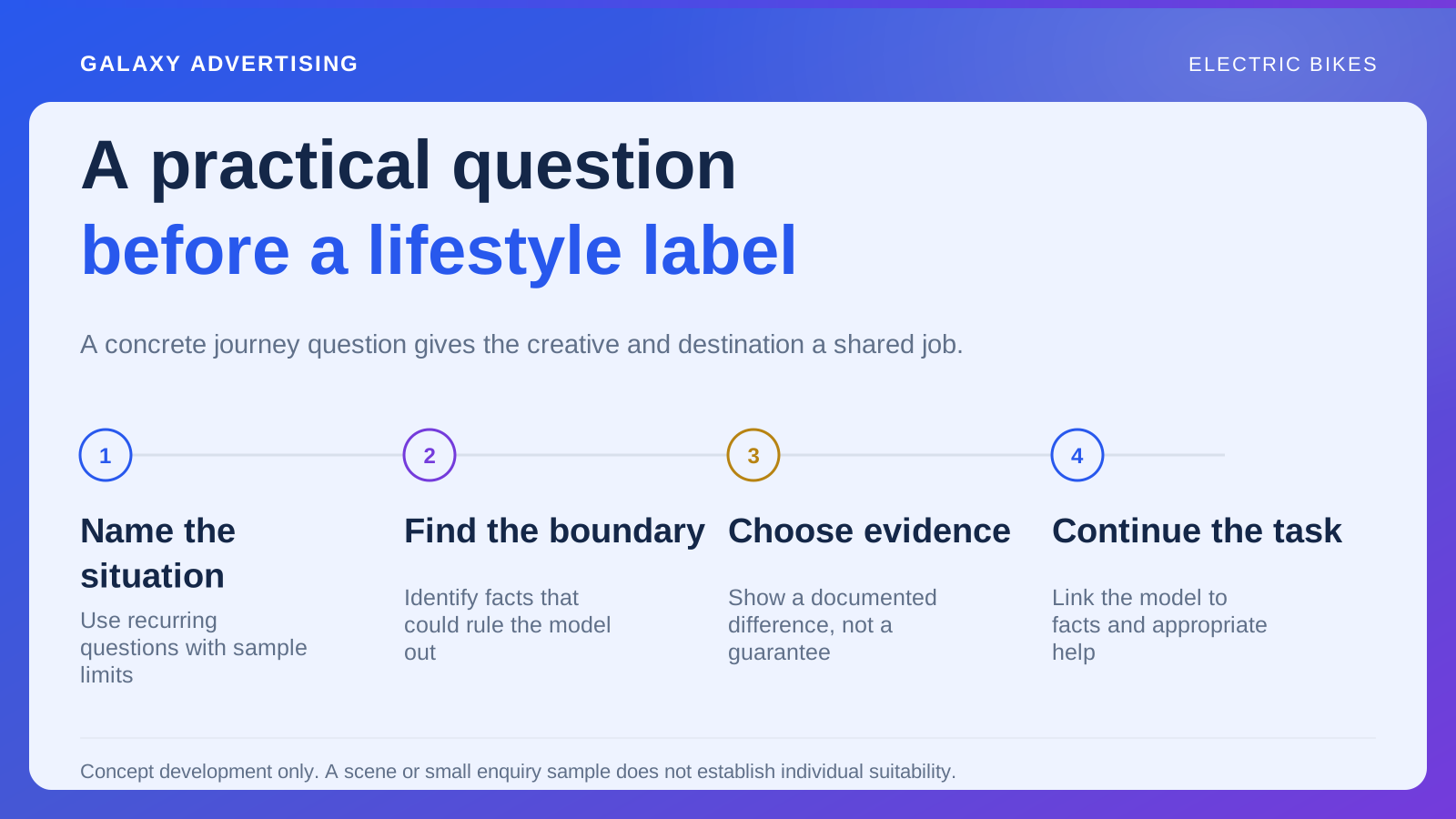
Start with the riding task
A commuter, a leisure rider and a household short of storage can have different priorities. Decide which use case the creative addresses before choosing the feature you want to emphasise. Otherwise, you're asking a feature to find its own customer.
For a commuter, that could mean frame fit, carrying equipment, practical storage and documented ownership requirements. Those needs won't be identical for everyone considering an electric bike. Make the particular situation clear without assuming it describes the whole category.
The use case also gives your asset and destination a shared job. If the campaign shows compact urban storage, the next page should help someone check the relevant dimensions and configuration. Let them investigate the promise you've just made interesting.
Keep the conditions attached to the claim
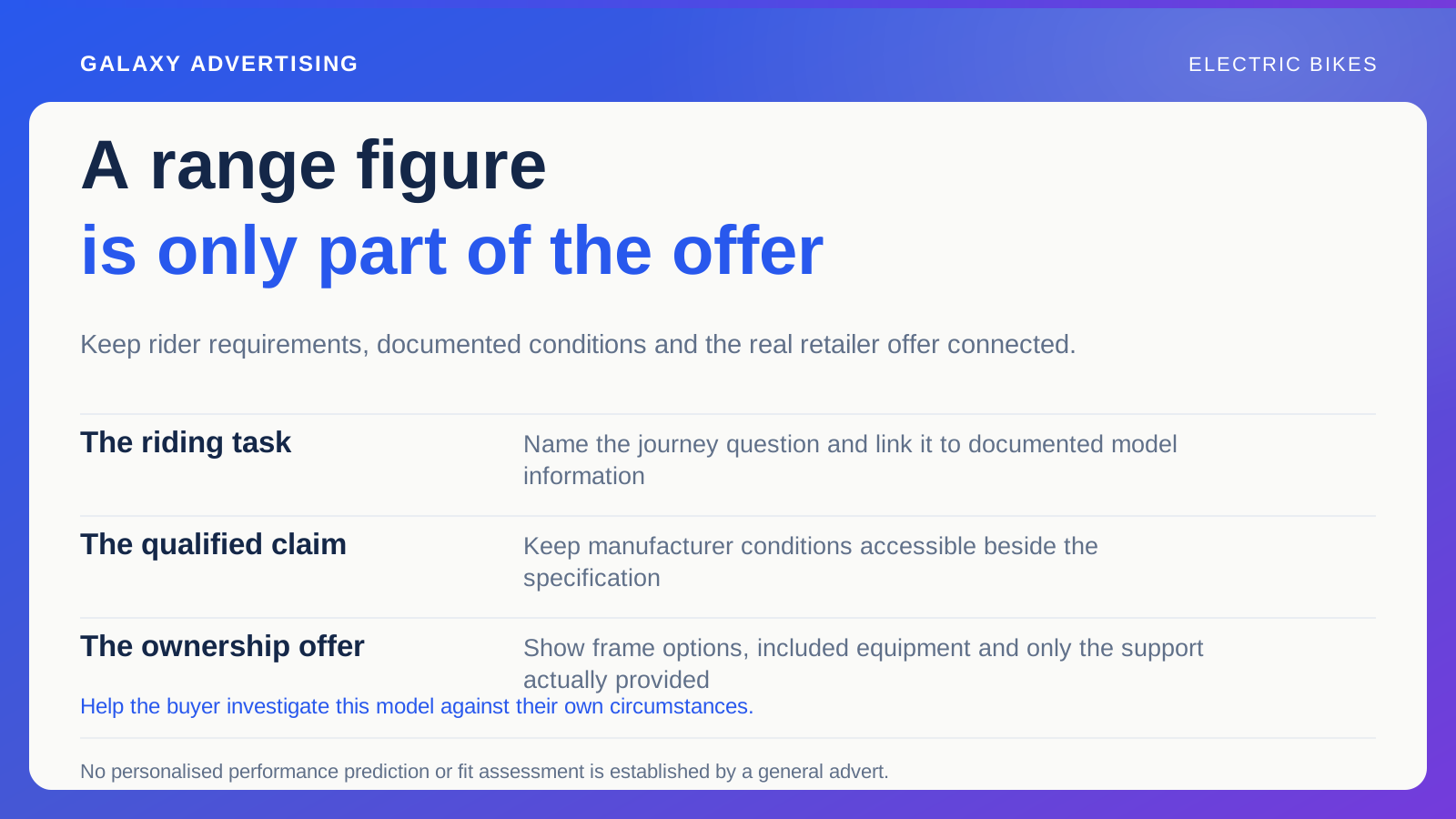
Use the manufacturer's documented specifications and make the important qualifications accessible. Taking the most attractive number out of a conditional statement can turn it into a promise the source never made.
When a shopper needs help interpreting the information, explain what to verify in the product documentation or with your team. A general headline isn't enough to make a personalised prediction about their circumstances. Leave room for that distinction.
This doesn't mean hiding useful specifications. They can remain prominent. The test is whether your presentation invites a conclusion the underlying evidence supports. A clear number and its necessary conditions should help the customer understand the offer together.
Fit belongs in the offer
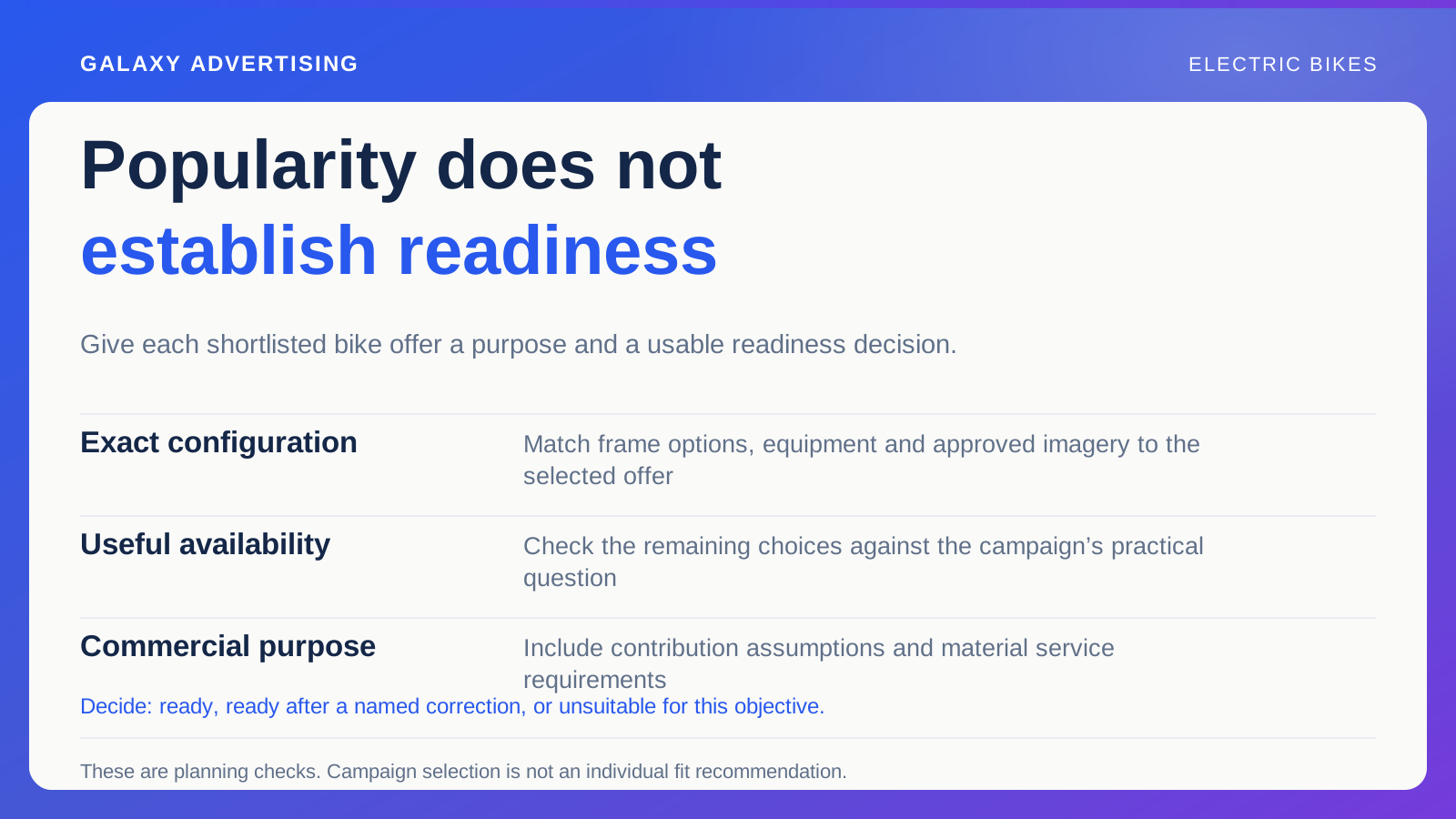
Make available frame sizes and relevant manufacturer guidance easy to find. Link that guidance to the promoted model. A generic category statement leaves the customer to work out whether it applies to the bike they're considering.
If you offer a test ride or fitting conversation, explain what happens and how someone accesses it. If you don't, the campaign's next step shouldn't imply that you do. The practical route needs to match the promise.
Keep size availability connected to promotion as well. An appealing model with few useful sizes remaining may deserve a different emphasis from a fully available range. Your marketing team needs a reliable way to find out when the offer changes, rather than discovering it through a customer's question.
Show what owning it involves
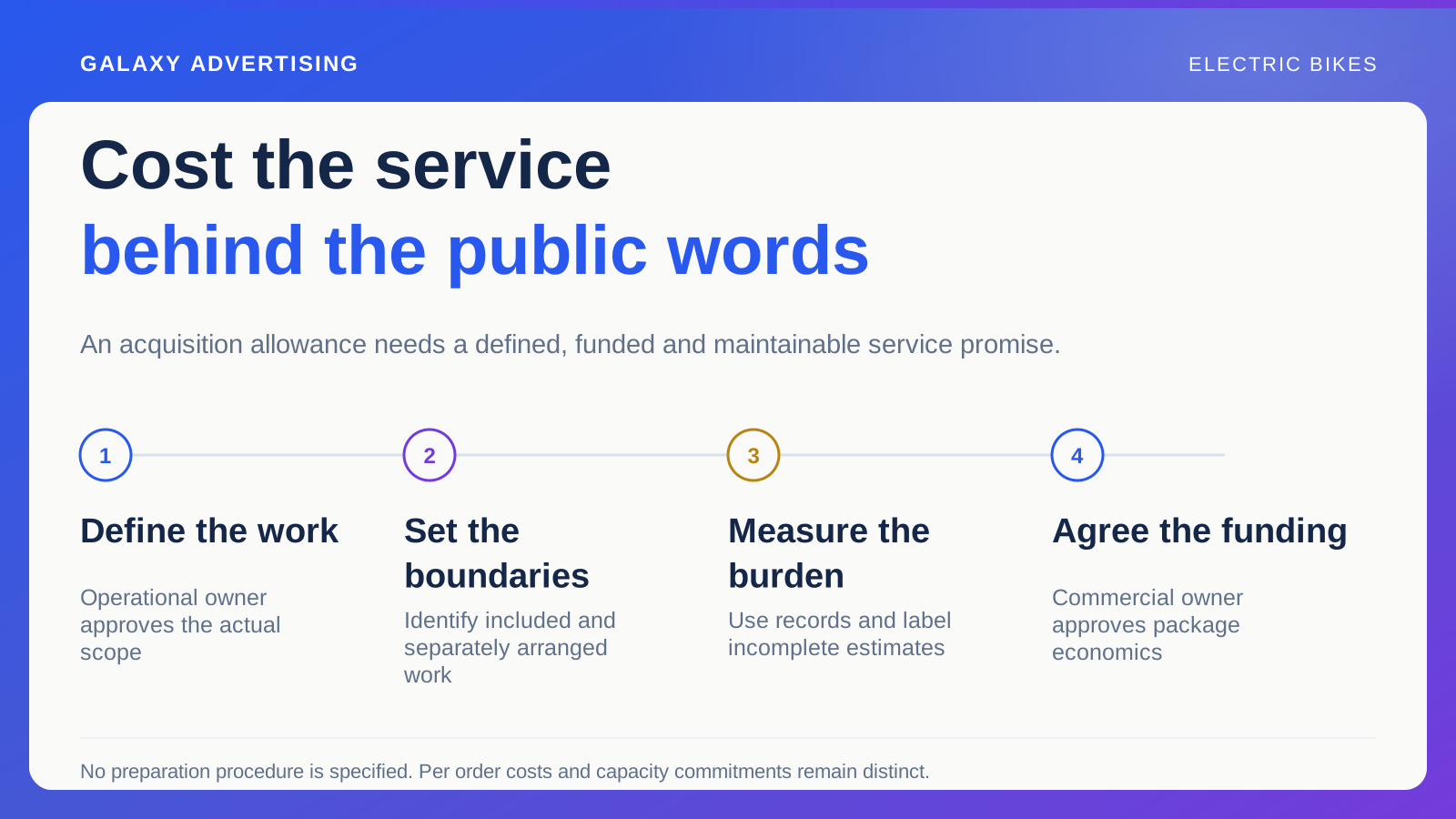
Storage, charging arrangements, servicing and included equipment can all matter to the buyer. Explain them using accurate product and business information. They're part of deciding whether the bike fits someone's life.
Be specific about the support your shop actually provides. A clear explanation of where to take a documented service question gives the buyer something useful. A general promise of complete peace of mind leaves them guessing what happens when they need help.
Avoid unsupported assurances about battery care, repairs or compatibility. Direct people to the relevant manufacturer instructions and your genuine support arrangements. Reassurance is stronger when the customer can understand exactly what stands behind it.
Check the bike as well as the scenery
Lifestyle demonstrations can make a riding task tangible. Keep the represented bike's proportions, components and configuration accurate. Generated or edited imagery needs checking against approved product references, just like any other asset.
Identify accessories in the scene and explain whether they're included. Someone attracted by a commuter's luggage setup needs to know which equipment belongs to the advertised package. The picture is helping them form an expectation.
Read the words with equal care. A believable scene doesn't rescue an exaggerated claim. Together, the image and copy can still give somebody the wrong impression of what that bike will do for them.
Give comparison a proper home
Build the product page around the available configuration, documented specifications, fit guidance, included equipment and support route. Let visitors reach those checks without working through unrelated promotional content.
Where you compare models, explain the tradeoffs relevant to the use case. A higher price doesn't automatically make a bike more suitable. A fair comparison can show why an alternative fits a different priority while preserving the value of the promoted model.
Make the final action fit your actual process. Buying, asking about fit and arranging a test ride where offered are different commitments. Show the relevant options. A visitor who still needs an answer shouldn't have to pretend they're ready for the same next step as everyone else.
Follow a live claim back to its evidence
Choose an important statement from a live promotion and find its approval source. Does the asset preserve the conditions needed to interpret it? Can the customer reach the supporting information from the destination?
If you've shortened the claim, consider what a new customer could reasonably infer from the remaining words. Inspect the image too. The equipment, route and conditions shown can reinforce an impression the text never states outright.
Record any gap between that impression and the documentation. The repair might be revised wording, a different demonstration or a clearer link to detail. Give the decision to someone who can verify the facts. This is more than copy preference, and the check should be repeatable when the model or configuration changes.
Look at the interest you're actually attracting
Review model visits and acquisition reporting alongside suitable enquiries, purchases and available operational information after the sale. Plenty of curious clicks doesn't prove you've reached riders whose requirements fit the bike.
Notice recurring misunderstandings about accessories or conditional claims being read as guarantees. Correct the communication instead of accepting avoidable confusion as a support burden. Keep your interpretation proportionate: a few conversations don't represent every visitor. Use the pattern to choose a specific correction, then inspect questions and purchase behaviour consistently.
A headline can bring a rider closer. The offer behind it must still help them decide whether this particular bike belongs on their particular journey.