What if the rider watching your sweeping outdoor advert is mainly wondering where the bike will fit at home? An interest in greener travel and outdoor activity describes a broad market. It doesn't tell your writer whether to show restricted storage, an occasional leisure trip or equipment for carrying everyday items.
Start with the journey someone wants to make. You're choosing a concrete situation the product can help them assess, rather than predicting a stranger's personality from online behaviour. The useful connection is between that situation and the model information needed to judge suitability.
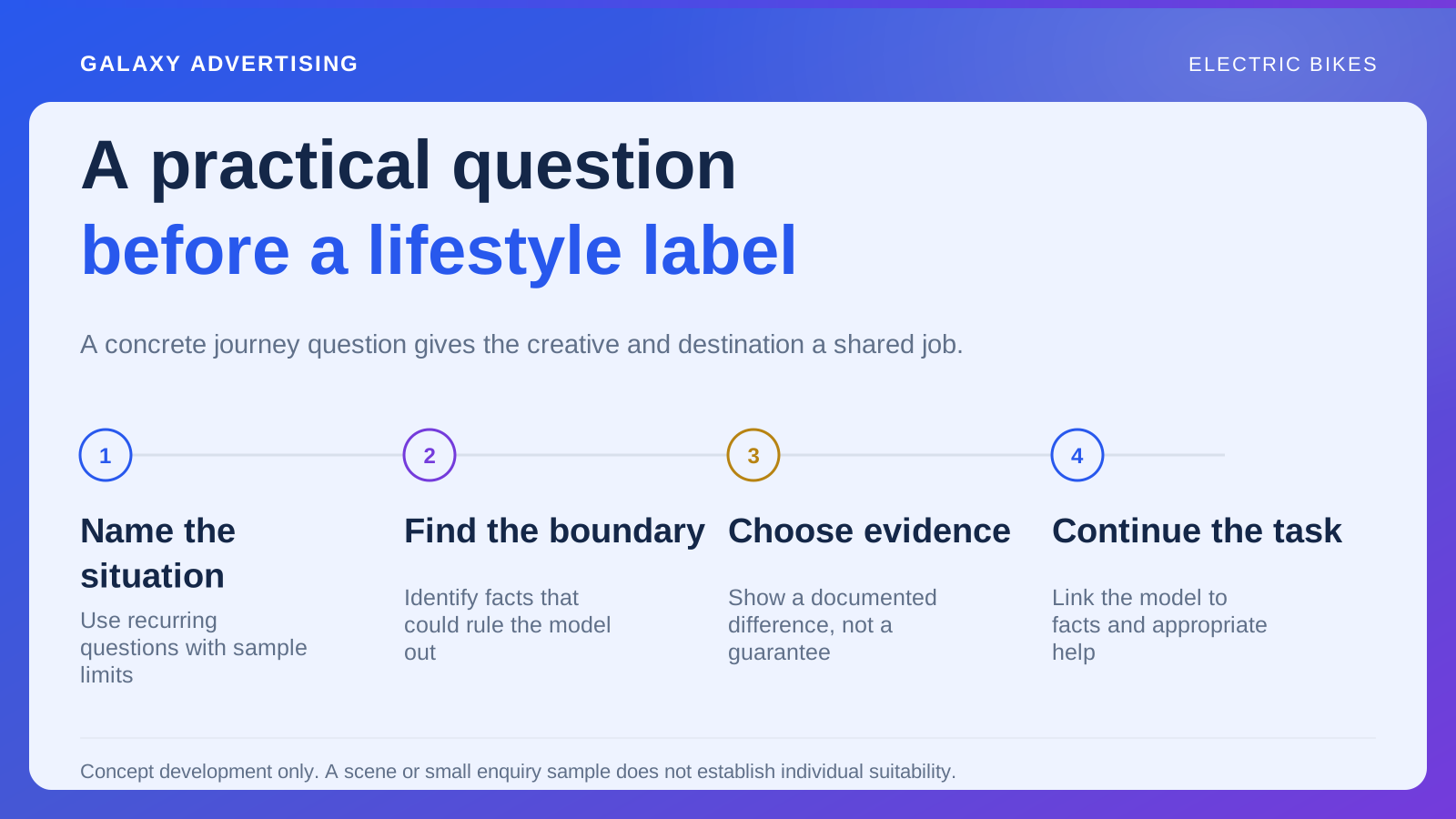
Put the practical situation into words
Look for recurring questions in enquiries and showroom conversations, where you have those records. Storage space, intended routes, carrying needs and uncertainty about frame options can all change the buying decision. Start with the circumstances that make a difference.
Treat a small sample with care. It can reveal plausible questions for your campaign to address, without describing the whole market. A particular enquiry can inspire a useful brief. It doesn't establish that every prospective rider shares that concern.
Write the situation plainly. Imagine a hypothetical customer with a restricted storage area who needs the actual dimensions before considering a model. Your writer can work with that. Asking for an advert aimed at active, environmentally conscious professionals leaves the practical question unanswered.
Decide what could rule the model out
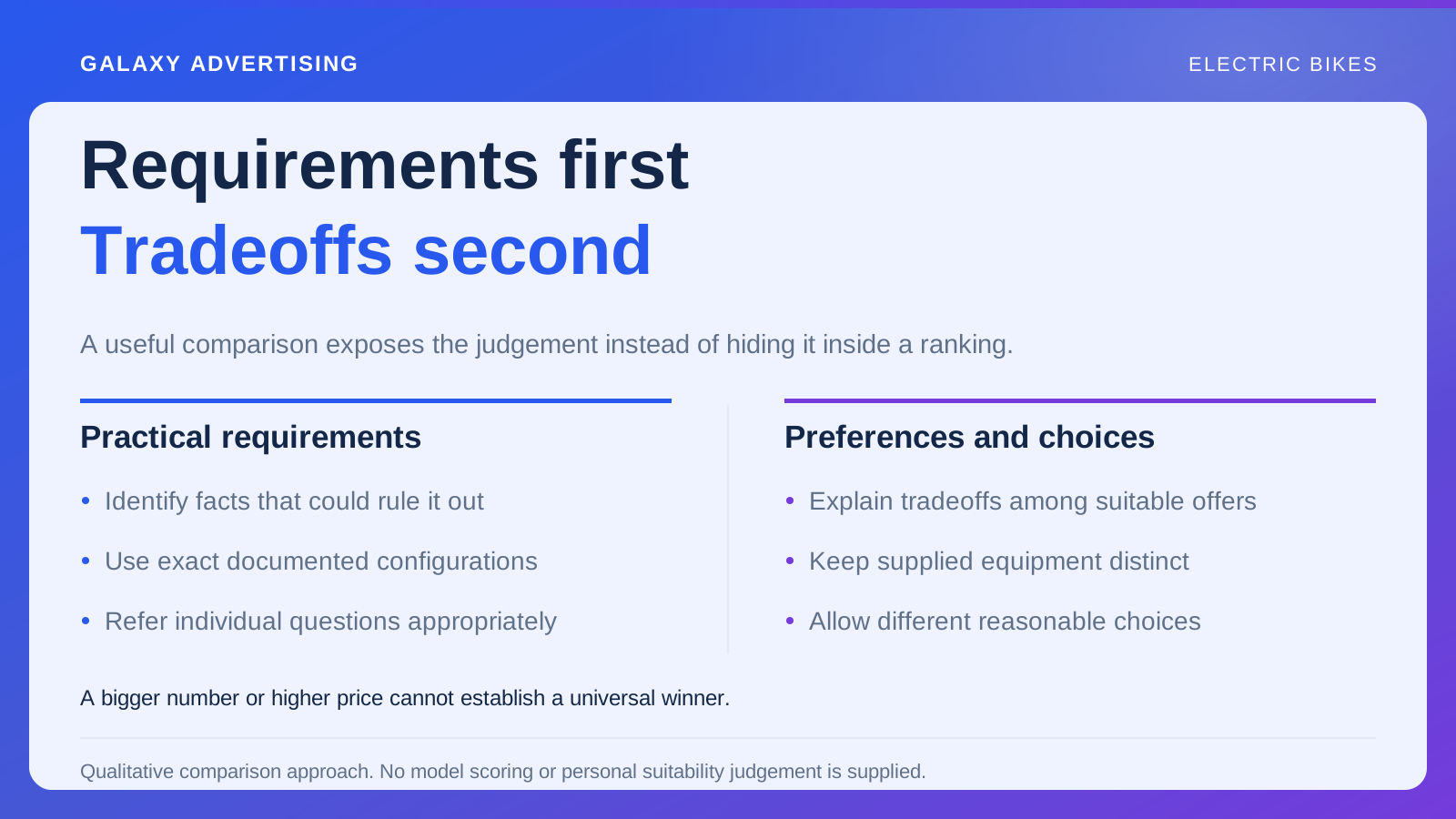
Separate essential requirements from attractive extras. Which facts could make this bike unsuitable for the intended task? Those need a different place in the communication from features that become appealing once the requirements are met.
Use verified manufacturer information about the model and preserve the relevant conditions. An assumption about someone's route or equipment shouldn't quietly become an unconditional recommendation in the finished advert. You don't know their circumstances merely because you've chosen a plausible scene.
For the storage example, showing the actual product clearly and providing accurate dimensions could be more useful than an elaborate montage of distant scenery. The work can still be engaging. Its main job is to make a relevant practical difference easier to judge.
Choose the evidence before writing the hook
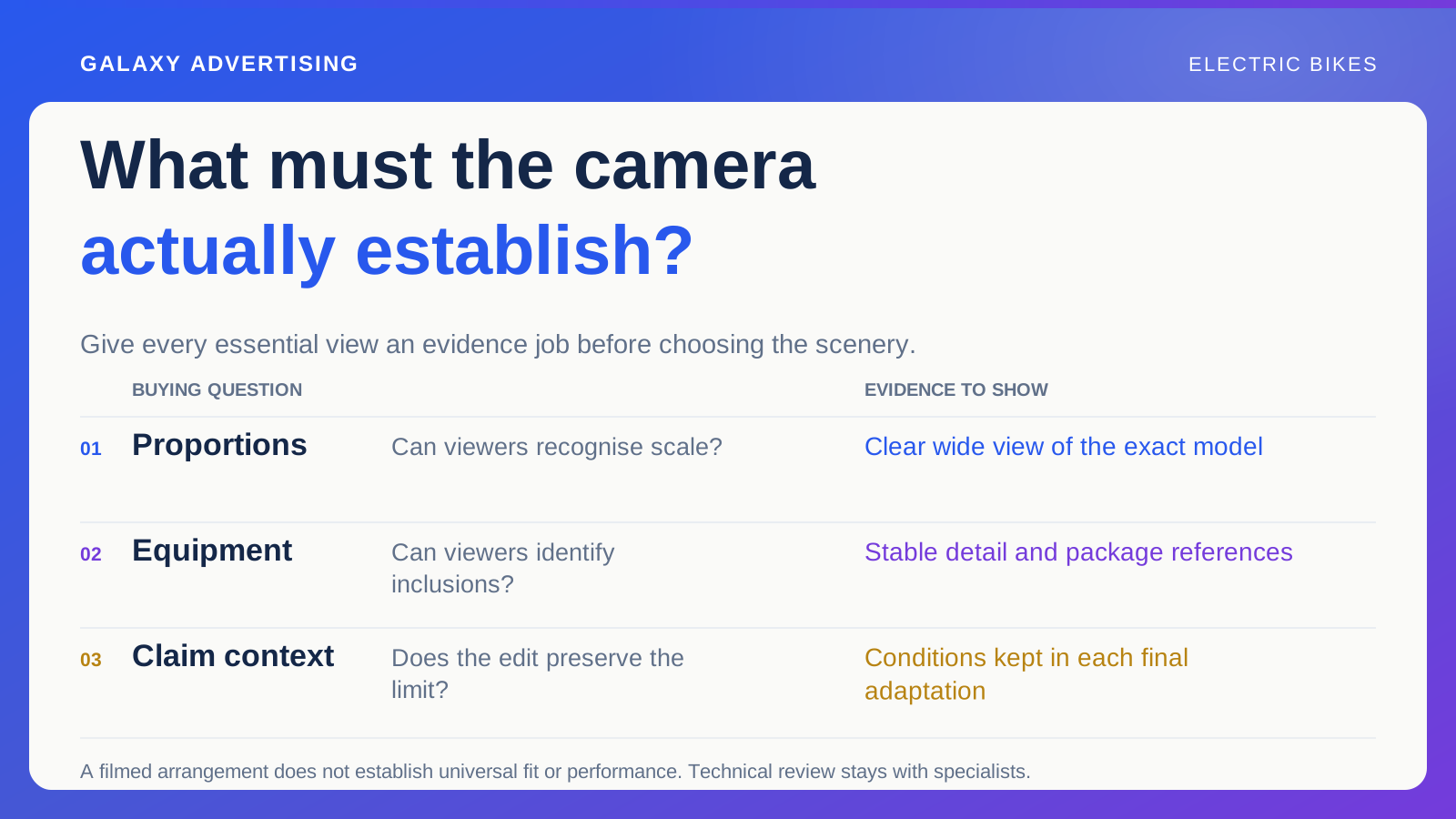
Ask what the viewer needs to see. Perhaps it's a documented feature, the scale of the product or the arrangement of supplied equipment. A dramatic opening isn't a good reason to imply a performance result you can't support.
Once the evidence is clear, write an introduction that makes the observation relevant. A believable situation can earn attention without a sweeping promise about changing every journey. Let the actual product carry the argument.
Keep the limit beside the evidence in your brief. Showing a bike in one storage arrangement doesn't prove it fits every home. Your destination should help people check their own requirements. The filmed example needs that boundary, even if the scene itself looks convincing.
Give different tasks genuinely different concepts
You can investigate several buying arguments within a campaign. The useful distinction is the question each concept answers. One could address storage, another documented carrying arrangements, and another the advice or demonstration route you actually offer.
A different background around the same claim is mainly an execution variation. That can be worthwhile production work, but it doesn't test another customer task. Be clear about which sort of difference you're commissioning.
Record why each concept might attract suitable interest. Later, you can review that reasoning against what happened. Otherwise, the most exciting edit can become the favourite without anyone knowing what it taught you. Organise your creative library around the buying argument so that the learning remains findable.
Let the destination answer the journey question
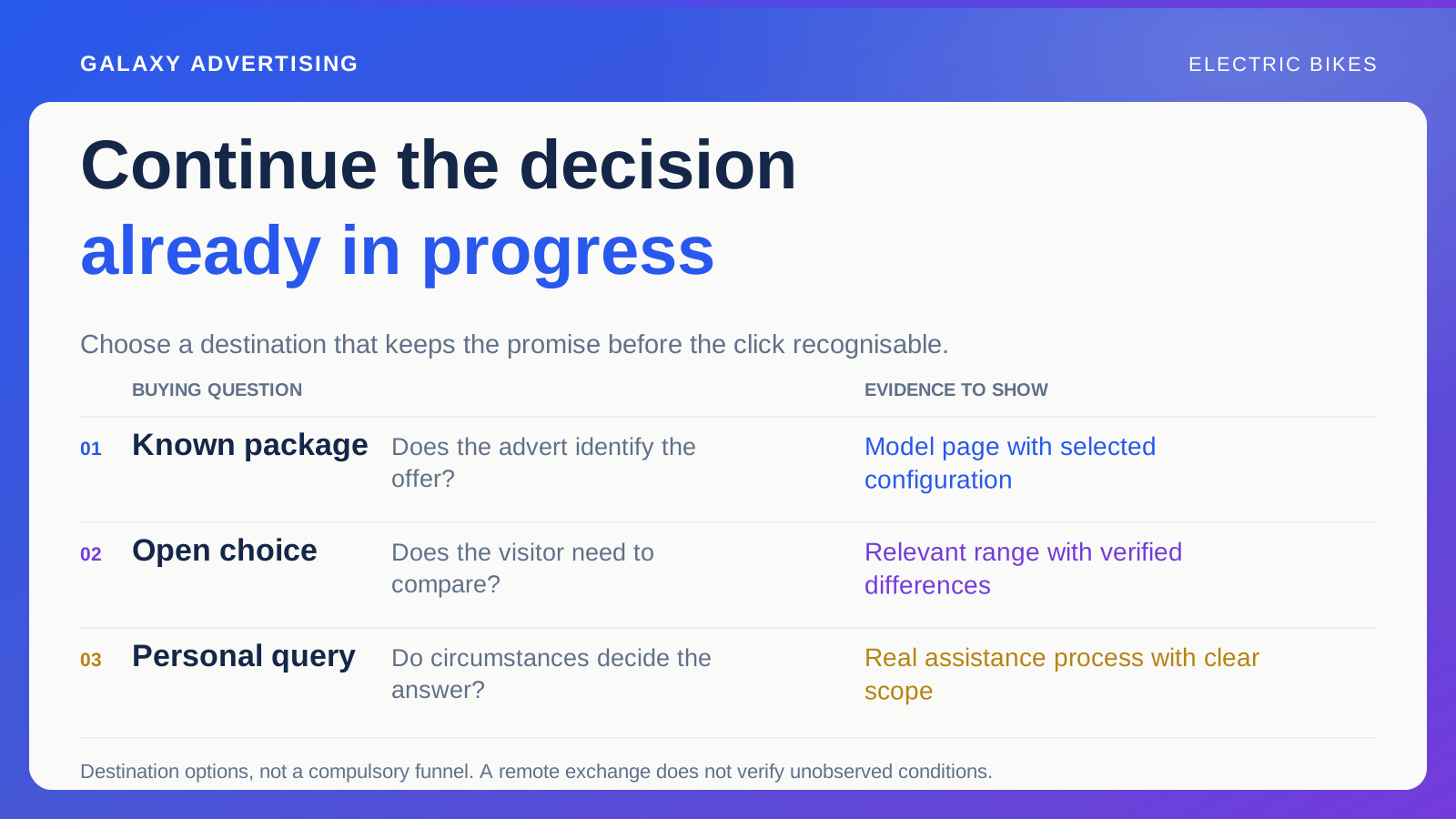
Send an advert for a specific model to the relevant offer. Make the demonstrated configuration identifiable. If there are several frame or equipment options, help the customer locate the version they actually saw.
Give them information that lets them challenge the proposition. Dimensions, included equipment and documented model details should be accessible without searching through unrelated promotional copy. You're helping them judge the fit, including where the fit might be wrong.
When an answer depends on individual circumstances, provide a clear route to appropriate assistance. Explain what information your team needs and what the conversation can establish. A generic online message shouldn't imply a suitable assessment has happened or that you've verified conditions you haven't observed.
Invite the sales team to challenge the situation before production. Your storage idea might sound plausible while real enquiries concern another practical constraint. Discovering that early lets you change the question, rather than polish footage for an assumption nobody checked. The challenge belongs in the brief's development, while it can still usefully redirect the work.
Judge the interest behind the attention
Review relevant model exploration, questions, demonstration requests where offered and completed orders alongside the advertising evidence available. Did people understand the intended use? Did they find the information they needed to assess it?
Attention alone doesn't establish suitability. An attractive journey scene can interest people whose requirements the promoted model cannot meet. That could call for a different argument or a better destination, before you consider increasing spend.
Use enquiry patterns with the same restraint. They show what some customers asked, rather than the complete motivation of everyone exposed to the advert. Keep your conclusion proportionate and let it guide a specific creative decision. A narrow, useful observation is enough to inform the next piece of work.
Make it possible to say no for a good reason
Accurate communication can help a person recognise that this model doesn't suit their circumstances. That's a useful result from the buying route. Removing every qualification to move more people towards checkout would lose that value.
Keep your commercial interest tied to the quality of the resulting order. A clear practical boundary may reduce unsuitable enquiries and avoidable disappointment, even if it makes your apparent audience narrower.
The rider needs a credible way to judge a bike against a real journey. Give them supported evidence and an appropriate next step, and you give the advert a better job than asking a lifestyle label or the largest number to think on their behalf.