Are those extra test ride requests producing worthwhile electric bike orders? Your advertising report can show more requests while the sales team says many need further qualification. Both can be right: a request, an attended appointment and a fulfilled purchase are different events.
Your measurement plan needs to preserve those differences. Follow the process your business actually operates, including the awkward routes, rather than inventing a tidy progression everyone supposedly follows. You want to see where suitable interest advances, where information is missing and which decisions the records genuinely support.
Define the events your team can maintain
List the stages that matter in your existing appointment process. They might include an enquiry received, a confirmed booking, attendance and a later order. Use terms colleagues can record consistently. A clever definition that nobody can maintain won't help your review.
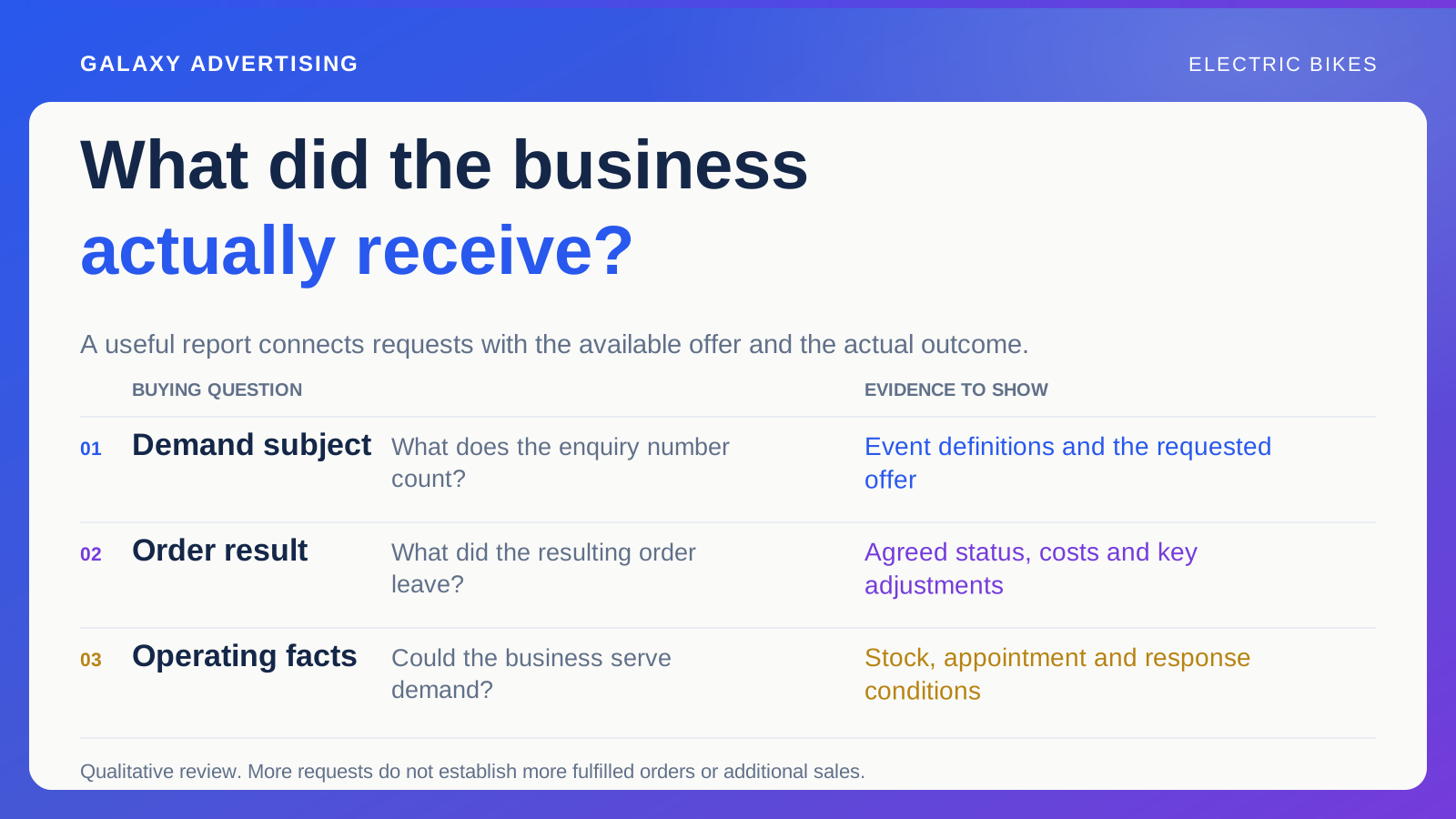
A submitted form doesn't establish that a useful appointment happened. Equally, an enquiry needing clarification isn't automatically worthless. Its value depends on the question, the available offer and your ability to respond appropriately. Keep room for that judgement.
Agree the principal outcome for each review. Campaign colleagues may need an early observation while you need evidence of fulfilled orders. Those views can coexist if they're clearly labelled. Trouble starts when different teams give the same number different meanings and then argue about whether it improved.
Make the request useful to the adviser
Capture the relevant product or question behind the appointment. Does the person want to investigate a named model, compare options or clarify your process? That context helps staff prepare for the service you're actually arranging.
Keep the request proportionate. A long form can create friction and unnecessary data collection without establishing suitability. Ask for what the team needs to arrange or prepare the service, using appropriate permissions and handling. More fields don't automatically mean a more useful enquiry.
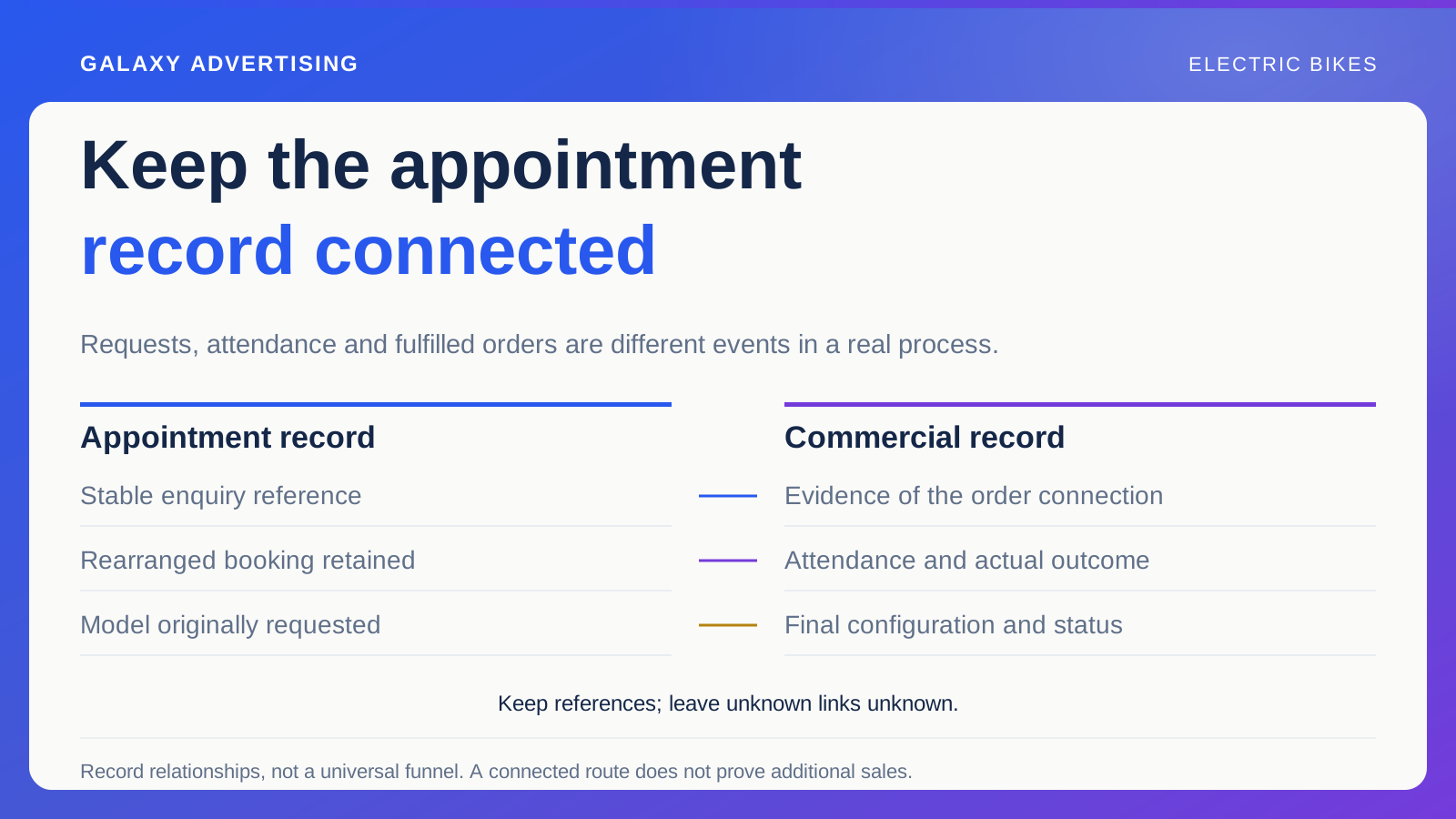
Where your existing system supports it, provide an enquiry reference. You want a maintainable connection between records, rather than a separate spreadsheet that becomes inaccurate when someone rearranges an appointment or another colleague takes over the conversation. Make the reference fit the real workflow.
Record what happened, including changes
Distinguish attendance from a cancelled, rearranged or unattended appointment. Keep reasons concise and useful where you record them. Don't require staff to invent an explanation they don't know just to complete a field.
If advice leads the customer to another model, preserve that change in the relevant records. The original enquiry reference can remain useful even though the eventual order differs from the promoted item. A changed decision is part of understanding the route.
Avoid calling every uncompleted booking poor marketing. Availability, response handling and scheduling can all influence the outcome. Make those operating conditions visible enough to investigate. Blame assigned from whichever number falls first won't tell you which part needs attention.
Connect the order where you have evidence
Use a stable order reference and your agreed order status and revenue basis. A placed order can change later, so make room for relevant adjustments in the commercial review. Otherwise, a useful initial connection can still lead to an incomplete financial interpretation.
Distinguish a directly recorded appointment connection from a colleague remembering that the customer visited. Both offer context, but they aren't equally precise. Your report should let the reader recognise the difference instead of giving both the same certainty.
Leave unknown connections unknown. Similar totals aren't a reason to assign unmatched orders to appointments. Incomplete evidence can still reveal worthwhile process questions. Artificial completeness makes an investment decision harder to defend because the apparently finished picture contains connections your records never established.
Trace a manageable sample of real routes
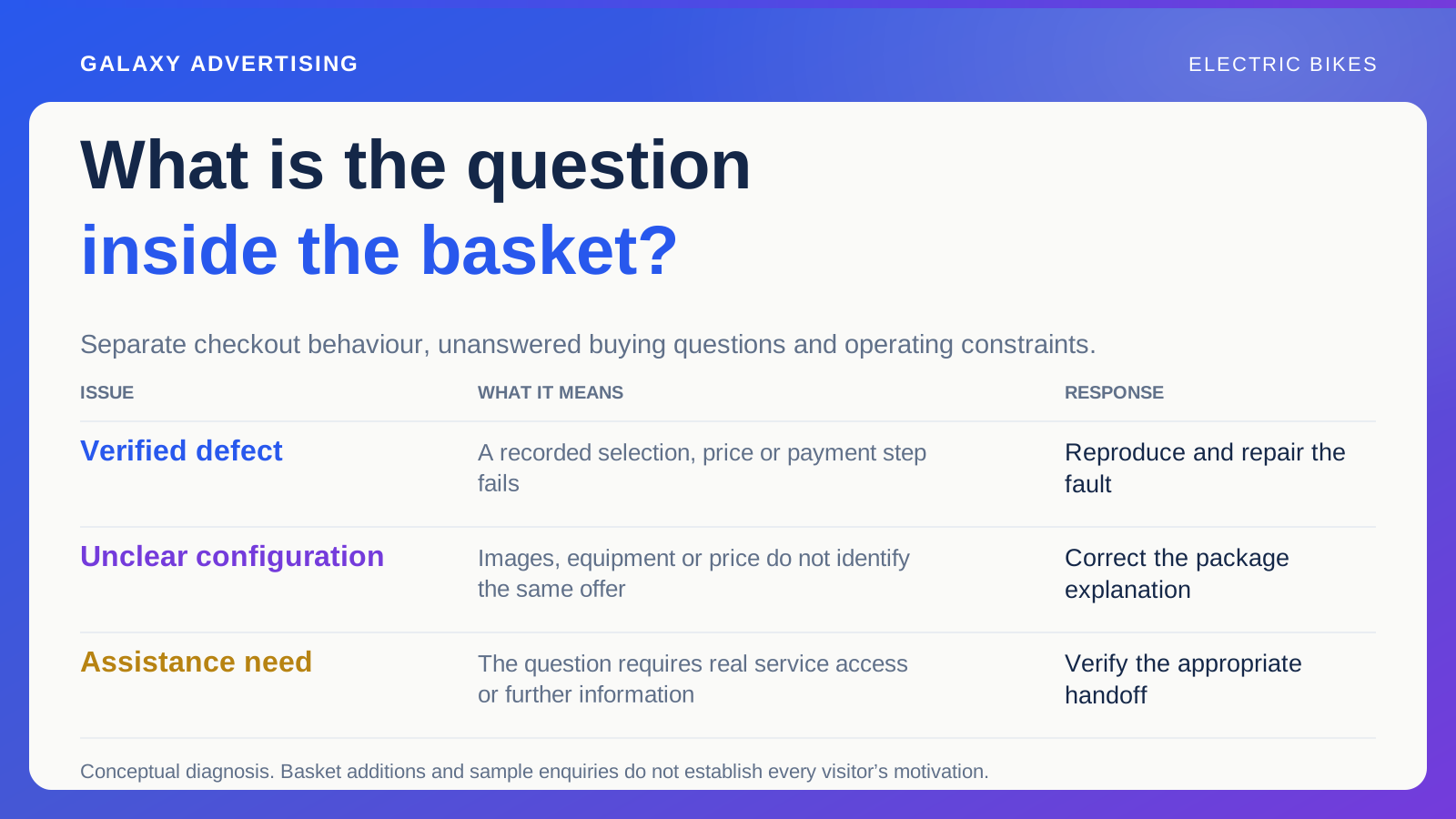
Include attended appointments, cancellations, suitable orders and enquiries that didn't progress. Follow what the person requested, what your business offered and what actually entered the records. Ordinary and exceptional routes both belong in the sample.
Look for practical explanations. Perhaps the model became unavailable, the booking message was unclear or the question concerned a service you don't provide. Those situations require different responses. Your review should help separate them.
Keep the sample's limits explicit. It might expose a repeatable fault or suggest a hypothesis. It doesn't establish the proportion of every cause across all customers. Use it to improve definitions and identify actions before turning observations into broad claims about performance.
Keep the recorded journey separate from sales credit
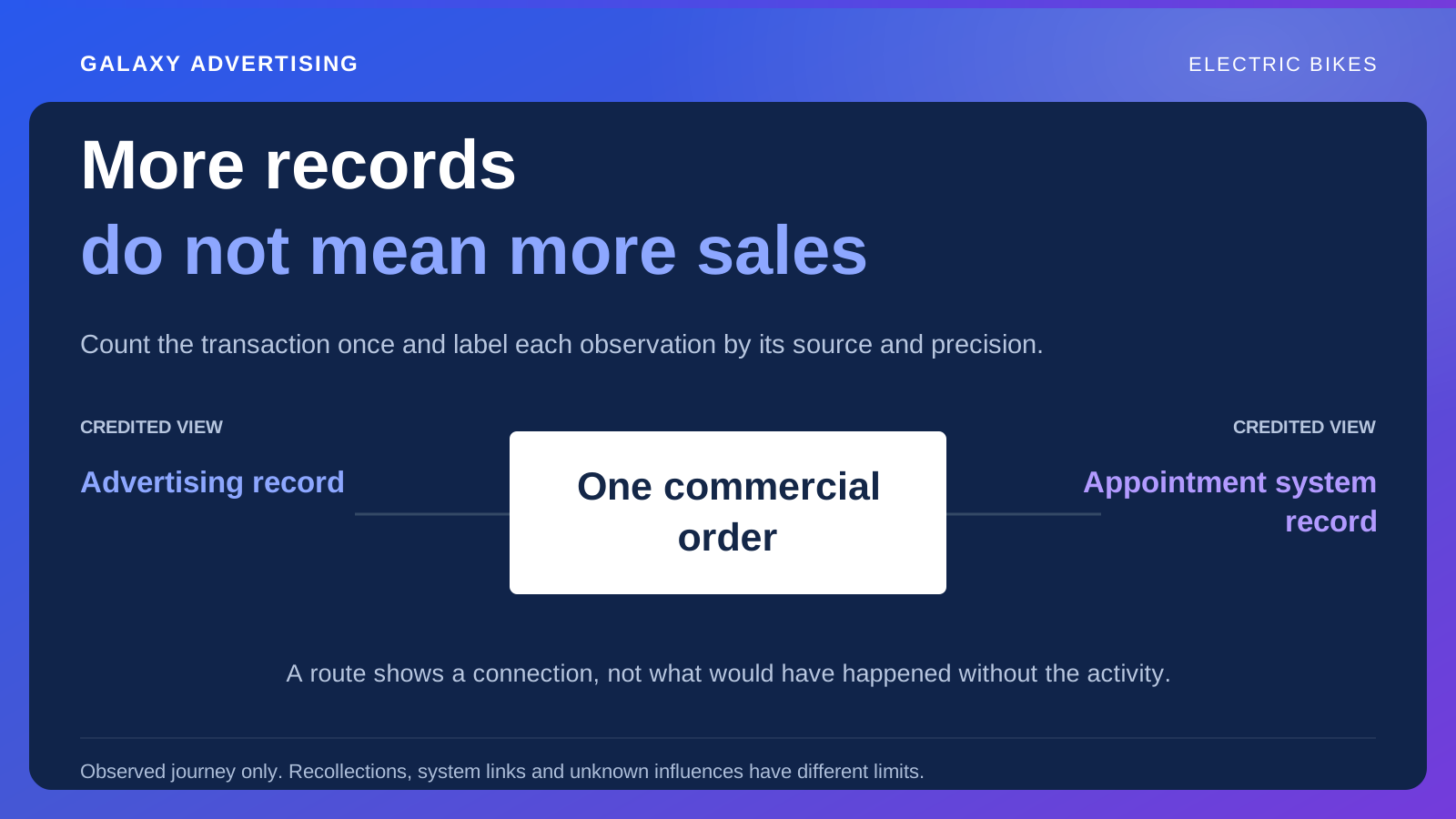
A connected campaign visit, appointment and order describes an observed route where the data supports it. It doesn't establish that the advert caused the whole purchase or that the person would otherwise have stayed away. The journey record answers a narrower question.
Keep platform attributed results on their stated basis and count each store transaction once in the commercial view. Several systems can describe a role in the same order without representing several purchases.
If a consequential expansion depends on additional demand, identify appropriate further evaluation. Ordinary journey records can't settle that causal question for you. Make the uncertainty and potential cost of investigating it visible, so you can decide how much evidence the commitment requires.
Give the handoffs owners and a realistic check
Name the roles responsible for booking records, attendance updates, order connections and website measurement. Each needs a route for clarifying missing information or a changed definition. The handoffs are part of the measurement process too.
Before relying on it in a management report, ask staff to follow a realistic request through a rearranged appointment and later sample order. This can expose a field that sounds sensible but doesn't fit how the business works.
Preserve the original appointment reference when a booking moves. A new entry can otherwise make one person look like separate opportunities or detach attendance from the first request. Agree how the existing system represents rescheduling and inspect a sample. Normal administration shouldn't silently change the report's apparent account of demand.
A useful process helps you understand suitable interest and operating work without forcing every customer into a straight line. The number worth trusting is the one you can explain well enough to make a commercial decision.