What if more electric bike enquiries at a lower cost per request leave the sales team with a less coherent buying route to manage? You still need to know which requests concerned available offers, who received useful assistance and what happened to the orders. The bigger total doesn't answer those questions.
Bring those views into the same review. Early demand measures have a place, with a defined role in your actual process. You should leave knowing what happened, which conditions shaped it and what deserves the next commitment of time or money.
Show the recommendation before the chart collection
State the main decision and its evidence near the beginning. Continue a prepared model campaign, repair a booking handoff, correct package information or narrow attention to an offer you can still supply. The report should make the proposed consequence clear enough to assess.
Don't ask the reader to infer that action from several pages of charts. This is a management conversation. The observations need to support a recommendation rather than substitute for one.
Match confidence to the evidence. A bounded continuation can make sense when broader expansion isn't justified. Explain what you can reasonably do now and which uncertainty matters before committing more. Being clear about the limit makes the recommendation more useful, rather than making it indecisive. You need a defensible next action, not certainty about every future outcome.
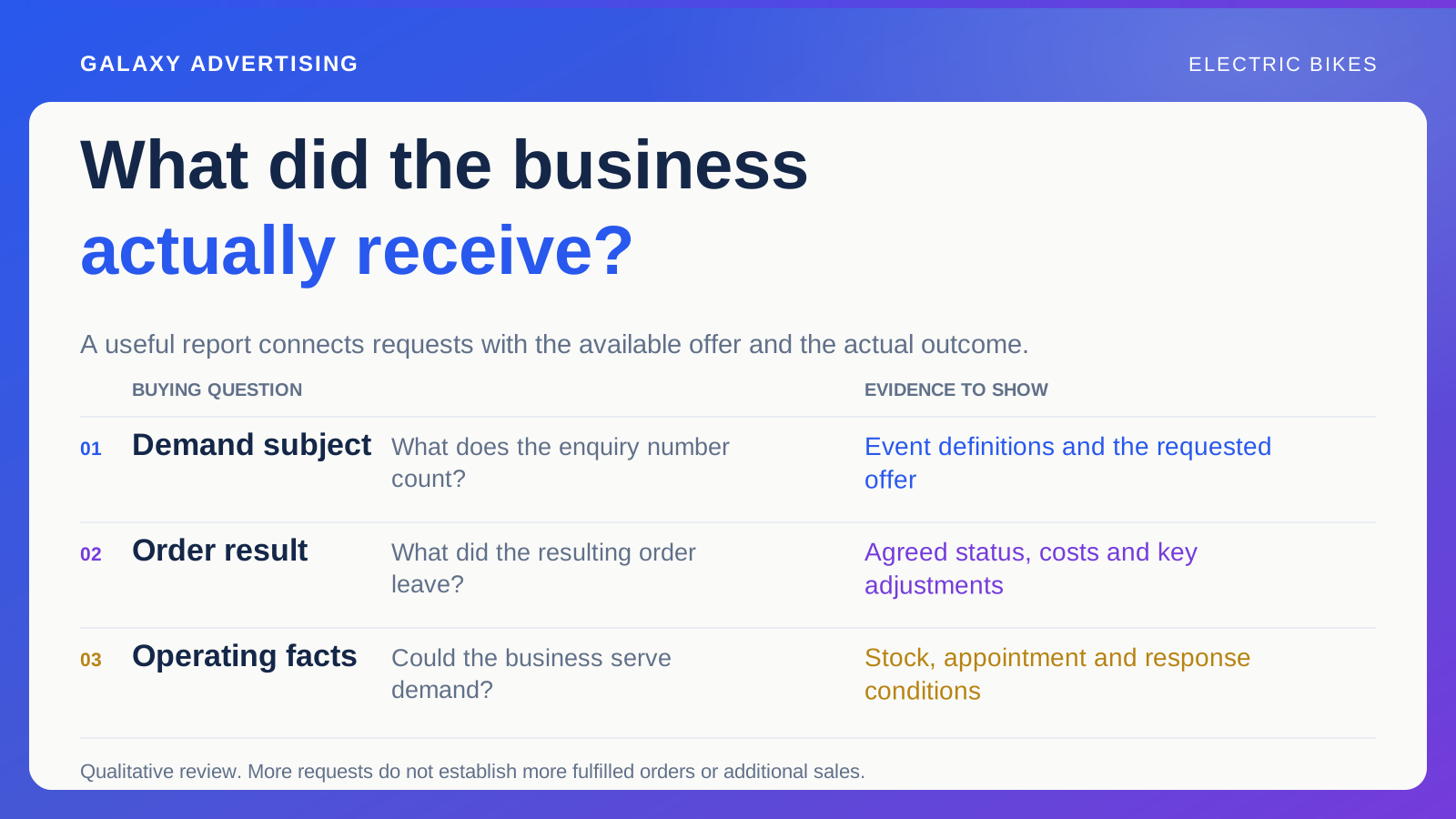
Define exactly what the demand number counts
Distinguish enquiries, confirmed appointments, attendance and orders using the process your retailer actually operates. An initial request doesn't prove the later stages happened. Keep the labels connected to events your team can record consistently.
Explain material changes in definitions or recording. A new form or revised booking workflow can change the observed number without an equivalent change in demand. Your review needs that context before interpreting a rising or falling total.
Include what people asked for. Interest in a named, available configuration differs from a question about a service you don't provide. Both can enter the enquiry count, but they imply different responses. Give the number a subject so you can judge which sort of interest the campaign is creating, rather than celebrating volume in isolation.
Put the actual offers behind the average
Identify models and configurations that materially affected the result. Broad category summaries can hide limited stock, temporary promotions or a package customers still find difficult to assess. Those conditions change what the average means.
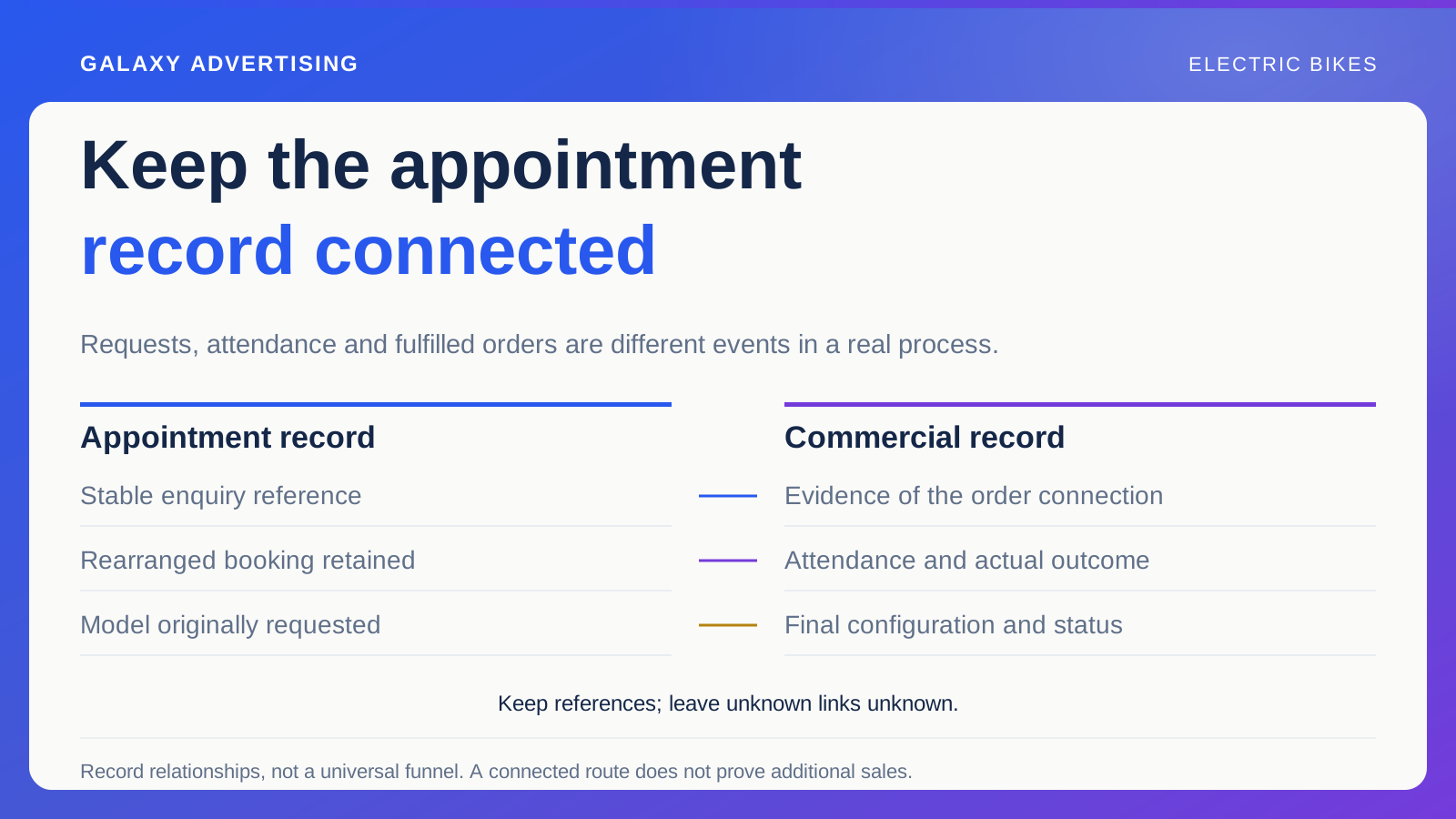
Use exact references for important exceptions. Where records establish the connection, show which package received attention and which one people eventually bought. A changed configuration can be part of the buying route the report needs to explain.
Keep detail proportionate. The main report should bring meaningful distinctions into view, with supporting records available as needed. A long export of every item doesn't automatically explain the next campaign priority. Your reader needs to understand which differences affect the decision and why they deserve attention, without losing the story inside the catalogue.
Put the economics on the agreed basis
State order status, revenue definition and treatment of material adjustments. Use the contribution assumptions that authorised acquisition investment. Contribution means the money remaining after the costs included in that calculation. The review and original approval should be talking about the same basis.
Label estimates clearly, particularly where service work or later changes remain incompletely recorded. Recent results may need reconciliation before comparison with an older set of fulfilled orders. Don't let unlike records acquire the appearance of a clean comparison.
A larger order value doesn't establish commercial quality. What does the actual offer leave after the agreed costs, and does that serve the activity's purpose? Revenue matters, with that surrounding definition. The headline needs an explanation of what the business received, rather than being allowed to stand in for it.
Explain the operating conditions customers encountered
Record material changes to availability, appointments and response handling. These are part of the offer. They deserve attention when results are encouraging as well as when they're disappointing, instead of appearing only as explanations for a decline.
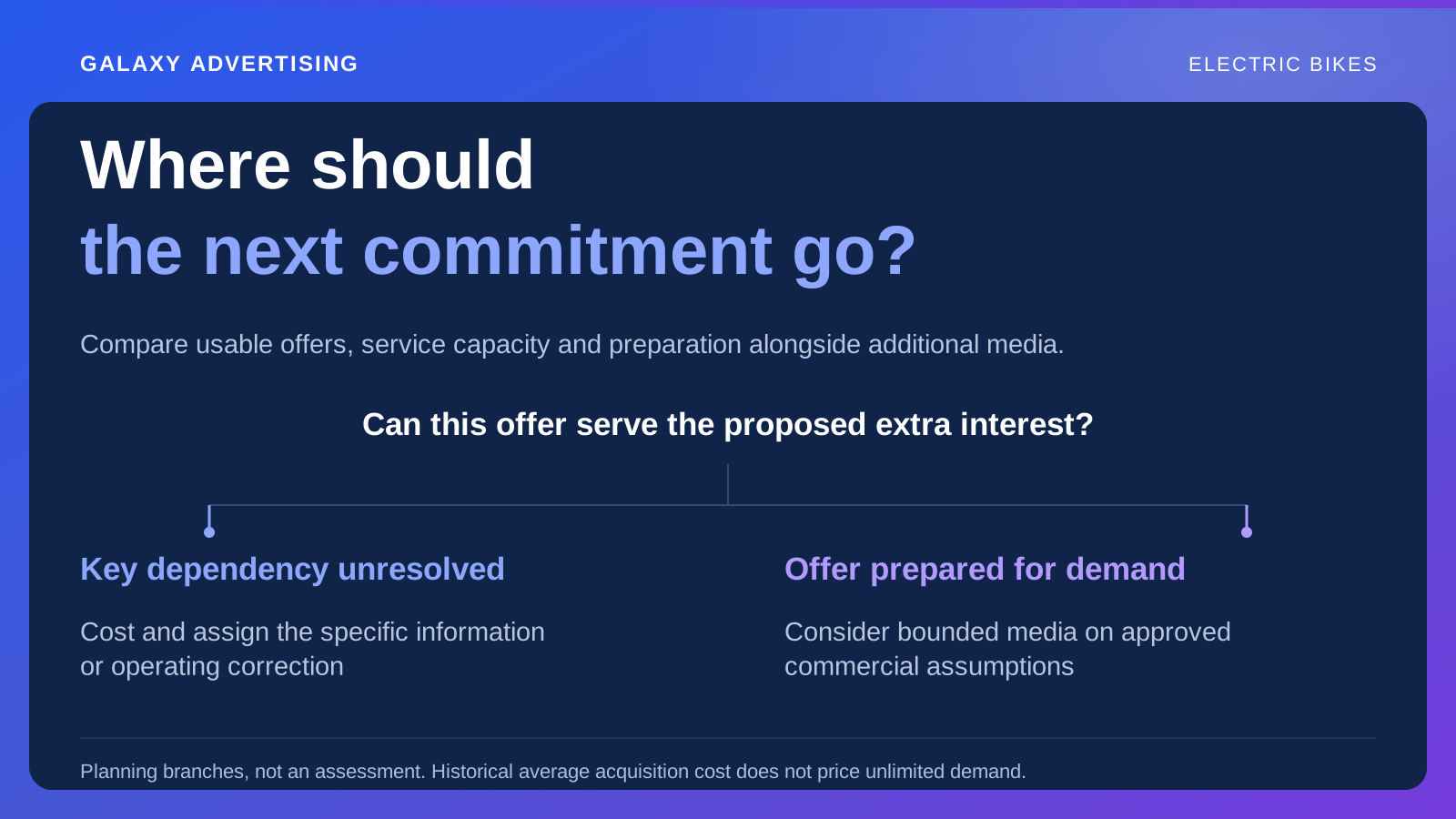
Distinguish lack of suitable interest from inability to serve interest already received. A missing factual handoff, confusing access information or unavailable configuration can call for a different response from a weak buying argument. Keep those diagnoses separate enough to choose the appropriate repair.
Name owners for unresolved dependencies. If a page correction or stock update is outstanding, state the necessary work and consequence. That keeps the issue actionable without turning the review into a competition over which team deserves blame. The practical question is what must happen next and who can make it happen.
Keep sales credit within the evidence
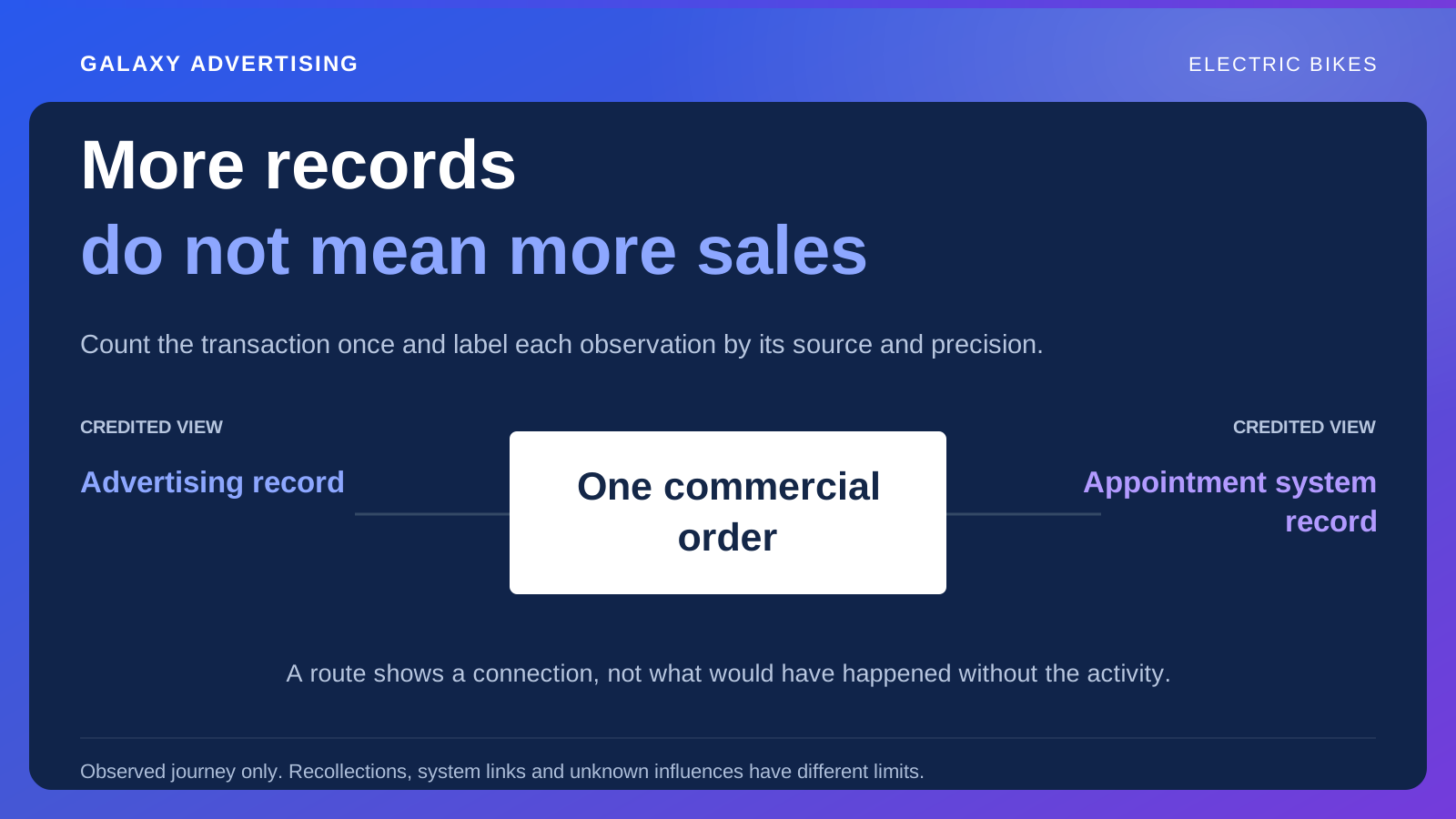
Count commercial orders once. Explain the basis of platform attributed figures shown beside them, since several systems may describe a role in the same transaction. Different observations don't become separate purchases simply because they appear in separate reports.
A recorded appointment connection can illuminate a route without proving the advert caused the whole sale. Preserve that distinction when discussing return on investment or proposing more activity. The observed connection and additional demand are different claims.
Where you need stronger evidence of additional demand, identify the question and appropriate evaluation. Don't treat an incomplete journey as a causal answer. Existing records can still guide improvements to information and operating handoffs while a practical investigation addresses the larger investment question.
Separate delivery from what you learned
List important changes with purpose and status. Publishing a page or producing a video establishes delivery, rather than automatic commercial confirmation of the idea behind it. Both the work and the learning need an honest description.
Explain what observations support and what remains unresolved. If a test didn't answer its question, identify the limitation and whether another commitment is justified. Don't rename uncertainty as success because the planned task was completed.
Include reasonable alternative explanations for consequential conclusions. Improvement during a discount period may reflect the offer, rather than lasting acquisition gains. Make that judgement visible so you can assess the recommendation with the competing interpretation in view.
Give the next action an owner
Specify the owner, scope and review condition. A general promise to keep optimising doesn't tell you what should change. Keep a decision history so later reviews inherit the reasoning behind approvals and limits.
The quantity of interest becomes useful when you know its subject, the available offer and the commercial result. That's the point where an encouraging average becomes something you can manage.