What if the substantial saving in your electric bike advert leads shoppers to a model family where only a limited configuration remains at that price? The discount can be genuine while the broad message makes the purchasable selection difficult to understand. The saving isn't necessarily the unclear part.
Start with the actual offer and its commercial purpose. Explain what the price includes, which conditions matter and who can reasonably assess it. An attractive discount doesn't compensate for an undefined package or make the remaining option suitable for every interested customer.
Know what the incentive is meant to change
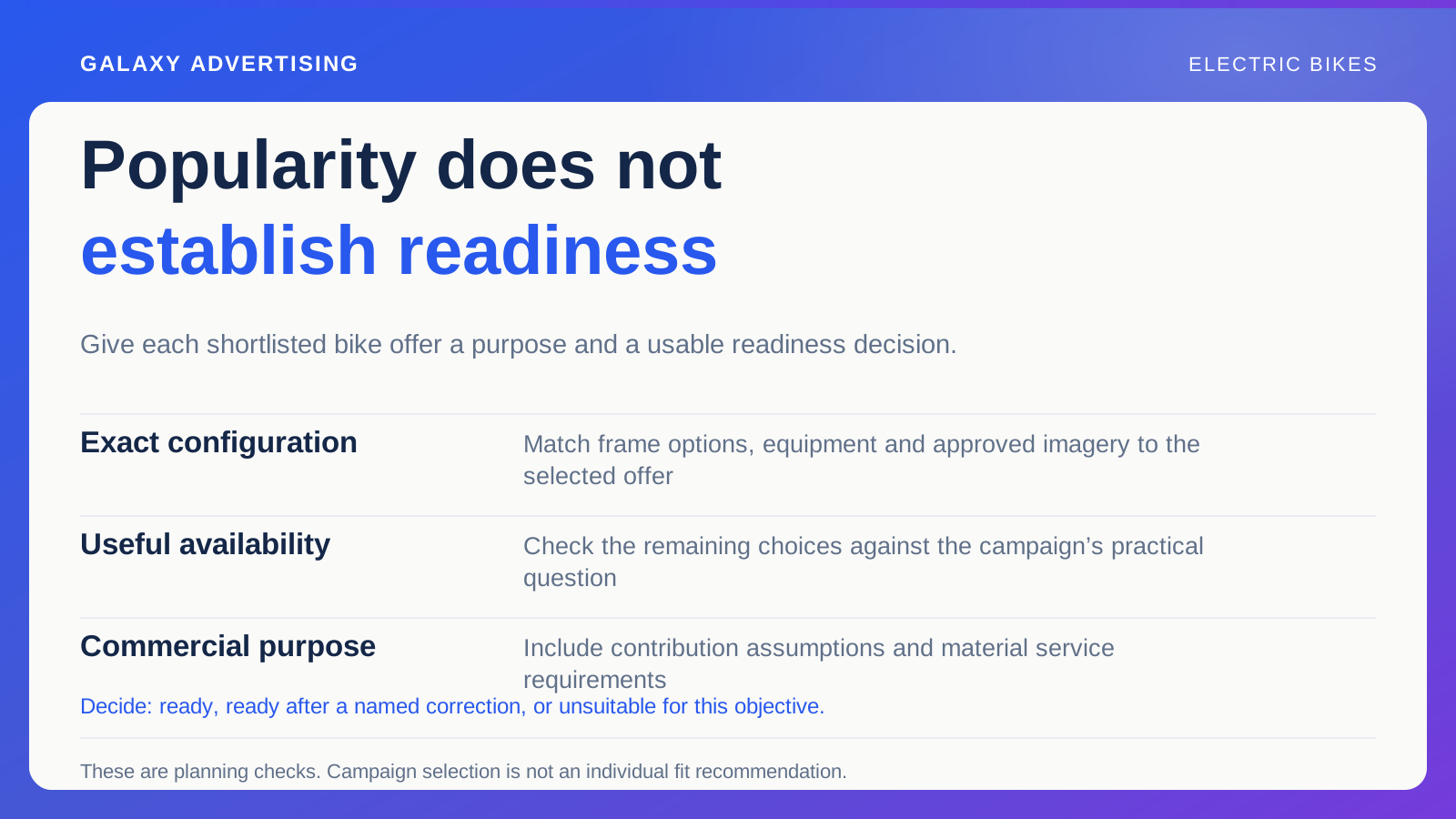
Identify the business objective before choosing the offer. You might need to sell a particular stock position, introduce an accurately documented package or investigate demand from another practical use case. Those are distinct reasons to fund activity.
Keep that purpose visible when reviewing the result. A worthwhile clearance doesn't establish that the same acquisition performance will continue once discounted stock has gone. The offer can do its intended job without proving a repeatable route for different conditions.
Avoid gathering several purposes under an ambitious growth headline. As the owner, you need to know whether you're recovering stock investment, learning about an offer or building ongoing acquisition. Different purposes can justify different limits and different interpretations of success. Agree which commitment you're making before the headline saving takes over the discussion.
Identify exactly what the price buys
List the model, available options and included equipment. Check that the image and destination match the configuration bought at the promoted price. A familiar family name isn't enough to identify the offer a customer can order.
If only a limited selection qualifies, make it intelligible. Visitors shouldn't have to work through unavailable alternatives to discover which version the advert meant. Help them understand their actual choices while the offer is still being considered.
Keep availability distinct from individual suitability. Say what you can supply and provide the relevant documents or assistance route. Don't imply the remaining configuration fits everyone attracted by the promotion. A discount changes the price. It doesn't establish somebody's requirements or remove the need to check them.
Work out what the saving leaves behind
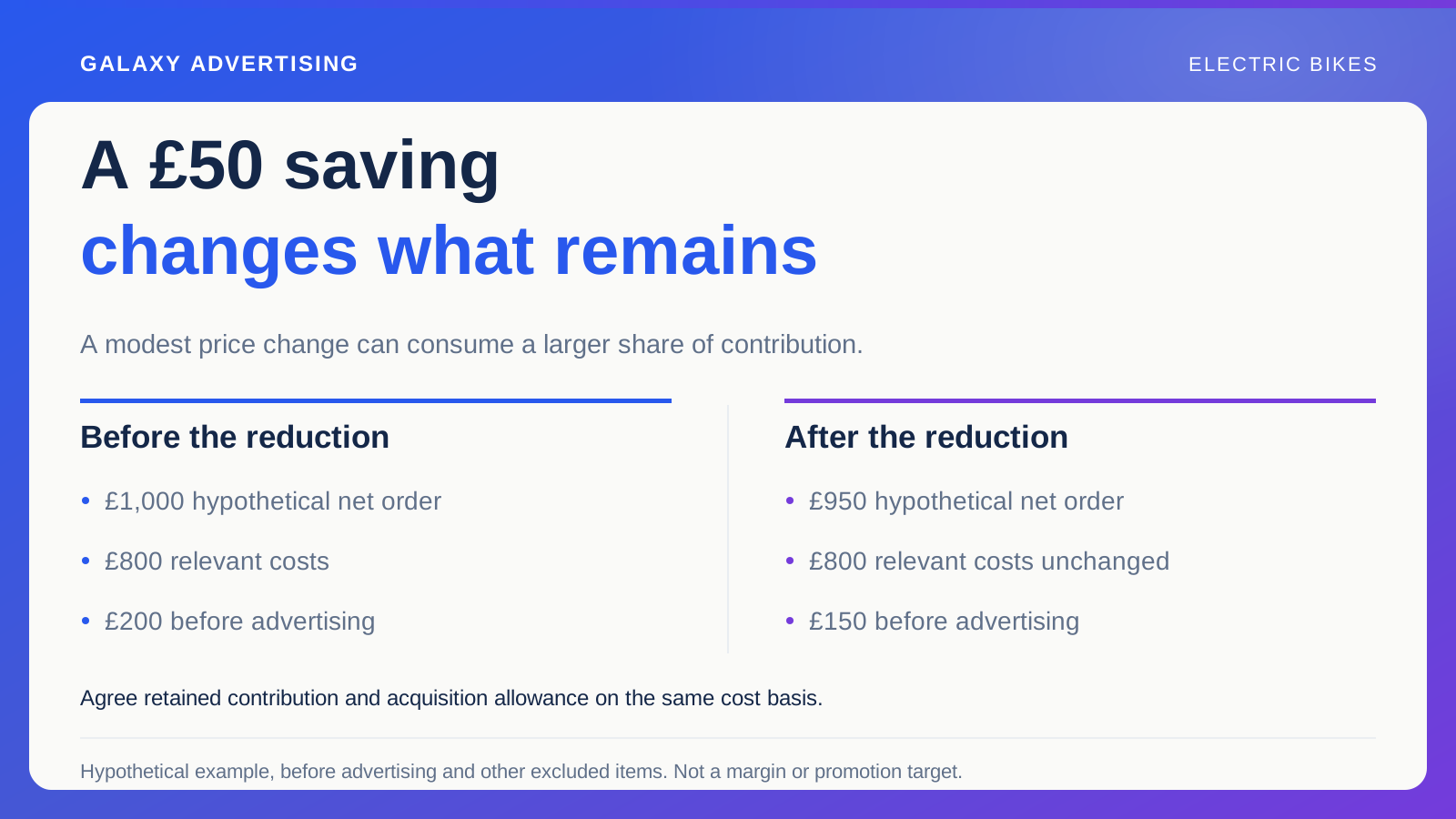
Use a consistent revenue definition and the relevant variable costs. When those costs stay put, a modest price reduction can use up a larger share of the money available for advertising. Look at the contribution change alongside the price change. Contribution means money remaining after the costs included in this calculation.
Take a hypothetical £1,000 net order with £800 of relevant costs. It leaves £200 before advertising and other excluded items. Reduce the price by £50 without changing those costs and £150 remains on the same basis. These figures illustrate the calculation. They aren't recommended margins or promotional targets.
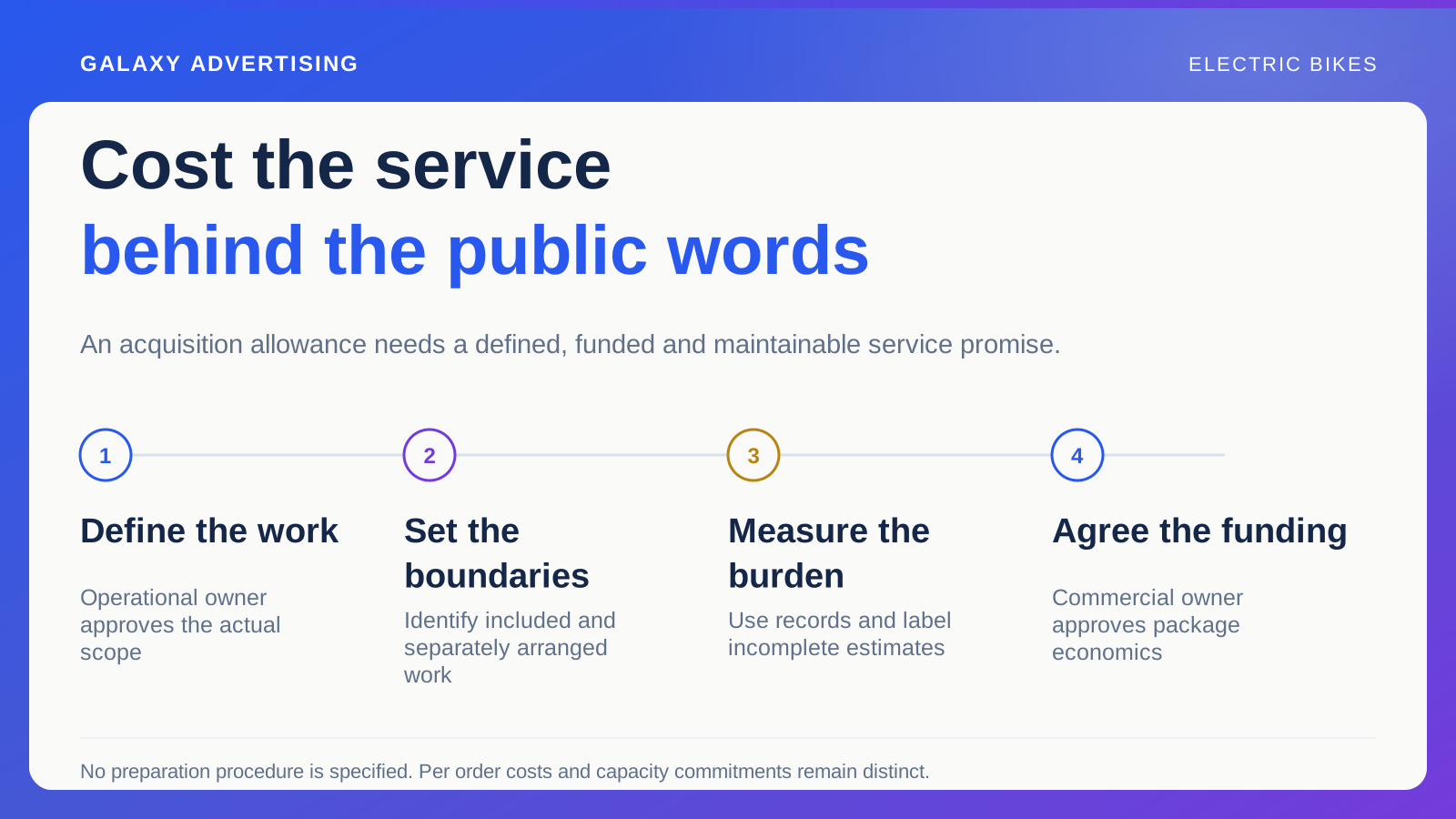
Agree how much your business needs to retain and which acquisition allowance remains. Read the platform's reported revenue return against that approved commercial basis. More recorded orders aren't, by themselves, proof that the discounted offer is worthwhile. You need to understand what those orders leave for the business under the actual assumptions.
Check whether the extra makes a coherent package
An accessory incentive needs a verified relationship with the promoted model. Check the documentation and describe what's supplied. A broad category association isn't enough to establish the arrangement you're inviting a customer to buy.
Make the package choice clear. Is the item automatically included, selectable as an option or available through another arrangement? Those are different offers. The buyer shouldn't have to infer the answer from the photograph or a general mention of extras.
Don't inflate apparent value with an unsupported reference price or a component the customer has little reason to need. A longer list of additions doesn't establish a better purchase. Judge the package through the practical task and your economics. The incentive needs to make sense as part of what the customer is actually considering.
Keep scarcity tied to the facts
If a real quantity or time condition applies, assign someone to maintain it. The campaign needs to respond when the configuration becomes unavailable or the condition changes. An accurate launch doesn't keep the statement accurate indefinitely.
Avoid describing the whole range as scarce because one option is constrained. Dramatic wording can earn attention while giving people the wrong impression of their choices. Be as precise about the limit as you are about the saving.
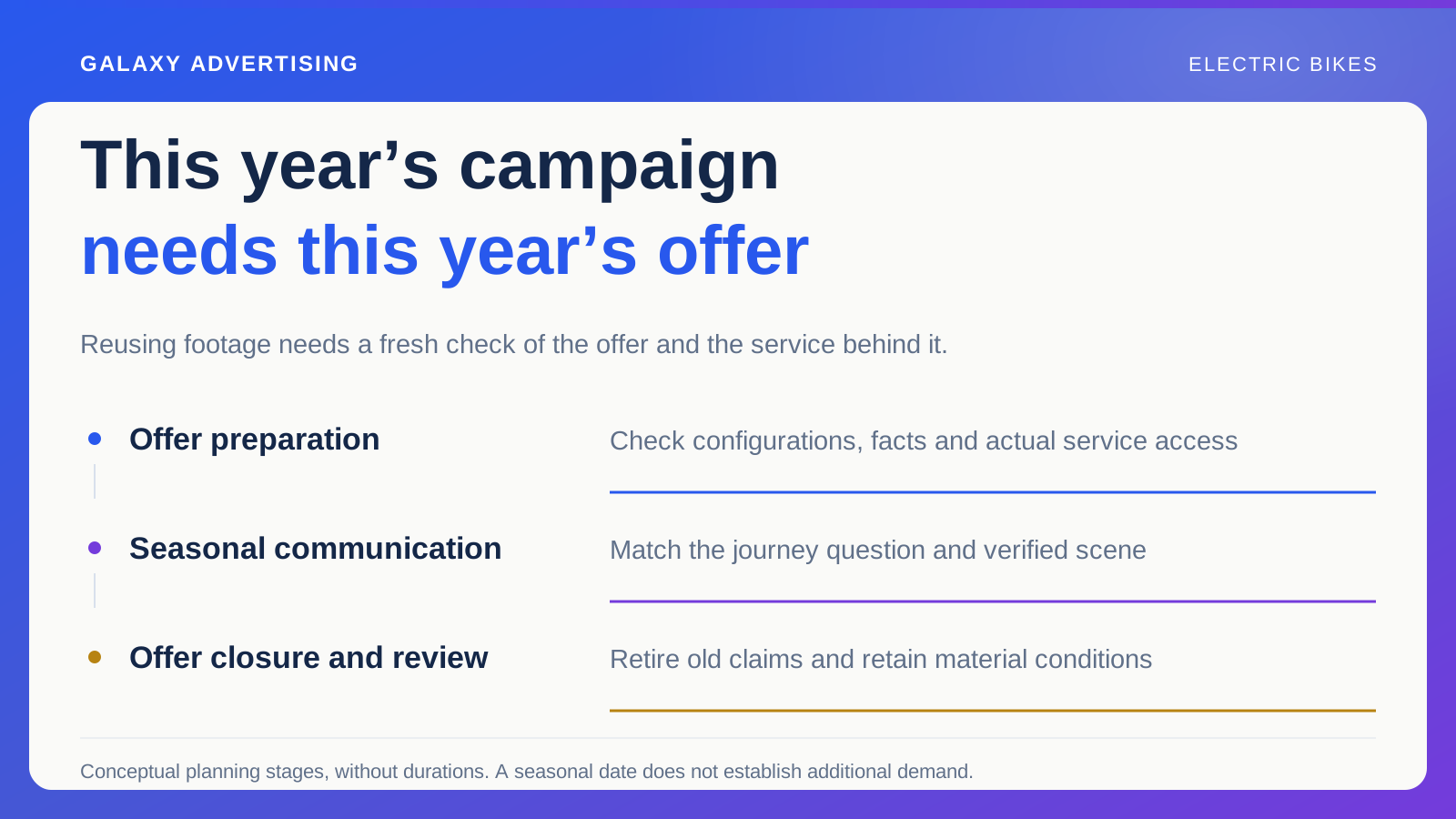
Check the live destination during the promotion. Stock movements can make a previously coherent message confusing. Your operating process needs a way to identify the change and authorise a correction before more demand reaches an outdated offer. Keep the public version connected to current conditions.
Follow the offer through to the basket
Open the advertised link on a phone. Inspect the selected model, price, package and relevant service information. Check the basket retains the offer the customer saw. Each stage needs to preserve the same purchase.
Identify additional costs and conditions early enough to support a responsible comparison. A headline saving loses clarity when the full payable purchase or retailer service remains uncertain. Customers need that context while they can still judge the alternatives.
Where an answer depends on personal circumstances, provide the appropriate assistance route. An attractive saving or countdown shouldn't pressure someone to skip an unresolved requirement. The offer needs to remain a useful decision, rather than treating hesitation as something urgency alone should overcome.
Judge the order after the initial transaction
Review fulfilled orders and material adjustments on your agreed basis. Include relevant returns, configuration changes and avoidable enquiries where they affect interpretation. An early revenue summary doesn't show every consequence of the promotion.
Unsuitable interest can look efficient initially while creating work or disappointment later. Keep that possibility in view alongside attribution limits. Some customers may already have intended to buy; associated revenue doesn't establish that the whole increase was additional. You can judge the promotion's commercial role without assigning it unsupported credit.
Close the offer without losing the explanation
Retire outdated creative and update the destination when the promotion ends. Leave a clear current route for people encountering earlier references or returning after consideration.
Keep the offer, purpose, material conditions and conclusion. Future decisions need to know what depended on a temporary price, a narrow configuration or another circumstance. A useful promotion leaves you with a purchase worth supplying and reasoning worth keeping after the saving disappears.