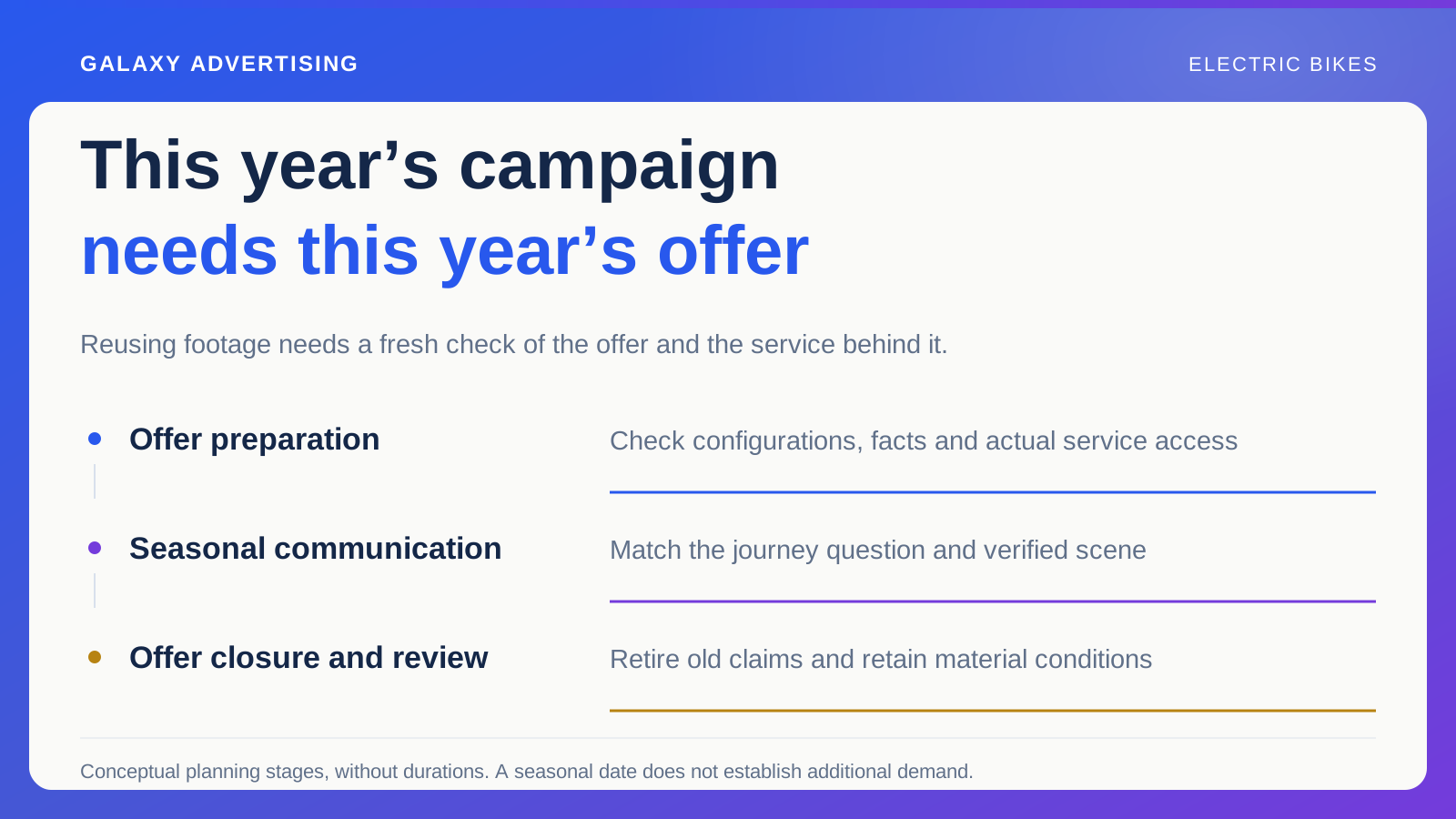
It's an easy shortcut: copy last year's electric bike campaign because the imagery still looks good. Meanwhile, the range has changed, appointment arrangements differ and the questions reaching your team have moved on. The calendar looks familiar, but the offer needs another look.
Start with the buying situation and your ability to serve it. Commuting, leisure and ownership messages can need different preparation. Weather, a holiday or a familiar retail period gives you context for investigating demand. It doesn't establish that every model deserves more spend.
Treat the seasonal pattern as a question first
Use your own enquiries, order history and campaign records to look for patterns. Keep the product and offer conditions alongside the observations. The circumstances behind the result matter when deciding what it might tell you now.
A stronger sales period could have coincided with a promotion, better availability or another change. Don't automatically credit the season and extend that conclusion to the current range. What worked under one set of conditions needs an interpretation before it becomes the next plan.
Write your expectation as a question. A hypothetical retailer might ask whether clearer information about a particular commuting situation creates suitable interest before planned activity. That's a more defensible hypothesis than expecting a date to guarantee sales. It also gives the review something useful to investigate rather than a seasonal assumption to repeat.
Choose the journey you want to explain
Define the practical task and unresolved question. Someone considering routine travel may need different information from an occasional leisure rider or a person with restricted storage. Give the creative team a situation it can work with.
Broad lifestyle labels don't complete that brief. Specify what the product can demonstrate and what the destination needs to explain. The buying question should connect those two parts of the route rather than sit vaguely above them.
Keep individual requirements outside unsupported general recommendations. Show an accurate model and provide access to documentation or appropriate assistance. Don't imply that everyone who shares the situation in the picture will find the same option suitable. A recognisable scene introduces a decision; it doesn't complete every viewer's assessment.
Prepare the range before adding urgency
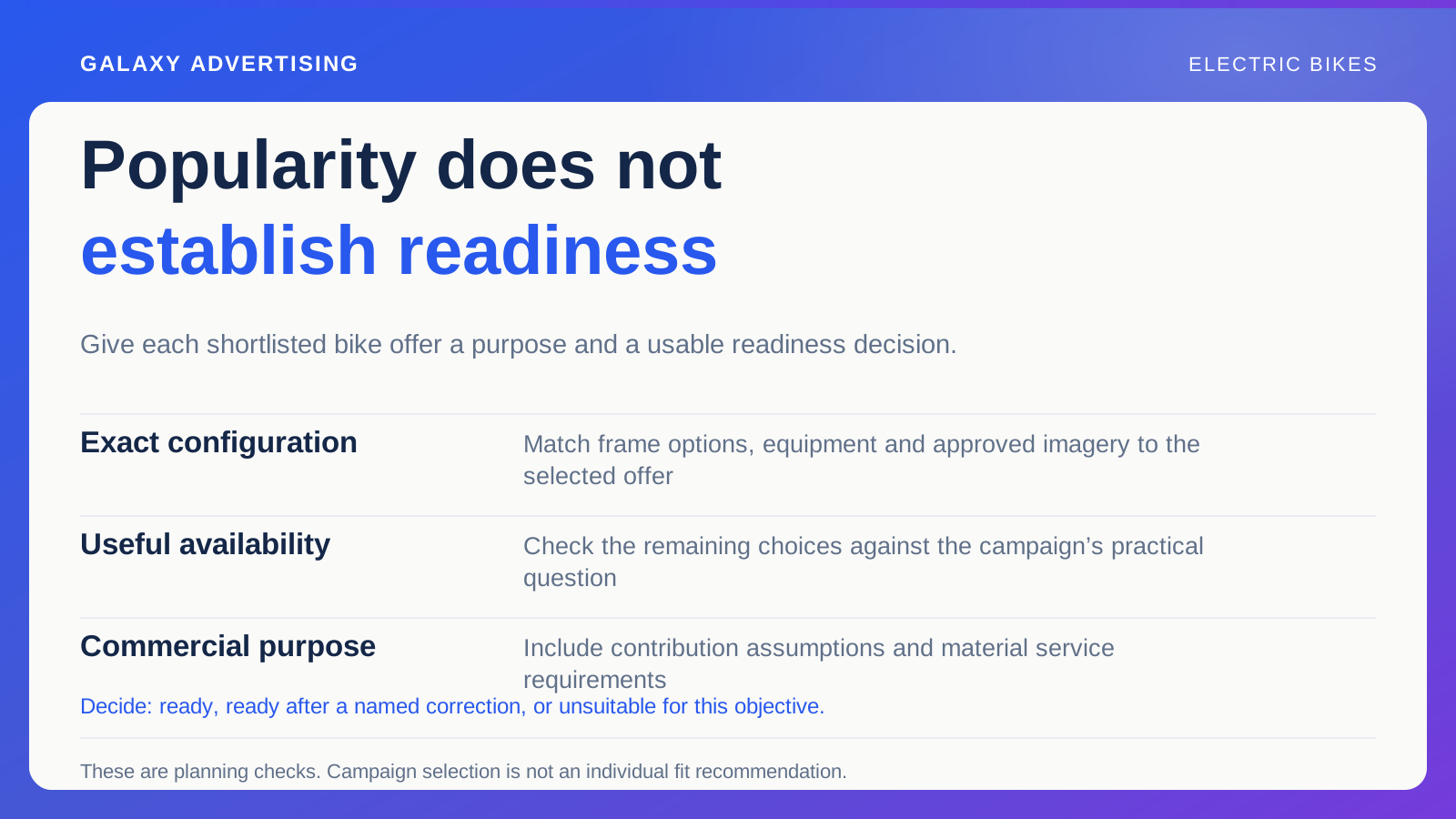
Check exact configurations, package contents and available manufacturer references. Make sure a visitor can identify and assess the intended offer at the destination. Product readiness belongs in the preparation calendar alongside the creative work.
If your campaign invites an appointment or demonstration you offer, verify access arrangements. A compelling invitation is less useful when customers cannot understand what's available or how to book it. The promised next step needs to exist clearly.
Assign unresolved dependencies early. A fresh scene won't supply a missing fact, and more media spend won't create stock. Show the work that makes the offer ready, alongside publication dates. Otherwise, a schedule can look complete while the information and operating arrangements needed to support it remain unfinished.
Check what the seasonal scene actually shows
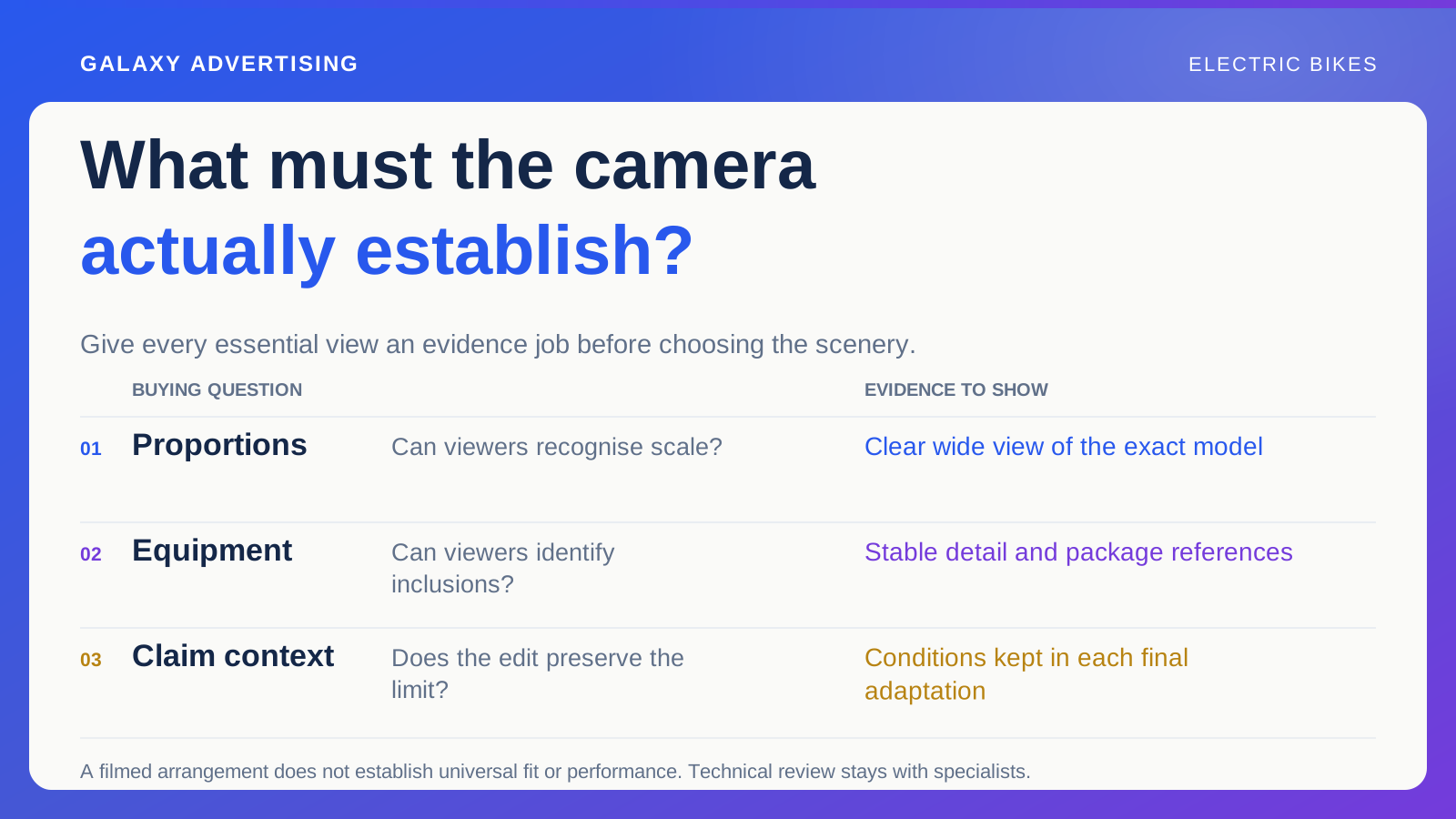
Identify the model and equipment in every scene. Styling can introduce accessories or arrangements outside the advertised package. Keep the distinction clear so atmosphere doesn't quietly change what the customer thinks they're buying.
A journey can create a recognisable context without verifying unconditional performance or range. Treat atmosphere and product evidence as different contributions to the story. Both can have value, but one doesn't establish the other.
Review reused footage against the current configuration. A small equipment change can make a familiar asset inaccurate even when the main model name stays the same. Reuse is efficient when the reference still matches. An old approval doesn't automatically cover every later version of the offer, so make that check part of preparing the next campaign.
Coordinate the people handling the interest
Ask relevant colleagues what extra activity they can manage and which questions need preparation. The service promise should reflect the arrangement you actually operate, rather than an optimistic assumption about availability. Capacity belongs in planning before the invitation goes live.
Give staff the promoted references and a route for resolving uncertainty. Customers shouldn't have to repeat the campaign several times before someone can identify the offer. A clearer handoff connects the public message with the conversation it creates.
Plan for exceptions. If a configuration becomes unavailable or an appointment route changes, who updates the public information and tells the account manager? A scheduled campaign can continue running while its customer experience becomes incoherent. Named handoffs let the plan respond when the operating conditions move.
Give the promotion its own commercial review
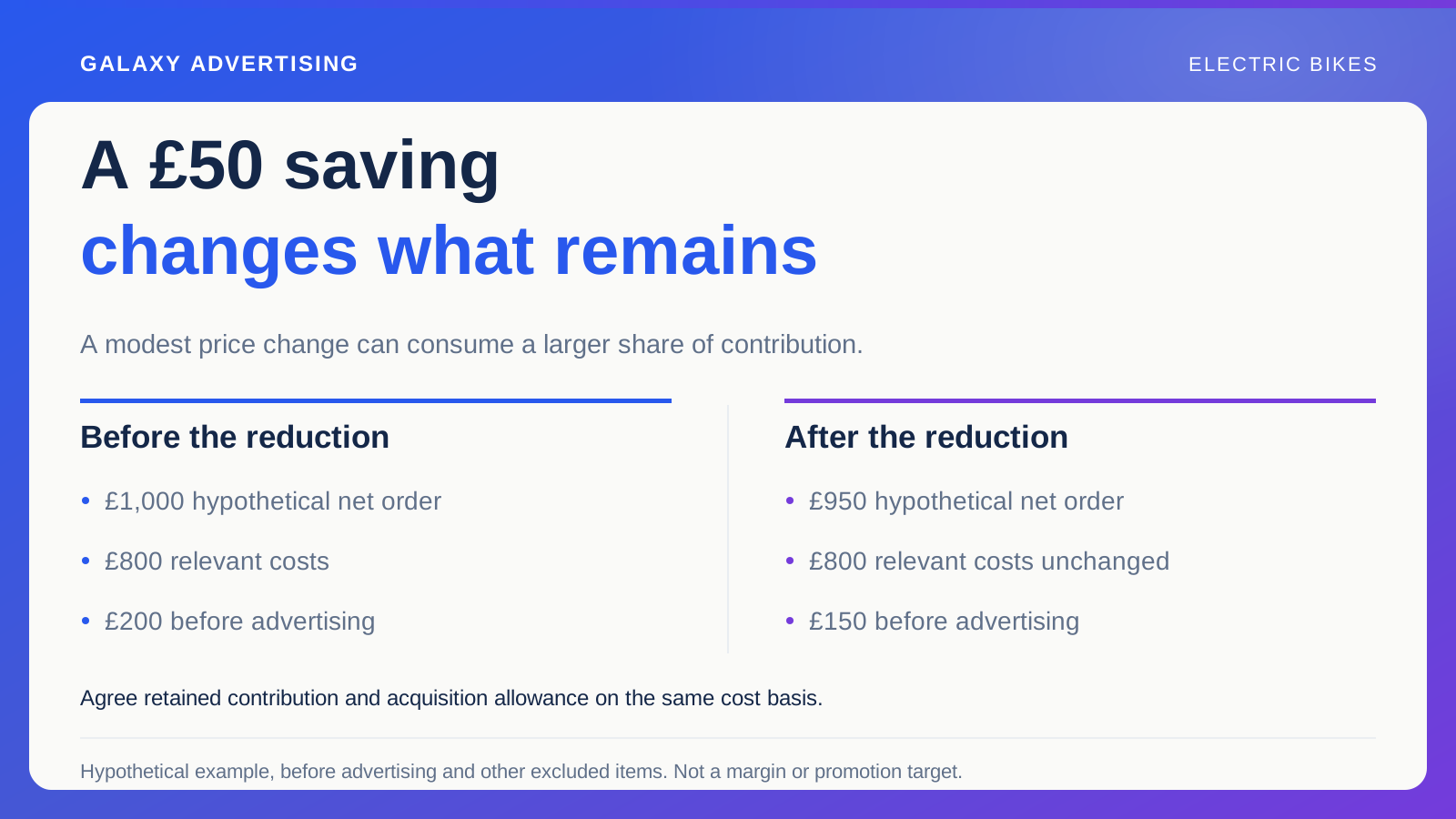
If the seasonal activity includes an offer, calculate its contribution effect using your agreed basis. Contribution is the money left after the costs included in your calculation. More revenue can coexist with less money remaining on that basis.
State the real conditions and check that basket and destination match the advertised package. Don't manufacture scarcity or a deadline because seasonal creative often uses urgency. The invitation needs to remain accurate throughout the route.
Keep the promotion's purpose explicit. Clearing a configuration, introducing a package and investigating demand are different objectives. Your review should establish which the offer served, rather than treating every temporary sales increase as evidence of a sustainable acquisition improvement. The purpose determines what the result can usefully mean.
Plan how the communication ends
Assign someone to retire or update material when its context no longer applies. An exit process matters alongside the launch checklist. Customers may still encounter references after your team has moved to the next activity.
A destination can stay useful after a promotion, provided its price, availability and next step remain current. Don't make returning visitors guess whether an old invitation still stands. Keep the route understandable for them.
Retain relevant versions and conditions, noting when and why the offer changed. That helps you interpret questions and results without rebuilding the campaign from scattered files or comparing unlike stages as if nothing happened. The history should explain the result you actually received.
Let the next plan inherit your reasoning
Review suitable enquiries, actual orders and contribution alongside stock, service and creative conditions. Separate delivered work from evidence supporting the original hypothesis.
Record what you'd repeat and what relied on circumstances unlikely to recur. A useful calendar carries a customer task and a ready offer forward. It gives next year's planning more to work with than attractive images and a familiar date.