It's easy to hand an agency your website and advertising access and think you've given them what they need. The awkward details stay elsewhere: different lead times for some finishes, weak contribution on one configuration, or the question your sales team keeps answering because the product page doesn't.
An agency can inspect what's visible. It can't reliably infer every operating condition behind it. Your brief needs to carry the facts that change decisions, plus a way to resolve what's missing. That's a better starting point for professional judgement than a long shopping list of marketing activities.
Say what the business needs to change
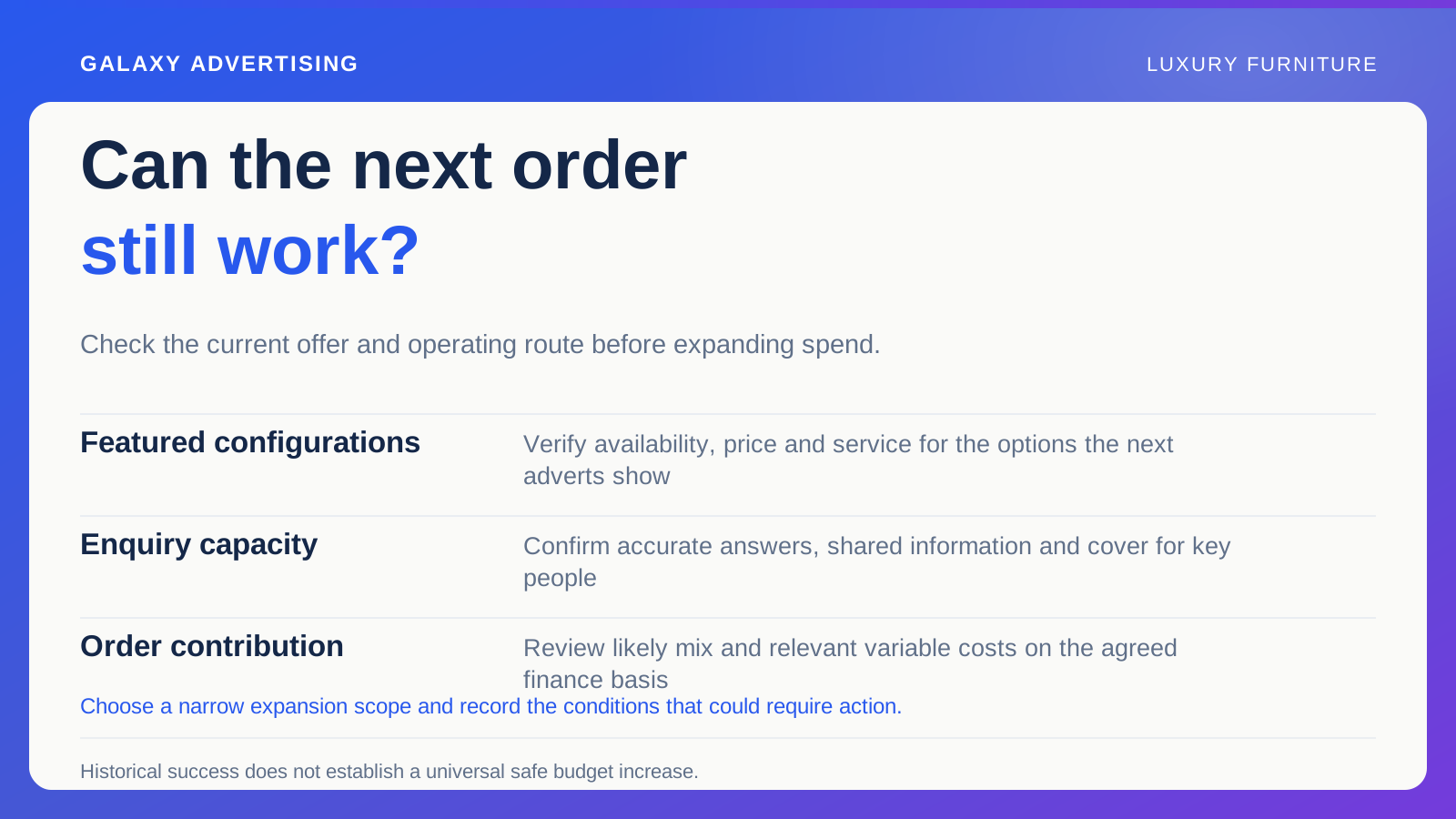
Describe the outcome you need and the evidence making it a priority. Perhaps a profitable range gets little suitable attention. Perhaps enquiries don't progress, or growing orders leave disappointing contribution, meaning the money remaining after the costs included in your calculation.
Separate the problem from your preferred answer. More campaigns might be appropriate. But a request framed only that way can prevent the agency from spotting configuration or service information that needs fixing first. Give them room to diagnose.
State practical constraints too, including affordable investment and your capacity to implement changes. An ambitious brief helps when the team can distinguish the desired result from the resources available today. Hiding a constraint won't make the eventual plan any more commercially realistic.
Help everyone identify the same offer
Identify the collections you're prepared to promote and the sources describing their arrangements, finishes and purchase conditions. Explain which records are current and who owns corrections. Access to information isn't much use if nobody knows which version to trust.
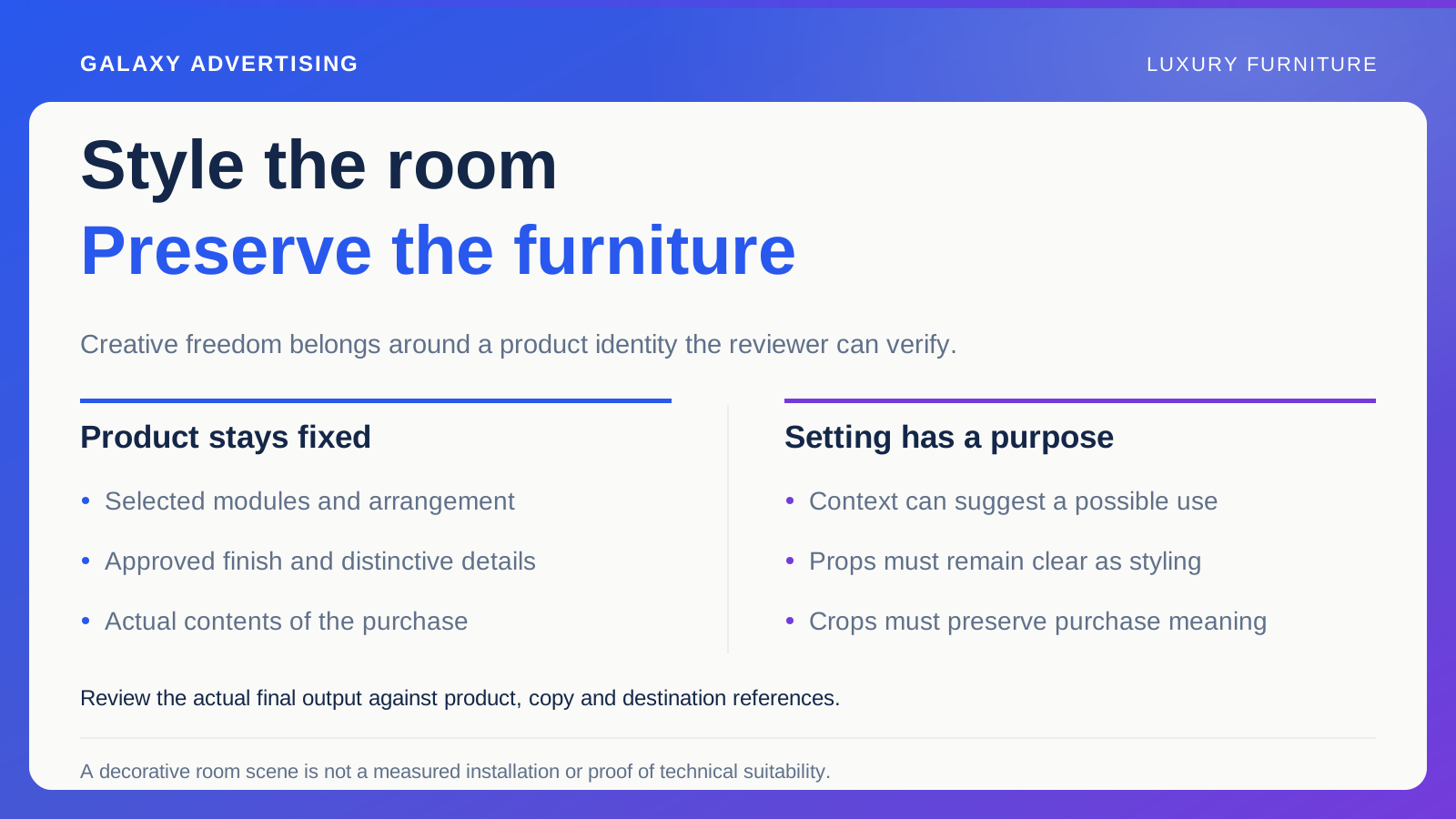
Highlight material exceptions. If a range has several supply arrangements, don't present every option as having the same availability. If an image shows optional components, attach the package context so the agency knows what the customer is actually buying.
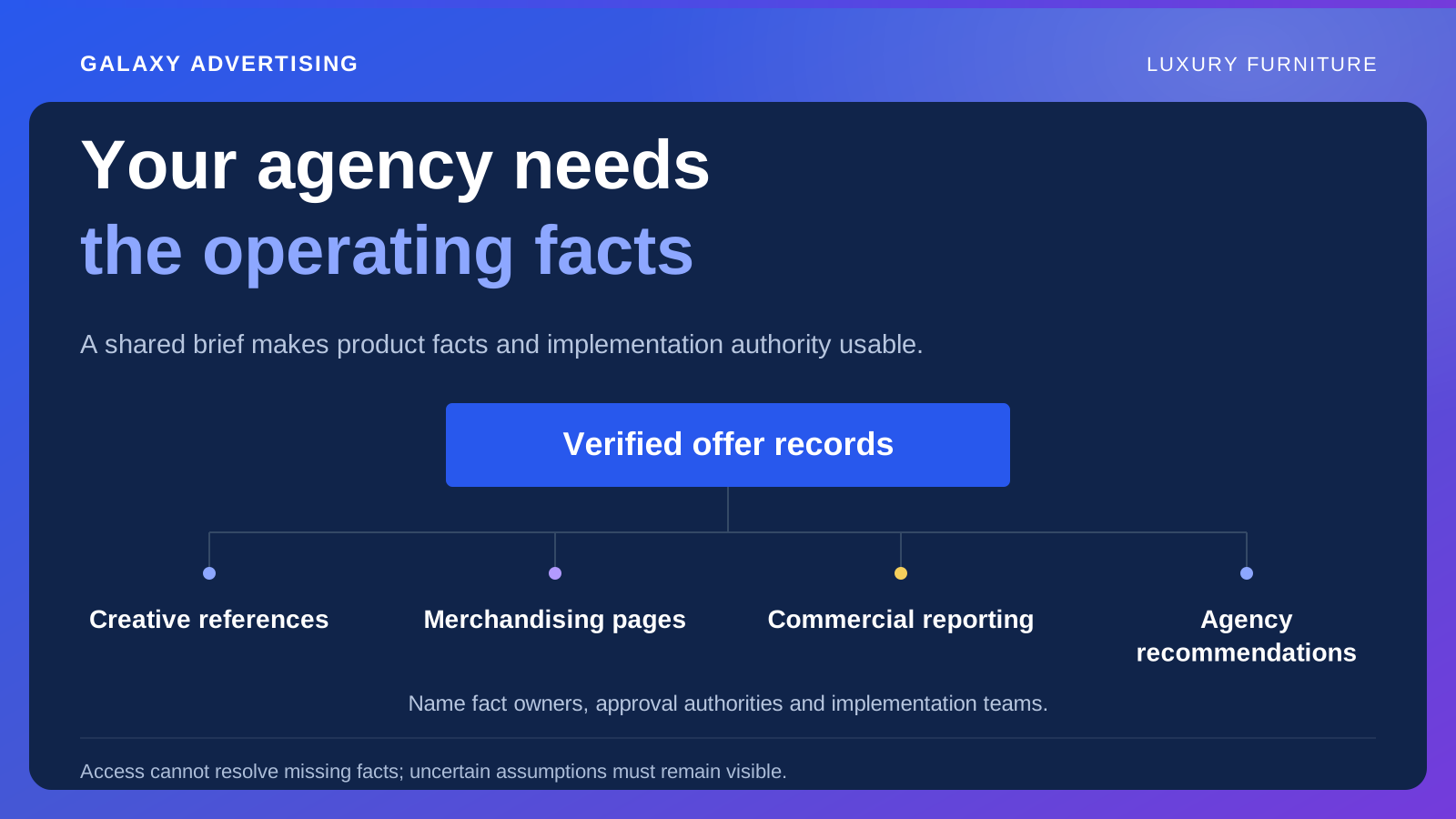
Use stable references across creative, merchandising and reporting. You want everyone discussing the same offer, rather than using one collection name for several different configurations. That shared identification makes later recommendations easier to review and put into practice.
Explain the money on a consistent basis
Agree which cost and contribution information the agency needs for this task. Product revenue alone may not tell them enough when configuration and fulfilment differences materially change an order's value. The information should fit the decision you're asking them to make.
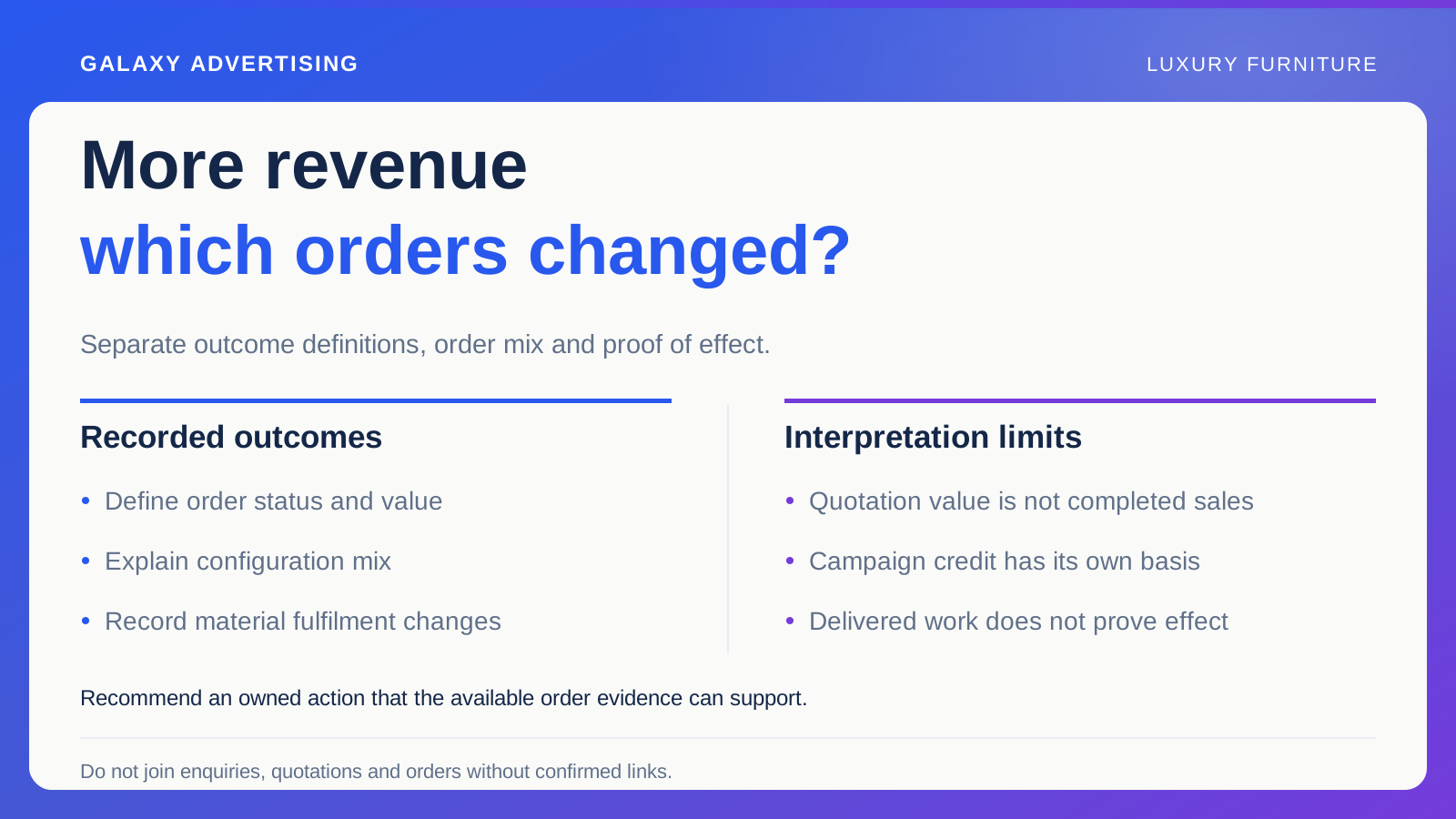
Explain your management reporting definitions. A figure including delivery income and a figure for net product revenue aren't interchangeable. The team needs that distinction before calculating or comparing acquisition performance, rather than discovering it halfway through a discussion about targets.
Label uncertain assumptions plainly. A rough estimate can support a provisional conversation if everyone can see its limits. A precise looking target built on an unexplained margin definition is harder to challenge. It can also lead to a recommendation your business shouldn't follow.
Show how an enquiry becomes a sale
Walk the agency through configuration questions, sample requests and delivery clarification. Who handles each request? How do you connect a later quotation or order where that relationship is known? Show the real route, including the parts that require a person.
Share recurring questions that affect purchases. They help the team understand what the creative and destination need to explain. There's little sense asking an external team to reconstruct commercial learning already sitting in your staff's conversations.
Keep customer information sharing proportionate to the work and your responsibilities. An anonymised pattern or representative issue may give the agency what it needs without unrestricted access to unrelated personal details. Useful context and disciplined handling of information can sit comfortably together.
Make approvals and implementation somebody's job
Name who verifies product facts, approves creative, changes the website and authorises spend. Explain where these responsibilities differ and where an unresolved decision should go. One contact name doesn't necessarily cover every authority the work requires.
Agree how material offer changes will be communicated. A new lead time, unavailable finish or changed service promise may need prompt marketing action. Relying on somebody noticing a website update isn't a dependable process. Make the route explicit in the brief.
Clarify what the agency can implement directly and what needs another team. Putting a recommendation in a report doesn't complete the work. Equally, a blocked correction shouldn't sit ambiguously between several suppliers, with nobody sure whose next move it is.
Bring the evidence behind previous decisions
Supply relevant campaign history, tested versions and the reasoning behind important choices. Saying “that creative did not work” tells a new team very little. They need enough evidence to understand what was tested and why you reached that conclusion.
Include known product and operating conditions. Perhaps configurations were unavailable during the test, or the destination was different. Without that context, the agency could repeat an avoidable mistake or dismiss a useful argument for the wrong reason.
Separate useful history from assumptions that have become tradition. The new team should understand why a decision was made and be able to challenge whether those conditions still apply. Preserve the knowledge without making professional reassessment impossible.
Include a small set of representative product records rather than an unexplained export alone. A worked example helps explain configuration naming and shows where the same information appears differently across the buying and operating route. It gives the larger dataset something concrete to mean.
Ask which parts of the plan are ready to act on
The agency's response should connect its recommendations to your business problem. Ask it to identify the evidence needed and the dependencies involved in implementation. Which decisions can you make now? Which remain provisional? You need to see both.
Agree how you'll review progress. Completed tasks, observed commercial outcomes and remaining uncertainty need separate treatment. A polished activity summary isn't an explanation of what your business should do next, however pleasing it looks on the screen.
You don't need to prescribe every technical choice. You need to give specialists accurate context and access to the people who can resolve what they cannot infer. With premium furniture, configuration, service and contribution belong in the marketing conversation from the start. Leaving them outside the brief leaves too much of the actual business outside the plan.