What if your furniture revenue rises, the advertising return looks attractive, and the extra orders leave less behind than you expected? That can happen when growth concentrates in configurations with weaker contribution and more demanding fulfilment.
The headline result can be real and still leave out the change that matters. You need the report to connect marketing evidence with the products and operating conditions behind it. Separate transaction outcomes from activity credited to campaigns, explain the order mix and recommend a practical next decision. More charts won't do that on their own.
Start with the decision you need to make
Put the main recommendation and its evidence first. Perhaps a promising range needs preparation before more promotion. Perhaps a reporting difference needs investigating, or a destination identifies the wrong configuration. Tell the reader what needs attention and why.
Give enough context to assess that recommendation without hunting through every chart. A short explanation of the collection involved and what the customer is trying to do helps more than an opening page of unrelated account totals.
Keep the recommendation in proportion to the evidence. A few unusual orders can justify investigation without justifying a broad programme change. Confident wording doesn't make a small or incomplete evidence base stronger. The report needs to show where that boundary sits.
Agree which outcome the figures describe
Name the order record and value basis you're using. Are these placed, confirmed or fulfilled orders? Explain how material cancellations and adjustments affect the view. The reader shouldn't have to guess which stage counts as a result.
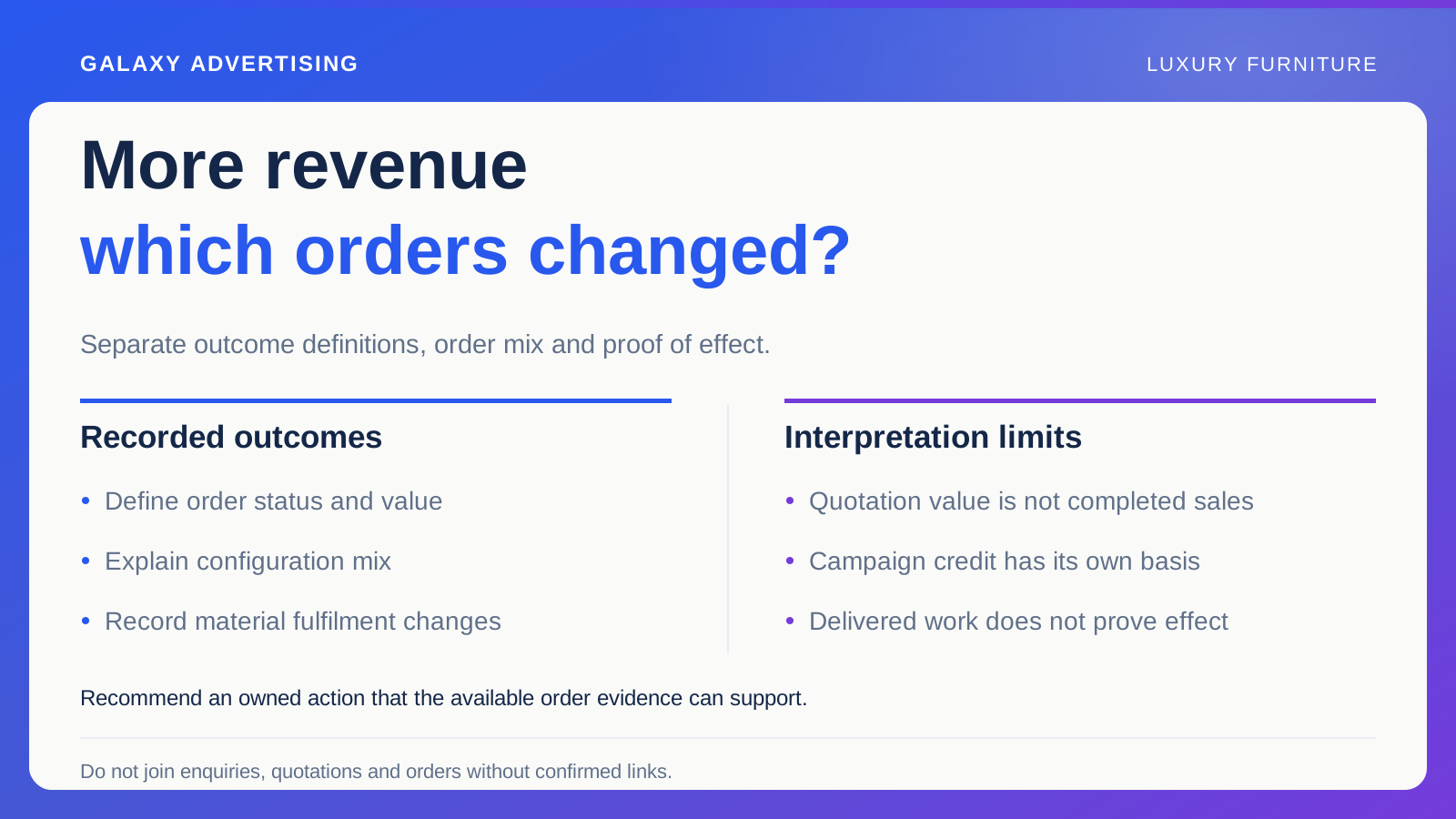
Keep quotation value distinct from completed revenue. A substantial furniture quotation can show useful interest. Even a promising one hasn't become the same commercial outcome as a completed sale just because the sales team feels encouraged by it.
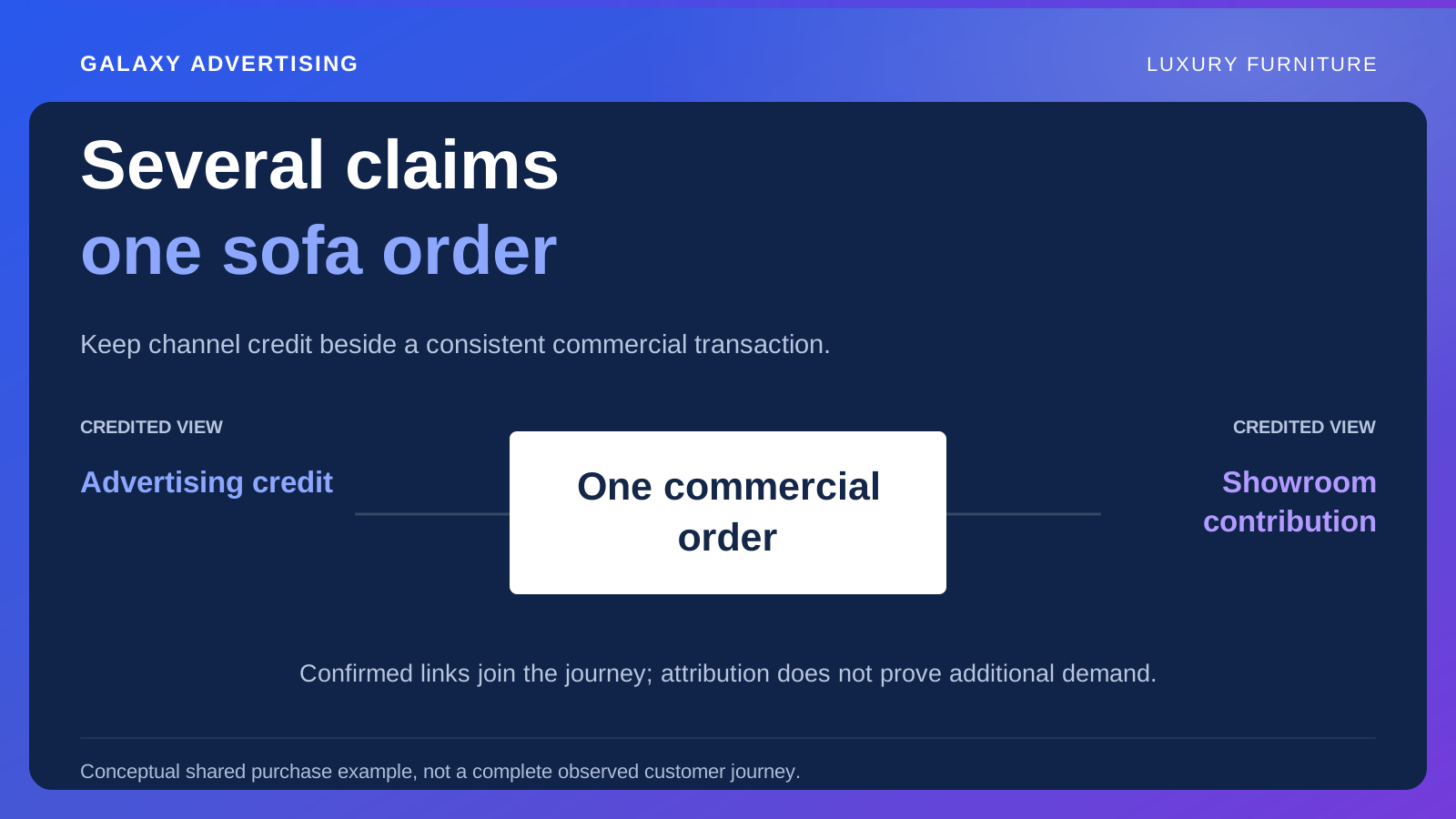
Retain campaign reporting for the question it answers, with its relevant attribution basis, meaning how it assigns credit for outcomes. A consistent management total and a platform's attributed result can coexist. Explain the relationship. Changing definitions between pages to make them appear to agree only obscures what each figure tells you.
Show the product differences that matter
Break out meaningful configuration or collection groups where their economics or operating needs differ. Resist splitting everything into so many categories that the commercial pattern disappears into tiny samples. More detail is useful only when it helps judgement.
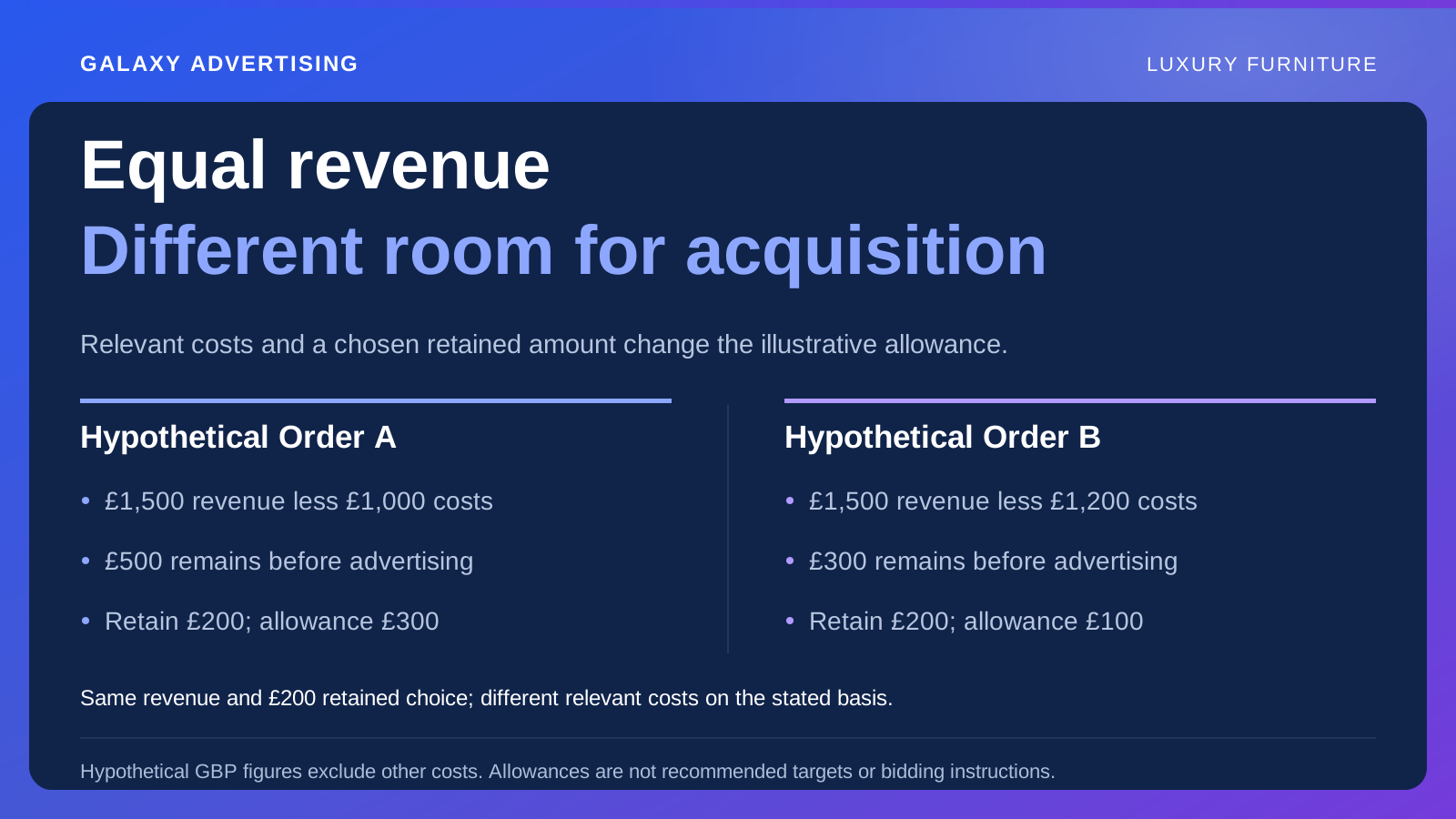
Explain why each distinction matters. Different delivery obligations or materially different contribution, the money remaining after the costs included in your calculation, can justify separate review. An internal catalogue label alone may add rows without helping you decide anything.
Include availability conditions during the period. If a range lost its most relevant finishes, it wasn't offering customers the same purchase throughout. Connect the product mix with what people could actually buy before judging how the range performed.
Be honest about how enquiries progress
Distinguish sample requests, product questions, quotations and orders using your agreed business definitions. Keep confirmed links between earlier records and later outcomes where those links are known. They provide useful context without requiring you to pretend every record is connected.
Don't construct a complete funnel from records you cannot reliably join. Similar timing doesn't establish that every quotation came from the enquiries counted in the same reporting period. A plausible story remains a story until the records support it.
Use gaps to identify a practical measurement or operating task. Maybe product references need to stay attached to enquiries. That is a different conclusion from deciding a channel has lost value. Explain what you know before giving an unresolved record a commercial interpretation.
Separate finished work from observed effects
Record material changes and the buying decisions they were intended to support. New configuration imagery, revised finish labels and an updated delivery explanation each have a particular purpose. State it so the reader can understand what the work was meant to improve.
Then describe the observations available so far. Publishing the information proves the work was delivered. It doesn't, by itself, prove a sales effect. Equally, an encouraging revenue movement doesn't establish that the latest content change caused it.
Recognise learning you can verify even when the commercial result is uncertain. A corrected product mismatch or clearer sales and marketing handover is a real achievement. You can report it without turning it into an unsupported claim about extra demand.
Explain exceptions that change the conclusion
Choose a manageable set of unusual events that materially affect interpretation. A large cancelled order, temporary configuration shortage or service change may belong here. Connect each with the figures it affects rather than leaving the reader to make the link.
This shouldn't become a catalogue of excuses. Ask whether the event changes the decision someone would reasonably make. If it does, explain the consequence and required action. If it doesn't, an operating note may be a better home than the main conclusion.
Assign a correction when an exception reveals a recurring weakness. Reporting the same unavailable finish repeatedly without changing the campaign or information process isn't useful context. It's an unresolved responsibility, and the review should make that visible.
Keep definitions with the report itself. Someone returning to an older review should be able to understand what a figure meant when the decision was made, without needing the current account manager to translate it.
Give the next action an owner
Name the action, who owns it and the evidence needed at the next review. It should follow from the report's reasoning. A generic promise to optimise further doesn't tell you what will happen or how you'll judge it.
State what the retailer must decide too. New imagery may need approval, or product facts may need verifying before the campaign manager can act. Make blocked dependencies visible while there's still time to resolve them.
A useful report makes your next conversation shorter and more precise. The figures become something you can question, connect to actual orders and use. When you can see the products and obligations underneath the revenue, you're in a stronger position to decide which growth is worth funding.