What if the customer asking about another dining chair finish simply wants it to work beside a table they already own? Sending the entire dining collection and inviting a room planning conversation could make a small decision feel unnecessarily complicated.
Another visitor could ask exactly the same opening question while planning a whole new dining space. The words alone won't tell you which. Clarify the scope first, then offer help proportionate to the actual task. That protects your team's time and gives the customer an answer they can use.
Find out what's already settled
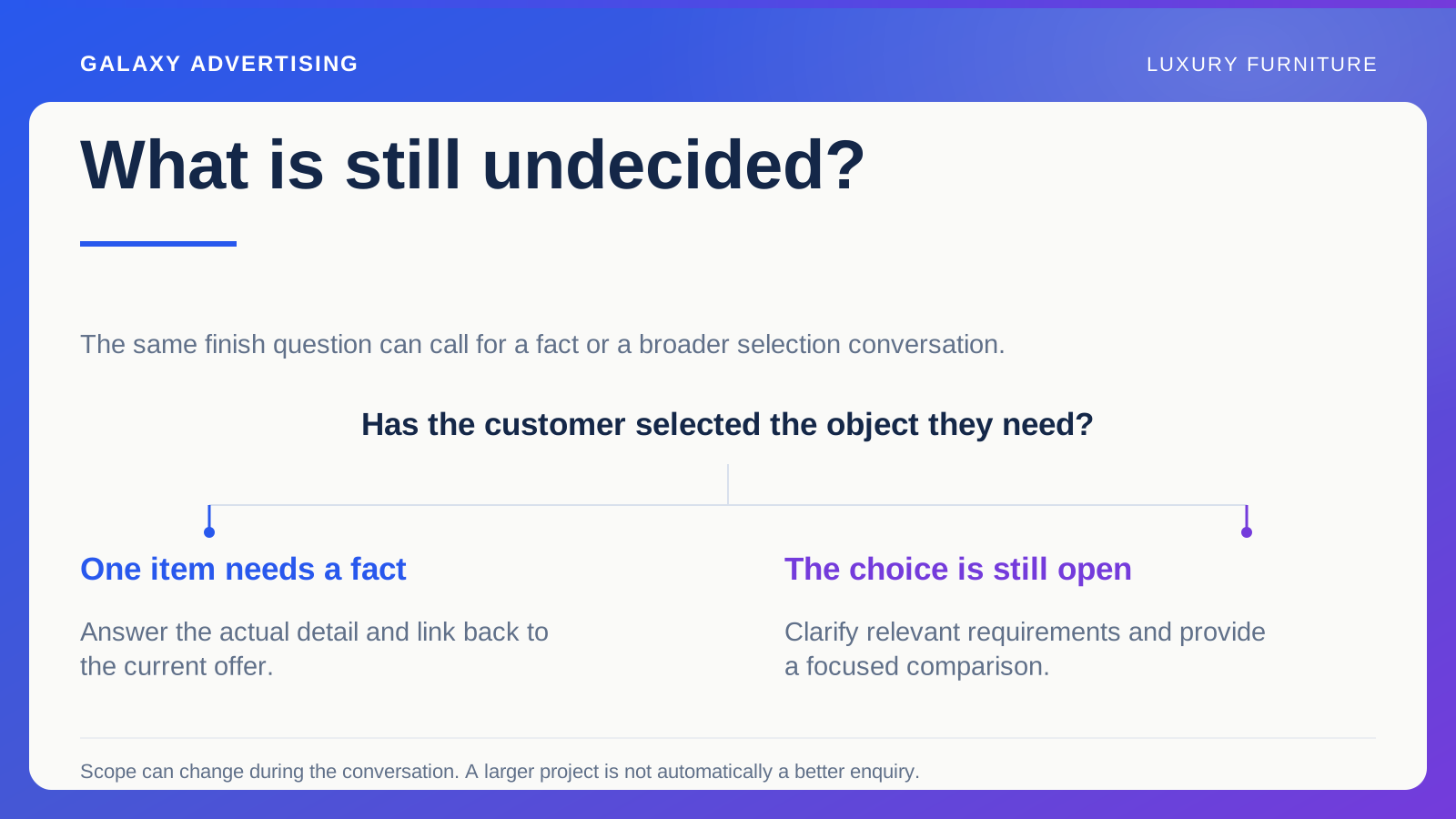
Ask which part of the purchase remains open. The customer might have chosen a product and need a verified detail. They might be comparing options, or beginning a broader project without any shortlist. Those situations call for different help.
Keep the question practical. Knowing whether a chair must work with an existing table can change which information matters. An elaborate household profile might add very little to the answer someone needs now. Understanding scope shouldn't feel like an interrogation.
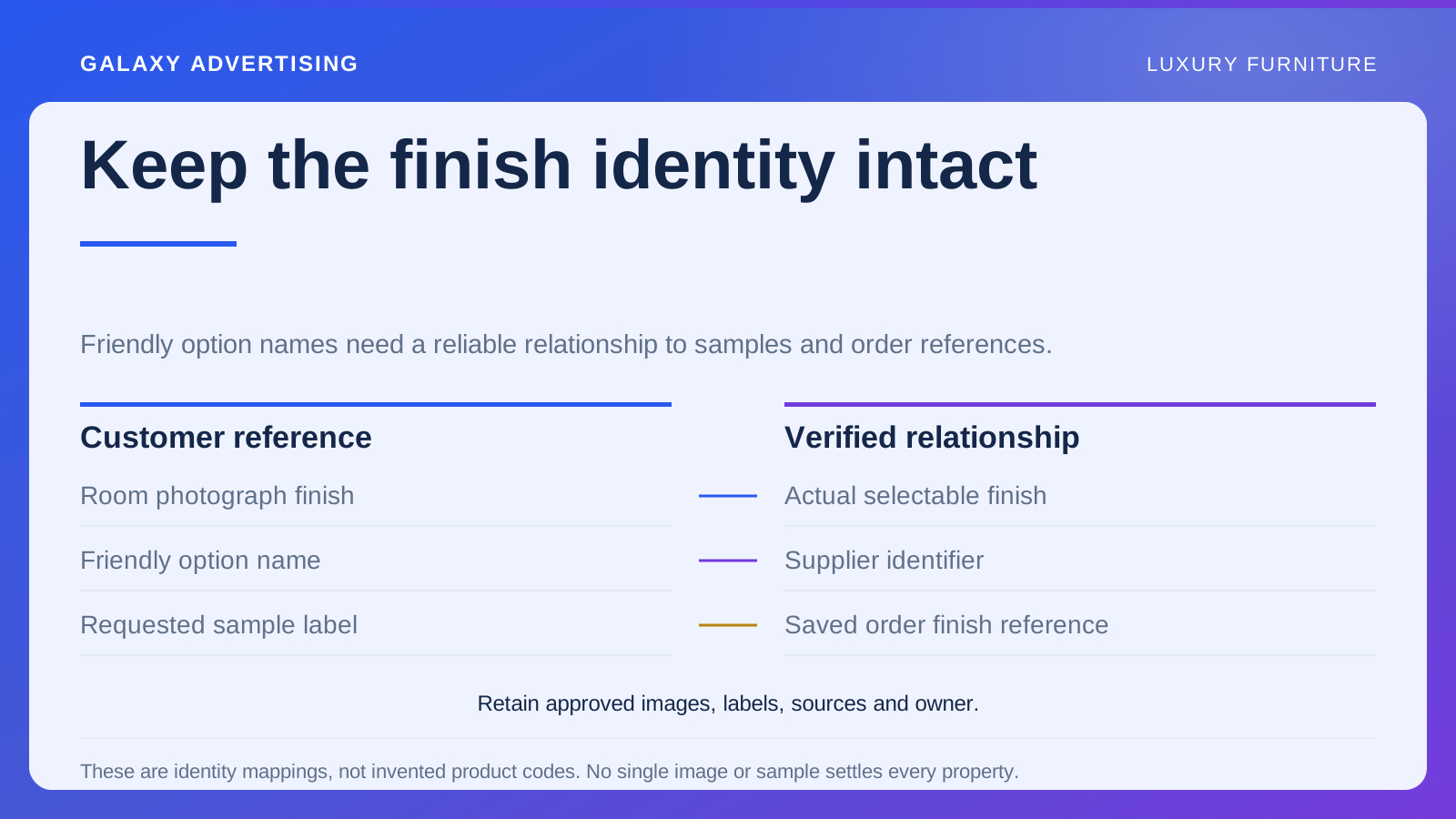
Record the product reference where one exists. Whoever handles the next conversation should know the chair, configuration or finish that prompted the enquiry. A general note saying “dining project” loses the useful detail the customer already gave you.
A fact question needs a different answer from a choice question
A factual request needs a dependable answer about the actual offer. A selection request may need a focused comparison and an understanding of the customer's relevant requirements. Sending both the same template assumes the work is identical when it isn't.
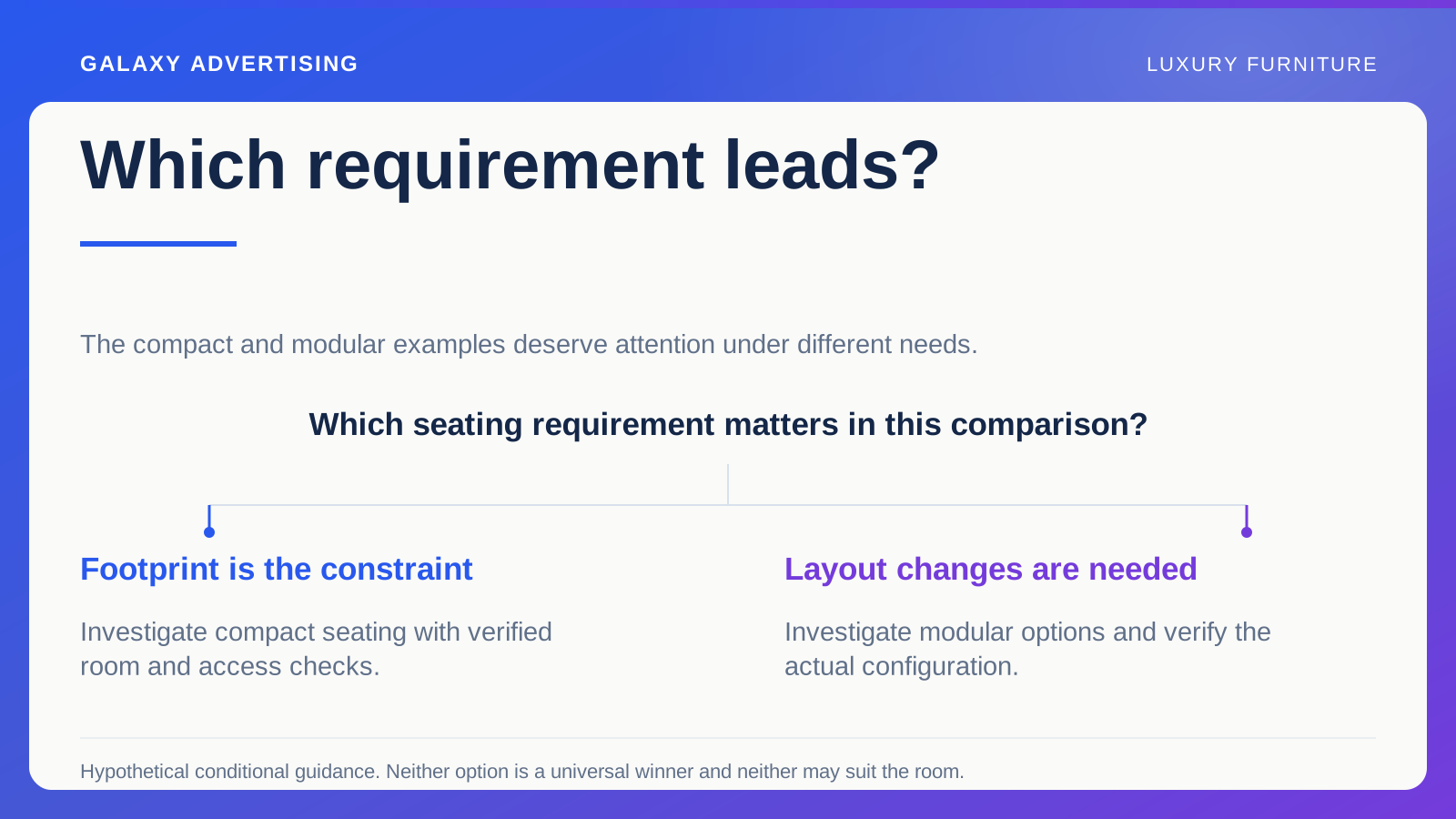
Take a hypothetical chair enquiry. Available finish names and current reference images might resolve the factual question. Choosing between several chair designs could instead require comparison against a documented dimension or a particular package choice. Keep the response tied to that distinction.
Don't let a broader consultation replace basic product information. If staff repeatedly answer the same missing finish question, improve the listing. Personal attention is valuable when it advances an individual's decision, rather than permanently compensating for an avoidable gap on your website.
Be clear about the help you're offering
If you provide design advice, product guidance or another service, explain what it includes. A friendly invitation to talk about a room shouldn't silently promise a complete specification or a level of professional assessment your business hasn't agreed to deliver.
Give staff a route for questions outside their role. A product adviser might be able to explain available options without being responsible for establishing every aspect of suitability in the customer's property. Don't leave that boundary for them to improvise during the conversation.
Clear limits needn't make the response cold. They help you provide accurate assistance and identify where another person or source is needed. The customer should understand what help is available before investing time in an extended discussion.
Send what helps the next decision
For a selected object, provide the relevant detail and a direct route back to its current offer. For a comparison, identify a small number of meaningful differences. For an open room project, offer a focused introduction to the relevant range, rather than an undifferentiated catalogue.
Distinguish styling references from product references. A coordinated scene can illustrate a possibility without establishing that every object is included or that the arrangement suits this customer's room. Keep those implications visible when using room photography to help the conversation.
Ask what information would help them decide next, rather than how much material the team can send. A concise verified answer may do more than a large presentation the buyer has to sort through. Your reply should reduce uncertainty, not hand back the sorting task.
Carry the decision forward between colleagues
When someone else follows up, retain the item reference, known question and answer already supplied. A change in staff responsibility shouldn't require the customer to repeat the project. They've already done that part of the work with your business.
Keep confirmed facts separate from assumptions. If they said they own a table, record that limited fact. It doesn't establish the table's dimensions, style or suitability, however familiar the description sounds. The next colleague needs to see what is actually known.
If a new question changes the scope, explain the transition. A finish request can grow into a larger selection conversation. Let that happen because the customer's task changed, rather than because your process automatically expands every enquiry into a more complicated opportunity.
Judge quality by the work you can help with
Eventual order value isn't the only way to judge an enquiry. Can you help the person investigate an available, commercially suitable offer? Does the information you supply support a meaningful next step? Those questions tell you something useful about the opportunity.
A small, specific question isn't necessarily poor quality because it contains no immediate buying declaration. Equally, a sprawling project description doesn't guarantee a viable purchase or justify unlimited staff work without a defined service scope. Neither size nor enthusiasm settles the issue.
Use patterns in the records to improve the route. Repeated factual requests suggest product information work. Repeated trouble choosing between options may justify a focused comparison. Those are different priorities, and a useful enquiry record lets you tell them apart.
End with something precise to do next
State the answer, relevant current offer and anything still needing confirmation. If follow up is appropriate, give it a purpose. A generic promise to check in says less than identifying the unresolved decision the next conversation should address.
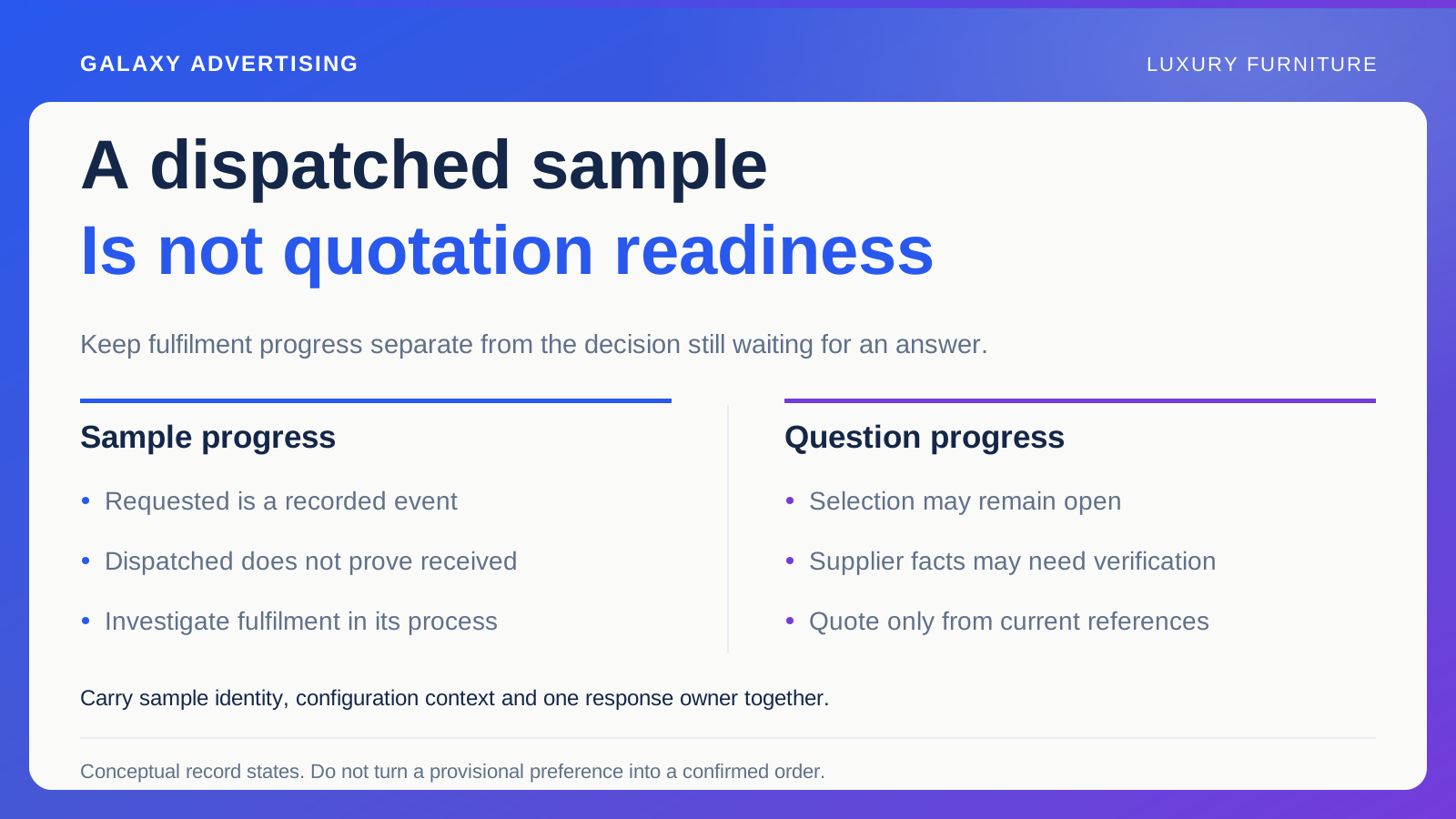
Keep the internal stage accurate too. An answered question, requested quotation and completed order are different states. Calling all of them an interested lead makes later reporting less useful and obscures what the business actually needs to do.
Understanding scope makes the conversation more accurate. The customer gets help suited to their decision, and you can allocate attention intelligently. Sometimes that means a clear fact about one chair. Sometimes it means a broader conversation. The useful route begins with the particular uncertainty the person brought you, rather than the size of opportunity you'd like it to become.