We can get so absorbed in the beautiful sofa photograph that the practical buying questions receive the leftovers. Yet your customer still needs to know whether it fits the room, whether the fabric suits the household, whether it can get through the entrance and what happens after payment.
Those questions belong inside the offer. They're part of how someone decides whether the lovely thing in the picture belongs in their life. Let the image create desire, then give the buyer a practical path to investigate the consequences of choosing it.
Make it clear which sofa they're looking at
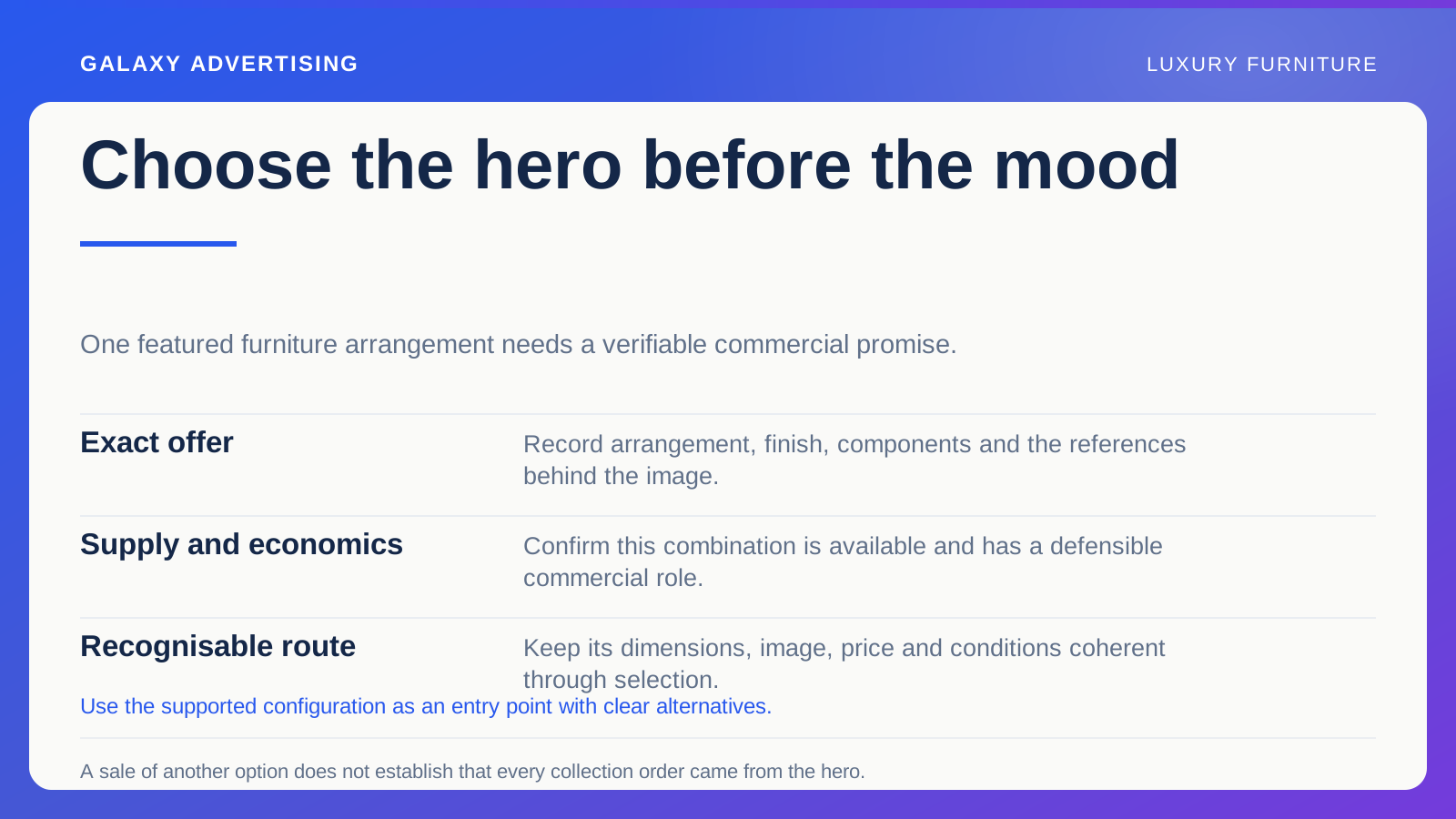
A modular collection can look like one product while containing several materially different offers. Your photograph might show a corner configuration, meaning the selected arrangement, while the headline price refers to a smaller version and the page opens with no option selected.
Identify what's shown and make the available arrangements straightforward to compare. Keep the chosen version's photographs, dimensions and price explanation together. A visitor shouldn't have to infer which portion of the image belongs to the quoted offer.
Take particular care when your creative communicates scale. A smaller configuration shouldn't appear to include the photographed version's seating capacity or extra modules. The room scene is part of the promise, even when the caption says very little.
Help someone take the fabric decision further
Colour names rarely explain how upholstery looks and feels. Use approved fabric references and useful close details, with the honest understanding that a screen isn't a physical sample. Attractive photography has a job, but it cannot do every part of material inspection.
If you offer swatches, explain what the customer receives, which variants are available and how they continue once they've chosen a material. A variant is the selected size, colour or configuration. If you don't offer swatches, the campaign mustn't imply you do.
Keep durability and cleaning claims tied to documented guidance. A styling opinion isn't a material property. Someone choosing for an active household needs more than “premium” printed beside several colour options, and unsupported reassurance won't answer their actual question.
Room fit doesn't settle delivery access
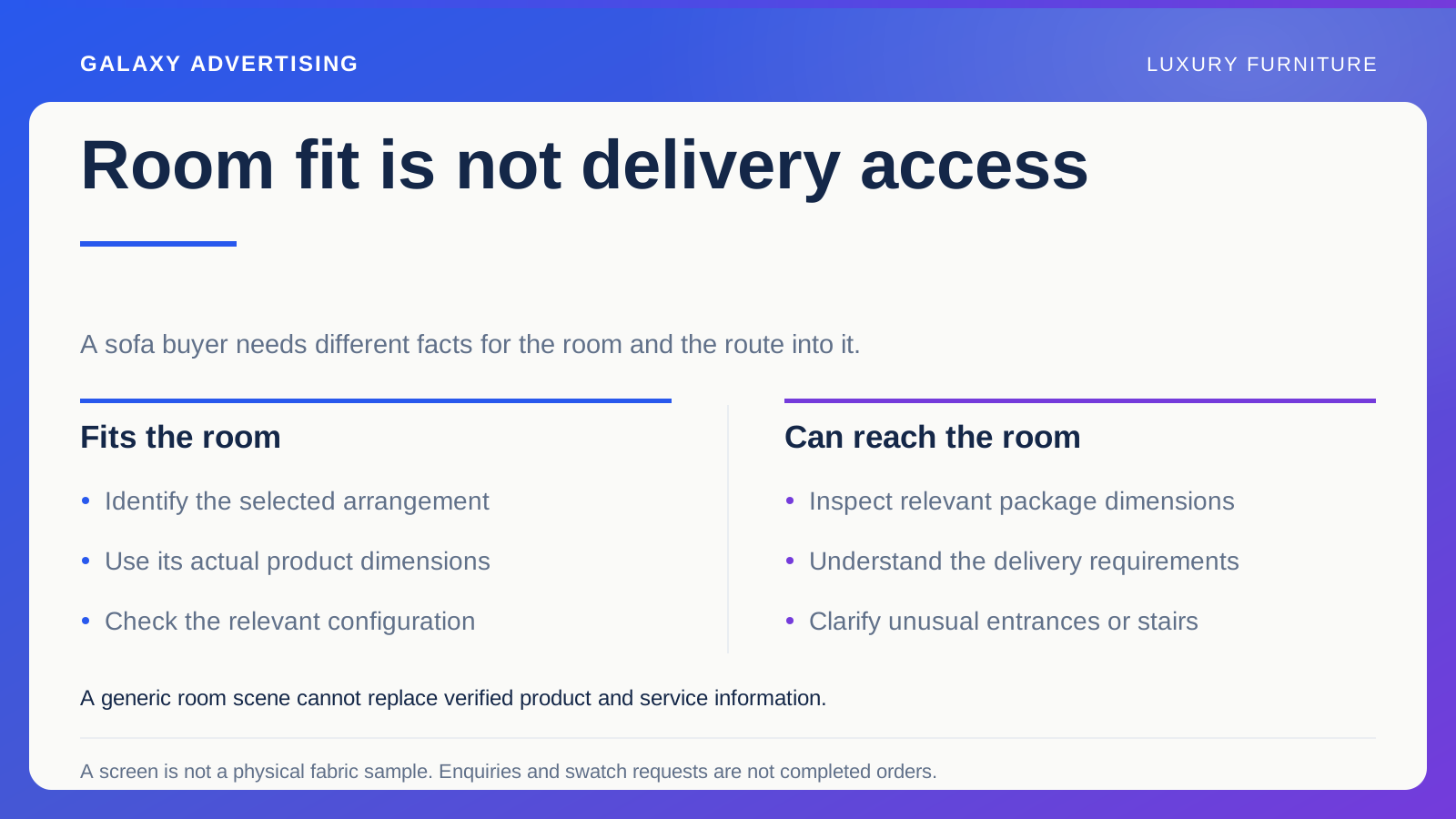
Your sofa can fit the room and still fail the journey into it. Product dimensions, package dimensions and delivery service requirements can describe different constraints. Keep those checks distinct so the buyer knows what each piece of information establishes.
Provide the relevant details and a clear way to ask about an unusual entrance or staircase. Don't promise the delivery team can overcome every access difficulty unless you can substantiate that for the service you're selling.
A measurement guide should lead people towards the actual product and service facts they need. A beautiful diagram using generic measurements doesn't replace dimensions for the configuration being purchased. Helpful presentation still needs the right underlying information.
Explain what happens after the order
A stocked sofa and a configuration made to order can bring different fulfilment expectations. Describe the applicable process accurately. Keep marketing informed when it changes, so the campaign continues to describe the offer the business can deliver.
Explain the service contents plainly. Doorstep delivery, room delivery and assembly mean different things. If an optional service changes the practical offer or total cost, help the customer understand that before checkout rather than leaving them to discover it later.
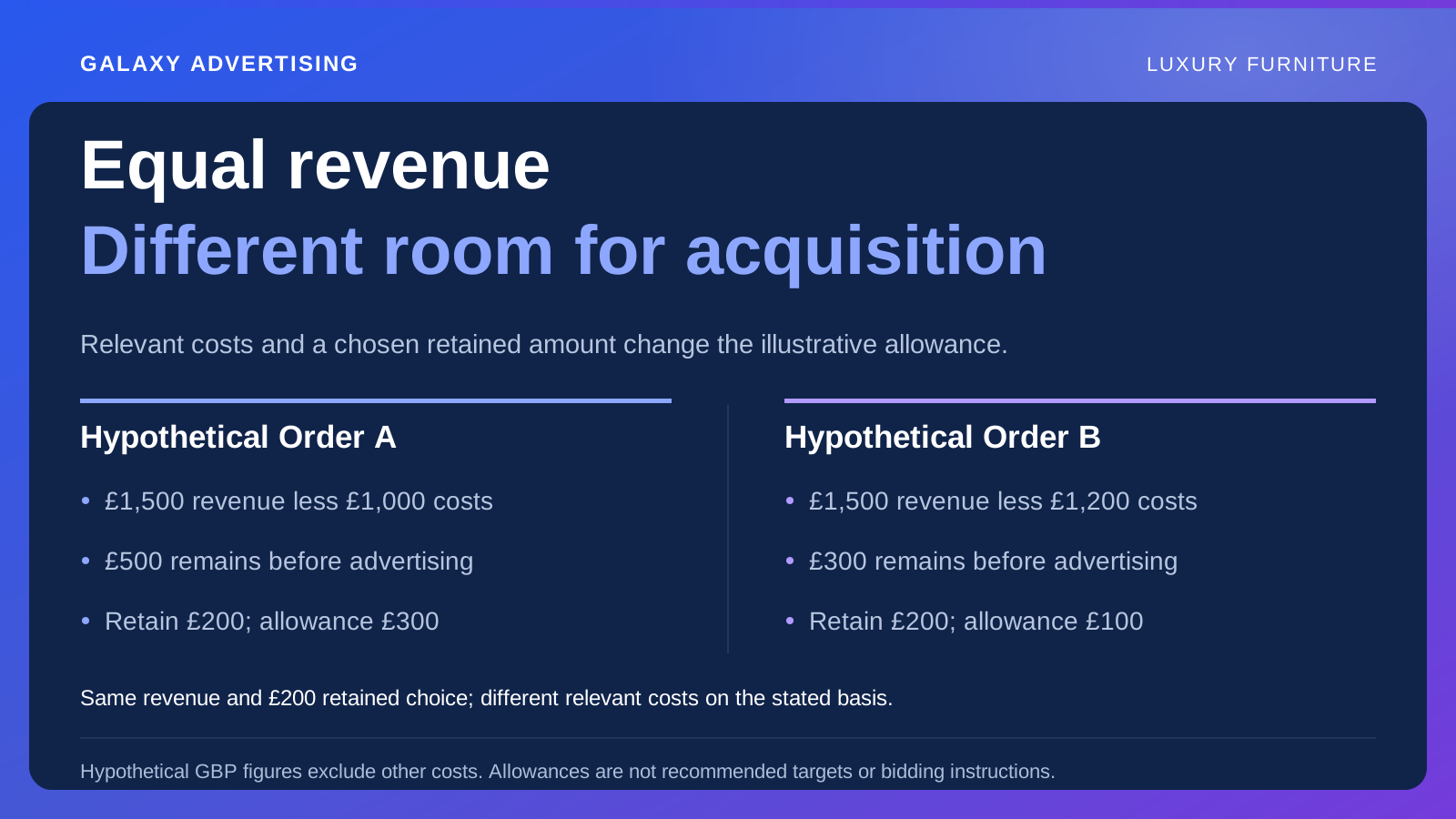
Process uncertainty can delay an otherwise suitable purchase, even when product and price are acceptable. The useful response may be clearer information rather than an incentive that reduces contribution, the money left after the costs included in your calculation, available to fulfil the order properly.
Give each creative idea one doubt to resolve
Build distinct concepts around distinct decisions. A room view communicates style and scale; a material close detail supports the fabric discussion. A configuration walkthrough explains the modular range, while a delivery explanation addresses a practical concern. They aren't simply alternative layouts for the same message.
Keep those arguments separate in your brief and make each destination finish the relevant explanation. Flexible configuration creative loses its usefulness if the page's option controls are difficult to understand. The customer still has the same unresolved decision after clicking.
One asset doesn't need to carry the entire sales conversation. Aim for a coherent path through the buying information. A video overloaded with every specification and service condition isn't the only way to be thorough.
Listen to enquiries without calling them all sales
Record questions from people who've looked carefully at the product. Group recurring themes around fit, materials, configuration and fulfilment, then improve the destination. There's little value in answering the same preventable question indefinitely while leaving its cause untouched.
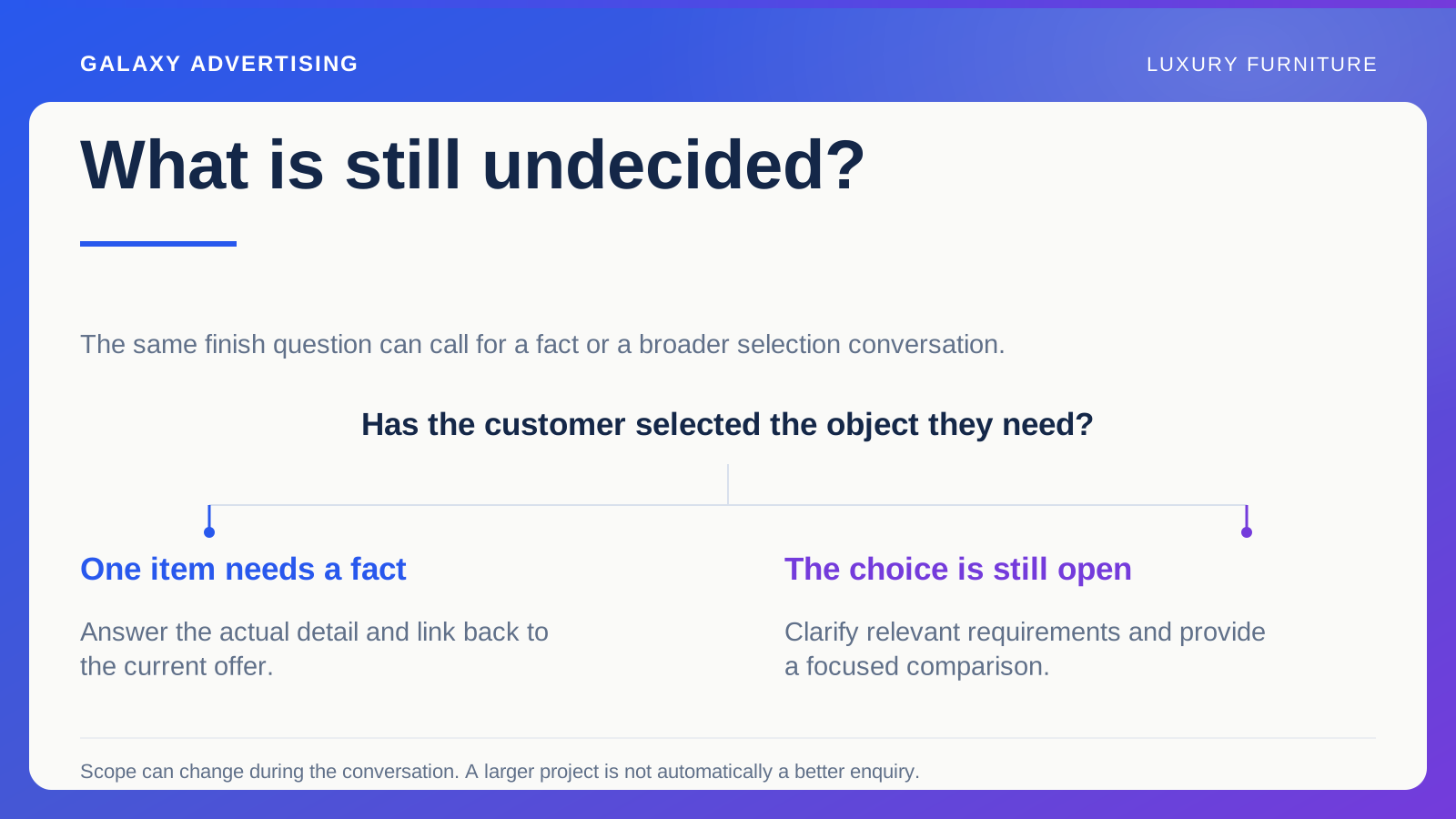
An enquiry can be valuable without being an order. It also isn't automatically as qualified as the next enquiry. Asking for an unavailable configuration is different from checking access before placing an order, and your commercial interpretation should preserve that distinction.
Where you have the information, review eventual purchases and contribution alongside those signals. Swatch requests and detailed visits help explain a journey. They aren't interchangeable with completed, profitable orders.
Walk the route with someone new to the range
Ask an unfamiliar buyer to identify the sofa shown, find its dimensions, explain the fabric they're assessing and describe the delivery service. Don't guide them towards the answers. Their difficulty could reveal an unclear label or a missing connection, rather than a need for more persuasion.
Record the precise confusion and the information needed to resolve it. You might improve a configuration label, connect the swatch process to the relevant finish or place an access question beside the delivery explanation. Those are separate corrections and may have different owners.
This isn't statistical evidence about every customer. It's a practical check for avoidable ambiguity before you pay to bring more people to the same offer.
Make the practical promise worthy of the image
Imagine a hypothetical corner sofa promotion. The image identifies the arrangement, the page allows dimension comparisons, the fabric section provides a real inspection route and the delivery section explains access and service conditions. Each addresses a different uncertainty.
That's a more defensible proposition than expecting premium imagery alone to establish confidence. Beautiful presentation matters. The buyer still has to live with the physical and commercial consequences of their choice.
Give a suitable customer reasons to want the sofa and reliable information to judge whether it belongs at home. Otherwise more traffic only means more people arriving with the same unanswered questions.