 Meta Ads
Can you support more Meta orders if the popular configuration has limited stock, delivery has little spare capacity and the creative library depends on one demonstration? A promising account report gives you a reason to investigate expansion. It doesn't settle those dependencies.
A substantially larger budget changes more than a number in the platform. It can change the product mix, audience reached and operational workload behind the orders.
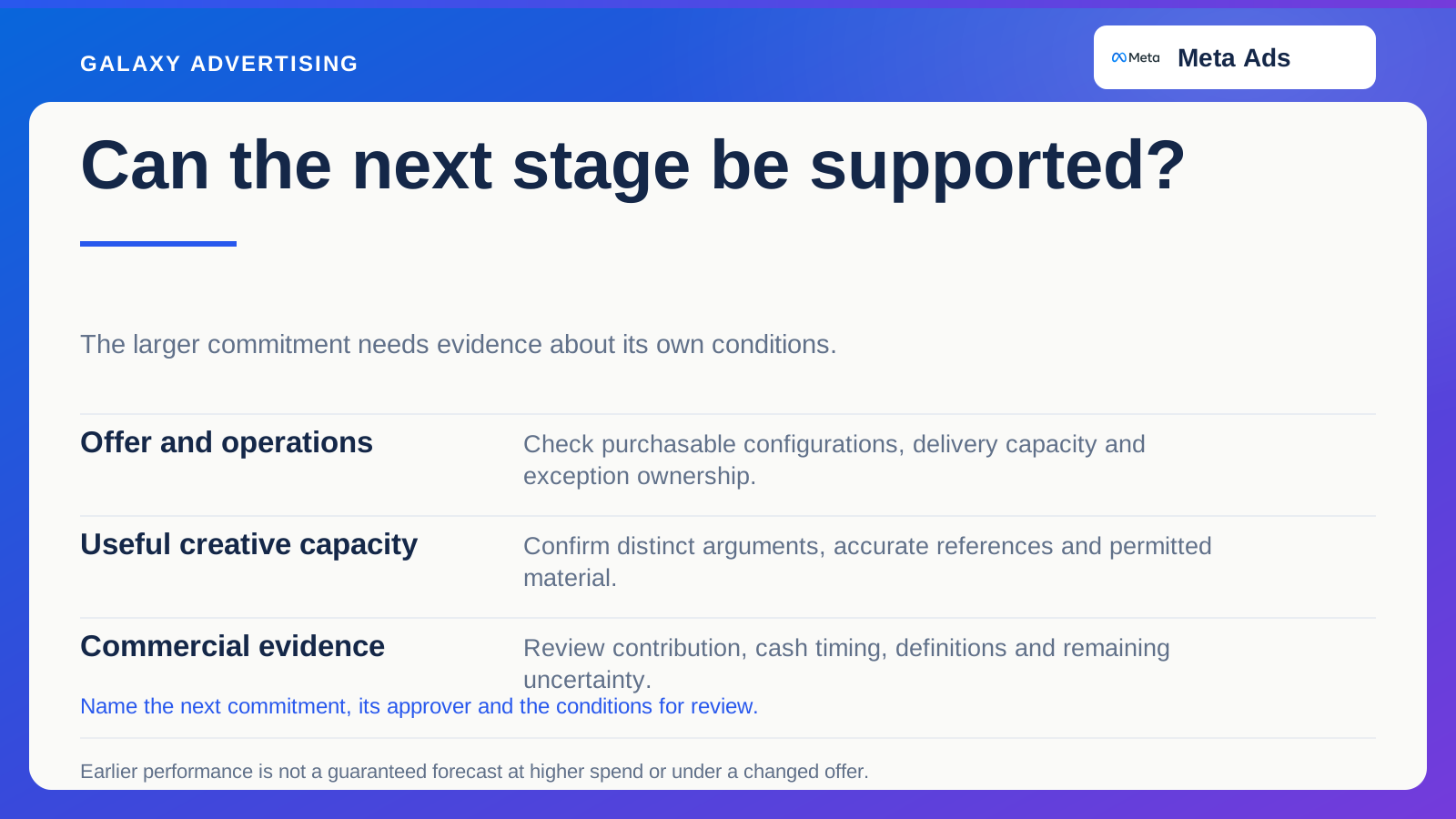
Check whether the business can support the demand and evidence it wants to obtain. The next commitment needs its own reasoning, rather than an assumption that a larger version of today's programme will behave identically.
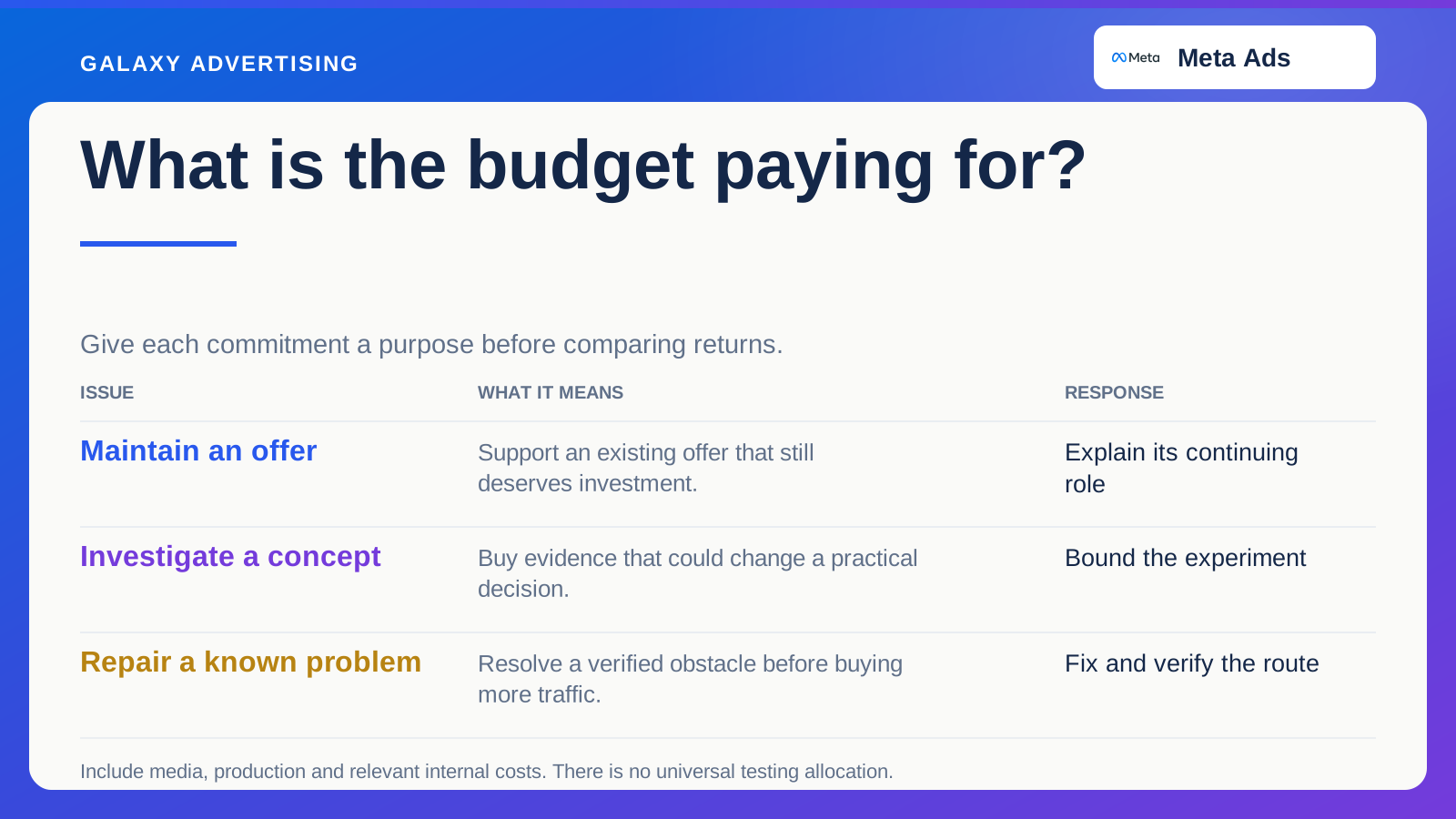
What is the extra investment meant to change?
State the proposed investment and commercial opportunity. Are you seeking more demand for the same stocked product, introducing a range or entering a different market? Each brings different dependencies, so the word scale isn't a plan by itself.
Ask the account team which opportunity the additional money would investigate. They should explain why the existing evidence makes that a reasonable next step. That gives the commitment a purpose you can assess beyond the wish for more growth.
Keep earlier results in context. A useful campaign under one price, availability position and customer mix doesn't establish a universal acquisition cost. You need a defensible hypothesis about the conditions the next investment will encounter, with limits that reflect the uncertainty.
Check the options people can actually buy
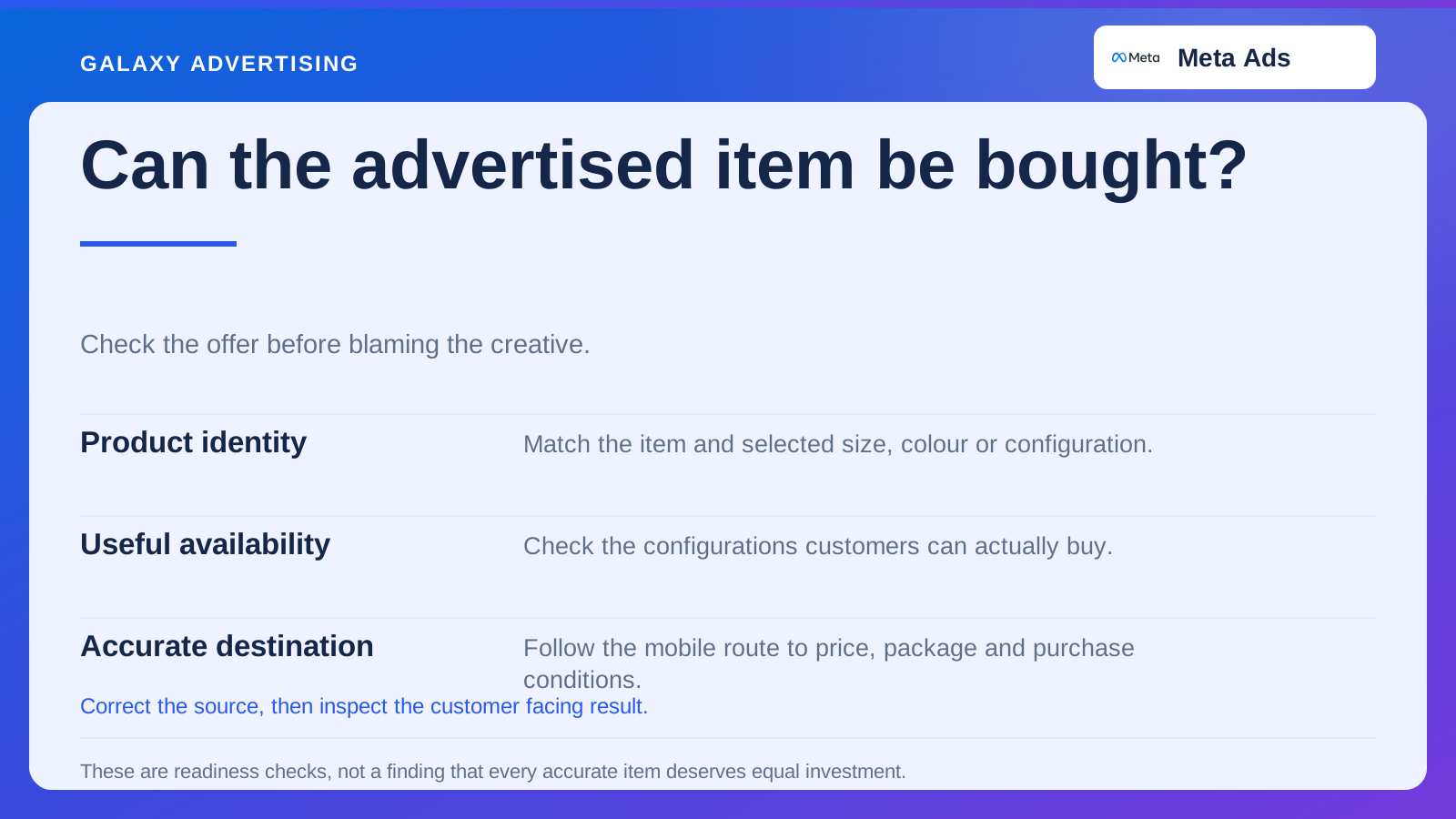
Review availability by meaningful configuration, rather than a broad product label. Identify which options produced earlier orders and whether the next customer can still buy them. A general stock position can hide a very different offer.
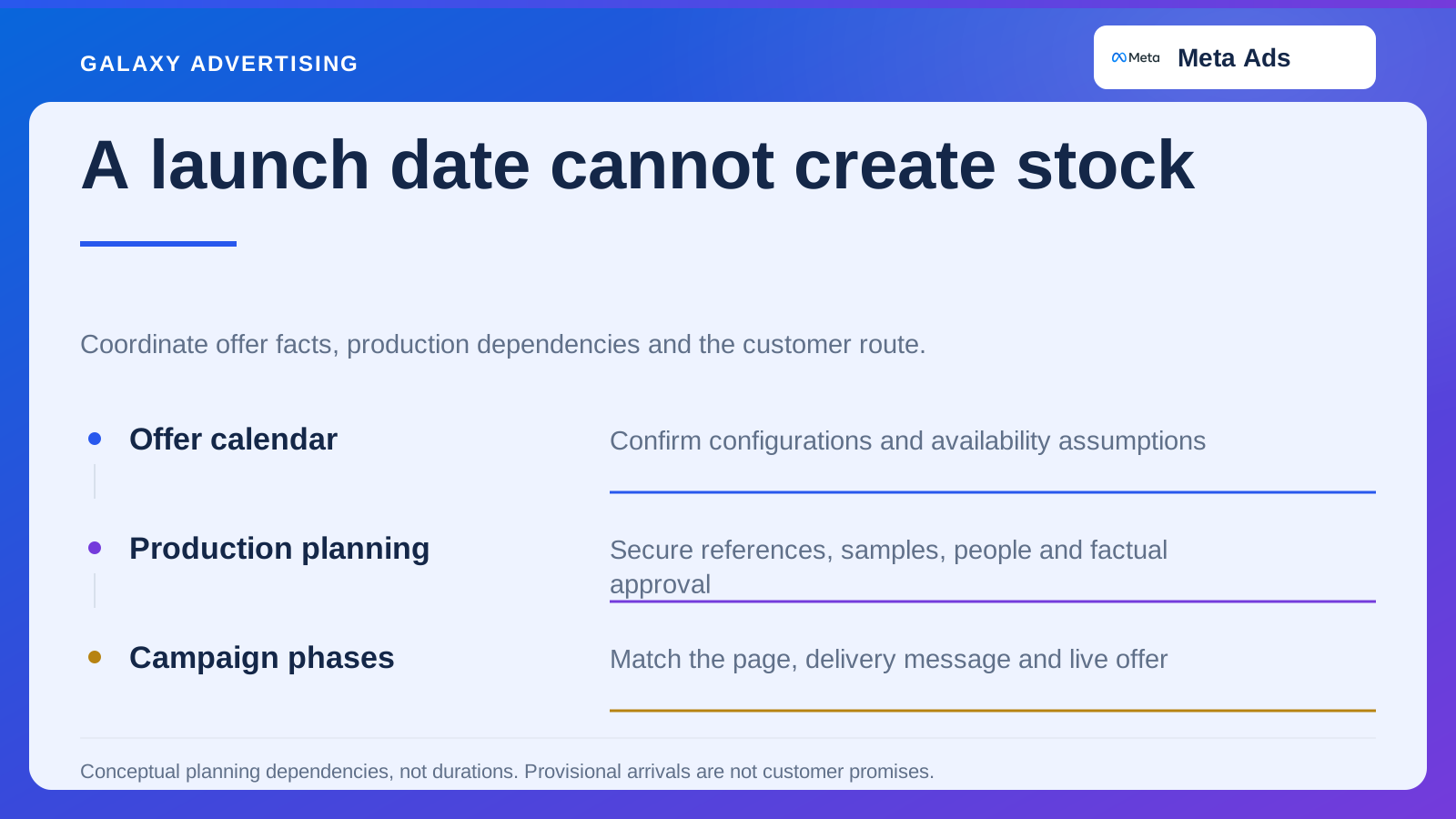
Imagine a hypothetical table campaign that performed well while its most popular finish was stocked. If the next phase mainly offers another finish with a longer lead time, you're promoting a changed proposition. The plan should acknowledge that change rather than treating the earlier result as directly transferable.
Ask merchandising how quickly availability updates reach advertising. Greater investment increases the cost of slow information. When a campaign relies on a small group of purchasable items, a workable exception process can matter more than another broad account adjustment.
Ask operations what more orders would require
Review relevant delivery arrangements, customer enquiries, returns handling and supplier dependencies. Ask operations what additional volume would require, without assuming every retailer encounters the same constraint. Your particular operating arrangements determine the useful questions.
Separate demonstrated capacity from optimism. A planned service improvement that isn't implemented belongs in the dependency record. It cannot support a stronger customer promise today simply because the business hopes to have it ready.
The advertising team doesn't need to manage every operational task. It does need a reliable way to hear when the conditions of the offer change. Otherwise, increasing activity can leave the campaign communicating a promise that the business has become less able to fulfil.
Count useful arguments, rather than files
Review the distinct propositions your creative library supports. Several crops of one demonstration offer operational flexibility, but the programme can still depend on a single customer argument. File count won't expose that dependence.
Identify the next credible question worth addressing and the evidence available to answer it. An accurate product reference pack, usable footage and clear permissions can reduce the effort needed to prepare a new concept. Readiness includes knowing what you can show truthfully.
Don't commission a large production package simply to make the library look ready for expansion. Additional assets need a role in the buying journey and a plausible learning purpose. Creative capacity means being able to produce the next useful explanation, rather than an obligation to publish continuously.
Revisit both contribution and cash
Check order economics using your agreed definitions. Contribution is the money remaining after the relevant costs in that calculation. Consider whether expansion will promote a different product mix or introduce material additional fulfilment costs. The current average may conceal those changes.
Cash timing needs a separate review. A commercially acceptable order can still require stock or service funding before you receive the full practical benefit of the sale. Finance should judge affordability against the actual operating arrangements, rather than assuming contribution answers the cash question too.
Don't present a historical return as a guaranteed forecast. Show scenarios with their assumptions and distinguish them from observed outcomes. A range of plausible cases may be more useful than a precise growth projection built by extending an unchanged average.
Make the evidence fit the larger decision
Confirm that important transaction and value definitions remain understood. A small uncertainty tolerated in an exploratory test might deserve investigation before informing a materially larger commitment. The decision has changed, even if the report hasn't.
Check that reporting distinguishes relevant products and conditions. A blended result can conceal a stock problem or less attractive range. More spending could amplify the hidden issue instead of reproducing the reassuring average.
You don't need perfect visibility into every customer. You need enough reliable evidence to judge the next decision honestly. State remaining limitations and choose a commitment whose risk you can support without pretending those limits have disappeared.
Walk through a hypothetical interruption: the featured configuration sells out early. Who receives that information, which approved alternative replaces it and what happens to the destination? The response needs to work at the larger investment level. Relying on one person noticing a stock email in a busy inbox may be tolerable during a small exploration and unsuitable now. Resolve that dependency before calling the budget the only remaining decision.
Give each next stage an owner and review
Agree who authorises the next stage and which conditions need attention. An unavailable product, inaccurate promise and uncertain commercial result need different responses. One vague stopping rule won't serve them all.
Record the actual changes. Connect new investment with availability, creative, destination and operational conditions, rather than comparing headline ratios in isolation. If the stage proves useful, say what it establishes and what still needs testing.
If it exposes a constraint, resolve that before repeating the expansion request. Scaling is a sequence of commercial commitments made under particular conditions. Understanding and maintaining those conditions gives the larger budget a business ready to support it.