 TikTok Ads
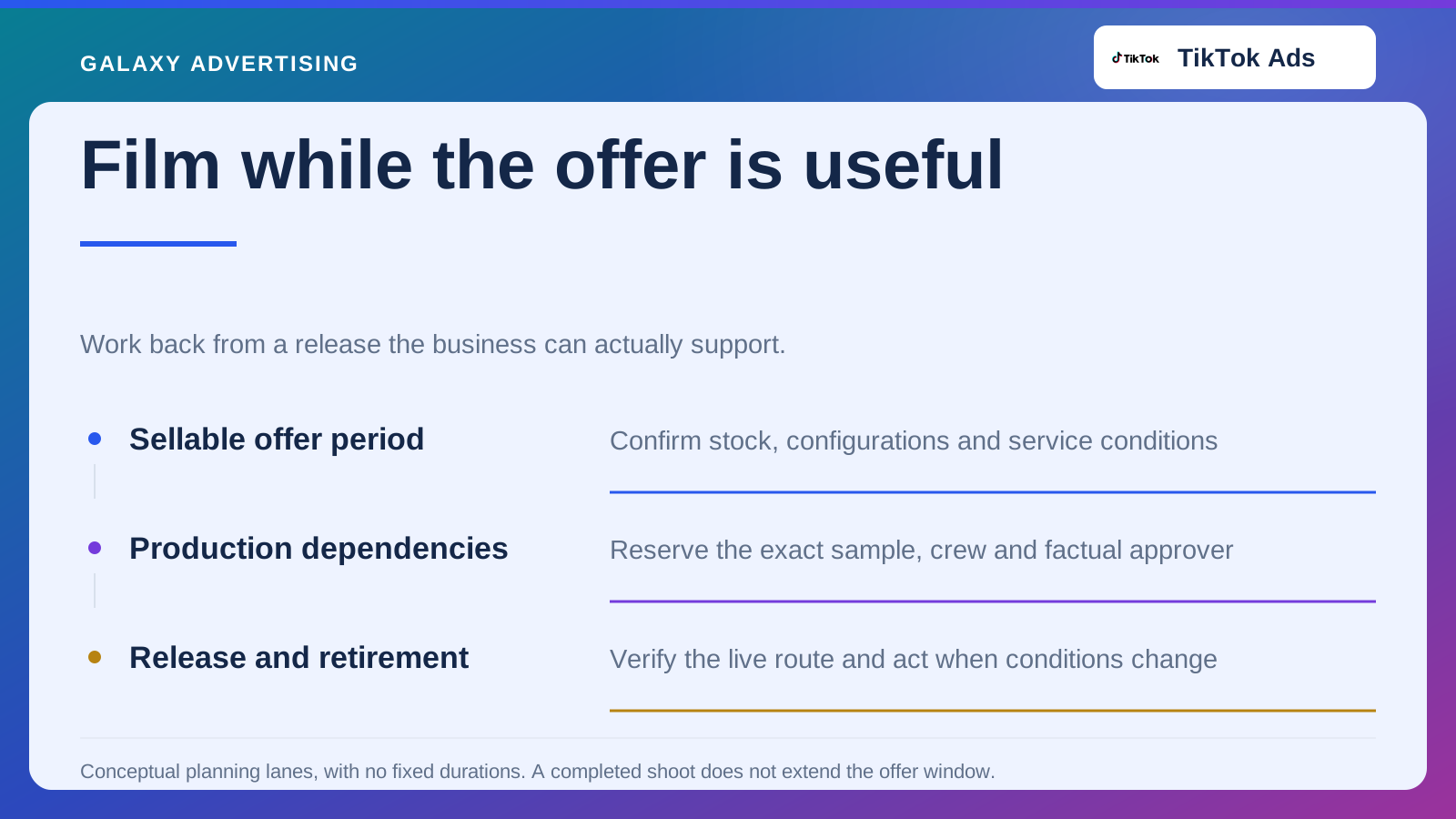
An approved desk video can become inaccurate when its storage accessory turns optional and its pictured finish becomes unavailable. Its earlier promising performance doesn't make those changes disappear. Reusing the old file can bring an old offer back into circulation.
The original approval may have been perfectly accurate. It described the particular finish, accessory and introductory price available then, rather than a promise that the video would remain correct indefinitely.
Connect important assets to the facts they represent. Then give the team a practical way to act when those facts change. Approval needs a maintained connection to the offer after filming finishes.
Record what the video actually promises
Identify the exact product, configuration and package shown. Include written captions, spoken claims and relevant implications from the scene. The factual review needs to cover the whole message someone receives, rather than only the script.
Visible accessories, components and product arrangements can shape expectations about what arrives. A demonstration communicates those things even without naming them. Examine the scene alongside the words, so implied inclusions don't slip out of the approval process.
Give the approved version a stable reference. Calling something the storage desk video isn't enough when several edits contain different prices or configurations. When a fact changes, the campaign owner needs to identify the actual affected asset. A recognisable description still needs a reliable version behind it.
Connect changing facts to the people who own them
Separate specifications from temporary commercial conditions. A documented measurement can stay stable while price, stock and delivery change more frequently. Those facts need different maintenance expectations, even when they appear together in the same video.
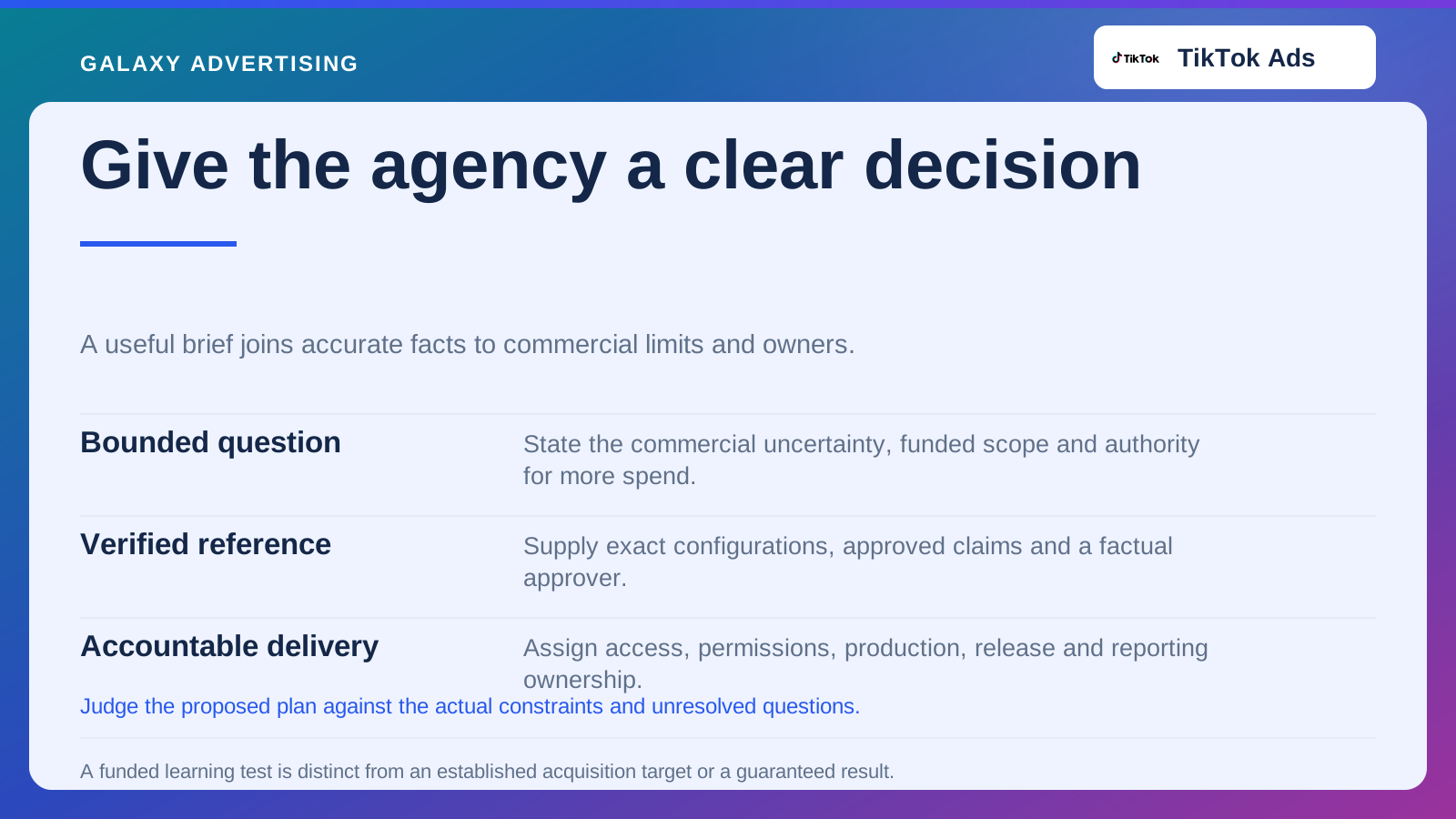
Name the person or system responsible for each important fact. The account manager may coordinate release, but the final video can't verify supplier availability or a service exception. Information needs to come from its factual owner.
A contact list alone doesn't establish how a change reaches people using the asset. Agree which material changes require notification and what the recipient needs to know. Include relevant item references and the current expected state. Ownership becomes practical when the notification helps somebody identify what needs checking and why.
Treat the images as product information
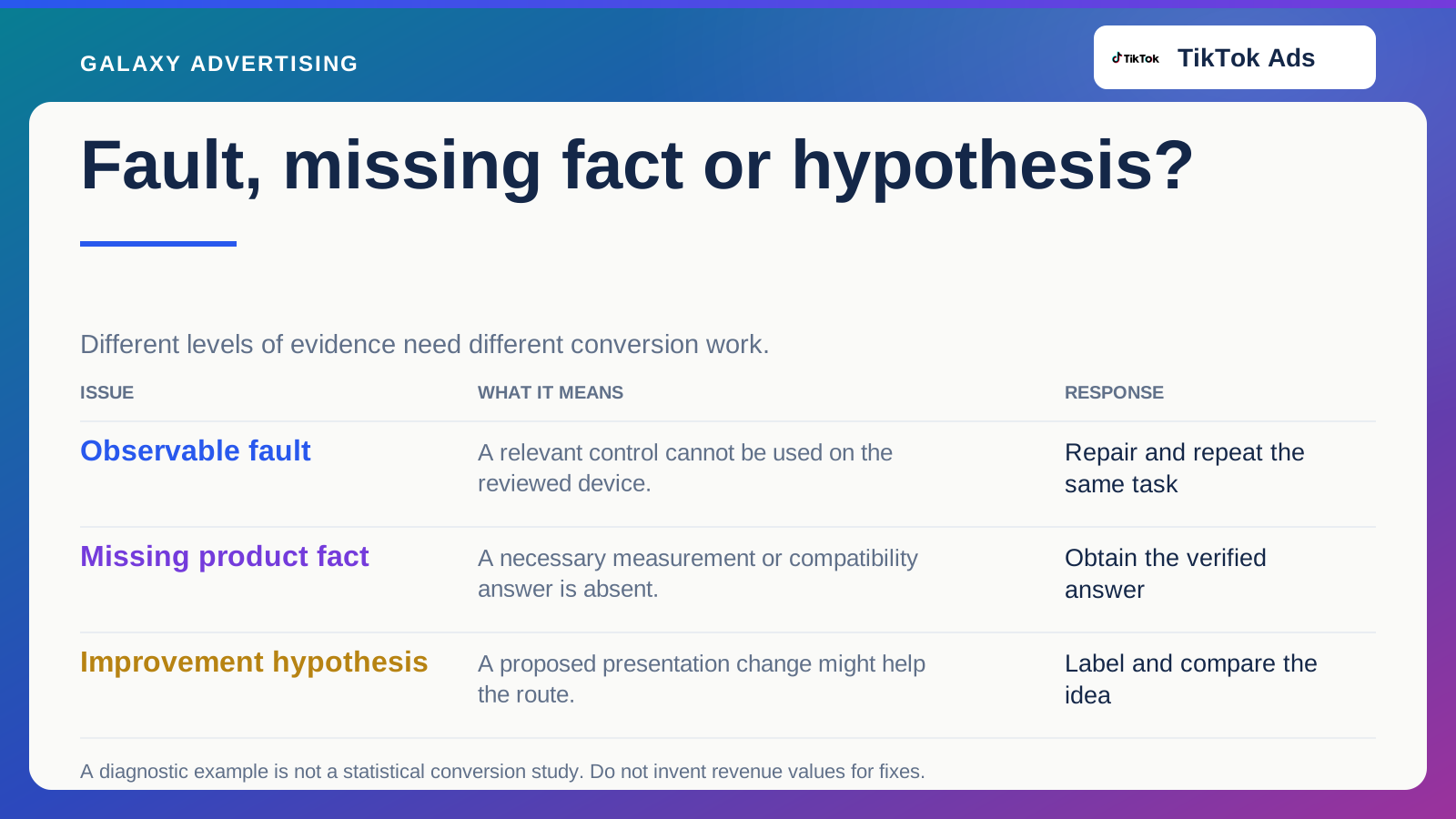
Compare the footage with the actual product and approved references. A different finish or component can mislead while the main model name remains unchanged. The name is only one part of the identity the customer sees.
Give generated or substantially edited scenes particular scrutiny. A convincing image can change proportions or add a feature the real item doesn't contain. The factual reviewer needs the underlying reference as well as the polished output. Appearance alone cannot settle the accuracy check.
An old approved image isn't automatically suitable for a revised package. If an accessory becomes optional, make that relationship understandable in the new presentation. The change may need another edit or another asset. Quietly changing the destination won't necessarily correct what the video continues to imply.
Decide who can act when a fact changes
Agree the immediate response to an unavailable configuration, incorrect price or unsupported claim. The team needs authority to correct or stop the affected activity while the offer is reviewed. Leaving that authority unclear can keep an inaccurate promise running while people work out who decides.
Earlier performance is relevant commercial history. It doesn't justify continuing a promise you know no longer matches the product. Don't make the decision implicit just because retiring a strong historical asset feels uncomfortable.
Keep the response proportionate to what the customer is likely to understand. A small verified correction, replacement configuration or full retirement may be appropriate. The inconvenience of changing an existing file shouldn't determine which one you choose. The important question is what the revised presentation would communicate.
Check the whole route after making a correction
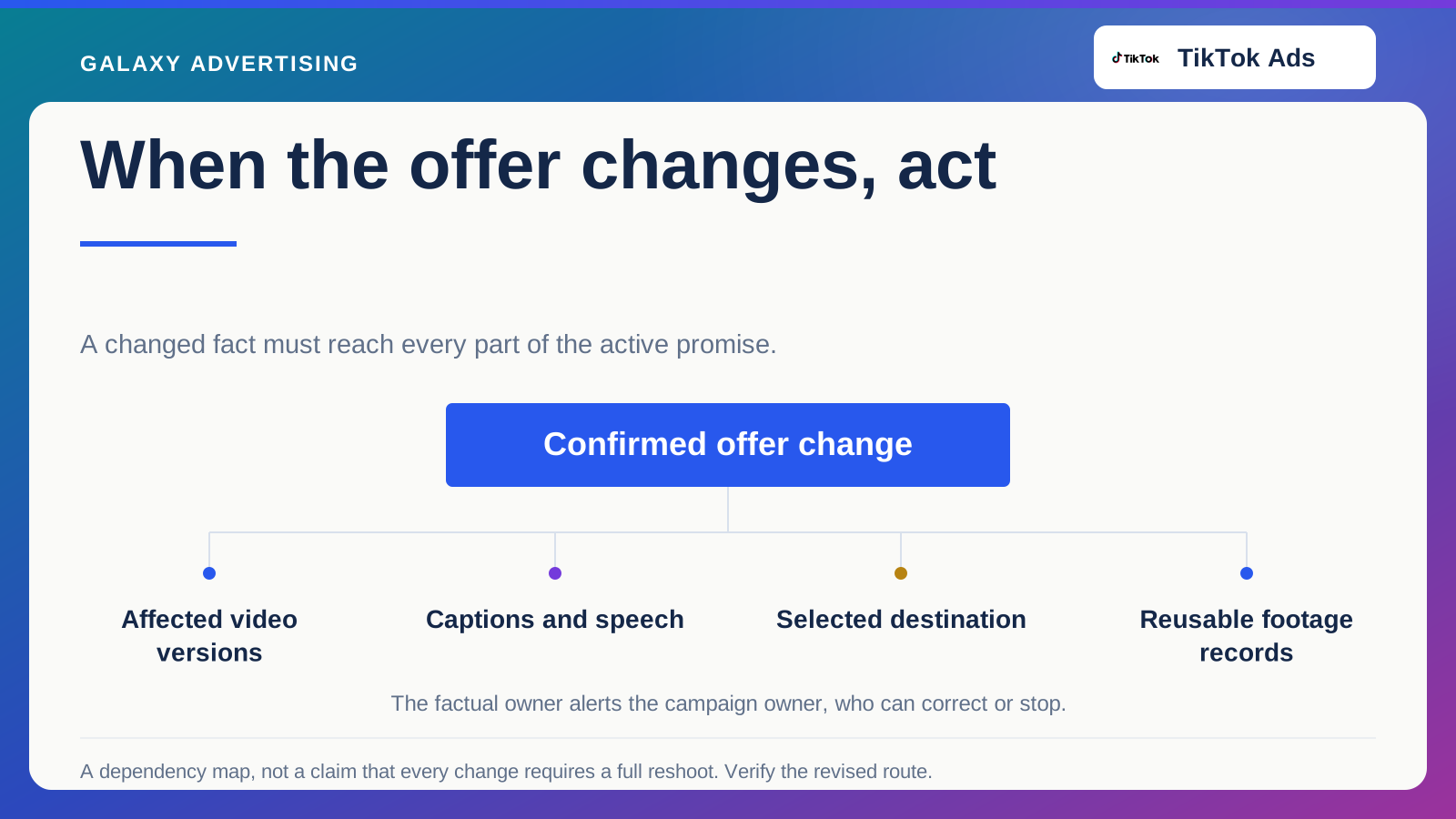
Review the revised asset, caption and destination together. Updating a price overlay doesn't prove spoken copy and the selected product page now describe the same offer. One corrected element can sit beside another that still carries the earlier promise.
Follow realistic changes of configuration on the website. The opening view can be correct while another size or finish introduces ambiguity. Visitors should understand their selection and whether it differs from the demonstration. A correct starting state isn't the whole route.
Keep a concise verification record with the relevant item and version references. Somebody else should understand what was checked without asking the editor to reconstruct the release from memory. The record needs enough specificity to make the correction reviewable later.
Separate usable footage from expired edits
An expired promotional edit can contain accurate product footage worth retaining. Preserve that distinction, so another editor can reuse useful material without inheriting an obsolete price or claim. Retiring one version needn't mean discarding every frame.
Label footage by its demonstration and product reference. Mark outdated configurations and material whose restrictions need checking by the responsible person. That gives reuse a factual starting point rather than treating every file as available for every purpose.
The efficiency comes from building on verified evidence while deliberately changing the proposition. Reuse should be a controlled editorial choice. Otherwise, the shortcut can quietly reintroduce the very offer you meant to retire.
Try a realistic exception before relying on the process
Review a configuration with an optional accessory, another with a different service arrangement and an item whose imagery recently changed. This tests the process. A few examples don't prove accuracy across the entire catalogue, so keep the sample's purpose clear.
If sources conflict, establish which record owns the underlying fact. Repeated downstream caption corrections can leave the original contradiction waiting to return during the next production cycle. Resolve the source rather than making the same repair repeatedly.
Ask the campaign and product owners to explain the same exception independently. Different interpretations call for a better handover, rather than an assumption that more careful editing fixes an ownership gap. This challenge can expose the weak point before another launch depends on it.
Put continued accuracy into the operating plan
Assign an owner for active asset review and connect it to product changes. Set the cadence around how often relevant conditions change and what the campaign claims. There's no universal refresh interval that settles that decision.
An unchanged, accurate demonstration and an expired offer need different responses even if produced on the same day. Approval stays useful when the team knows what each asset promises, who owns the facts and how to respond when the offer moves on.