 TikTok Ads
We can mistake the arrival of summer weather for the moment to start planning summer videos. Then the creator is available late, the garden product sample arrives late and approval takes another week. By the time the strongest footage is ready, the pictured finish has limited stock and the delivery promise has changed.
Production time is only part of the problem. The plan followed a general season instead of the dependencies of the actual offer.
Connect filming, product readiness and customer purchase conditions before launch becomes a deadline everyone feels obliged to meet. The useful window belongs to the offer, rather than the day the video is finally finished.
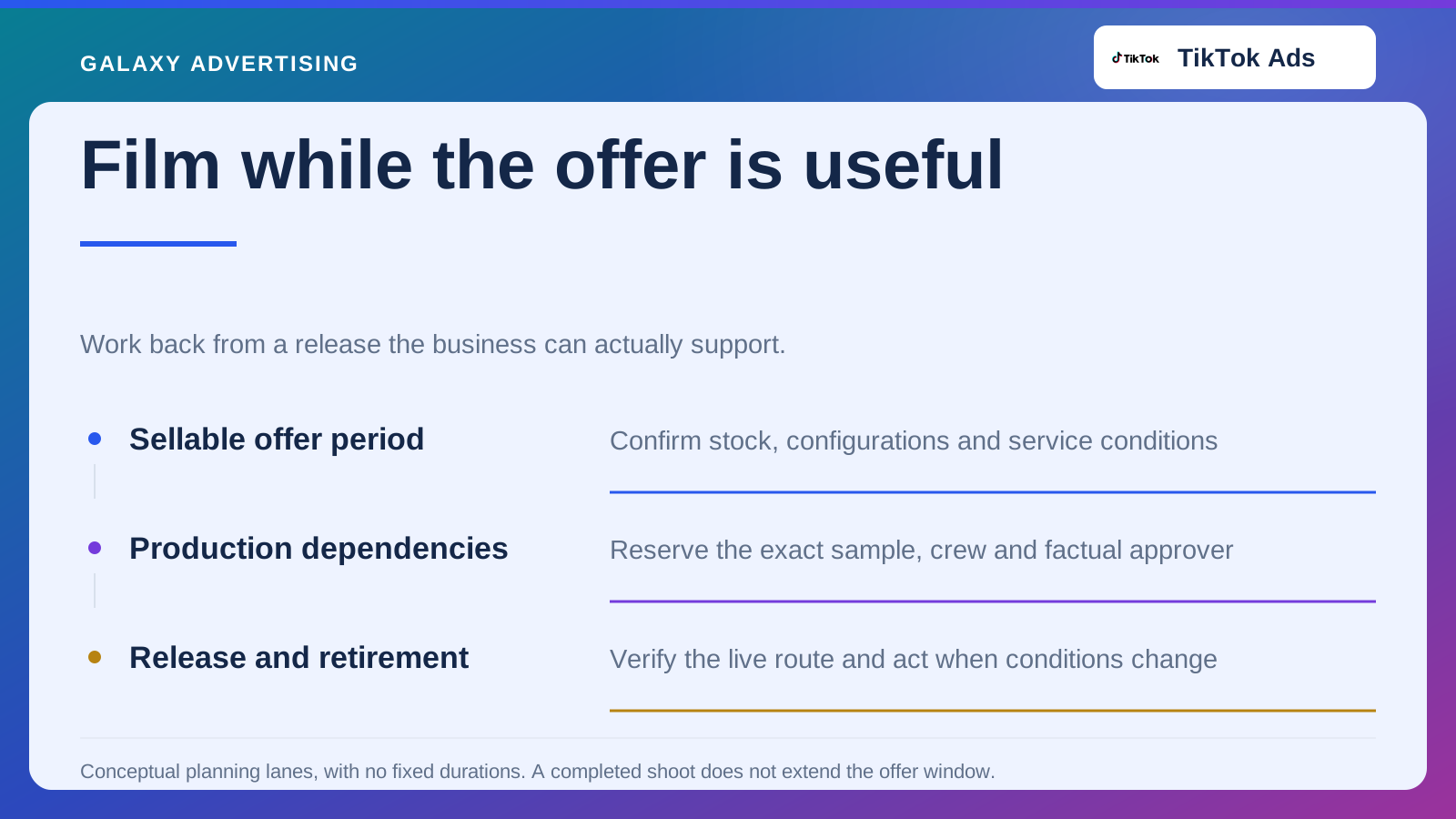
Start with the period you can actually sell it
Ask merchandising which configurations you expect to supply and what's known about replenishment. Confirmed stock is different from an assumption that more inventory will arrive in time. Keep the distinction visible when choosing what to show.
Ask operations which service promises apply during the campaign period. A product can remain purchasable while delivery becomes less suitable for the seasonal use in the advert. Availability alone doesn't establish that the customer can use it when the scene implies.
For a hypothetical outdoor dining set, a video centred on a particular summer gathering shouldn't imply every new order will arrive before that occasion. The creative and destination need the actual offer and relevant timing conditions. The mood of the scene cannot do that factual work for you.
Work backwards from a release you can verify
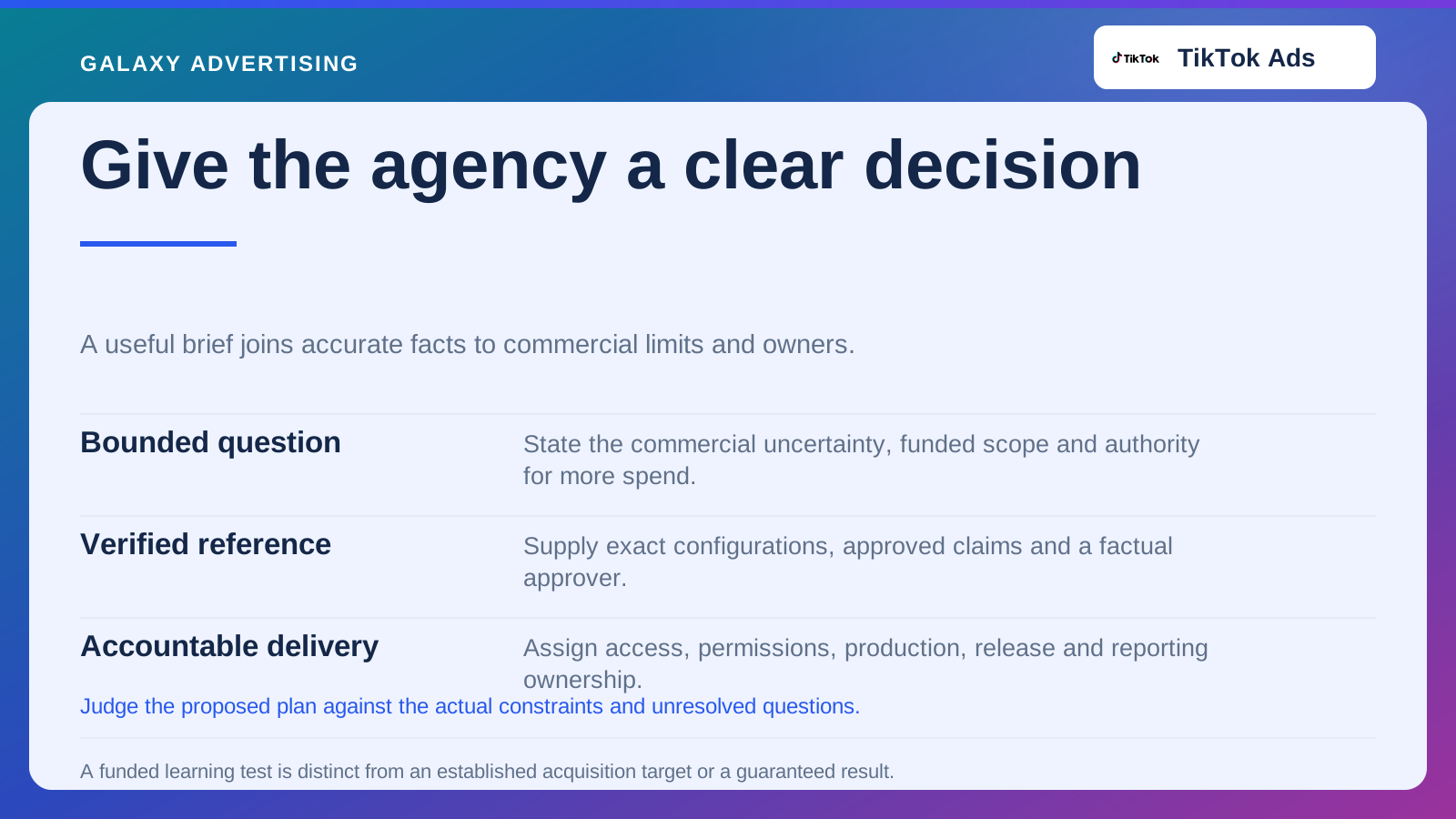
Define what must be ready before the campaign runs: approved facts, relevant destination, available inventory, usable creative and a measurement route the team understands. That gives release a practical meaning beyond the scheduled date.
Assign dependencies to named owners. The media manager can coordinate the plan without being able to verify supplier availability or approve a service promise personally. Those facts need information from the right people before they enter the customer message.
Use internal lead times based on your actual process. A generic schedule can overlook transport, assembly or the availability of an approver. Working backwards should expose dependencies while you can still change scope. A decorative timeline won't help if the required product or person remains unconfirmed.
Keep product evidence separate from temporary promises
Film evidence so it can remain useful after a promotion or deadline changes. A clear folding demonstration may outlast a seasonal price overlay or an opening tied to a particular occasion. Separating them can preserve useful material without preserving the expired promise.
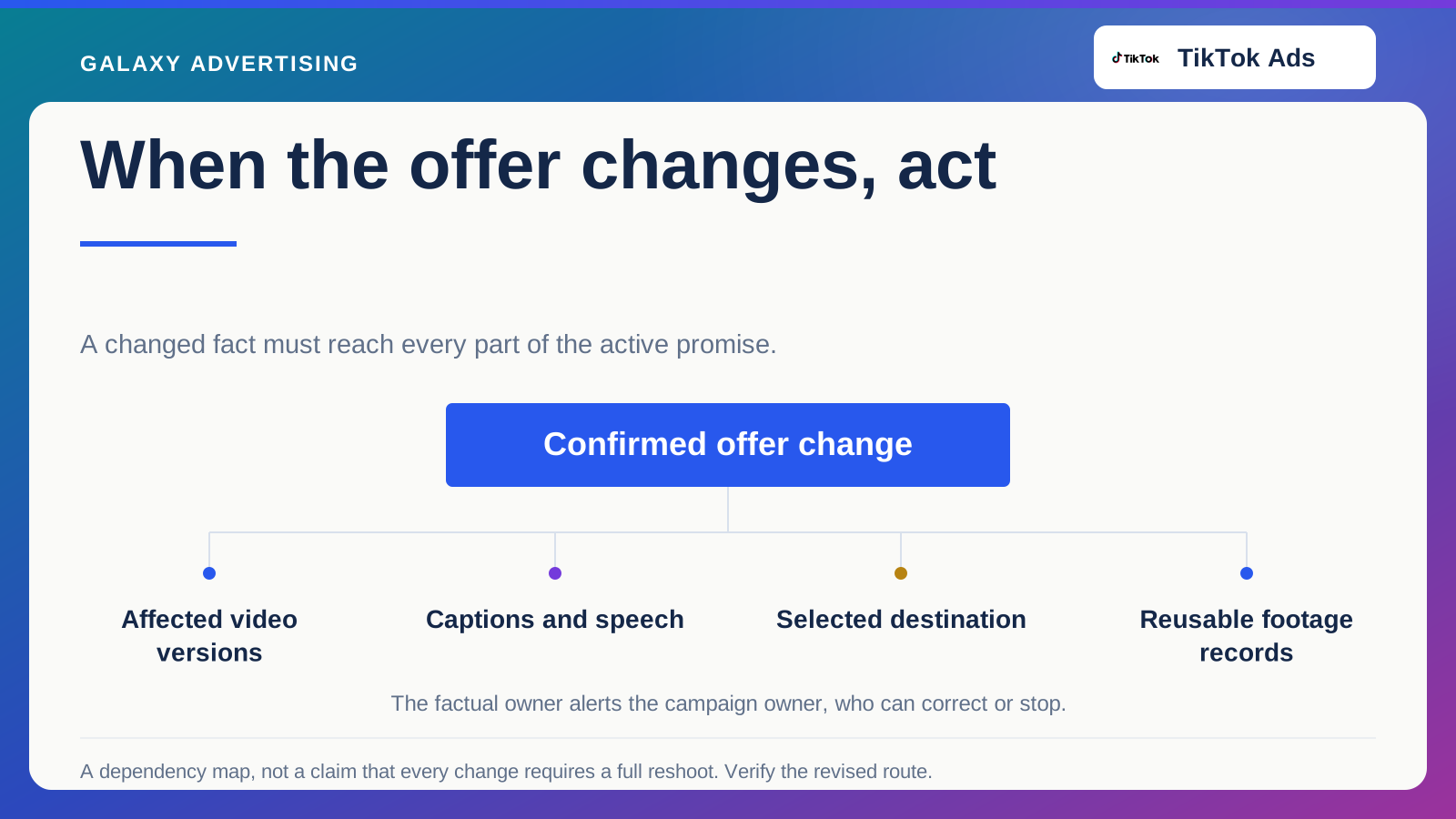
Make temporary elements identifiable and replaceable. Record the offer version in captions, voiceovers and text. Updating the obvious title doesn't establish that another layer has stopped making the old claim. The complete edit needs to remain traceable to the offer it describes.
This doesn't mean every asset should be generic. Seasonal context can make a use case recognisable. Know which parts explain the product and which depend on temporary conditions, so you can revise or retire them accurately when those conditions change.
Prepare alternatives that match real choices
Decide in advance which alternatives are suitable if the primary configuration becomes unavailable. Another colour might preserve the argument. Another size or package could need a new explanation. Similarity alone doesn't settle whether the alternative serves the same customer task.
Changing the destination may not be enough. The video can still show the unavailable configuration. Review the whole promise when moving spending to another item, rather than assuming the new link repairs the visual message.
If existing material cannot represent the alternative accurately, reduce or stop the affected activity until the route is coherent. Seasonal pressure doesn't justify knowingly sending shoppers to an offer that doesn't match the advert. A smaller accurate programme can be more useful than a broader inconsistent one.
Make the change log useful to production and media
Record material price, stock, package and delivery changes with affected creative references and destinations. The people editing and running the work need to identify what requires action. A general announcement that the seasonal offer changed leaves too much to infer.
One model may have an exception while the wider range follows another rule. Give the release owner enough detail to decide which assets remain valid, rather than expecting familiarity with the range to fill every gap.
After a correction, verify the customer-facing result. An updated planning sheet doesn't prove the old caption stopped running or the destination shows the right offer. Follow the route someone can actually encounter. The operational record and the live presentation need checking separately.
Plan when the seasonal context stops making sense
Agree how you'll identify assets made inappropriate by an occasion, deadline or stock change. Retirement should follow the actual condition, rather than an arbitrary wish to refresh the account. The reason needs to remain explainable.
Store useful footage separately from the expired promotional version. A demonstration may serve later campaigns after the temporary message is removed and current facts verified. Review the destination too: returning visitors need today's honest offer, rather than a promise valid only in the earlier period.
Before filming, reserve the exact approved sample and configuration. Confirm assembly responsibility and the references the crew will use. A generic booking can leave them with a similar item that doesn't support the intended offer. Discovering that on the day can force an inaccurate substitute or avoidable delay, neither caused by advertising performance.
Use readiness failures to improve the next plan
After the campaign, compare the planned release state with what happened. Identify avoidable delays in filming, factual approval, inventory and implementation. Keep the explanation specific enough to change the next cycle.
Starting earlier is less useful than identifying an unreserved sample or delivery exceptions without an owner. A precise correction can improve readiness without adding unnecessary meetings. Retain that operational lesson beside the campaign observations.
The calendar should help you describe real supply and service constraints and produce relevant material while the offer is useful. Finishing the shoot isn't, by itself, a reason to keep a seasonal campaign running after its coherent buying opportunity has passed.