What if your report named the winning video, but the production team still couldn't tell which buying question to explain next?
The attention charts look useful. The recommendation says to make more in that style. Yet nobody can identify which evidence to retain or what the next brief should change. The reporting has ranked the files without making the next investment clearer.
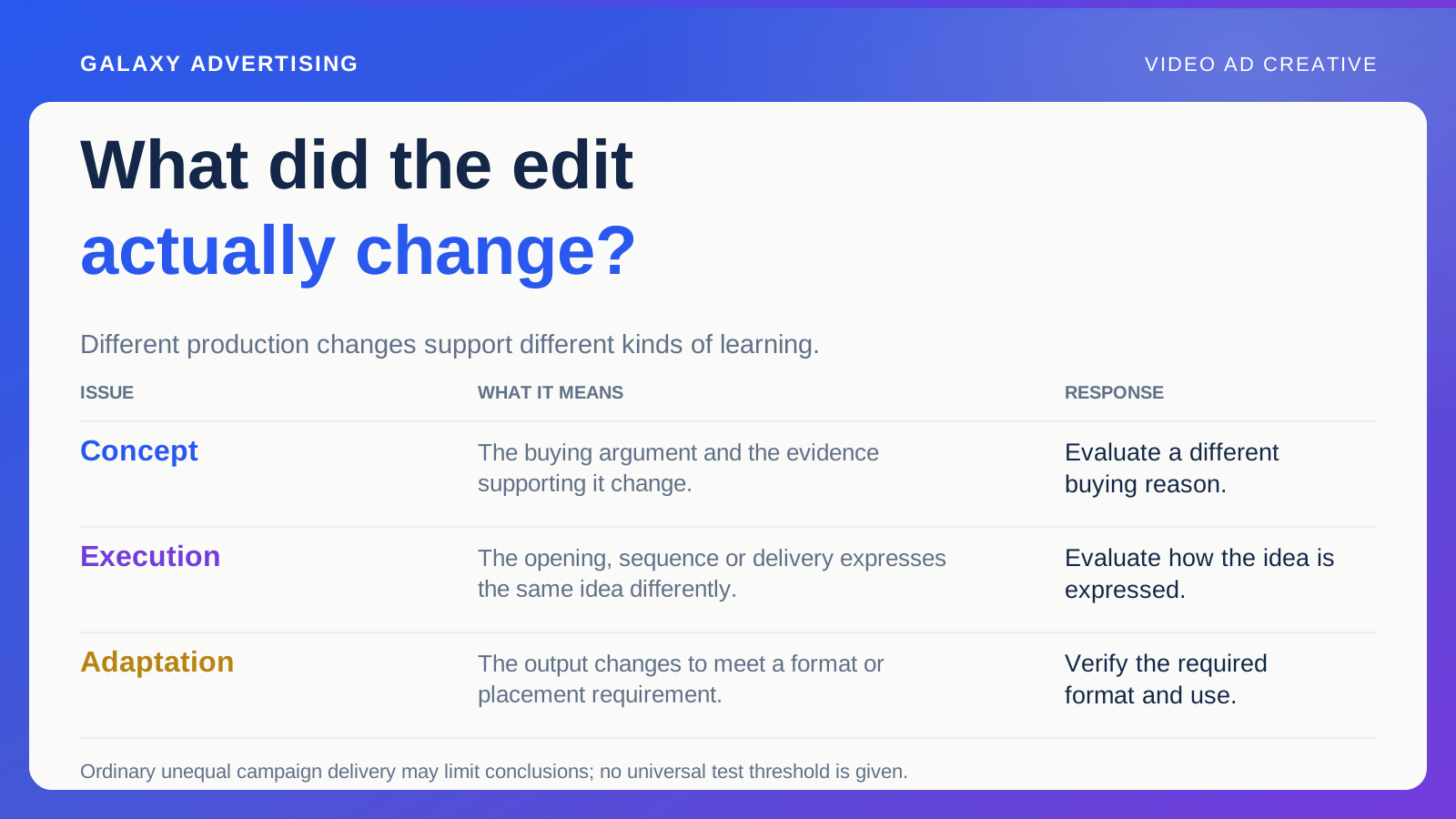
A useful creative review translates observations into production decisions. It separates the buying concept, its execution and adaptations for different formats, then connects them with what the evidence actually supports.
Start with the next decision, not the league table
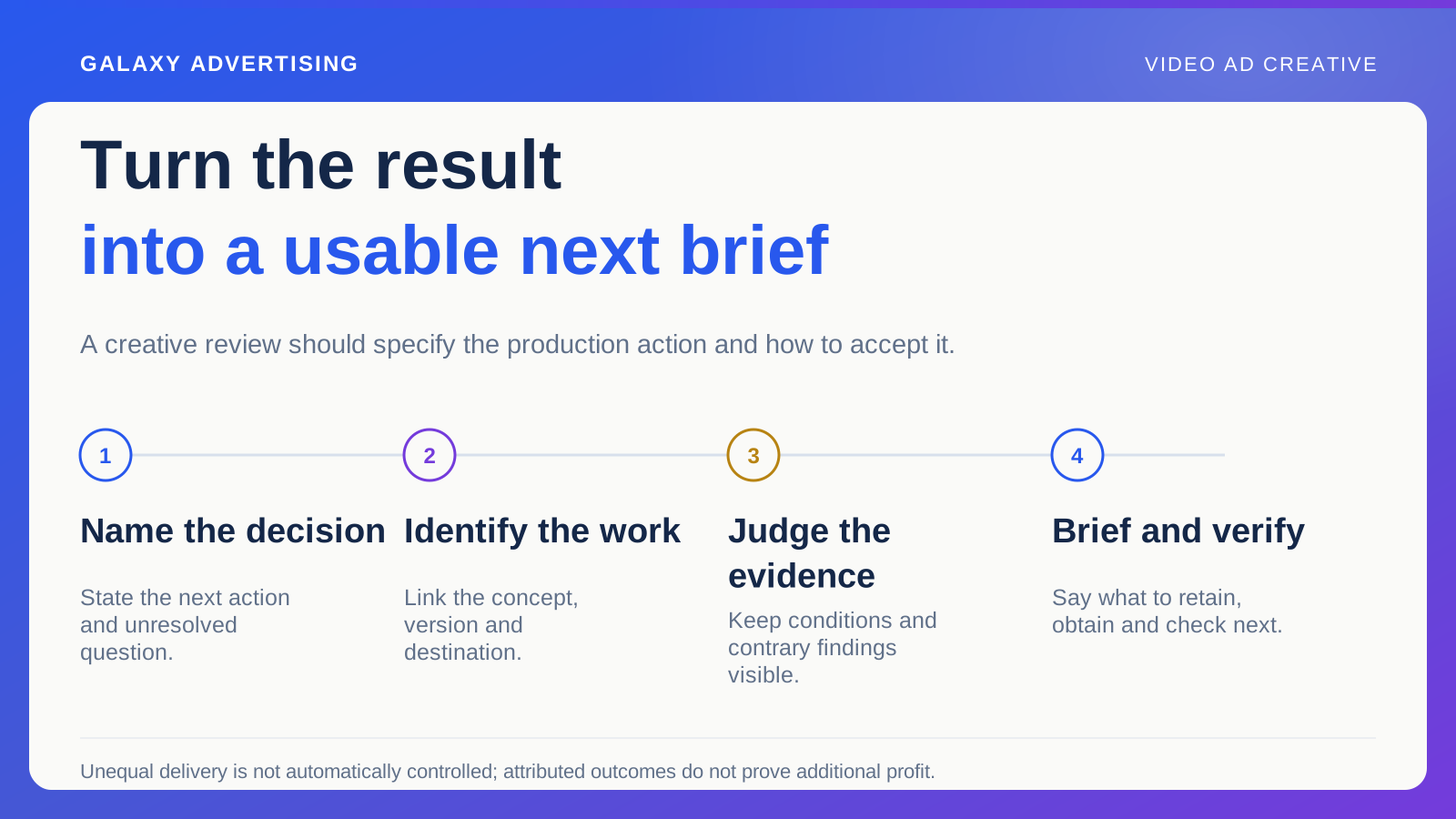
State the action you recommend and the question it addresses. Another demonstration, a clearer opening, a destination repair and stopping an unhelpful argument are different choices. Name the one you think the evidence justifies.
Explain that reasoning. A favourable result for one asset under one set of conditions needs interpretation before it becomes an instruction to produce more of a visual style.
Identify dependencies before commissioning. Missing product references, uncertain service claims or unavailable footage can change the practical recommendation. Making them visible now saves an apparently finished brief returning for another round of clarification before anyone can produce it.
Be clear about which video and which argument
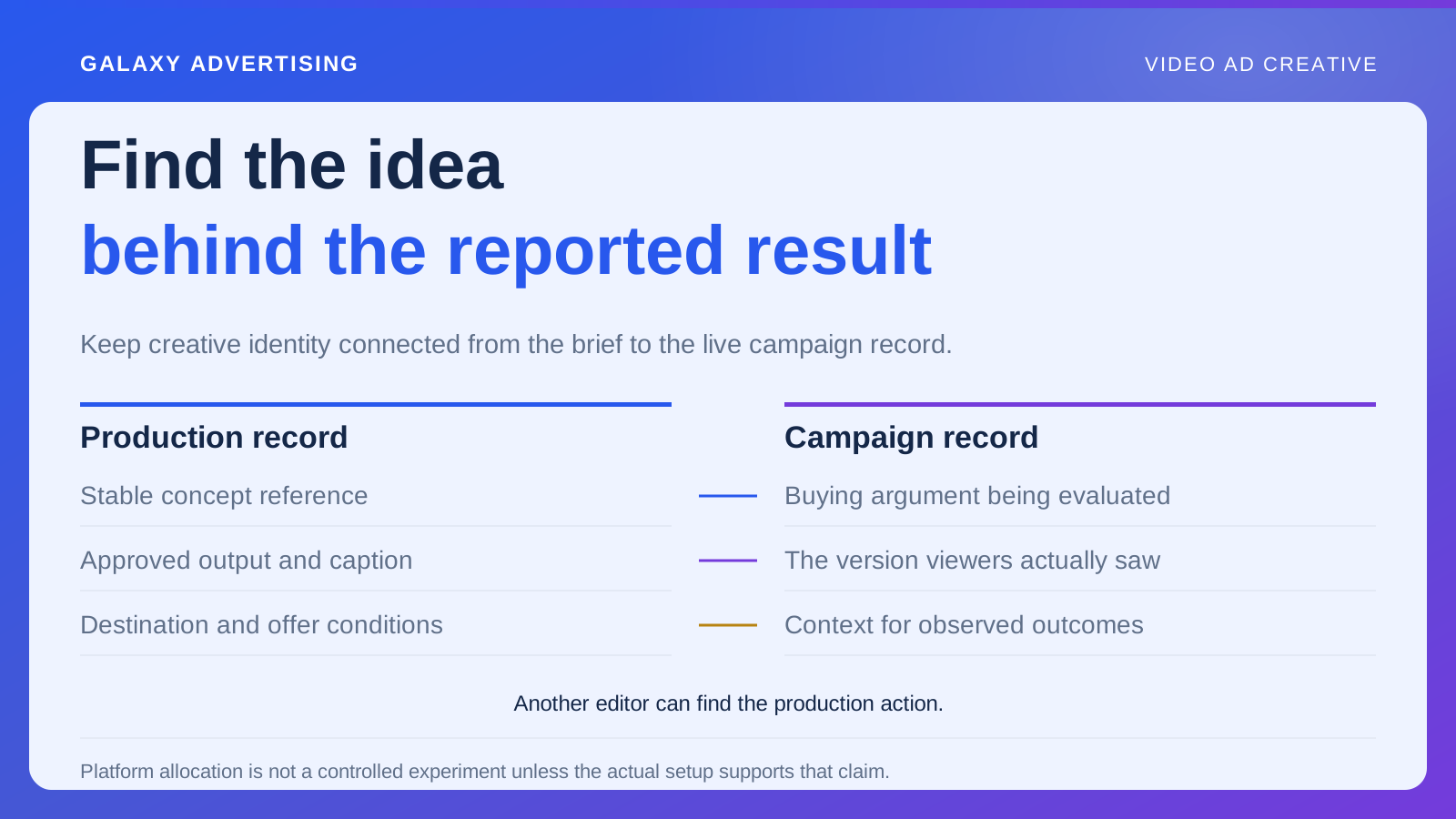
Use concept and version references to identify what you evaluated. Include product, principal buying question, demonstrated evidence and relevant destination. Everyone needs to be discussing the same thing.
Distinguish a new concept from an execution change. Shortening an existing demonstration's opening could teach you about clarity or attention. It doesn't create an independent new reason to buy.
Keep a route to the approved file and record. A thumbnail or loosely understood filename isn't enough. Reliable identification lets the reader inspect the actual asset and stops the next brief borrowing its reasoning from a version nobody meant to discuss.
Explain the conditions it ran under
Show meaningful differences in spend, placement, audience conditions and availability. Choose context that helps interpret the comparison, rather than attaching every available activity record.
Ordinary unequal delivery isn't a controlled experiment unless the setup supports that claim. A platform ranking can be informative without isolating the creative's effect. Say what the information helps you investigate and where that confidence ends.
Don't bury the result beneath every possible qualification either. Select conditions that plausibly change interpretation and explain their consequences. The business needs an honest account of uncertainty that still makes a recommendation possible, rather than a collection of reasons never to decide.
Attention and suitable demand aren't interchangeable
Read attention measures for what they describe. Then consider relevant referrals, product exploration, enquiries and orders, explaining how each informs the decision. They give you different views of the asset's job.
An entertaining sequence can hold interest without helping suitable buyers assess the offer. A detailed explanation can attract fewer casual viewers while answering something useful. Neither pattern deserves a verdict from one measure alone.
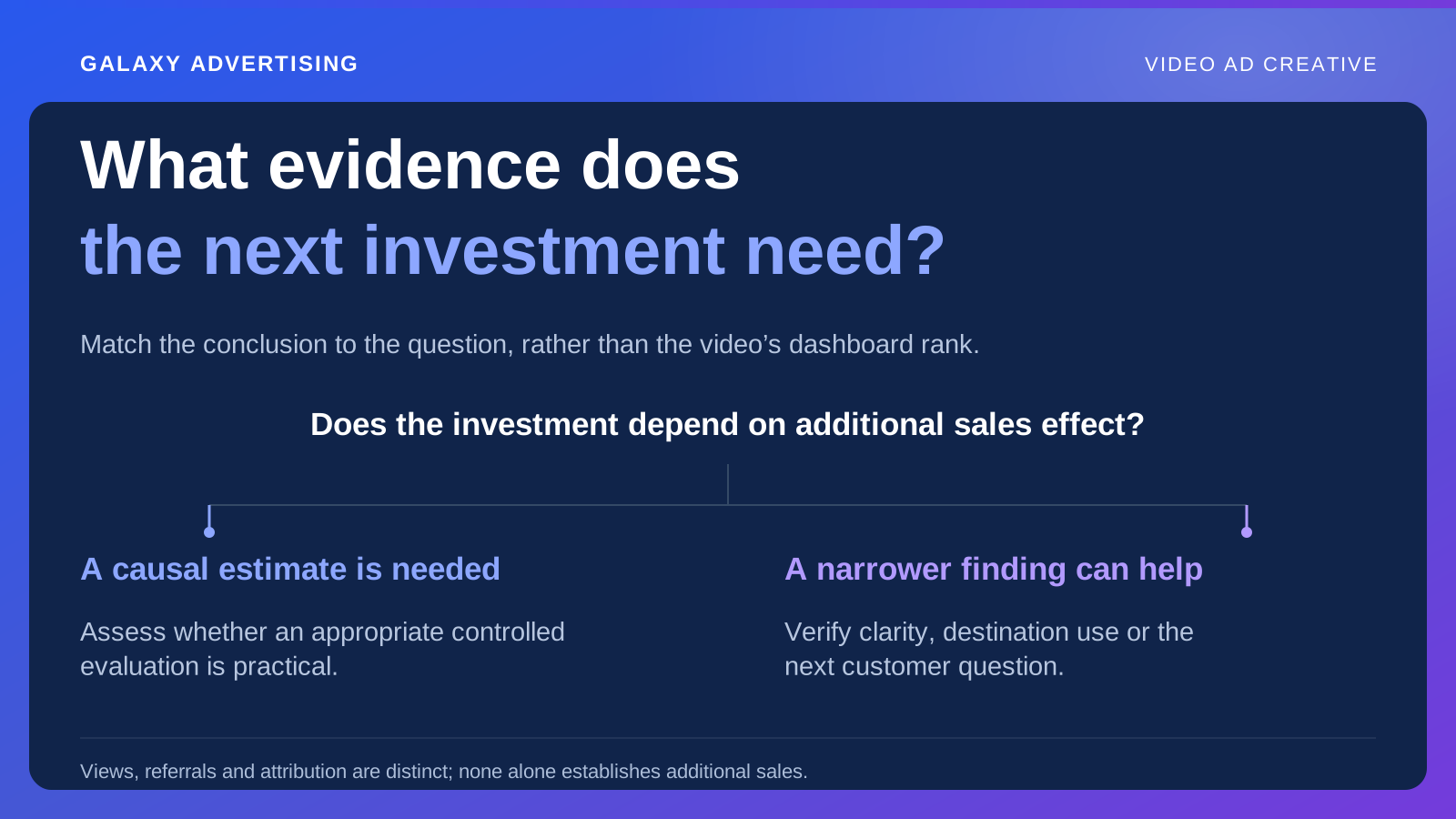
Use agreed commercial definitions for revenue and contribution, the money remaining after costs included in the calculation. Keep production costs and relevant order economics visible. An attributed total, revenue reporting rules credit to the activity, doesn't automatically establish additional profit or justify another production batch.
What did the viewer actually understand?
Include factual and comprehension findings alongside campaign observations. A video can run under favourable conditions while creating package or configuration ambiguity. A good result doesn't make that ambiguity disappear.
Was the principal evidence visible? Did the destination continue the same offer? If the asset failed its own brief, the correction could concern execution or source material rather than mean the buying argument is unsuitable.
Keep evidence that challenges the team's preferred explanation. A customer question could show the supposed benefit was understood differently. That belongs in the next brief even if the overall commercial report looks encouraging. The inconvenient finding could be exactly what production needs.
Give the producer something they can act on
Specify material to retain, remove or obtain. “Show the adjustment continuously before the close detail” tells an editor more than “increase credibility”. “Identify the included configuration in the opening” is clearer than “improve messaging”.
If you need another concept, name the new customer question and required evidence. Asking for a different video while leaving the argument unchanged makes different learning rather difficult to expect.
Match the instruction to the strength of the finding. A promising association could justify a bounded continuation. It doesn't oblige you to declare the format suitable for the whole catalogue. Keep uncertainty that still matters in the next brief, where it can guide the commitment being made.
Say how you'll check the correction
Include an acceptance check. For a clearer mechanism demonstration, identify the action the viewer must be able to follow. For a corrected package explanation, name the approved source and the destination that must agree.
This connects reporting with delivery. An abstract direction leaves the next reviewer deciding whether production fulfilled the instruction and whether the original commercial idea worked at the same time.
Check the instruction first. Then evaluate the commercial hypothesis, the proposed explanation you're testing, again. Each cycle can add knowledge rather than another round of subjective reactions to a new edit. The team should know what was made clearer before asking what that clarity changed.
Keep the learning with the concept
Store the decision, supporting observations, relevant limits and next review condition in the concept record. Include rejected explanations and reasons for stopping a production line. Those are useful parts of the business's creative memory too.
Read it before commissioning. You could find a similar argument has already been tested, or accurate footage already exists for a question now coming back. That saves avoidable repetition without assuming every earlier conclusion must remain permanent.
A video report can't guarantee the next asset's outcome or remove professional judgement. It can make that judgement traceable to evidence and give the brief a concrete purpose. Your library should be gaining understanding, rather than merely gaining more versions of whichever filename happened to top the last report.