A similar silhouette can conceal a different mechanism or finish that matters to your buyer. That becomes a practical risk when editors start borrowing familiar looking clips from a growing video library.
Your first video may have been checked carefully by somebody who knew the product. Months later, several models, finishes and promotional versions sit in different folders, and the account team cannot be certain which still represent the offer.
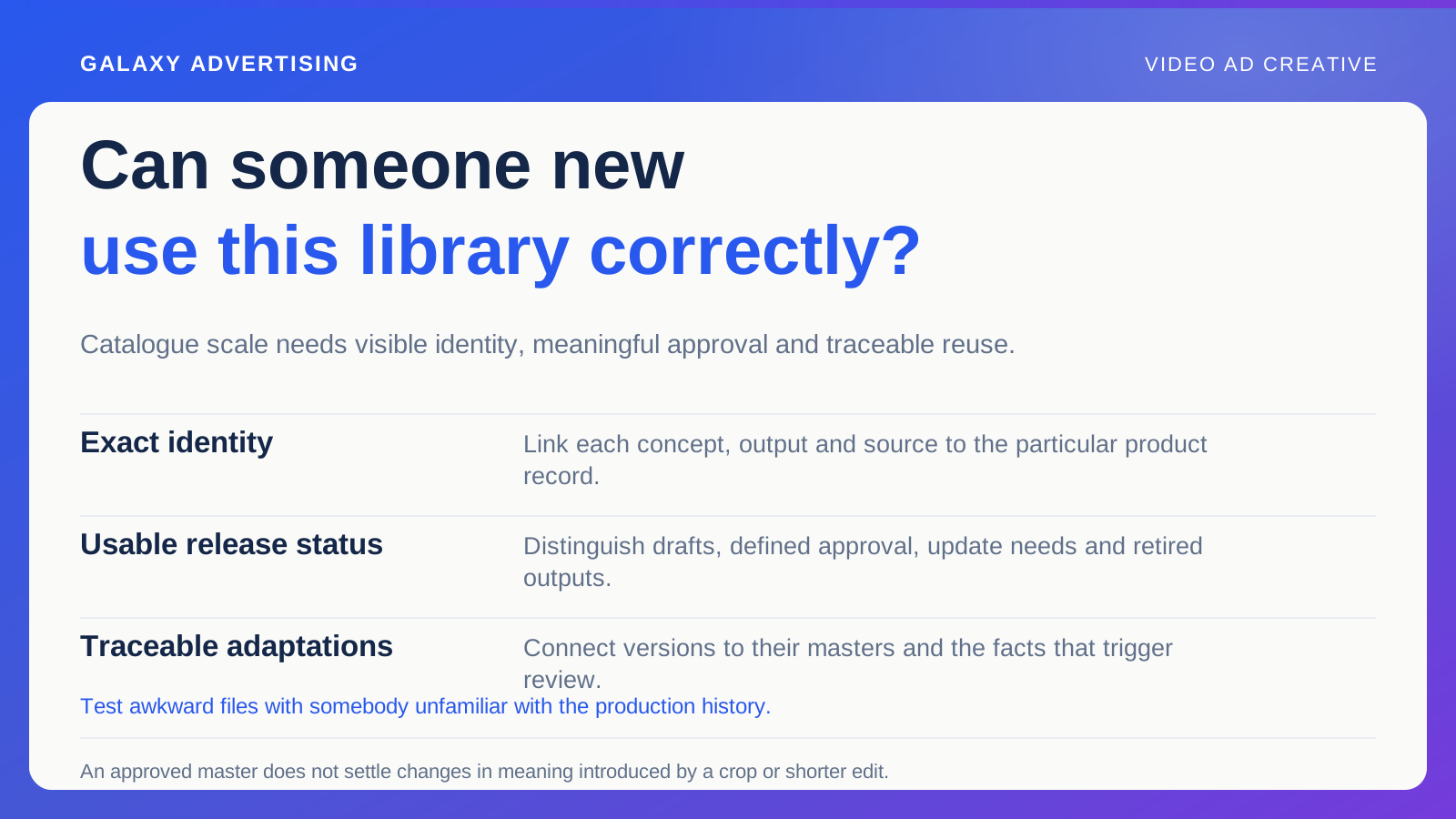
Scaling changes what a review needs to do. Personal memory that served a few assets becomes less dependable across a catalogue. Make product identity, approved evidence and usage status visible enough for the next person to make a responsible choice without reconstructing every earlier conversation.
Decide what can travel between products
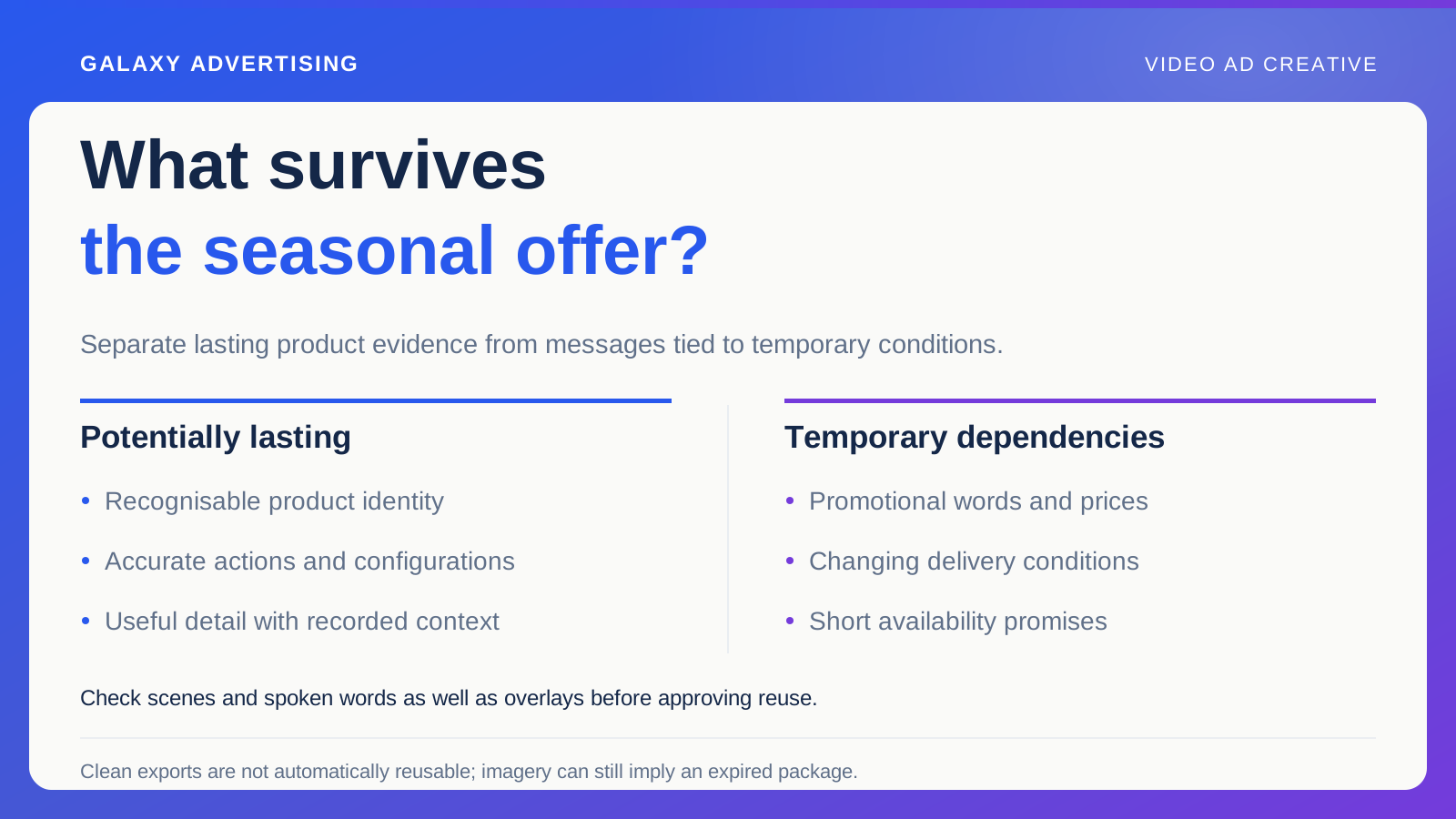
Separate production principles you can reuse from product facts you must verify. A framing approach or editing structure may transfer. Dimensions, controls, configuration and package contents need checking for the particular item.
A successful visual treatment does not give you permission to treat several products as interchangeable. Their appearance may be close while the distinction matters commercially to the person deciding what to buy.
Put the boundaries into the library structure. An editor needs to know which footage belongs to an exact model and which contextual material can support another brief. Clear allowable choices make reuse efficient; removing every factual check does not establish the same thing.
Give the asset and its sources a clear identity
Connect each concept, execution and approved output to its product record. Use readable references with a reliable route to fuller information. A filename should help somebody find the detail, rather than try to contain every detail itself.
Keep source material distinguishable from released outputs. A working draft can retain unresolved claims or visual defects removed from the final video. Finding it in the library must not imply permission to use it immediately.
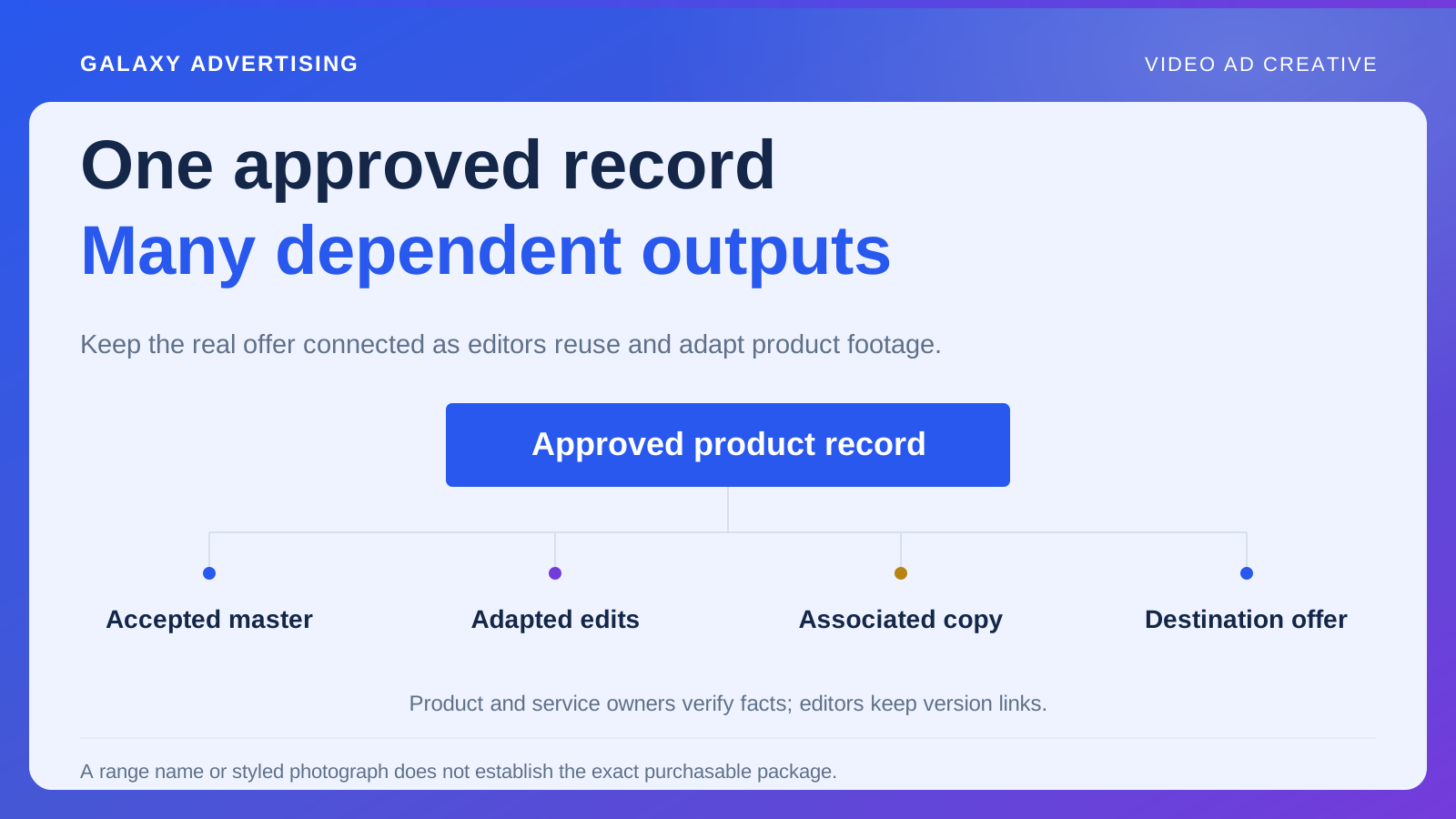
Preserve the relationship between an adaptation and its approved master. If the master later needs a correction, you can identify dependent versions. Otherwise a local repair could leave the same outdated or inaccurate information alive in several related files.
Make approval status mean something
Use operational states people understand, such as awaiting factual review, approved for the defined use, retired or requiring update. The exact words matter less than agreement about what each permits somebody to do.
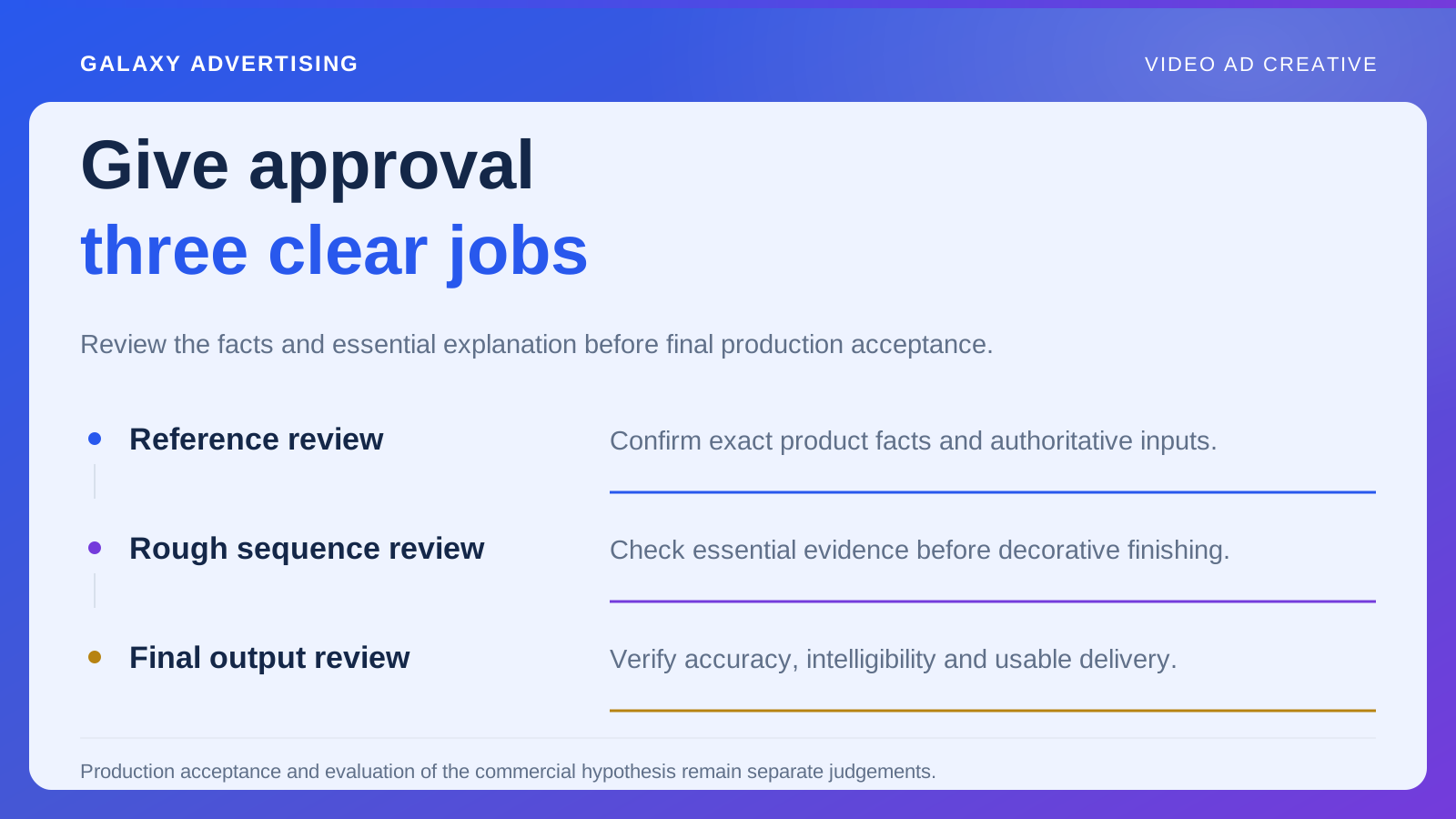
Assign responsibility for changing that state. A producer delivering a file does not automatically establish product owner approval of its factual representation, or coverage of intended use by the relevant permissions. Those responsibilities need their own clear place.
Avoid a “final” folder containing incompatible versions. A release state should identify the output, associated copy and destination actually accepted. The latest export is not necessarily the complete communication the team approved.
Check what an adaptation now communicates
A crop can lose a scale reference. A shorter edit can keep the promise and remove its evidence. Replacing the closing frame can leave an earlier spoken condition intact. Small production changes can have substantial effects on meaning.
Match checks to the adaptation. Inspect identity, essential meaning, readability and the current offer in the actual output. The approved master does not answer every question the new version introduces.
Keep review proportionate. A straightforward adaptation could need a focused check rather than the full production approval sequence. Identify what changed and verify the meaning affected. A technically successful export still needs to be usable as communication.
Tell production when the offer changes
Agree how withdrawals, new configurations, changed prices and altered service promises reach the people maintaining the library. Source owners need a route to notify them if the system is to remain accurate.
Record the facts each asset depends on. Then a change can trigger targeted review instead of a worried search through every video you have ever made. The knowledge becomes usable when somebody can follow it to the affected work.
Check destinations too. An unchanged asset might need another route when a page moves or the default offer changes. Library growth therefore needs coordination with merchandising and website ownership alongside a more efficient editing queue.
Try the awkward files on someone new
Choose examples that test the system: a retired configuration, price dependent promotion, crop from another master and footage carrying restricted use. Ask somebody unfamiliar with the production history to explain what they can use and why.
If every answer requires the original creator, the record is not carrying enough knowledge yet. Add the specific missing information rather than expanding the checklist without a purpose.
Repeat the exercise when workflows materially change. New suppliers, formats or approval responsibilities can introduce gaps even where the previous process worked well for a smaller range. Test the system you now have, rather than relying entirely on its earlier success.
Give old assets a route out
A library needs withdrawal as well as approval. Identify who may retire an output and how users will be notified. Follow dependencies through crops, extracts and other versions so an obsolete claim does not survive in a secondary file.
Keep historical material clearly separate from assets ready for use. You can preserve production memory without allowing the archive to become an accidental source of current campaign material after the product or offer has changed. Retention and permission to release are different decisions.
Count usefulness rather than files
Review accepted assets, actual reuse, correction effort and distinct customer questions answered. A large collection of near identical outputs does not necessarily mean broader or more productive creative capability.
Maintain quality as volume rises. Faster production has value when it yields accurate, intelligible material you can use and maintain. Savings that return as repeated review and urgent corrections deserve closer inspection.
The library needs to preserve the knowledge behind its pictures. When somebody can identify the offer, understand approval and trace an adaptation, growth becomes manageable. Customers should not have to absorb the errors created when production expands faster than its memory.