A production mistake worth owning: putting an expiring promotional deadline throughout an otherwise useful product demonstration. Once the offer ends, you discover how much footage now needs awkward editing before it can be used again.
The opposite approach has its own problem. A generic library may last longer while saying nothing about why someone should investigate the product now.
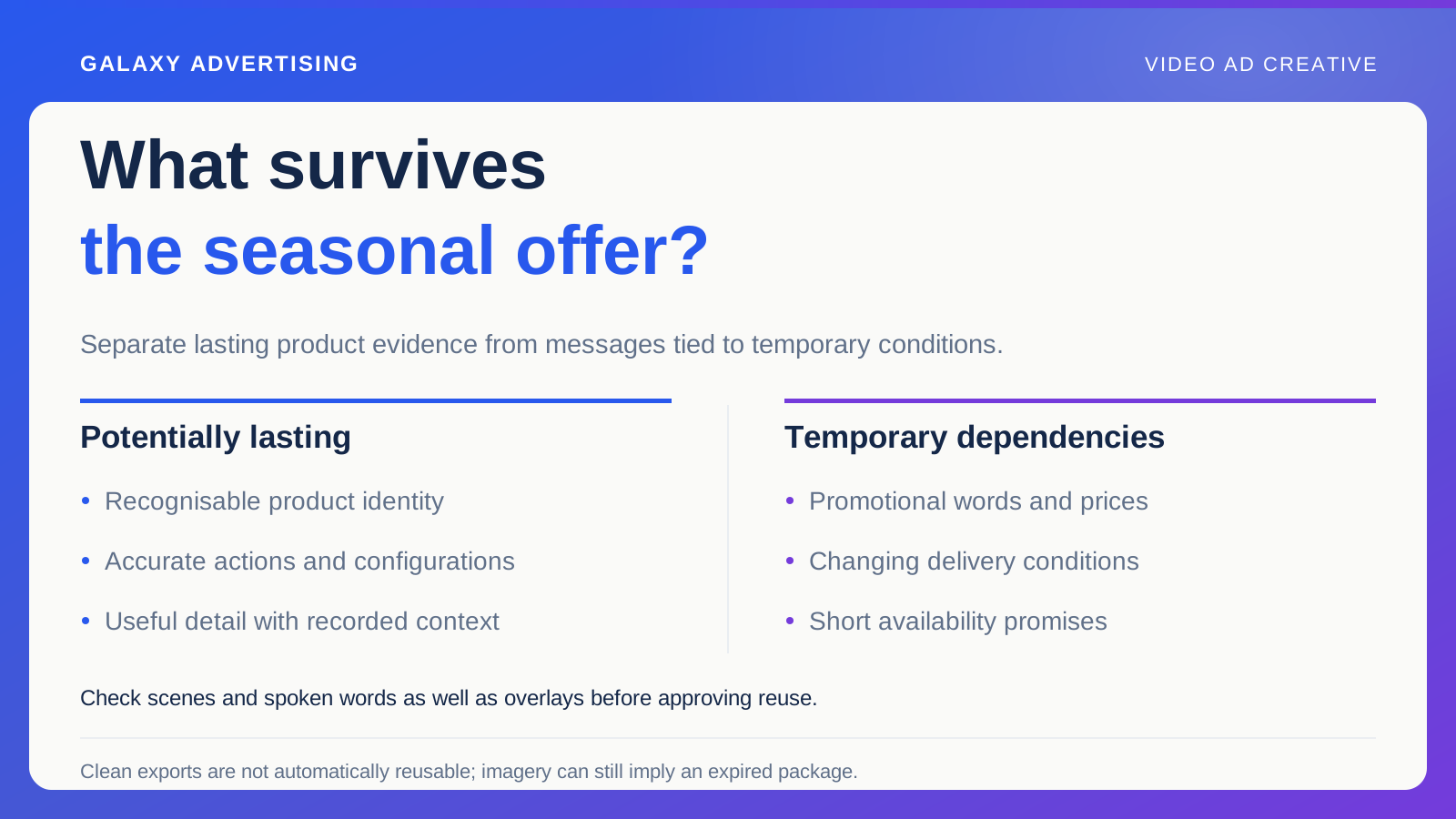
Seasonal planning can serve both needs. Separate durable product evidence from temporary messages and prepare what each requires. That lets timely communication use a useful library without leaving an expired promise hidden inside an apparently reusable asset.
Why does this season matter to the customer?
Start with the task somebody faces, rather than your calendar alone. Preparing an outdoor space, accommodating guests and replacing equipment make products timely for different reasons.
Choose situations your actual range supports. A seasonal scene must not imply unverified availability, delivery timing or suitability. The operating facts and the product itself still set the boundaries of the creative.
Record what is genuinely temporary. A promotion, delivery condition or short availability window may need a specific message. A broader use case could remain relevant afterwards. Production can then decide which parts must be straightforward to revise, rather than discovering that distinction when the offer has already expired.
Capture the evidence you can use again
Film product identity, important actions, configurations and useful details without unnecessary temporary overlays. Retain accurate references and enough context for another editor to understand what the footage establishes.
Durable does not have to mean bland. The scene can have a point of view. The question is whether its evidence stays useful when you change the closing message, rather than whether you have removed every trace of personality.
Nor does every product need a huge evergreen library. Prioritise material you have a plausible reason to use again. A coherent demonstration may have more future value than extensive decorative coverage with no recorded customer question behind it.
Make temporary promises easy to find
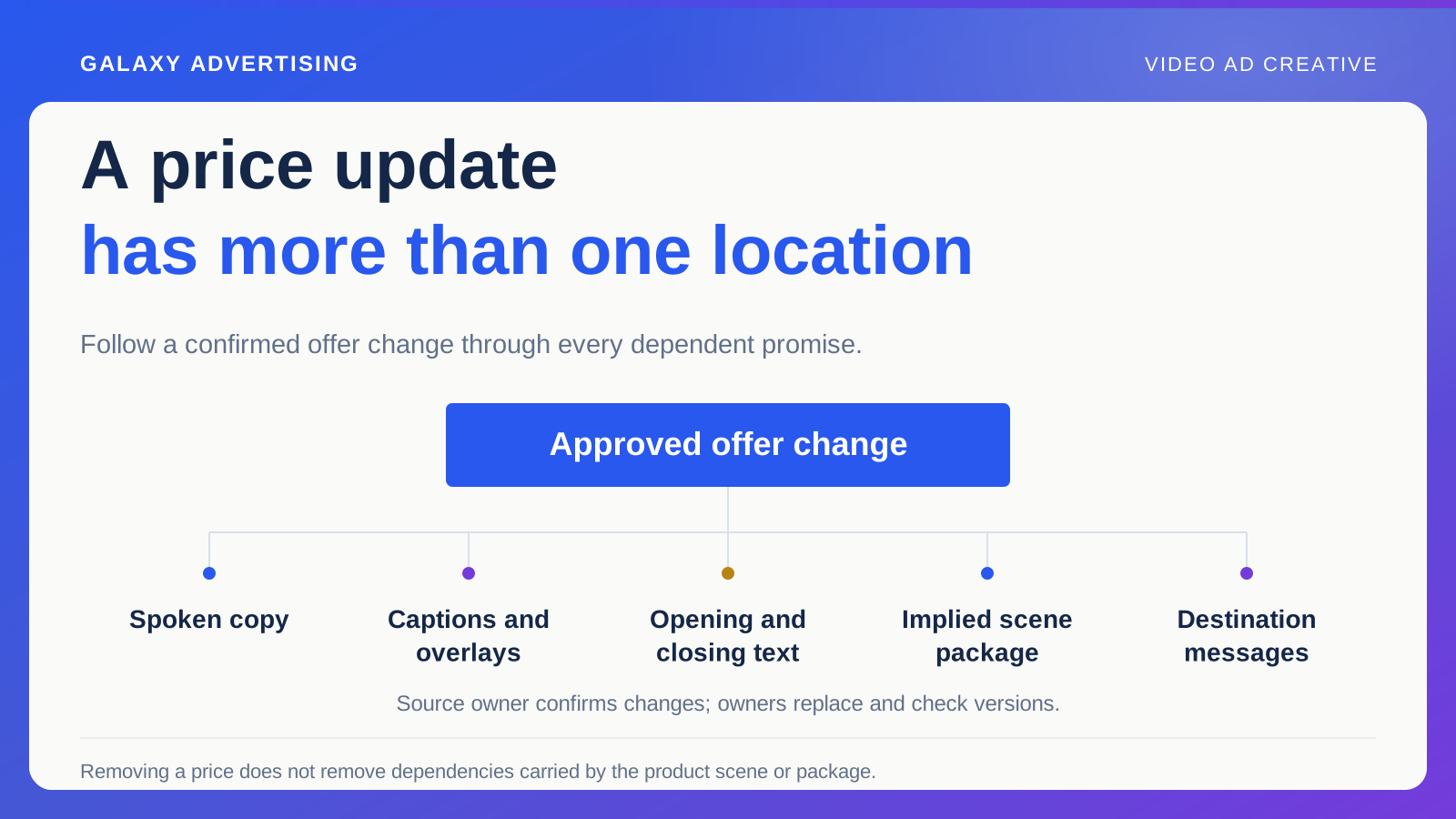
Keep promotional words, prices and relevant conditions in identifiable outputs that can be replaced. Explain in the plan which versions depend on each fact.
Review the complete communication when adapting it. A replacement closing frame might leave the temporary promise alive in spoken words or the scene itself. Inspect more than the obvious text graphic.
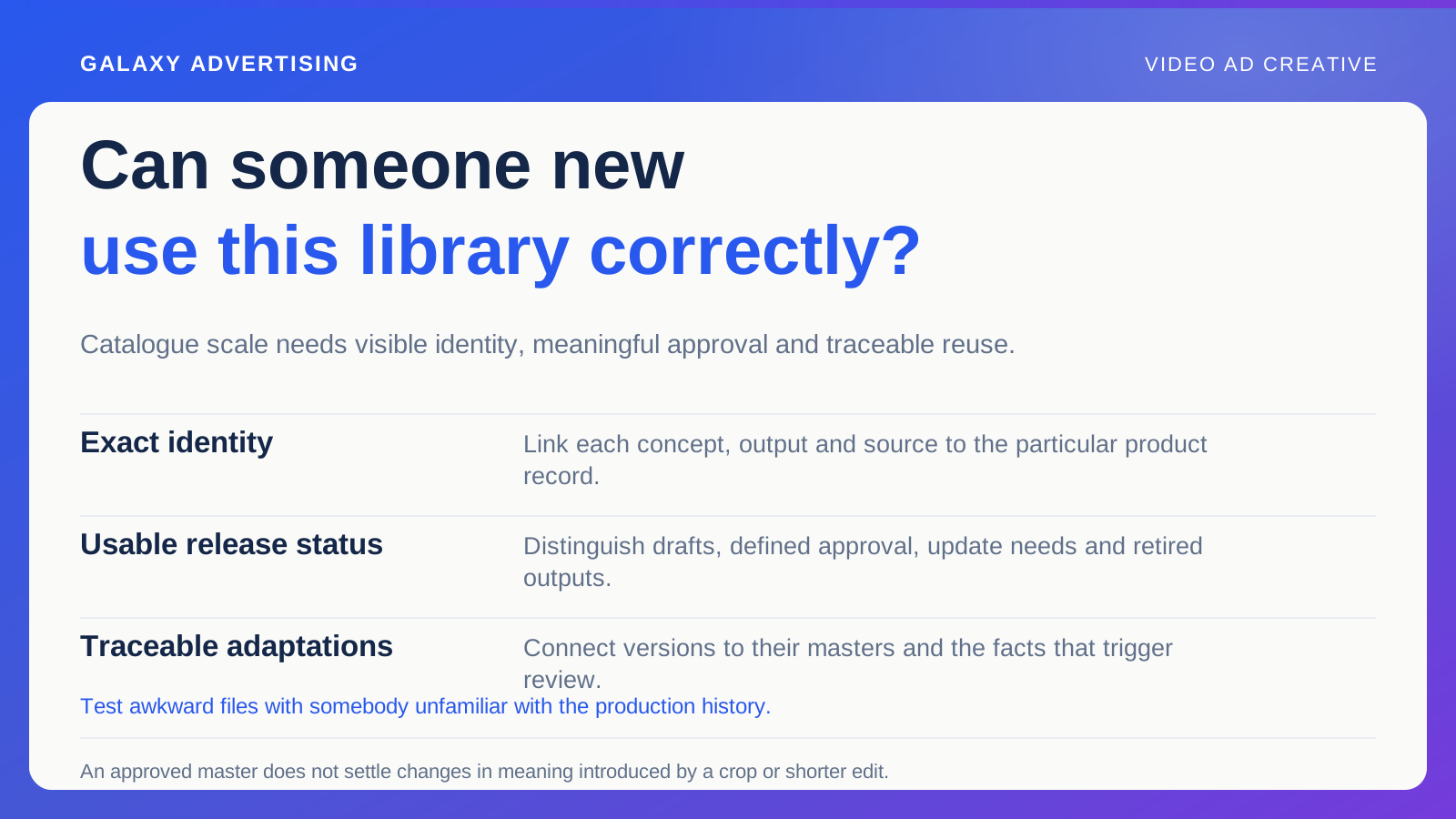
Retain the approved message and its source beside the asset. If operations changes the service arrangement, the campaign team needs to find affected versions quickly. Temporary claims become difficult to maintain when the only record of their whereabouts is somebody's memory.
Sort the dependencies before filming
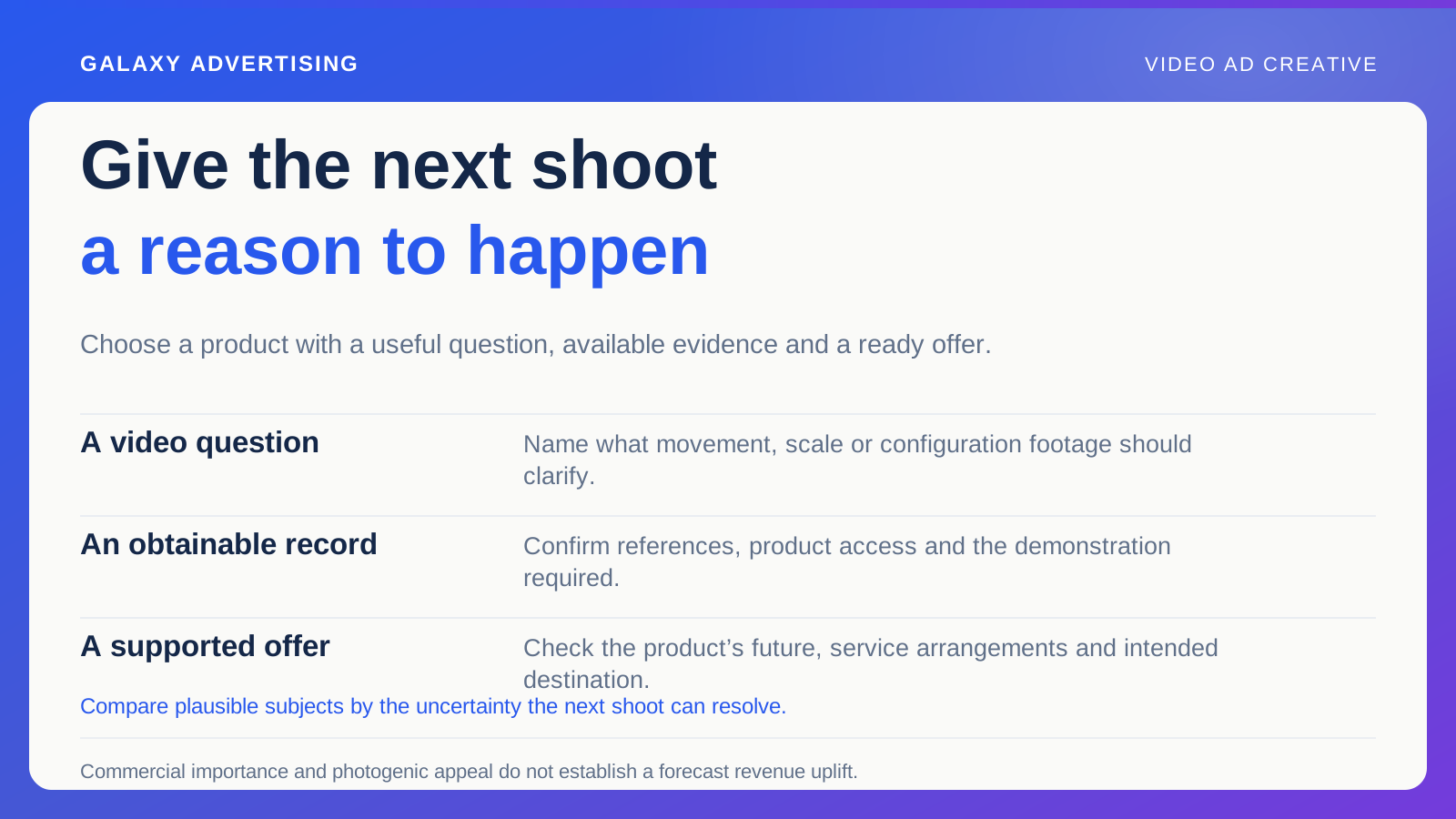
Confirm product access, configurations, contributors, location requirements and factual approvals early enough to fix gaps. A seasonal deadline does not make uncertain references any more dependable.
Ask merchandising whether the demonstrated version is likely to remain in the intended campaign. They may not be certain. Production still needs to understand that uncertainty before investing in a highly specific scene.
Leave a workable review interval before release. If factual approval waits until every output is finished, a mismatch can consume the time remaining. Check references and rough sequences early, when an avoidable problem can still be dealt with before it turns into a last minute correction.
Prepare for the changes you can foresee
Name the conditions that would call for another version, such as an unavailable configuration or changed service promise. Decide whether the sensible response is an alternative concept, revised destination or pause.
A vague substitute can hide a meaningful difference. A similar product might have different dimensions, materials or included components. If it becomes the new subject, verify its offer and references as a fresh production dependency.
Keep contingencies proportionate. You do not need every possible scenario filmed and waiting. You need a clear response to the changes most likely to make the planned asset inaccurate or commercially unsuitable.
Retire the offer everywhere it appears
Give somebody responsibility for finding and withdrawing versions when their offer ends. Include associated captions, landing messages and reused extracts alongside the principal video.
Then check what is actually live. Completing a scheduling task does not prove every dependent asset has been replaced. The meaningful check follows the customer route and inspects the current offer as presented.
Archive expired material with its status clear. It may help explain the old campaign, but it should not sit among current assets looking ready for immediate reuse. Historical evidence and approved current communication need to be distinguishable to the person selecting the next file.
Test whether a clean clip is really reusable
After the campaign, choose an apparently durable clip and watch it without the seasonal closing message. Do the scene, spoken words or objects still imply a temporary package?
A product placed beside a seasonal accessory can remain ambiguous after every price overlay has gone. Record whether the clip is genuinely reusable, needs another explanation, or is unsuitable outside its original context.
This tests reuse against actual material. Counting clean exports as evergreen assets is a less useful measure if the pictures still carry an expired meaning. Take that finding into the next production calendar.
Learn from what the season left you
Review which material remained accurate, which adaptations you used and which dependencies caused avoidable work. Keep that assessment separate from a broad claim that production alone created the season's sales.
Use the findings to adjust the next calendar. Recurring late delivery copy could call for earlier approval from operations. A frequently reused demonstration may deserve better source coverage rather than another unrelated scene.
Footage is only worth keeping if the team knows what remains true about it. When lasting evidence and temporary messages stay connected but separately managed, the next campaign can begin with usable knowledge, rather than attractive pictures carrying promises nobody means to make any more.