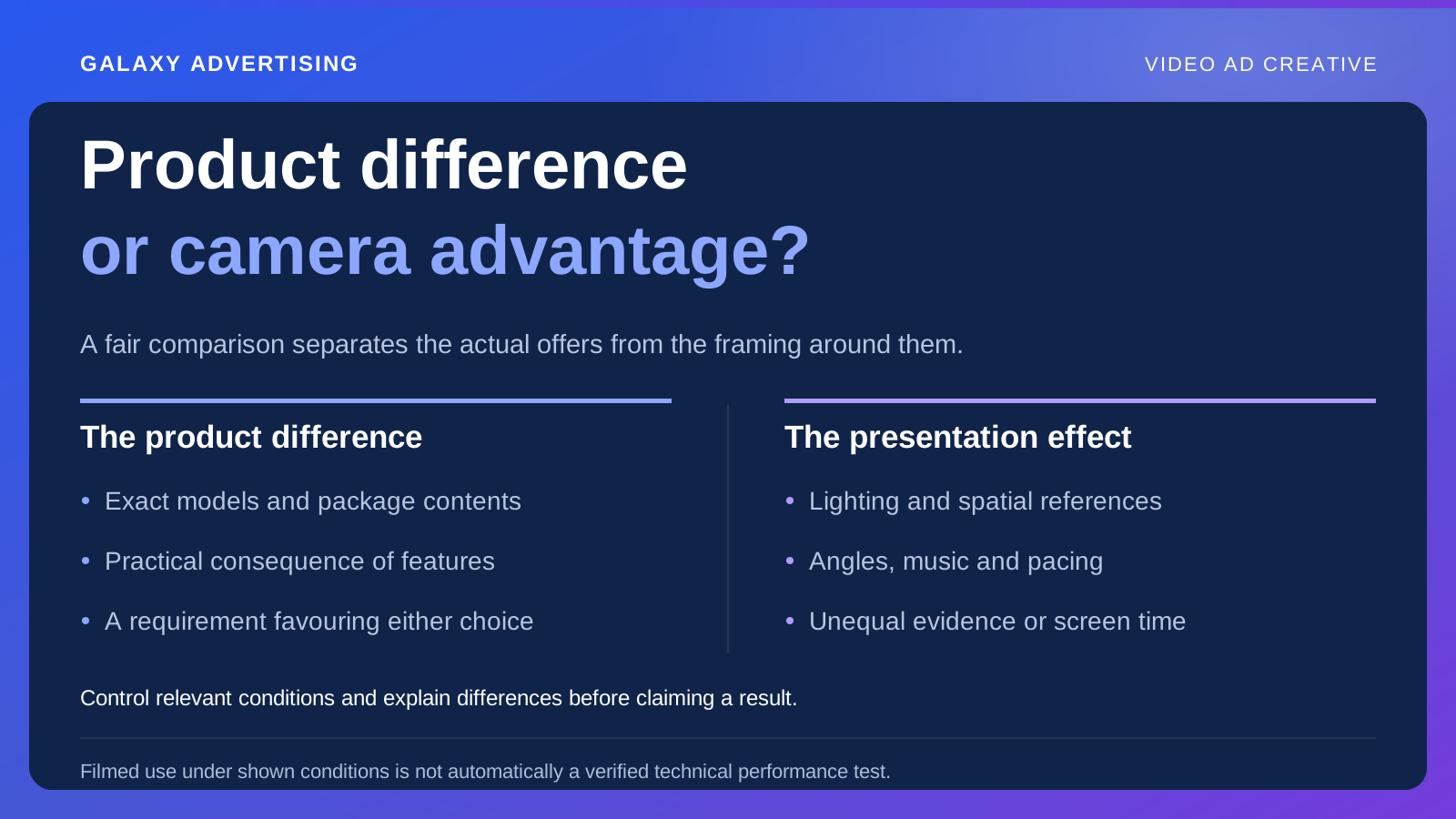
A smiling person beside a neatly made bed cannot establish how comfortable another buyer will find the mattress. The scene can communicate an emotion while an “exceptional comfort” overlay asks it to prove much more.
Material, appliance performance and durability claims can fall into the same gap between attractive footage and dependable evidence.
You can explain an offer without pretending the camera verifies every benefit. Separate what is demonstrable, what needs supporting information and what remains an individual judgement. That boundary can make the argument clearer and more credible than a more ambitious scene the business cannot substantiate.
Break the promise into claims you can inspect
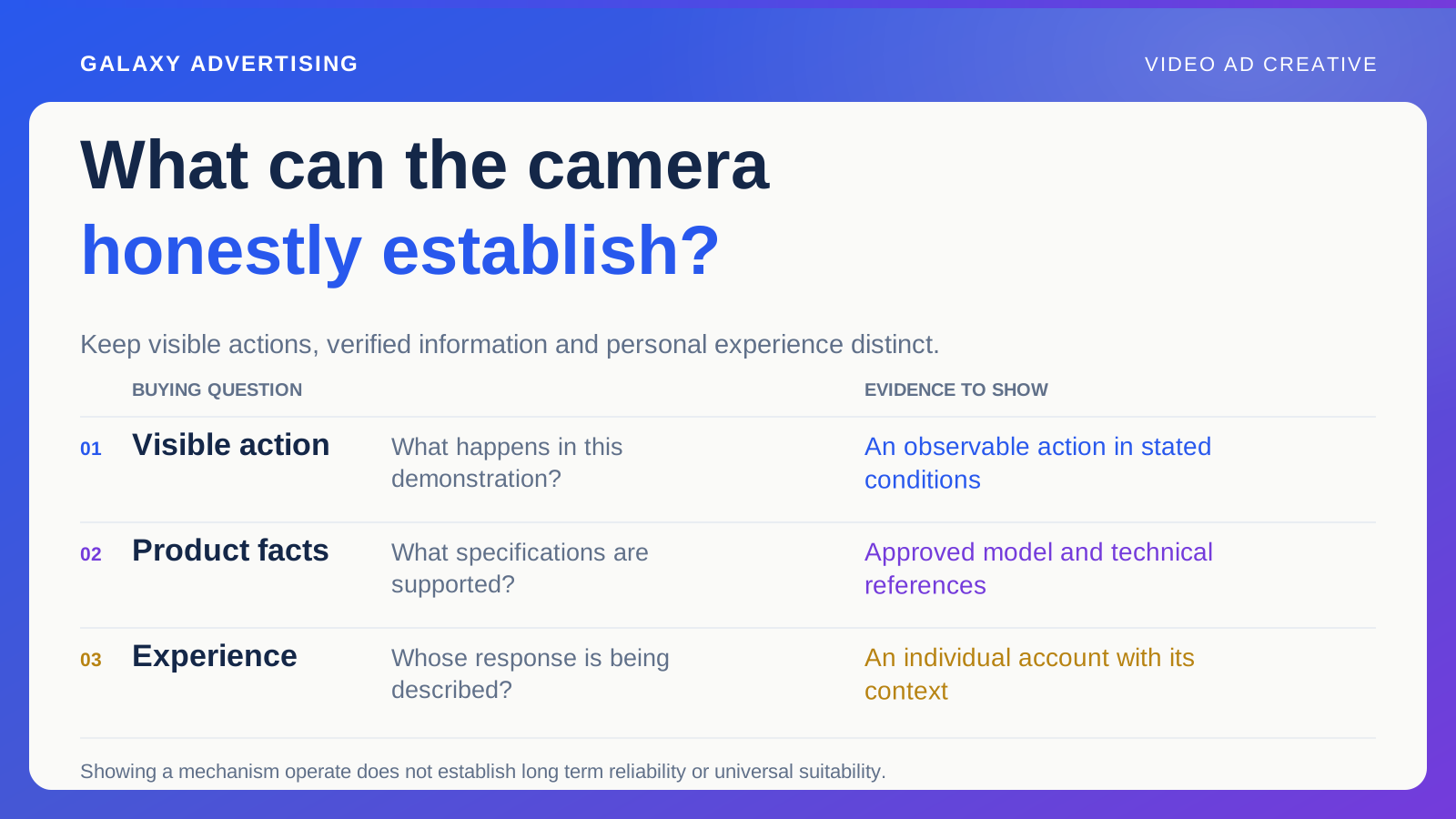
Write the benefit as customers will encounter it. Which parts concern visible features, documented specifications, individual experience or a future outcome you cannot guarantee?
For a hypothetical mattress concept, construction and available dimensions could have verified references. A person's comfort account describes their experience. A universal promise about every buyer's sleep needs a different level of support and should not be improvised during production.
Set those boundaries before storyboarding. Once an attractive sequence exists, narrowing the claim can become harder for the team. A clear factual limit gives production room to communicate creatively without making the appeal depend on evidence the business does not possess. Decide what you can support before investing in the way it will look.
Choose a visible part of the value
Look for something the viewer can reasonably assess. You can show a storage mechanism operating, identify a configuration or represent a finish through accurate references and appropriate lighting.
Choose a point that matters to the intended decision. An easily filmed detail still needs a useful role in helping the customer understand suitability. Ease of production alone is not enough.
Say what the demonstration establishes and what it does not. Showing a mechanism opening explains its action. It does not automatically establish long term reliability or suitability for every user. Those broader questions need separate verified information. An impressive edit should not quietly make the promise larger than the demonstration supports.
Use a close view to identify the real detail
Close footage can make a texture, component or control recognisable. Preserve the actual appearance without adding detail that makes it materially different from what customers can buy.
Agree a reference standard for important visual characteristics. If production changes colour, surface pattern or proportions, the reviewer needs a reliable comparison. Product memory is not a substitute for that standard.
Do not present a decorative close view as a scientific test. Attractive material footage can support identification and understanding without replacing documented performance evidence. Captions should explain its role rather than use technical language to give the shot unsupported authority. The closer the view, the more careful you should be about what you imply it establishes.
Let the wording provide the right context
A concise explanation can connect an observable feature with a practical consequence. You might identify the arrangement shown and direct viewers to documented dimensions for assessing fit.
Stay within the evidence. “Here is the compartment shown with these objects” describes a demonstration. Claiming it solves every household's storage needs goes further than the scene establishes.
Review words and images together. An accurate sentence paired with unrelated footage can mislead. A cautious caption may not sufficiently qualify a dominant visual suggesting another product or capability. The complete communication needs to remain coherent. Approval of the wording alone cannot settle the meaning of the finished video, because the scene contributes to the claim too.
Give contributors the role their knowledge supports
A product specialist can explain verified construction. A customer can describe their own purchase experience. A creator can make a demonstration understandable. These are different contributions, rather than interchangeable forms of proof.
Keep personal accounts within their context and boundaries. Editing one person's response should not turn it into a promise that every buyer receives the same outcome.
Give each contributor approved facts and a route for questions. Confidence helps only while the content is accurate. A mood board without product information leaves people improvising technical explanations they should not be expected to invent. Let their knowledge guide what they explain, with a dependable source for the offer's facts.
Let the destination support the remaining assessment
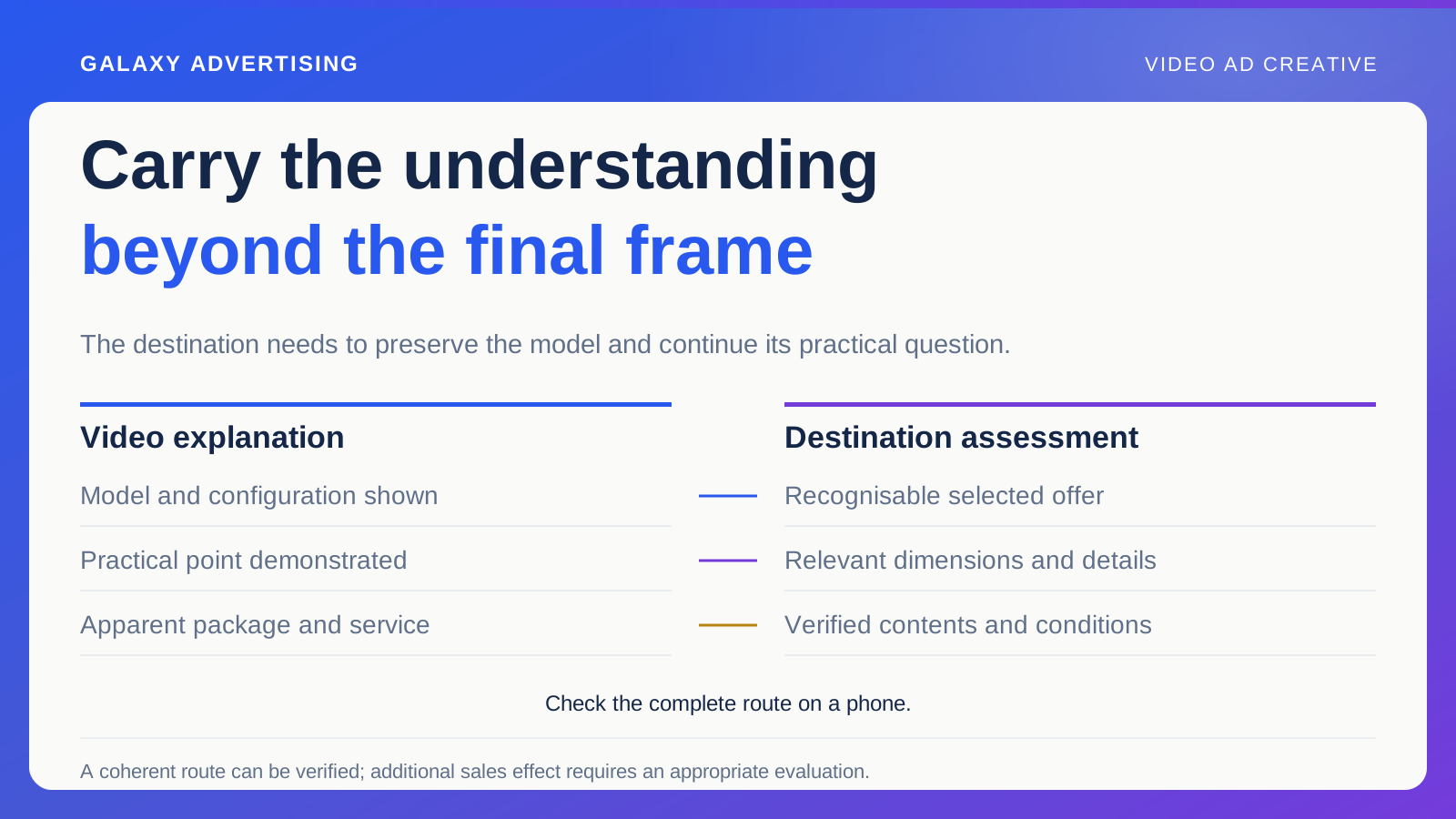
A short video can make a useful point and give someone a reason to investigate. The linked page should provide the product details, conditions and evidence needed to continue responsibly.
Keep information that could challenge the proposition visible. Customers need practical limitations before commitment. Clear boundaries let suitable buyers assess the offer and help unsuitable buyers avoid a wrong choice.
Check the exact model and configuration after clicking. A carefully bounded video still confuses people if the destination defaults to another version. Product identity must remain consistent through the route. The care taken in the script needs to survive the transition into the page where the customer will make the next decision.
Challenge the promise the scene never states
Ask a reviewer for the most ambitious conclusion a reasonable viewer could draw. Compare it with the evidence the business holds.
A person moving a large object easily could imply a handling benefit absent from the script. You might need another shot, clearer context or removal of the action. Review the meaning, alongside the approved sentences.
This is particularly useful when convincing visuals create more confidence than the product information supports. The strongest implied promise deserves the same attention as the headline claim. Otherwise the scene can widen the proposition despite carefully controlled copy.
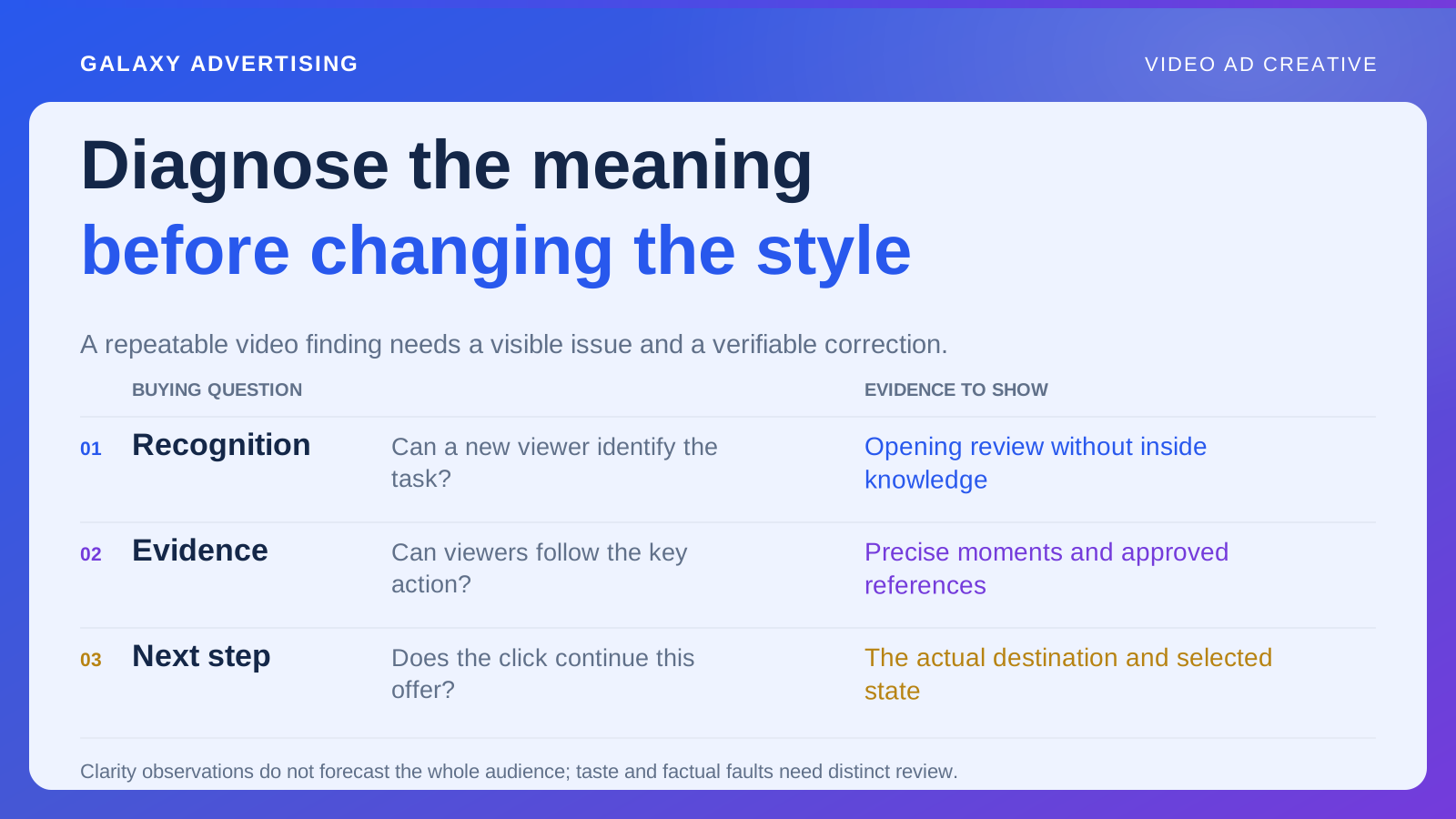
Check understanding before judging persuasion
Ask somebody unfamiliar with the brief what they believe the video establishes. Listen for unintended implications, such as a performance guarantee or included accessory. Their response can reveal a communication problem before launch.
Keep that review separate from predicting sales. Clear, accurate explanation is a necessary standard, while commercial performance also depends on the offer, distribution and destination.
The strongest argument is often narrower than the initial concept. It shows something real, explains why it could matter and leaves a dependable route to further assessment. Video then gives the value proposition clarity, with confidence resting on what the business can actually establish.