Which product should get the next video: the one that looks impressive, or the one customers keep asking how to use? The photogenic choice may be easier to style while a less obvious item has a clearer information problem for production to solve.
Another attractive room scene does not automatically address that difference.
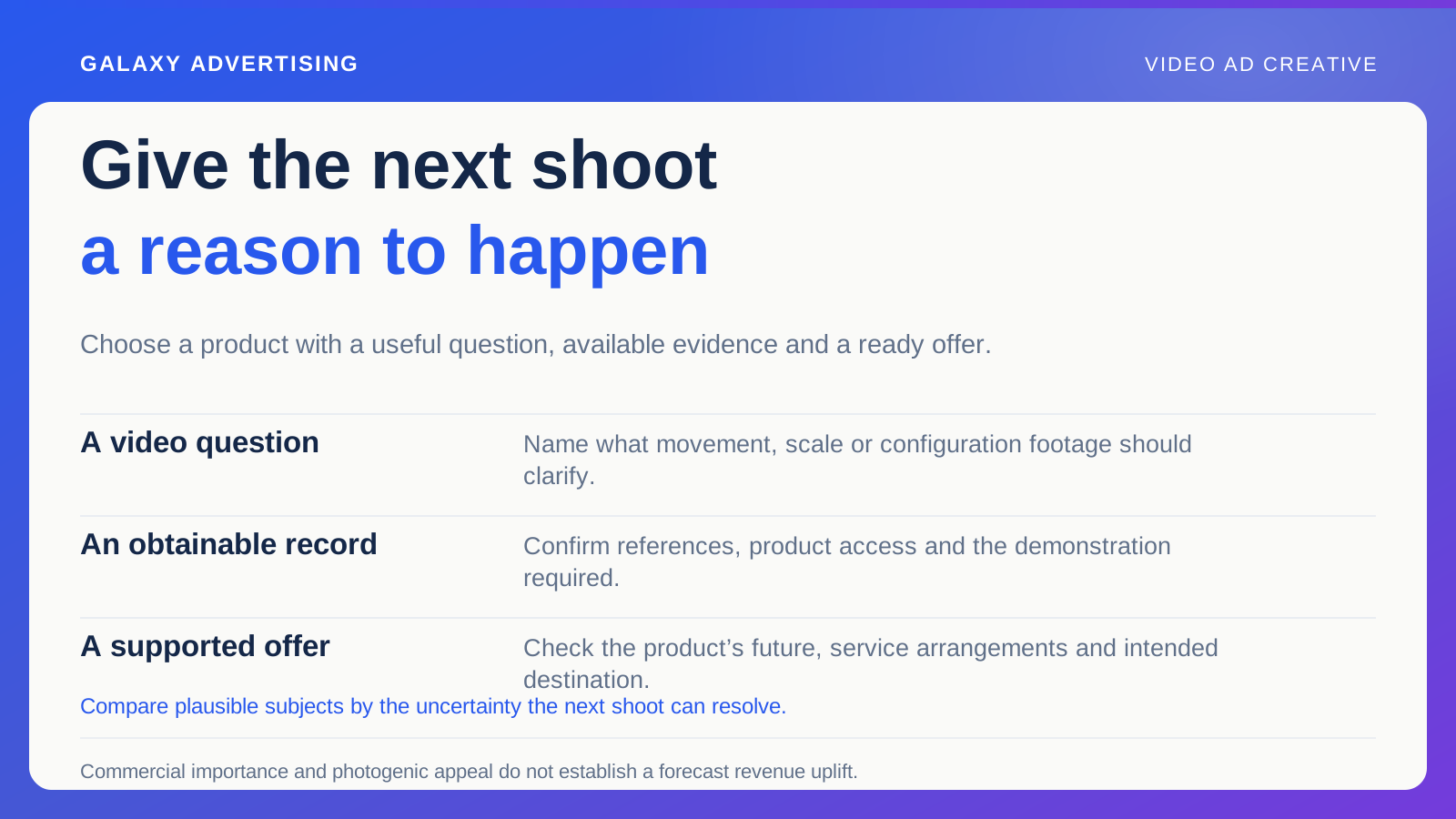
Treat product selection as an editorial and commercial decision. Find the question worth demonstrating, check whether accurate evidence is available and establish that the business can fulfil the resulting demand. The shoot then has a purpose you can explain beyond how impressive the item will look on camera.
Find the question a moving image can answer
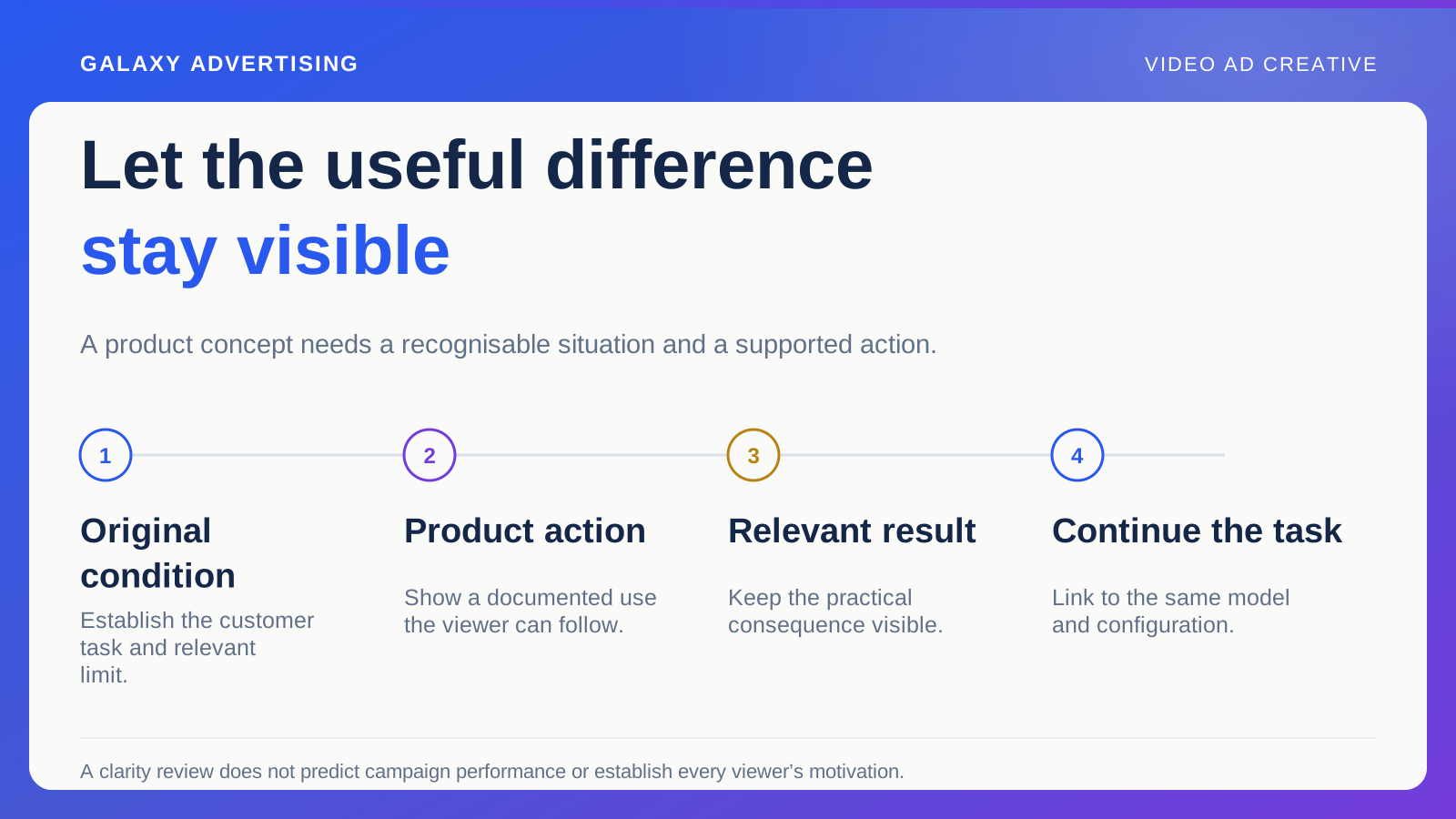
Collect recurring enquiries and inspect what still images or descriptions leave uncertain. Movement, scale, configuration and practical use can each justify video, depending on the product.
A long specification sheet does not automatically need filming. Some information is easier to compare in a table or clear diagram. Give video a role where it makes a relevant point easier to understand, rather than choosing the format before examining the question.
Write the demonstration in one sentence. What should the customer be able to judge afterwards? If you cannot say, the product might not yet be ready for production. More styling will not necessarily supply the missing editorial purpose. Decide what you need the camera to make understandable before booking its time.
Check whether the demonstrated offer is ready
Review availability, relevant configurations, price context and service arrangements. Reconsider the production investment if the business does not intend to keep selling the version you plan to show.
Separate temporary stock trouble from an uncertain product future. One can change scheduling; the other can change the value of building a large asset collection. Ask merchandising rather than inferring either situation from the website's current status.
Include the destination in the decision. Even a clear video can create avoidable uncertainty when customers cannot identify or purchase the item shown. Discuss destination readiness alongside product selection before booking the shoot. You need an accurate route from the demonstration into the actual offer.
Establish whether you can obtain the evidence
Identify the references, access and demonstrations required. A commercially important product can still be difficult to represent responsibly with the material currently available.
If the story needs a mechanism, can you film the real action under appropriate conditions? If it concerns a finish, obtain accurate material references. A generic picture with a more appealing texture will not establish what your product looks like.
Record what is missing. The next move could be supplier information, product preparation or another concept. An easier subject is not always the best choice, but proceeding without essential evidence can make the finished video unusable. Make the dependency visible so the team can resolve it deliberately.
Consider the commercial role alongside current popularity
Look at ranges the business wants to develop and orders leaving worthwhile contribution, meaning money remaining after the costs included in its calculation. Existing demand may justify coverage without proving that another asset for the popular item offers the most useful next learning.
A hypothetical retailer might compare a well understood chair with an unfamiliar modular item that repeatedly generates configuration questions. Lower current sales need not rule out the modular demonstration if the business can supply and support it.
Keep assumptions visible. Invented revenue uplifts do not make a shoot ranking more reliable. A reasoned recommendation can explain why one information problem matters more while acknowledging uncertainty about the commercial effect. The purpose is a useful investment decision, rather than a precise looking forecast without evidence.
Plan reuse around accurate product coverage
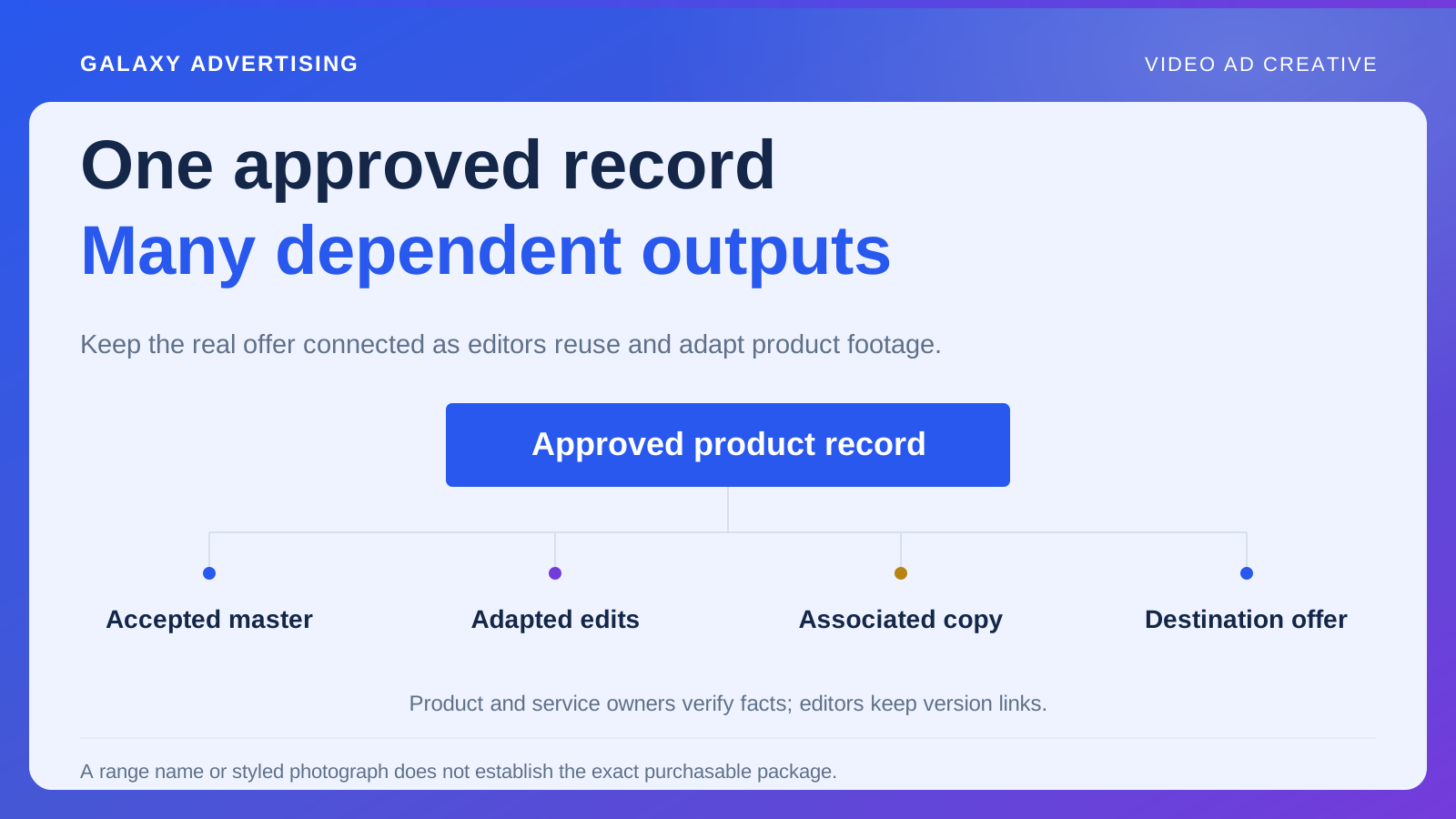
A shoot can gather material for several distinct customer questions. That works best when accurate references support different arguments, rather than stretching one scene into many nearly identical edits.
Plan essential angles and details future briefs are likely to need. Stable mechanism footage, included components and scale references could remain useful after a seasonal closing message expires.
Visual similarity does not permit reusing footage for another model. A different finish, size or construction detail changes what is represented. Keep item references with the material so a later editor knows those boundaries. Reuse is valuable when it preserves the meaning of the footage, not merely when it saves making another file.
Group the shoot without forcing one story on every item
Products sharing a location or preparation requirement might be filmed efficiently together. Keep the evidence each needs intact when deciding the group.
A shared room can give several furniture pieces useful context while their demonstrations need different space, lighting or handling. Ask production to identify those requirements before fixing the schedule.
When time is tight, protect essential shots. An attractive extra scene should not displace the only footage explaining the important action. Product selection is not complete until the schedule can deliver the evidence that justified it. Efficiency should help the demonstration happen, rather than remove its reason for being filmed.
Compare two plausible subjects in writing
For each, name the unresolved question, required evidence, source readiness and intended destination. Explain which fact makes one the better next investment.
One product might have stronger current sales while another has a clearer problem video can solve. Acknowledge that trade off instead of pretending a single attribute settles the choice.
If the recommendation depends entirely on calling one item more exciting, gather better customer or product information before booking either. The written comparison should give the business a reason it can revisit when the first footage arrives.
Check the choice against the first output
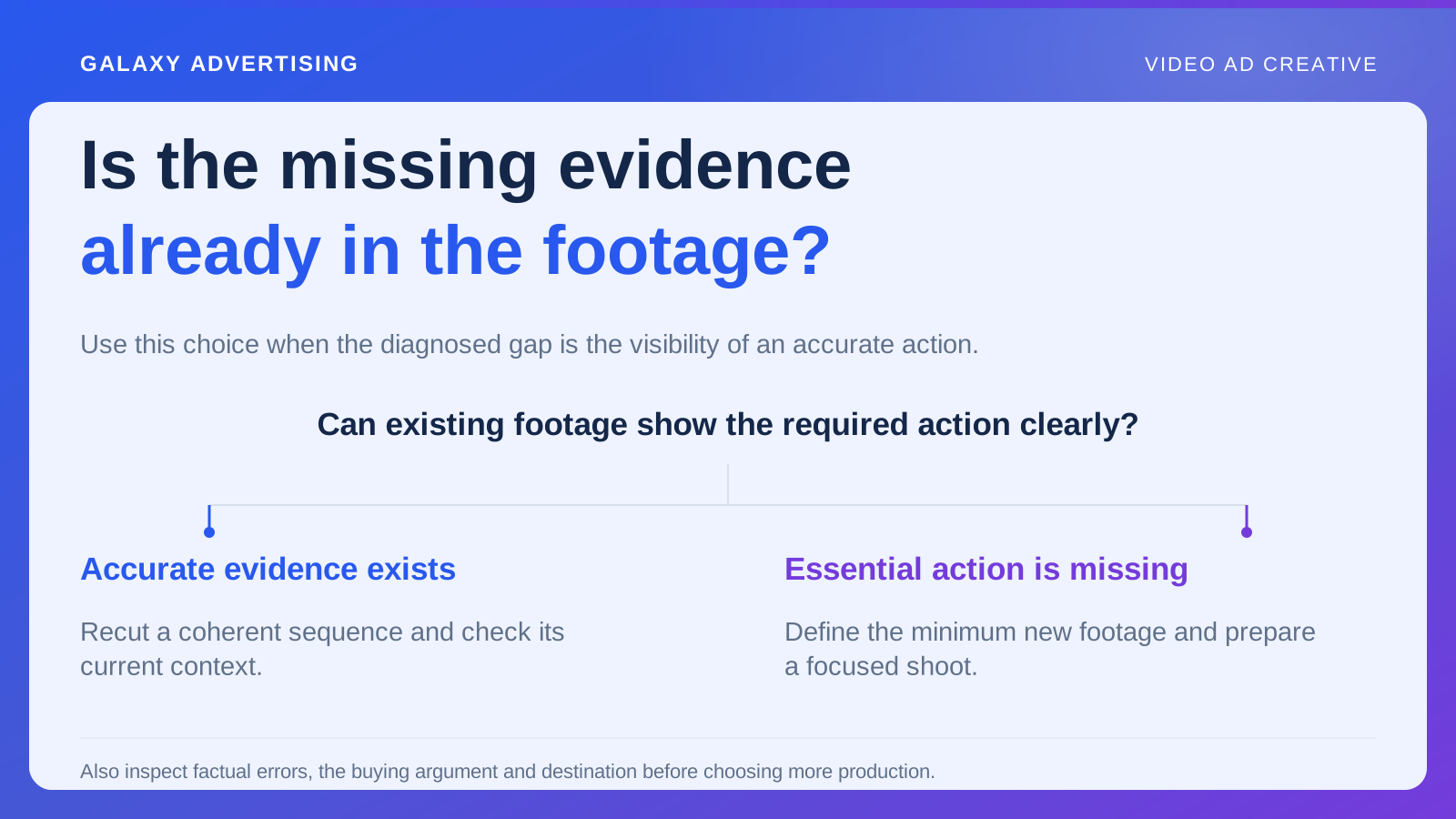
Does the footage resolve the question you selected? If the key difference is still hard to show, reconsider the approach before creating many versions of the same unclear demonstration.
Use available campaign and customer observations to guide further spending, separately from acceptance. Accurate footage can carry a weak commercial argument. A promising argument may need a better destination.
Retain the reasons for the subject and the dependencies affecting it. The next shoot can build on what you learned. Your camera then has a product worth explaining, with a reason to judge usefulness beyond whether it was the most photogenic item in the range.