Your restored walnut sideboard has sold, but the campaign is still sending people to its page. The photographs keep earning attention. Visitors arrive, discover they can't buy the piece, and your store keeps paying for interest it can no longer fulfil in the same way.
With unique vintage stock, a sale changes the marketing job. Beforehand, you're helping someone assess that object. Afterwards, you may want to preserve useful information and guide interest towards a genuinely relevant alternative. Those stages need different messages and different investment decisions.
Treat this piece as its own offer
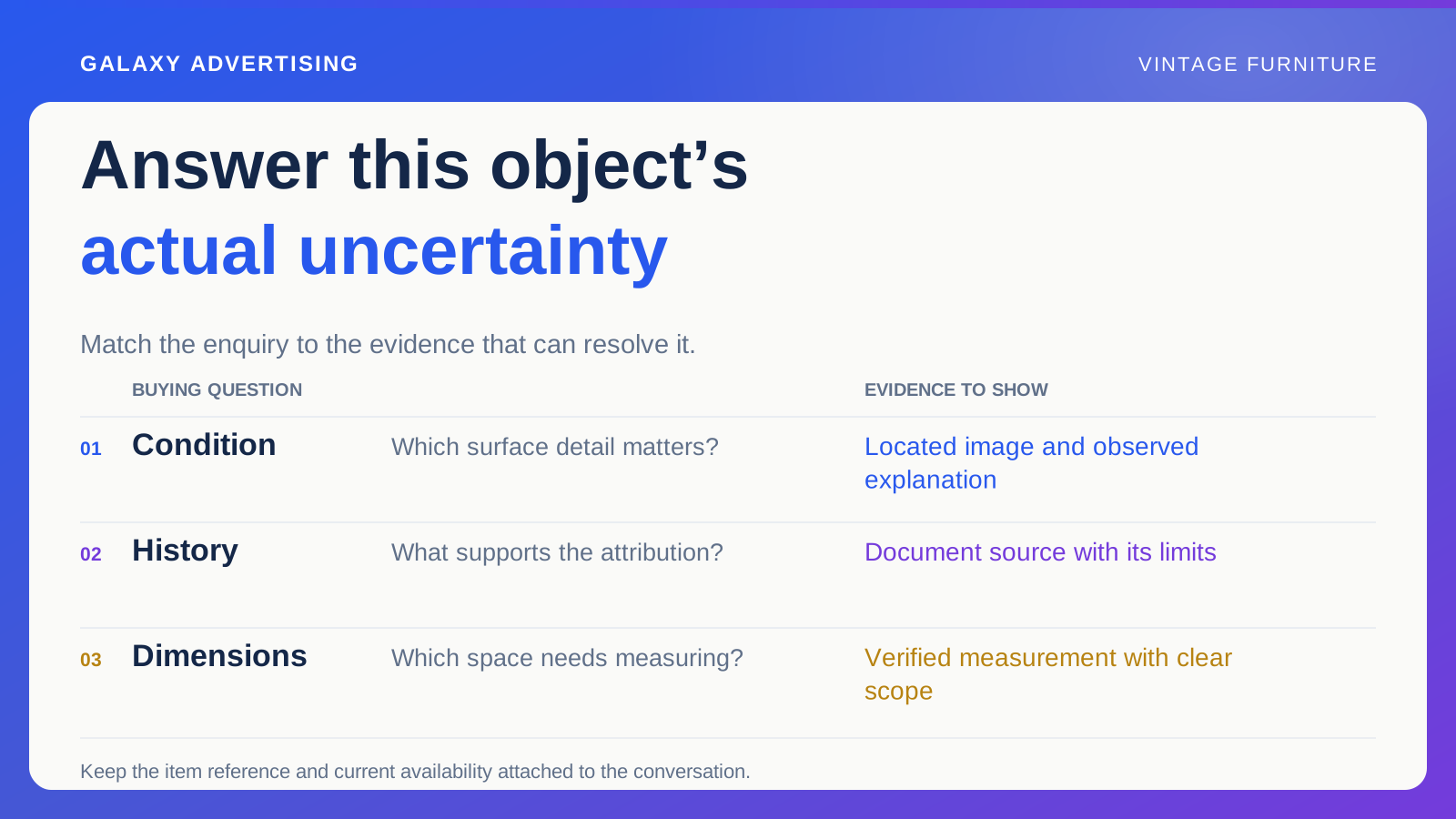
A sideboard's condition, restoration, dimensions and visible details belong to its identity. Use photographs of the actual piece and describe important imperfections clearly. A room scene that hides surfaces a buyer wants to inspect cannot carry the whole purchase explanation.
If provenance is documented, say what the evidence supports. If it isn't certain, keep that uncertainty. Resembling a particular style doesn't justify a confident attribution. Your copy needs to distinguish verified information from interpretation, even when a stronger claim would sound more appealing.
Specificity helps someone judge the purchase. It also means another sideboard cannot simply take this one's place in the same promotion. Change the object and you've changed the offer. That matters when deciding what to do with the interest you've earned.
Decide who tells marketing when stock changes
Agree how the person managing advertising hears that an item has sold or been reserved. Define what each status means operationally and which should trigger a different promotional message. A reservation and a completed sale may require different treatment.
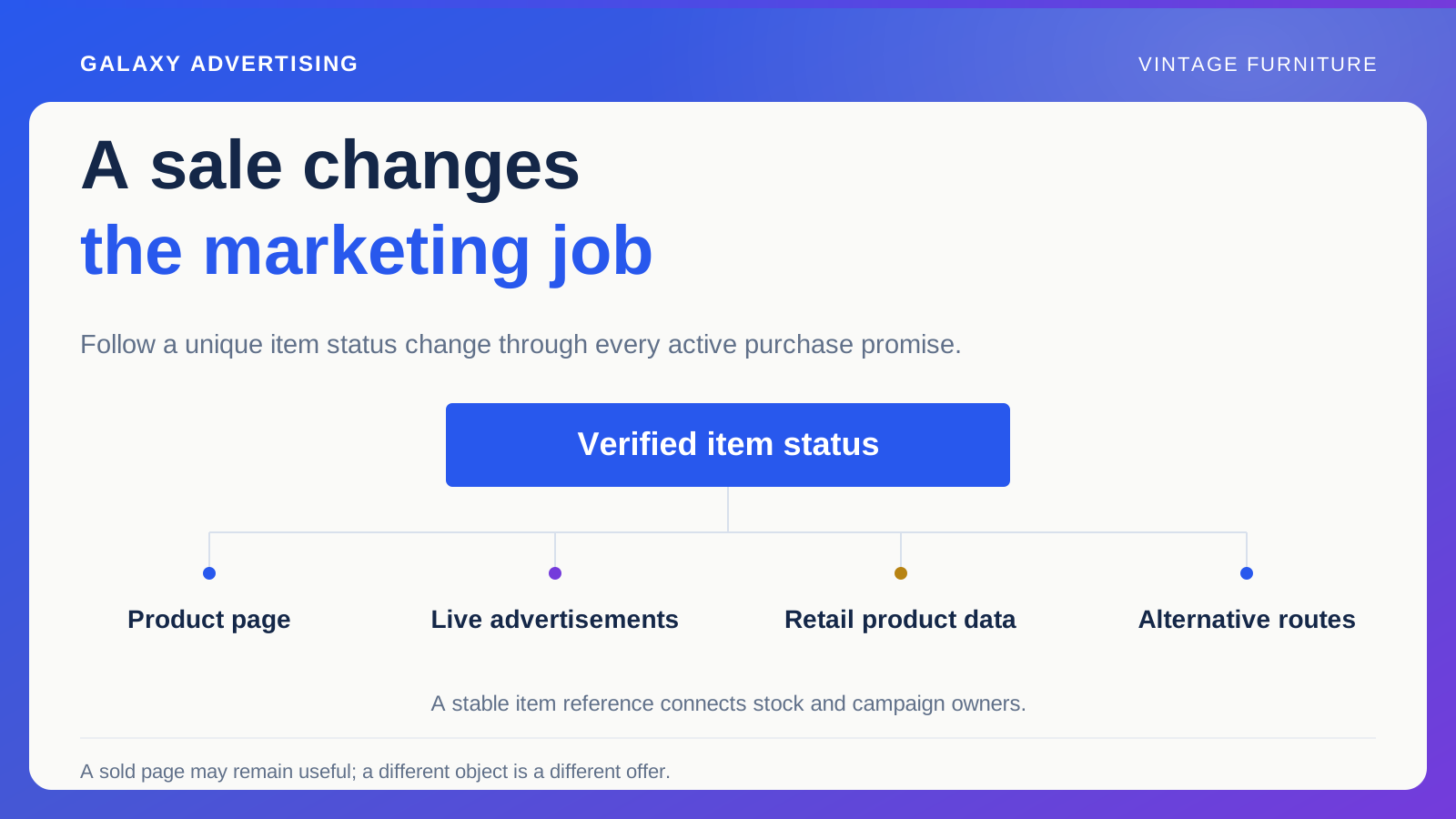
When several systems are involved, check how quickly the website, product data and campaign destinations reflect the change. Correcting one system doesn't establish that every connected asset has changed instantly. Follow the update through the route customers actually use.
Keep a clear item identifier in working records. A nickname that varies between warehouse, website and agency creates ambiguity just when someone needs to act. Make it straightforward for everyone to identify the same piece without interpreting a description.
Remove the promise that the sold piece is available
Inspect active destinations and assets linked to the item. Wherever they promise it is available to buy, change or stop the relevant promotion using the account's capabilities and your operating process. The customer should meet an accurate offer.
You don't necessarily need to erase every trace of the piece. A useful sold page can demonstrate the stock you handle and retain information someone deliberately searched for. The problem is an invitation to buy something you no longer have.
Keep availability accurate in product data used for retail listings. Google's product data documentation provides a technical reference for representing availability. Your business still needs its own process for maintaining the inventory facts behind it. Documentation cannot own that handover for you.
Make the sold page useful and unmistakable
Show the sold status clearly near the main product information. Keep useful photographs and the description where that makes sense for customers. Then offer a relevant next step, with the sale remaining clear throughout.
Choose alternatives sharing meaningful characteristics such as dimensions, material, period, storage function or style. A random display of current stock doesn't become a thoughtful substitute just because it gives visitors something else to click.
Explain the differences. Someone interested in a compact walnut cabinet may gain little from a much larger oak dresser, despite both being furniture. Don't imply an alternative is identical when the details that attracted the visitor have changed.
Give ongoing demand a different argument
If a style consistently draws interest, consider promoting its collection or your sourcing proposition instead of repeatedly showing an unavailable piece. The destination must support the broader promise. Changing the ambition of the advert means changing what people can reasonably expect from the page.
A collection can explain the current range and make availability easy to inspect. If you genuinely offer sourcing, explain how it works and what you cannot guarantee. Don't invent a sourcing service in the copy merely because it would make a convenient destination.
Plan this as a separate creative concept. Changing the link isn't enough if the image and message still appear to promise the sold object. The broader route needs its own honest reason for someone to visit.
Judge the item's economics while it was available
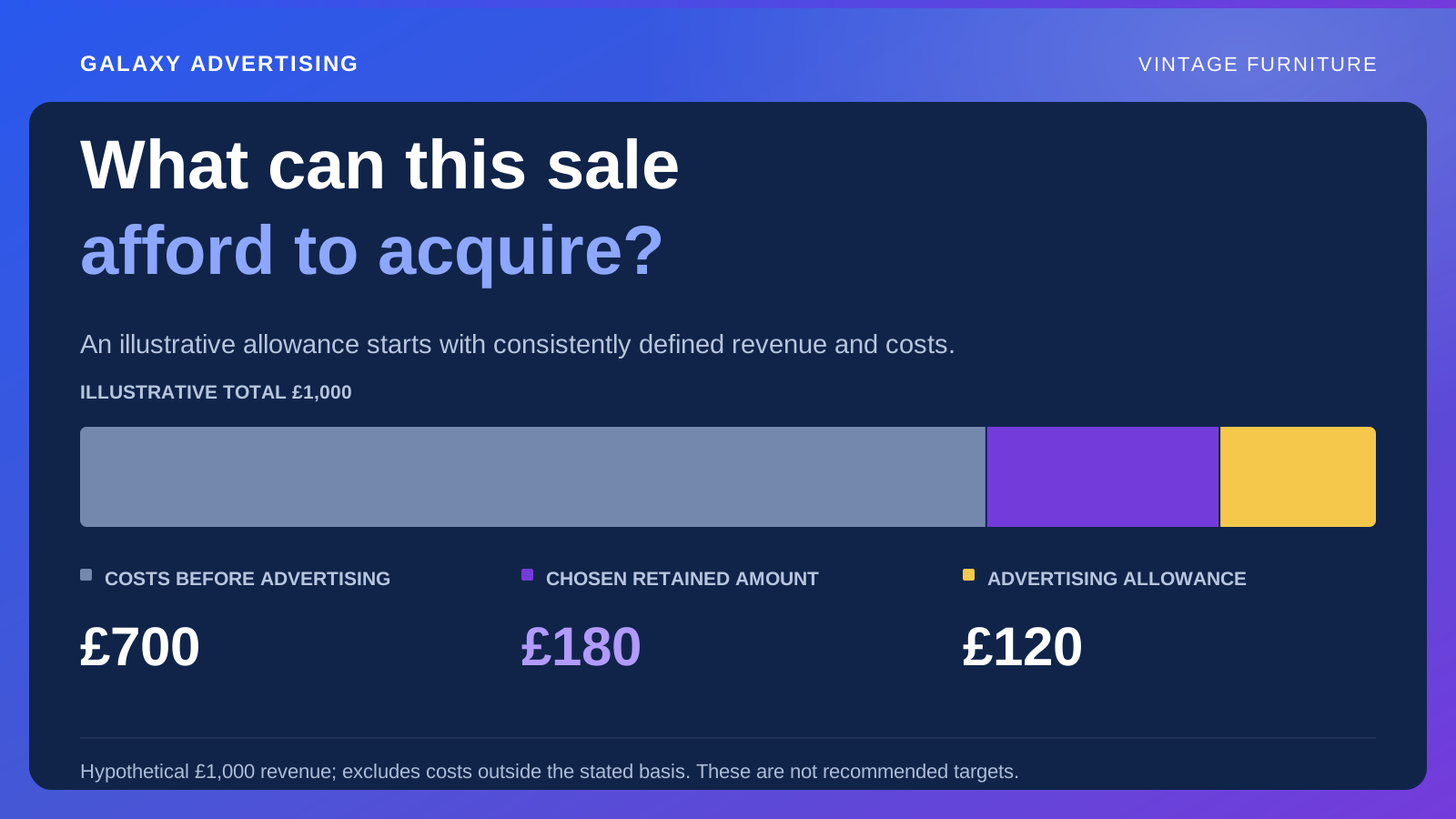
Unique stock can have restoration costs, specialist handling and delivery arrangements unlike other items. Assess promotional investment against the contribution from the sale, using your agreed cost definitions. Contribution is the money remaining after the costs included in that calculation.
Keep traffic arriving after the sale separate when reviewing acquisition. Prolonged clicks after availability ended can make the original offer look weaker than it was. They can also exaggerate continued demand when you have no plan to fulfil it.
Still, enquiries about similar pieces are worth understanding. Record what people wanted and whether you could offer a suitable alternative. Every sold page visit isn't automatically a missed sale. You need evidence of the customer's need and what you could provide.
Make the stock handover repeatable
Use a simple available, reserved and sold checklist. Define who can change each status and what it triggers. Available stock needs its live offer and product evidence checked. Reserved stock needs an honest message while the outcome remains unresolved. Sold stock needs a review of page status, connected promotions and relevant alternatives.
Attach the checklist to the item identifier, rather than a photograph that could be reused. If an asset shows several pieces, record which part of its promise changes when one sells. One correction may not resolve the whole scene.
Keep the handover simple enough for a small team to repeat without a complicated approval process for every sale. Review occasional exceptions and improve the rule when they reveal a real operating need. Administrative work people bypass won't make stock communication more reliable.
Plan the next piece's journey before launch
For each arrival, identify the evidence required for promotion, who owns stock status and what happens to the page after sale. Include connected assets so an outdated promise doesn't remain live elsewhere.
A reliable notification and clear ownership matter more than a sophisticated dashboard nobody can maintain. The customer should always know which conversation they're entering: assessing an available piece, viewing a sold example or considering something meaningfully different. Your marketing can keep the interest without blurring that distinction.