A grinder included with a coffee machine during a promotion changes the package, rather than the machine's underlying features. If your guide recommends the bundle for that addition, ending the offer changes more than the price label.
A later customer can still discover the old recommendation and assume the accessory belongs to the ordinary purchase. The most persuasive fact in the comparison may no longer be true.
Give temporary offers a boundary and update process. Keep enduring product judgement distinct from advice dependent on an incentive. That helps customers assess today's proposition and keeps your team from maintaining conflicting versions of the same package.
Does the incentive change the answer?
Ask what the promotion contributes to the decision. A lower price can change the commercial comparison. An extra component can change what the package does. These are different kinds of advantage, and the guide needs to describe the right one.
Make dependence explicit when the conclusion rests on the incentive. A temporary benefit shouldn't read as a permanent characteristic of the product or retailer. Readers need to understand what would change if that benefit disappeared.
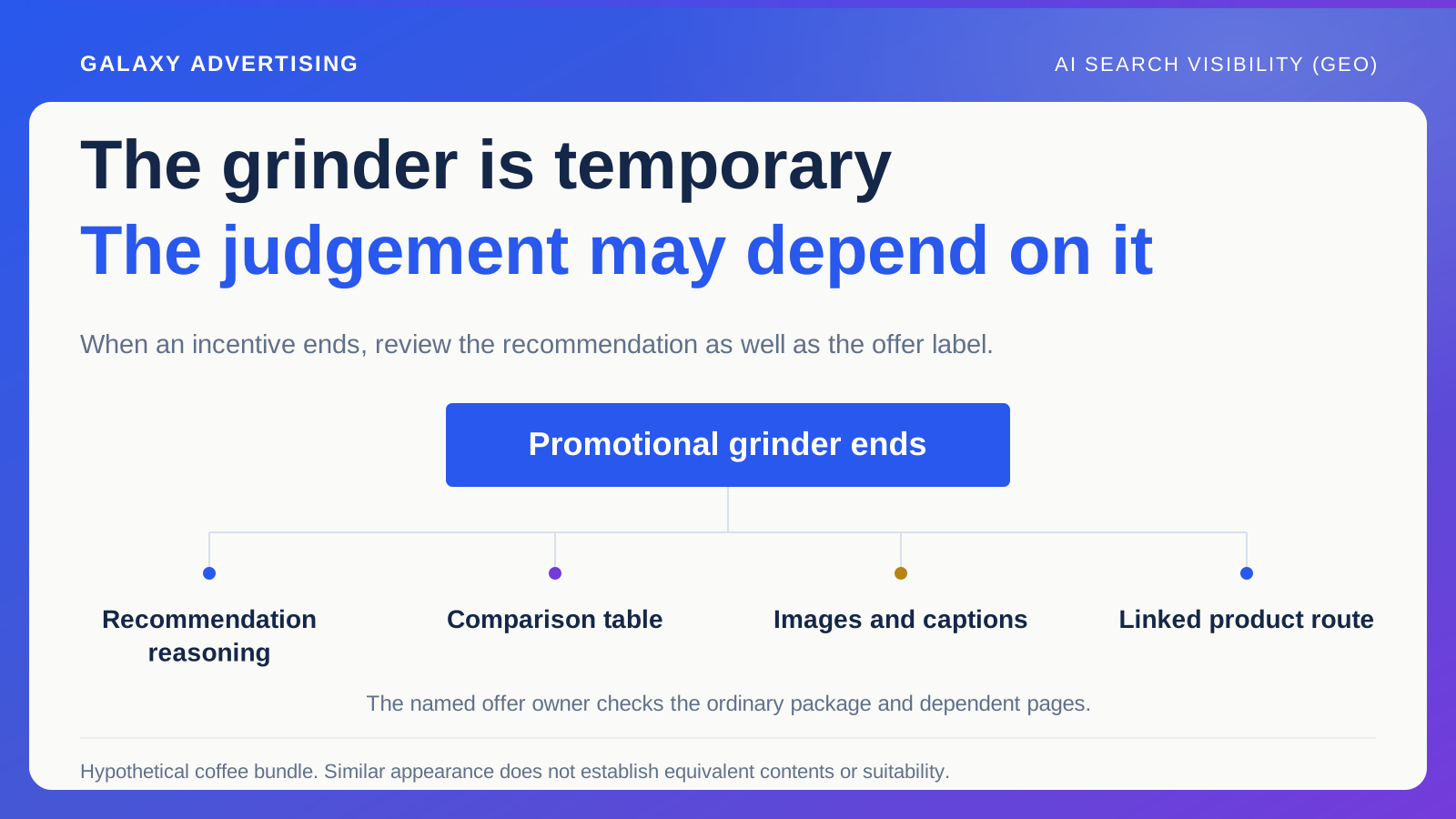
For the hypothetical coffee equipment bundle, identify actual contents and separate the promotional grinder from the machine's features. When the incentive ends, review the relevant comparison rather than making only a cosmetic price edit. The recommended purchase itself has changed, even if the product name and main photograph look familiar.
Keep changing facts tied to a maintained source
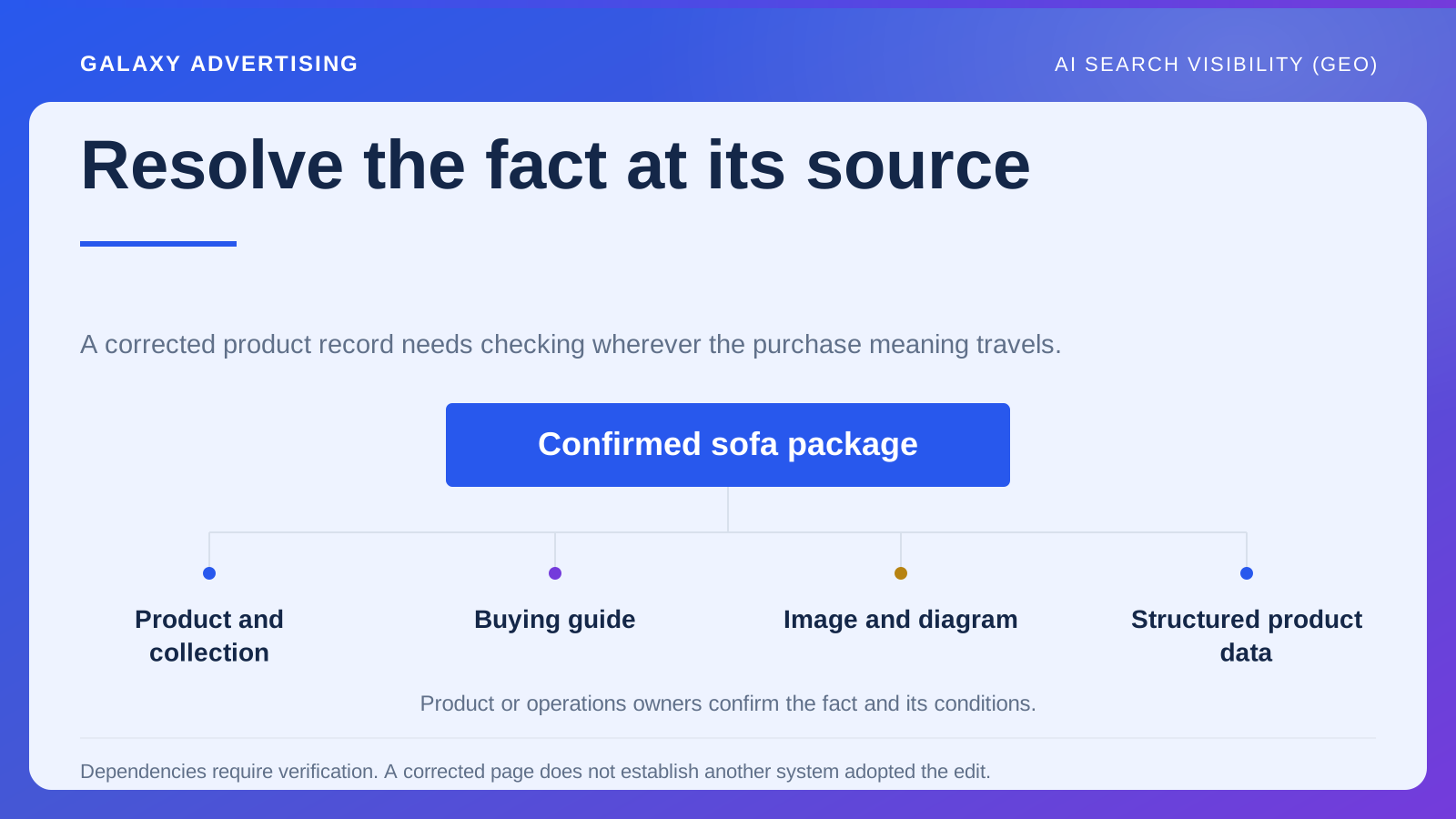
Identify who or which system owns current prices, packages and eligibility. A writer's old briefing document shouldn't become an independent version of promotional truth. The explanation needs a dependable route back to current commercial facts.
Establish how material changes reach pages using those facts. A small range may use a manual process. A larger operation may connect to a maintained source. What matters is reliable responsibility for the update, rather than a particular mechanism for every retailer.
Retain the configuration reference. Similar package names don't mean every option qualifies. Even a correct price can mislead when the dominant image shows a different arrangement. Check the offer customers are likely to infer from the page, rather than treating an accurate number as sufficient on its own.
Compare the whole purchase fairly
State what is included and which additional costs or services affect the assessment. A product price isn't the complete purchase if relevant components have to be bought separately. Make those differences intelligible before asking someone to compare value.
Use a supportable basis for savings. Don't invent a reference price or combine figures from incompatible packages to produce a more impressive comparison. The claim needs a factual relationship the business can explain.
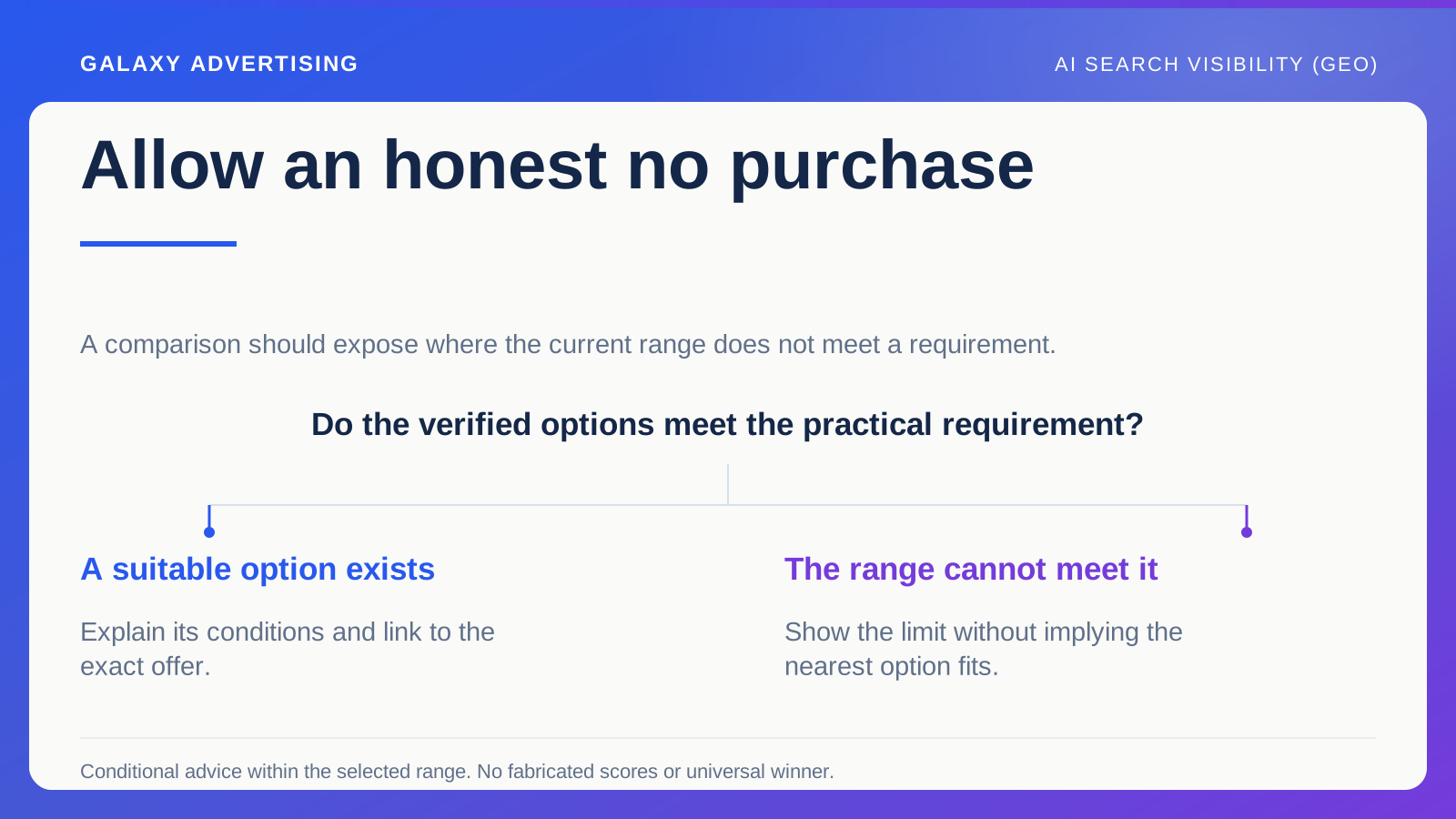
Keep economic attractiveness separate from suitability. A discounted bundle may contain equipment the customer doesn't need or fail an important requirement. The largest visible saving isn't automatically the best choice. Help readers assess the tradeoff rather than allowing a promotion to answer a product question it doesn't actually settle.
Put temporary information somewhere it can be retired
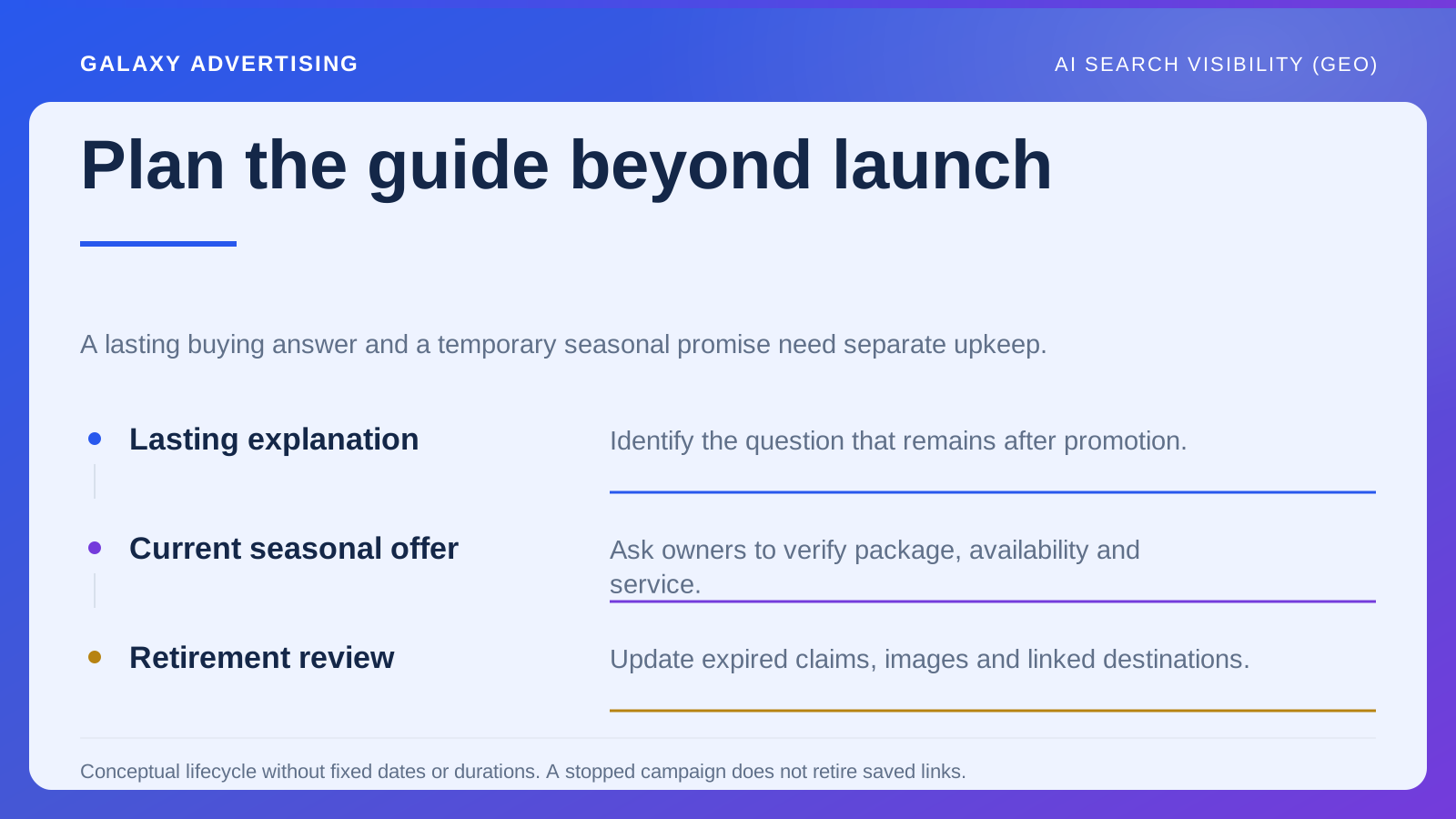
Keep the stable explanation separate from a clearly identified current offer section or relevant product destination. Weaving a short lived incentive through every paragraph of an otherwise useful guide makes later correction harder than it needs to be.
Separation shouldn't hide material conditions. Readers need enough information to understand the proposition before following a purchase route. A vague pointer to terms elsewhere won't repair a misleading main impression. Keep the boundary clear where the offer is being assessed.
Plan for saved links and later discovery. People can reach the page after supporting media stops. The destination should show the current offer or accurately explain that the arrangement changed. It shouldn't continue selling an inaccessible benefit simply because the original campaign is no longer active.
Review the reasoning when the offer changes
Check whether the original conclusion still follows without the incentive. A bundle recommended mainly for temporary contents may no longer deserve the same emphasis. The editorial judgement needs review alongside the commercial details.
Inspect tables, images and captions as well as main copy. An introductory paragraph can be current while a comparison table retains an obsolete accessory. Customers read the combined offer, rather than only the section most recently edited.
Verify meaningful differences if another package replaces the original. Similar appearance or price doesn't establish equivalent contents, compatibility or service. A replacement needs its own factual review before inheriting the recommendation.
Keep a brief record of the ordinary package, temporary addition and pages whose conclusions depend on it. When the offer ends, inspect the affected reasoning directly. This matters where pictures remain similar while contents change: customers may not notice a missing component, and the earlier recommendation can still assume it is supplied. Retiring the price label alone leaves that confusion intact.
Separate promotion response from visibility claims
Review available visits, enquiries and orders using consistent definitions. Keep stock, price and other promotional changes visible. They can affect what happened during the offer, independently of how customers discovered the page.
More orders don't establish that AI discovery caused the movement. A simultaneous mention or citation adds context rather than a complete causal explanation. Keep that distinction beside the result, not tucked away from the claim.
An unchanged visibility sample doesn't make the guide commercially useless either. It may support people arriving elsewhere. Explain the role you observed without assigning every benefit to the newest discovery channel. The page can have value beyond the particular answer sample you're monitoring.
Give the end of the offer an owner
Before release, name who acts when the incentive ends. Include the guide, comparison table, imagery and linked product route. Keep a record of the change and current source so a later editor can distinguish an intentional update from an accidental loss of benefit.
A buying guide should remain credible after the promotion finishes. Product facts, commercial conditions and editorial judgement can work together without becoming interchangeable. Preserve their boundaries, and an old incentive won't quietly become the advice shaping a new customer's expectations.