A missing citation makes us want to give the developer something to fix, even when we haven't diagnosed a fault. The guide is absent from a sampled answer, so the website must be blocking AI. That leap feels actionable.
The page could have an access problem. The missing link alone doesn't establish one, and an urgent technical task can be a confident response to the wrong question.
Separate access, permitted use, information quality and answer selection. Each needs its own evidence. A responsible audit identifies the actual constraint before asking somebody to change the site or remove controls the business may deliberately want.
Define the page and route you mean
Identify the exact URL and its purpose. A public buying guide, private account page and filtered product result can have different intended access conditions. Start with what the business wants discoverable, rather than treating every restriction as an accidental growth barrier.
Record the platform or experience under investigation. Use that provider's current official documentation for requirements and controls. A general list of bots collected from commentary isn't a substitute for checking the relevant route properly.
Don't alter broader access policy before understanding the scope. The audit should clarify which controls are deliberate and which conflict with the intended use. That gives technical work a defined purpose, rather than assuming wider access must always be the right outcome for every page on the site.
Ask the responsible specialist to verify access
Have the developer or hosting owner inspect the relevant response, crawler controls and infrastructure behaviour. Loading the page in your browser doesn't necessarily establish how the intended crawler encounters its content. The access question needs the appropriate check.
OpenAI's crawler documentation distinguishes its search crawler from other uses. Apply that documented distinction when reviewing intended controls. Don't assume one general AI bot setting governs every purpose, or let a broad label hide the decision you're actually making.
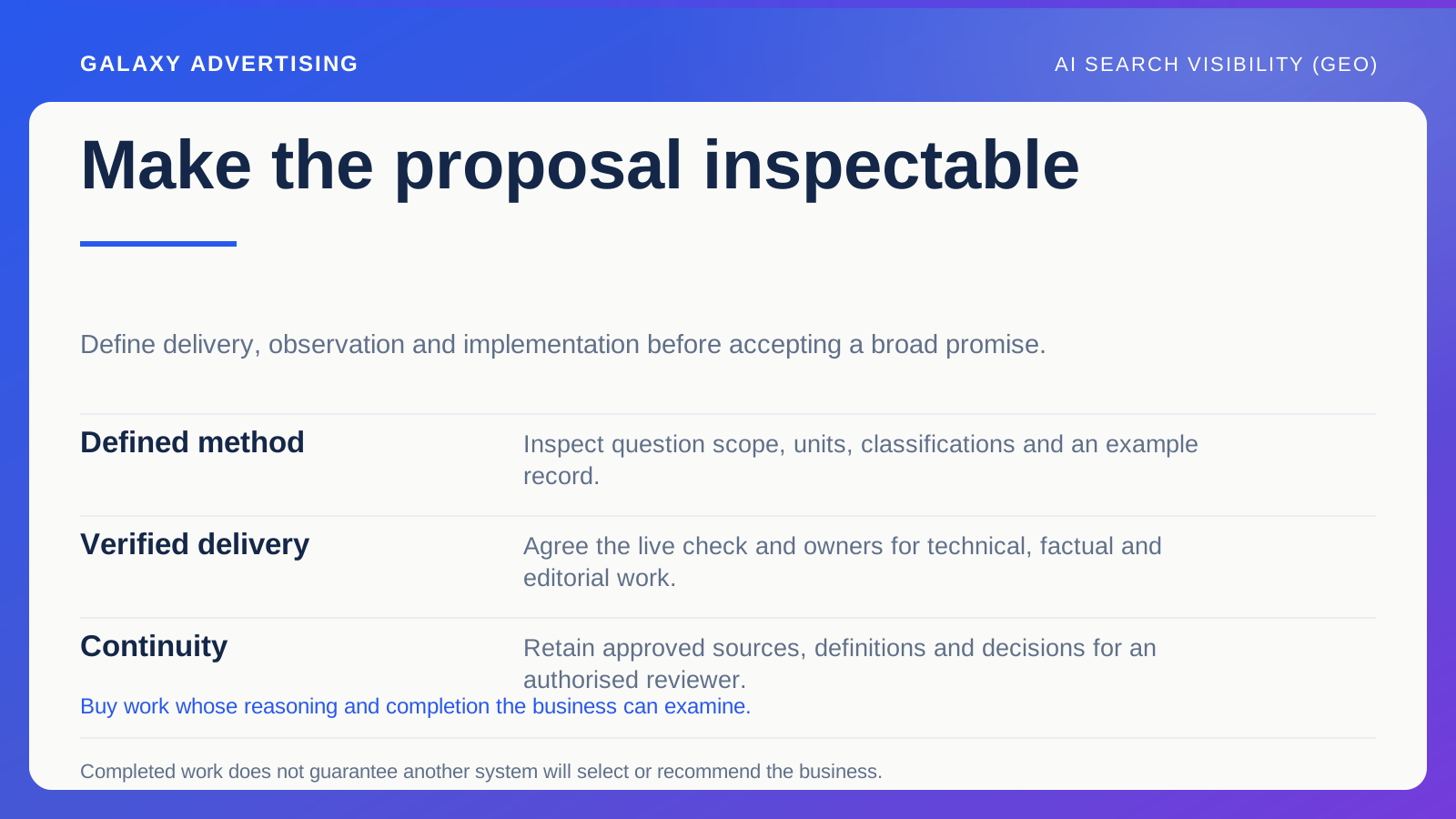
Keep the finding reproducible. Identify the page, relevant conditions and evidence of the observed barrier. Saying the site needs to be AI ready isn't a diagnosis or an adequate implementation specification. The specialist needs a fault they can investigate and a condition they can later verify.
Check requirements without inventing a special fix
Use current official guidance for the experience being reviewed. Google says established search foundations remain relevant to its AI features. It doesn't prescribe special AI schema, a technical description of information, as a universal inclusion requirement. Don't commission an invented requirement as though it were documented.
Eligibility isn't a guarantee of selection. Meeting a requirement can allow consideration without causing the page to appear in a particular answer. Keep those outcomes distinct when discussing what technical work can deliver.
Where technical information is used, check it matches the visible offer and actual implementation purpose. Hidden claims or invented markup aimed only at influencing a response can introduce contradictions without improving customer information. Prefer something accurate and maintainable to speculative additions whose relevance hasn't been established.
Check that the answer is really available
Inspect what customers and relevant systems can encounter. Is the key fact clearly expressed in text, or left to a decorative image, vague label or unavailable interaction? Accessibility of the page doesn't automatically mean its answer is useful or intelligible.
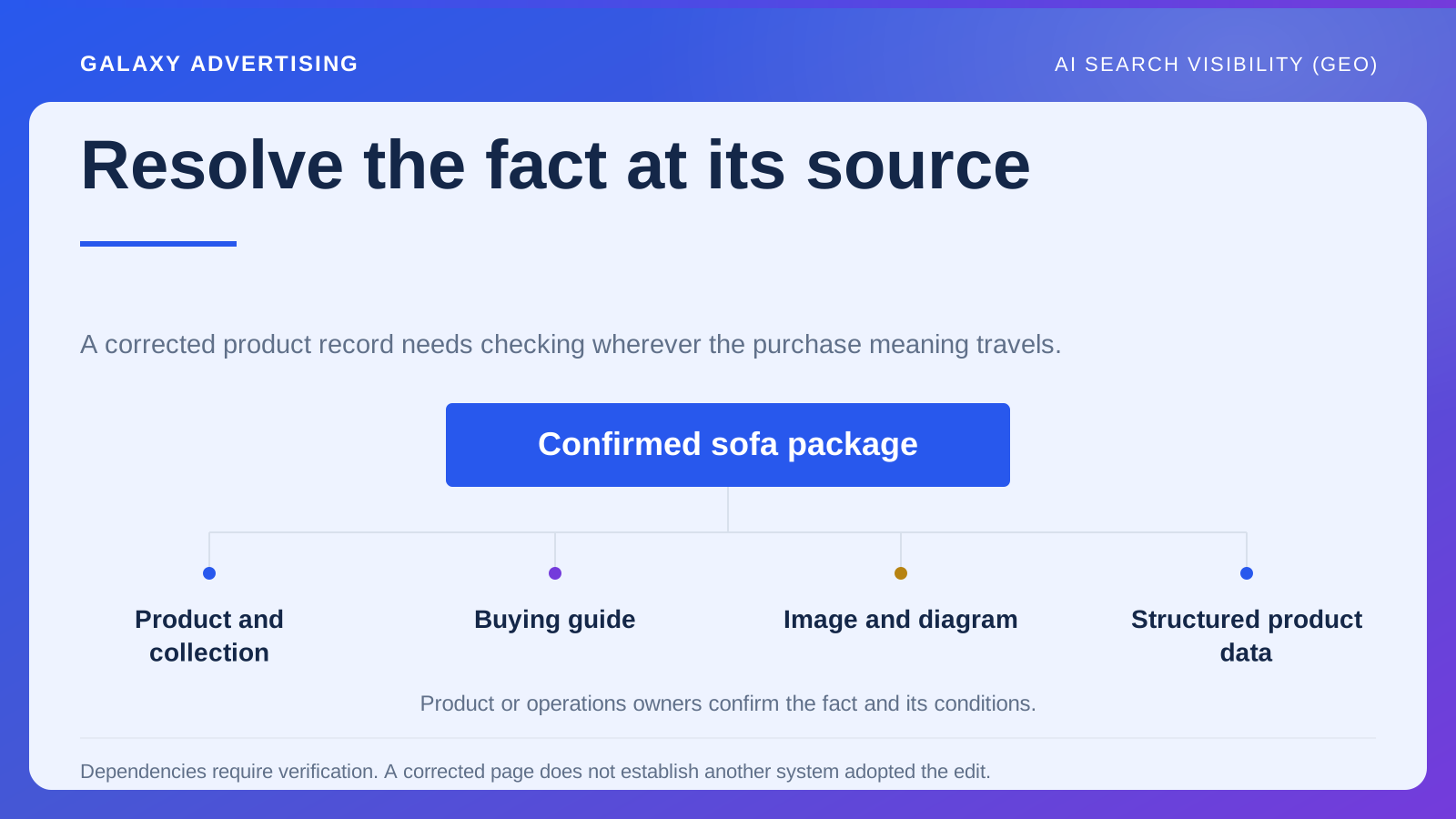
Have the product owner verify the information. An accessible page can still describe obsolete comparisons or incorrect package contents. Those are editorial and commercial problems, even when a technical concern prompted the audit. Give them the appropriate evidence and owner.
Trace the links too. A guide may explain a distinction correctly and then lead to an unrelated collection or unavailable configuration. One accessible paragraph isn't a complete information route. The next action still needs to support the customer's task.
Classify what you've found before assigning it
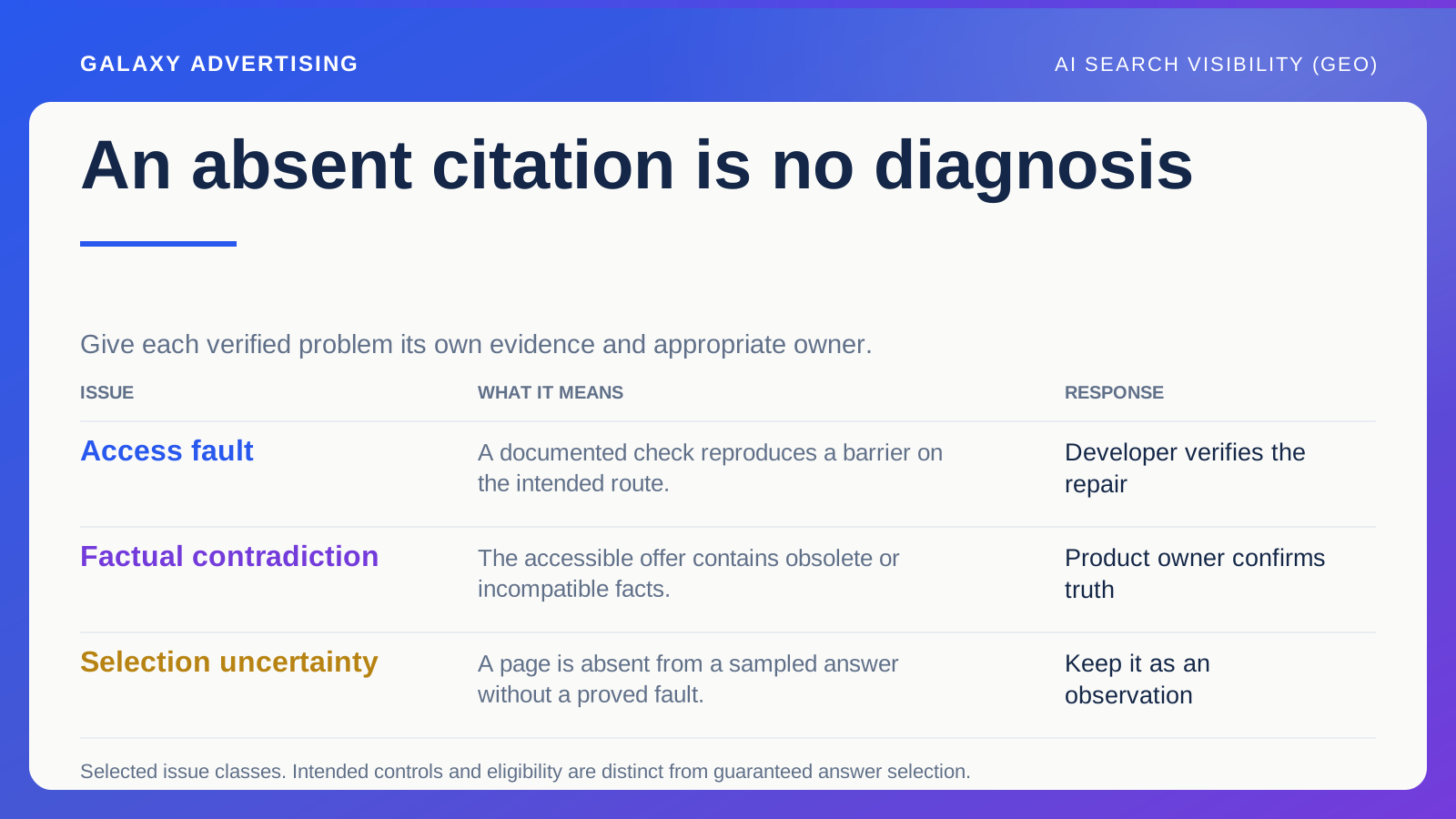
Separate a demonstrated access fault, implementation mismatch, factual contradiction and unproven content hypothesis. Each needs its own evidence and appropriate owner. Don't collapse them into a general request to improve visibility.
A developer might resolve a response problem. Merchandising may confirm the package. A writer may clarify the comparison. Keep the absent citation in the observation record unless further evidence supports a diagnosis. It can justify investigation without becoming a verified technical defect.
For example, one record can show that a public guide returns an unexpected response under a documented access check. Another can show its absence from a sampled answer. Keep them separate even for the same URL. Combining them into a claim that AI excluded the site loses the evidence boundary and can encourage broad changes whose relevance was never established.
Verify the correction where the problem was found
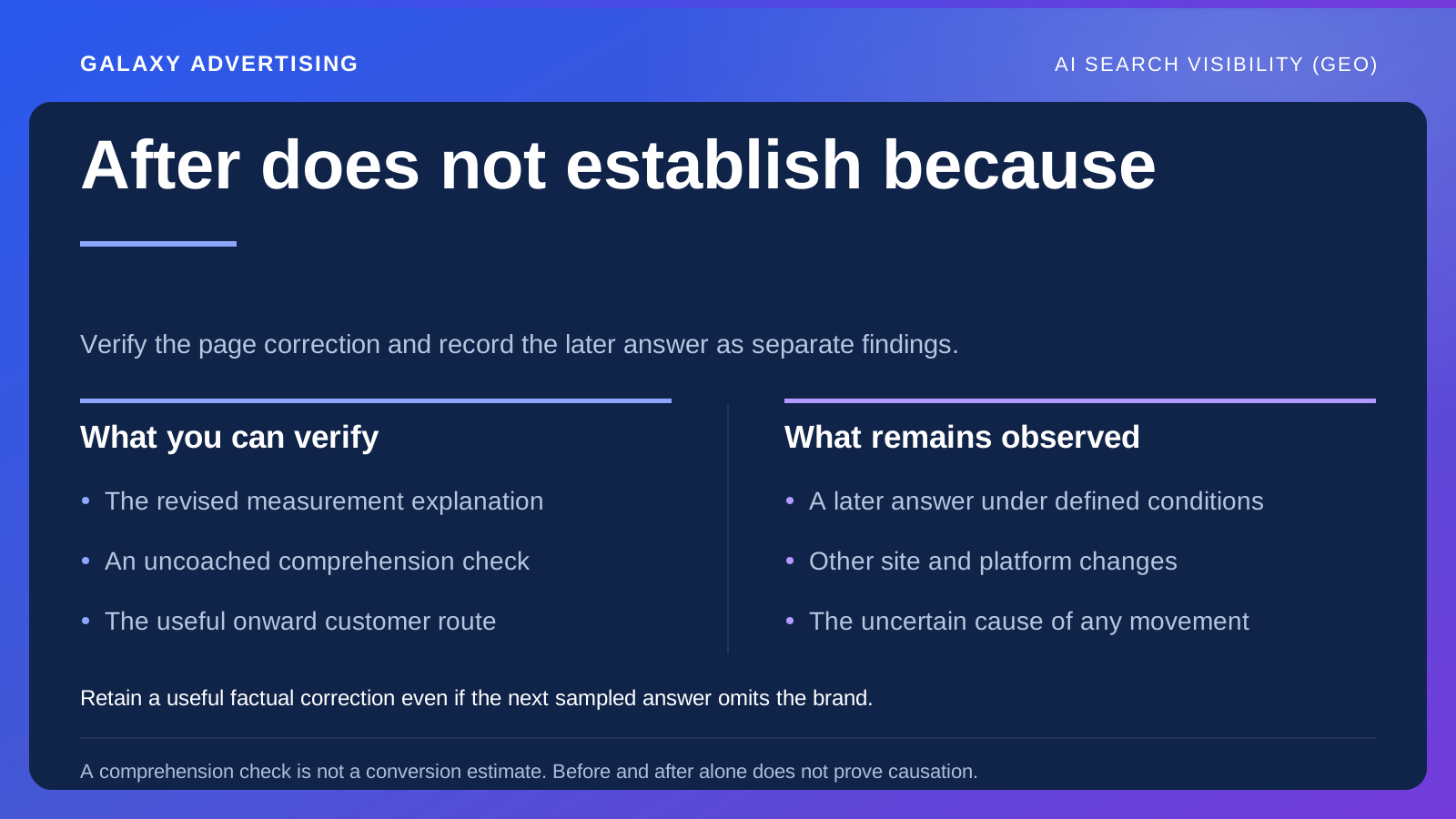
After repair, repeat the check demonstrating the original fault. Confirm intended access or resolution of the information mismatch in the live route. The correction needs evidence at its proper level, rather than a different observation standing in for verification.
Don't make a later favourable AI answer the only proof of technical success. Responses can change for several reasons. The original fault still needs its own check.
Equally, an unchanged answer doesn't necessarily mean the repair failed. Technical outcome and external selection are different observations. Keeping both visible helps explain what you paid to fix and which uncertainty remains. Neither should be forced to validate the other.
Choose the next expense from the real constraint
Report verified findings, completed work and unresolved questions. Recommend further technical investigation, product fact review, a clearer destination or proportionate observation according to the evidence. The appropriate next job depends on what the audit actually established.
Don't promise citations from a completed checklist. Improve the foundations you control while recognising that another system's selection isn't guaranteed delivery.
The useful audit replaces vague anxiety with specific evidence. It lets you correct genuine faults and preserve useful controls, without turning every missing mention into a broken website. That's a clearer decision than a longer technical checklist attached to an uncertain screenshot.