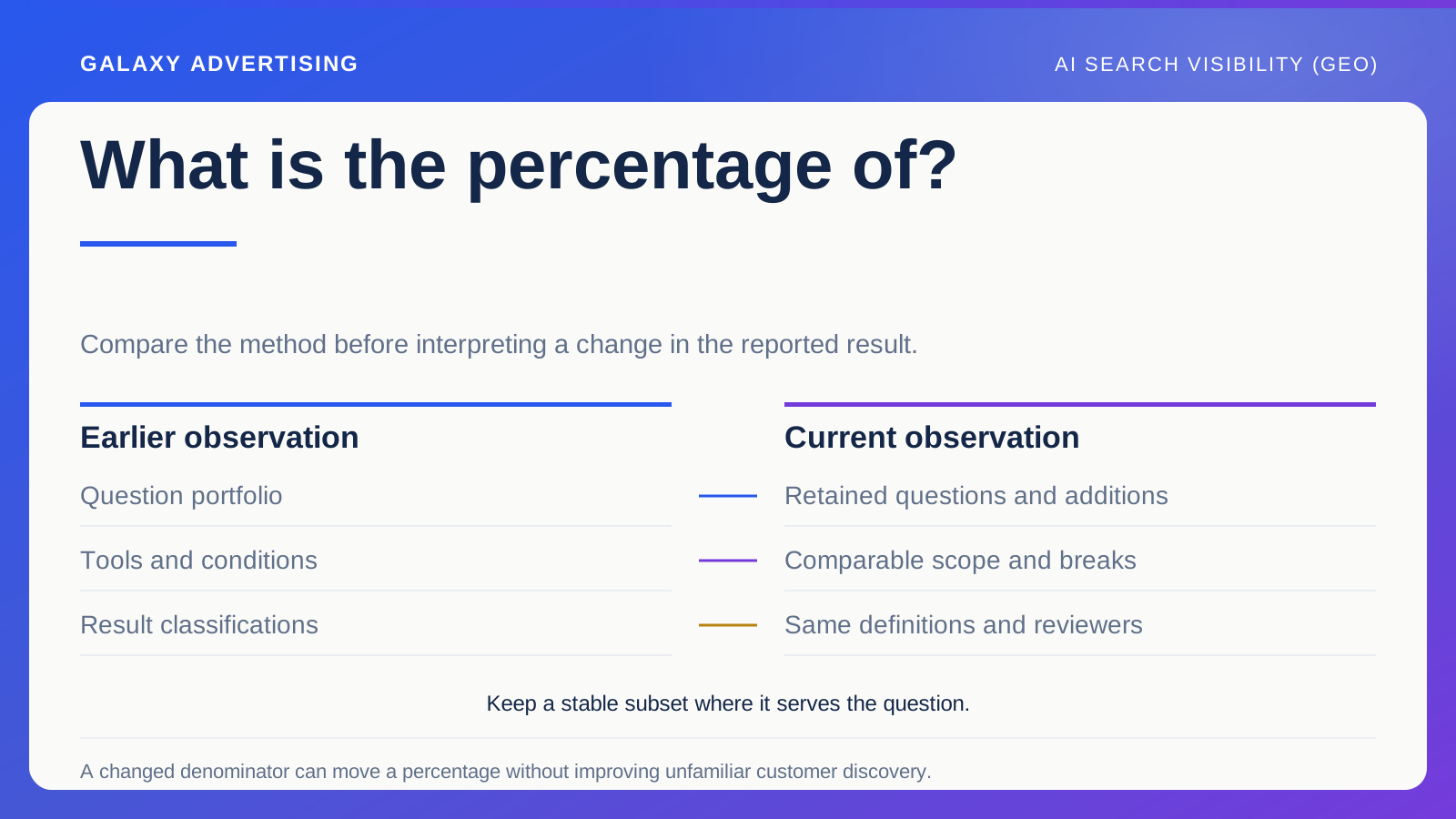
Adding more favourable questions containing your brand name can improve a visibility percentage without improving discovery by unfamiliar customers. If your report's number rises, you need to know whether the result changed or the measurement did.
That's why “a percentage of what?” is a useful commercial question. New prompts, additional tools and revised recommendation classifications can all make a comparison unclear. A report worth using makes its observation method as visible as its result, keeps different evidence apart and gives you a specific decision to make.
Which questions were actually checked?
Record the question portfolio and explain why it belongs in the review. Broad discovery, product comparison and checks about your particular brand serve different tasks. Keep them distinct so a change in one isn't quietly presented as progress in another.
Identify the tools and relevant conditions used. A selected sample, or the reporting scope of one platform, doesn't cover every experience. Your report should tell you which part of the picture it observed rather than imply universal coverage.
When that portfolio changes, explain what happens to comparison. More favourable brand named questions can move a percentage without changing unfamiliar customer discovery. You need to distinguish movement in the observed route from movement caused by the way it was measured.
What exactly counted as a result?
A brand mention, source link, recommendation and visit aren't interchangeable. If your provider combines them into a score, ask for its components and why each has its particular weight. A tidy total shouldn't conceal a collection of different outcomes.
Keep inspectable examples for ambiguous classifications. Being named as an alternative doesn't automatically make your brand the preferred choice. A citation supporting one fact doesn't endorse your whole range. The label needs to match what the answer actually did.
Use the same definitions between reviewers and reporting periods. A bigger report isn't more reliable when classifications depend on who read the response. Small disagreements can improve the rules if they're discussed, rather than hidden to protect an attractive trend.
Check the comparison before celebrating the change
Identify the observations genuinely comparable with the earlier period. Keep a stable subset where that serves your business question, while recording legitimate changes to the wider method. You can improve the method without pretending nothing changed.
Don't conceal a break just to show one continuous line. An explanation of changed coverage is more useful than a smooth chart with an unstable foundation. Otherwise you risk making decisions on a trend whose meaning has quietly shifted.
Keep the offer's context too. A new range, a changed stock position or a major website revision can affect what observations mean. Give the reader enough operating context to understand the comparison without making them reconstruct the business's entire history.
Show the work and the response separately
Explain the corrections and improvements completed and why each mattered. Perhaps a package description was clarified, a diagram replaced or an access fault repaired. State how the live result was verified, so completion means more than somebody marking a task finished.
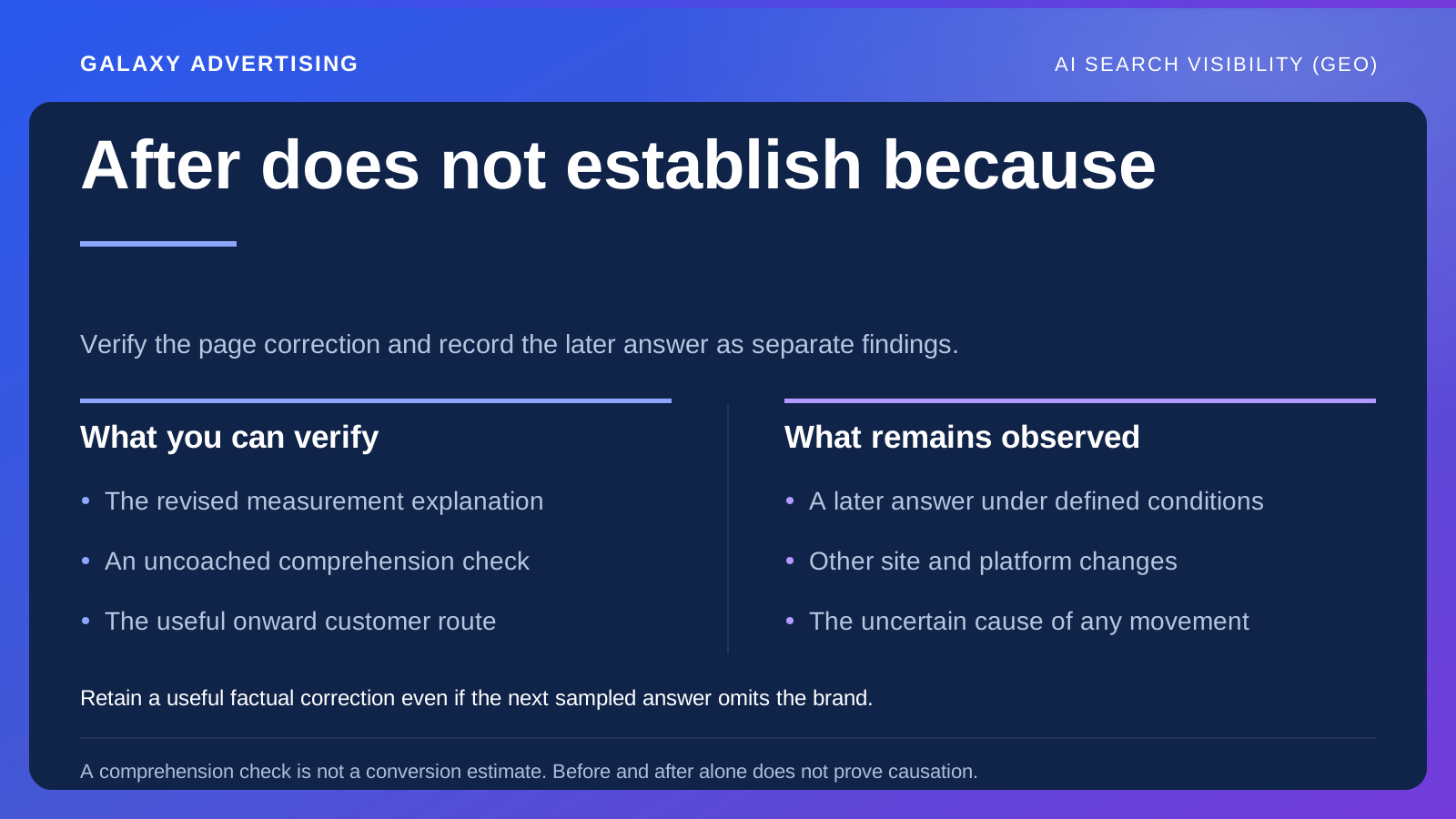
Then describe the external response using its own method. A later change in citations isn't the same fact as the page correction. Their sequence alone doesn't establish that one caused the other, however conveniently they fit on a timeline.
Keep useful work visible when the sample doesn't change. An accurate product page still matters if it isn't selected in one response. Equally, an attractive mention shouldn't distract from a destination that remains misleading or difficult to use.
Give customer response its own space
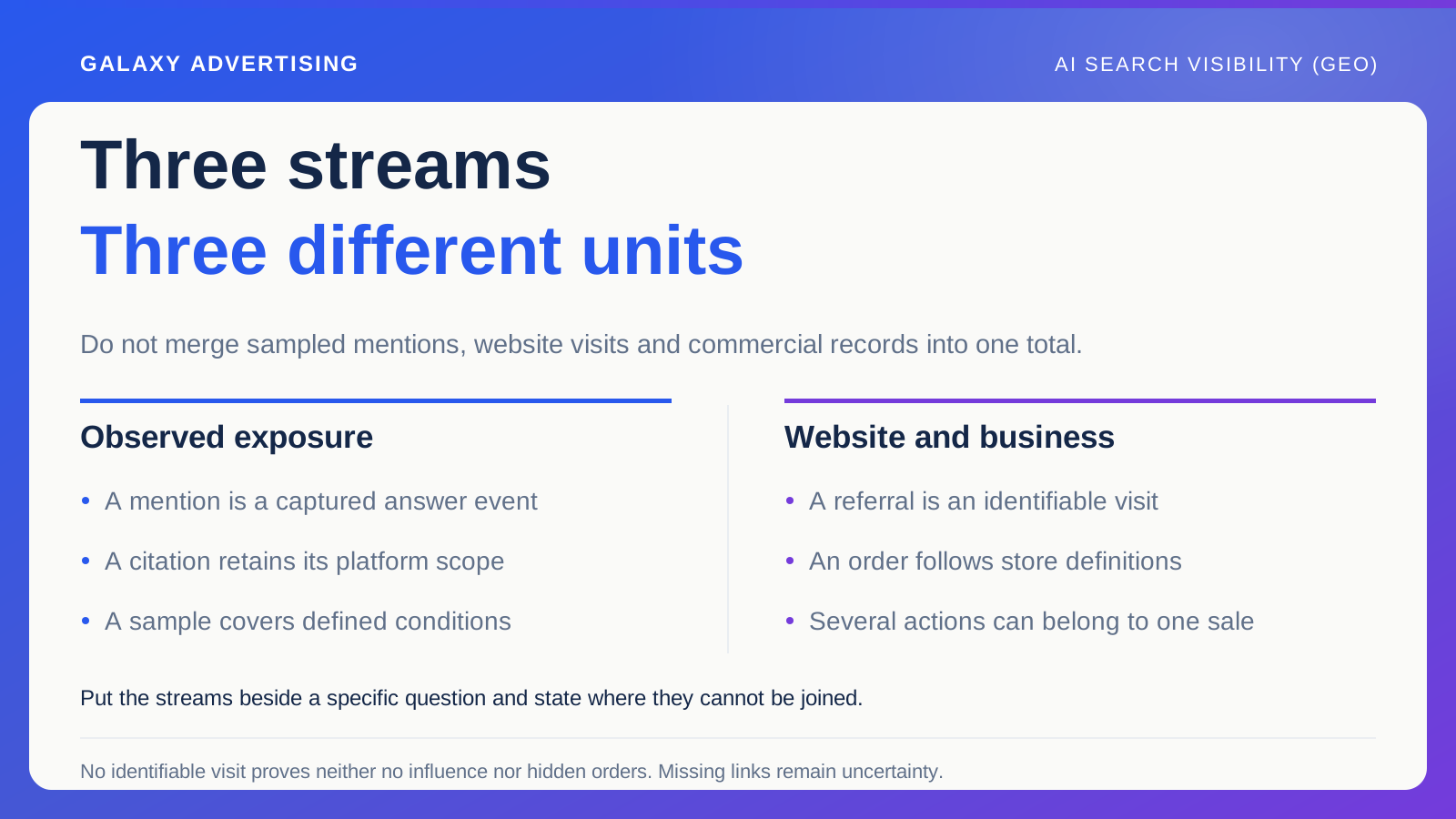
Review relevant referral visits, product exploration, enquiries and orders using consistent definitions. Explain what your records establish and where they cannot reliably connect the journey. That gives identifiable activity its proper weight without making the gaps disappear.
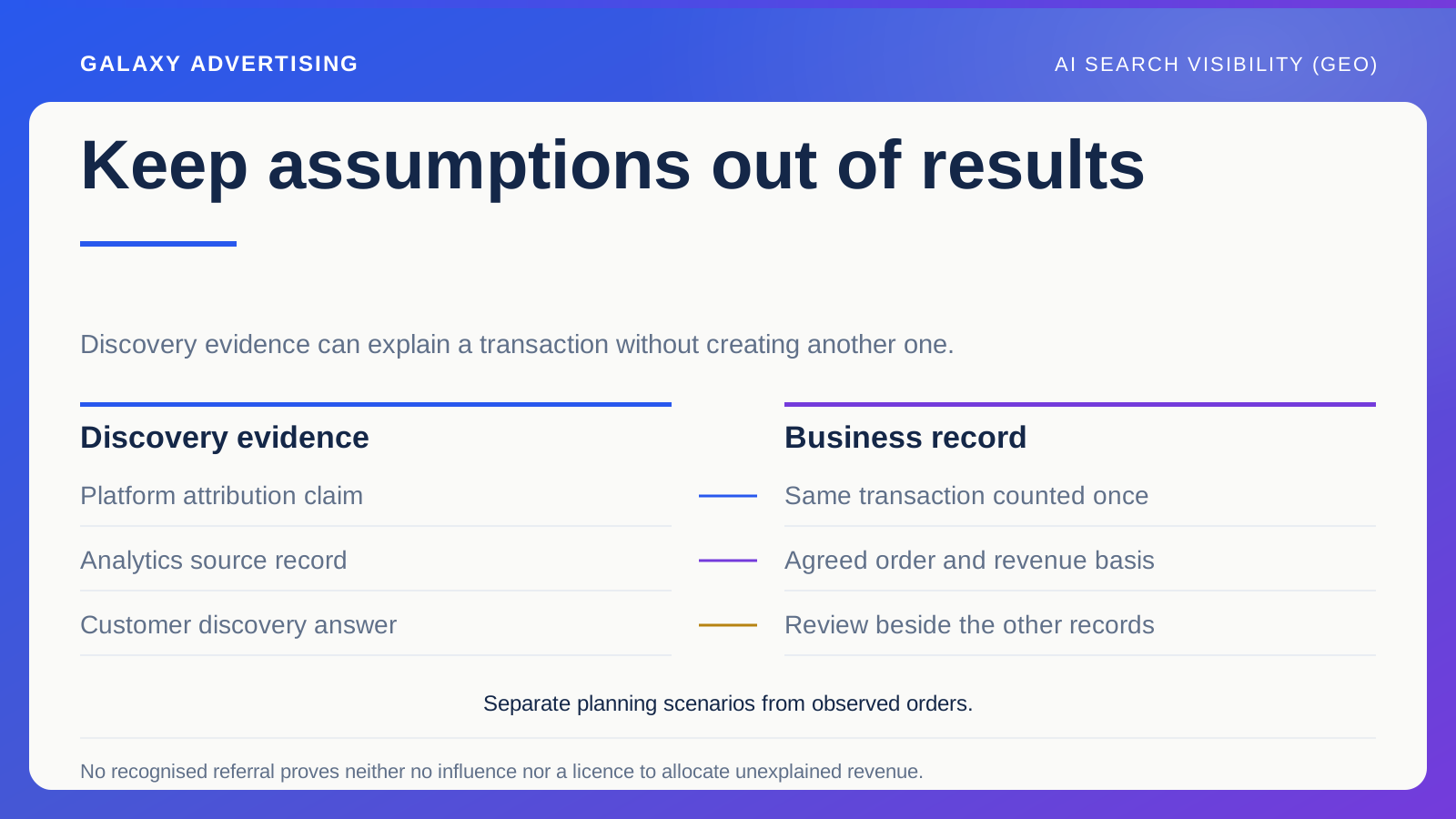
No recognised referrals doesn't prove no influence. Nor does the uncertainty justify assigning unexplained revenue to the programme. Both claims can go beyond what you've observed. Keep that boundary visible when discussing the commercial result.
Where the decision needs it, connect outcomes to the actual offer and cost basis. Revenue alone doesn't establish contribution, meaning the money remaining after the costs included in the calculation. A citation count can't provide that missing economic link. Compressing everything into one return figure won't supply it either.
Put the findings that change action first
Prioritise consequential observations. An inaccurate specification, unclear comparison or unhelpful destination needs a named correction. A fluctuating mention with no identified consequence may belong in the background rather than at the top of the report.
For each important issue, include the source needed to resolve it and the responsible person. A writer can't verify an undocumented product condition because a reporting deadline has made it urgent. Identify the missing dependency instead of disguising it as a drafting task.
Check progress on earlier recommendations. If a correction remains blocked, state the dependency and the business decision required. Reporting should help complete work, rather than turn an unfinished task into a permanent feature of the monthly narrative.
Test the report with one finding. If a product is repeatedly described with the wrong included accessory, identify the observation, reliable product source, page or record needing review and correction approver. A screenshot alone establishes neither the cause nor the completed response.
Follow that finding to a verified information update. You'll have a useful action trail and avoid recycling the same alarming or attractive example while nobody checks whether the underlying customer information improved.
Finish with a commitment you can revisit
Recommend a defined continuation, correction, narrower scope or stop decision. Give the supporting evidence and the limitation that most affects confidence. Caution can still lead to a clear action when its purpose and boundaries are understood.
Record that action, its owner and the review condition. Begin the next report by checking the commitment, so the programme becomes accountable for more than a sequence of score updates.
Challenging the denominator doesn't dismiss progress. It gives you a way to recognise progress you can actually use: an observation with a known method and a sensible next decision, rather than a percentage whose meaning moves whenever the report changes.