We can mistake evergreen for finished and leave a buying guide to look after itself. The storage question stays relevant, visitors keep arriving, and nobody notices that the wardrobe configuration in the example is no longer sold.
Meanwhile the linked collection may contain a different selection. Returning readers recognise the guide but have to work out for themselves which parts of its offer still apply.
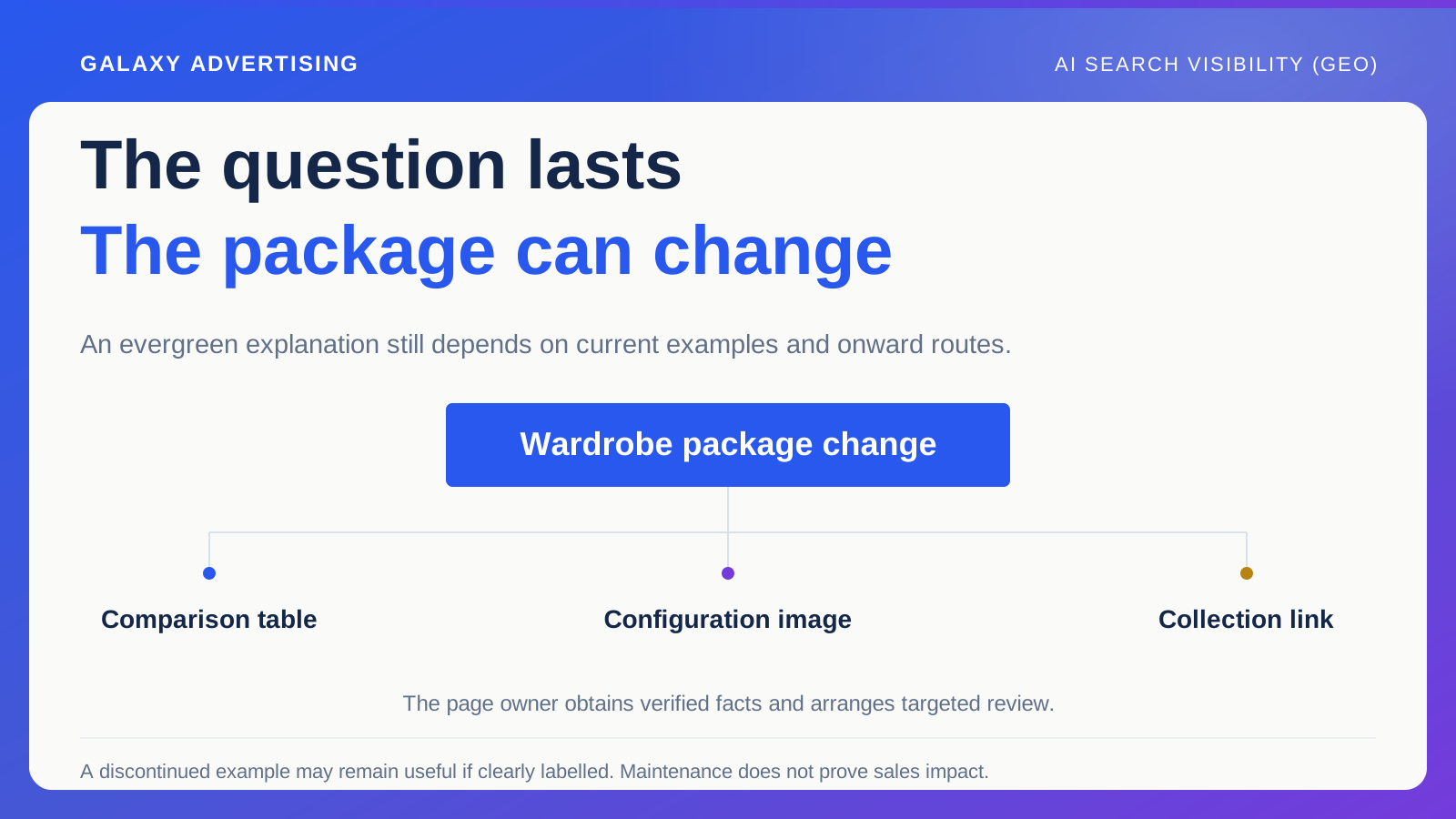
Evergreen describes the continuing usefulness of the question. It doesn't mean examples, answers and links can go without review. Keep the useful explanation while maintaining a buying route your business can currently support, for familiar readers as well as new arrivals.
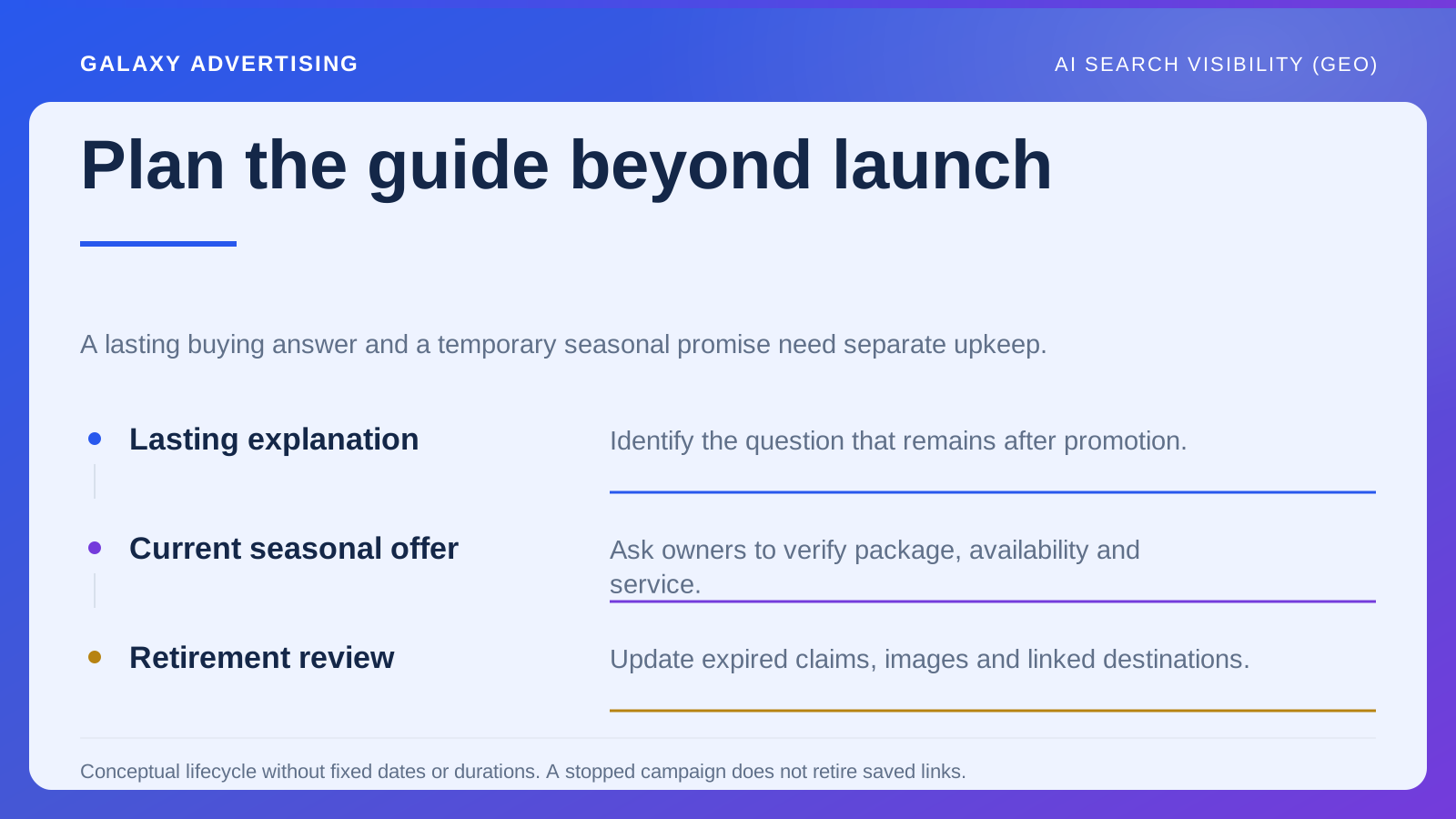
Separate the lasting answer from changing details
Identify the enduring explanation alongside product examples, prices, availability and service arrangements. Advice about choosing internal storage may remain useful after the range illustrating it changes. Those parts need different kinds of attention.
Mark facts that depend on other teams. Merchandising may own product information; operations may own delivery explanations. The writer needs to know who can confirm each important update rather than guess at the current position.
Don't assign every paragraph the same review frequency. A stable comparison principle and a current package list carry different risks. Prioritise facts likely to change instead of imposing an arbitrary full rewrite schedule on every page. That keeps maintenance practical and directs effort towards details that could alter the customer's understanding or next step.
Keep a purpose and a person with the page
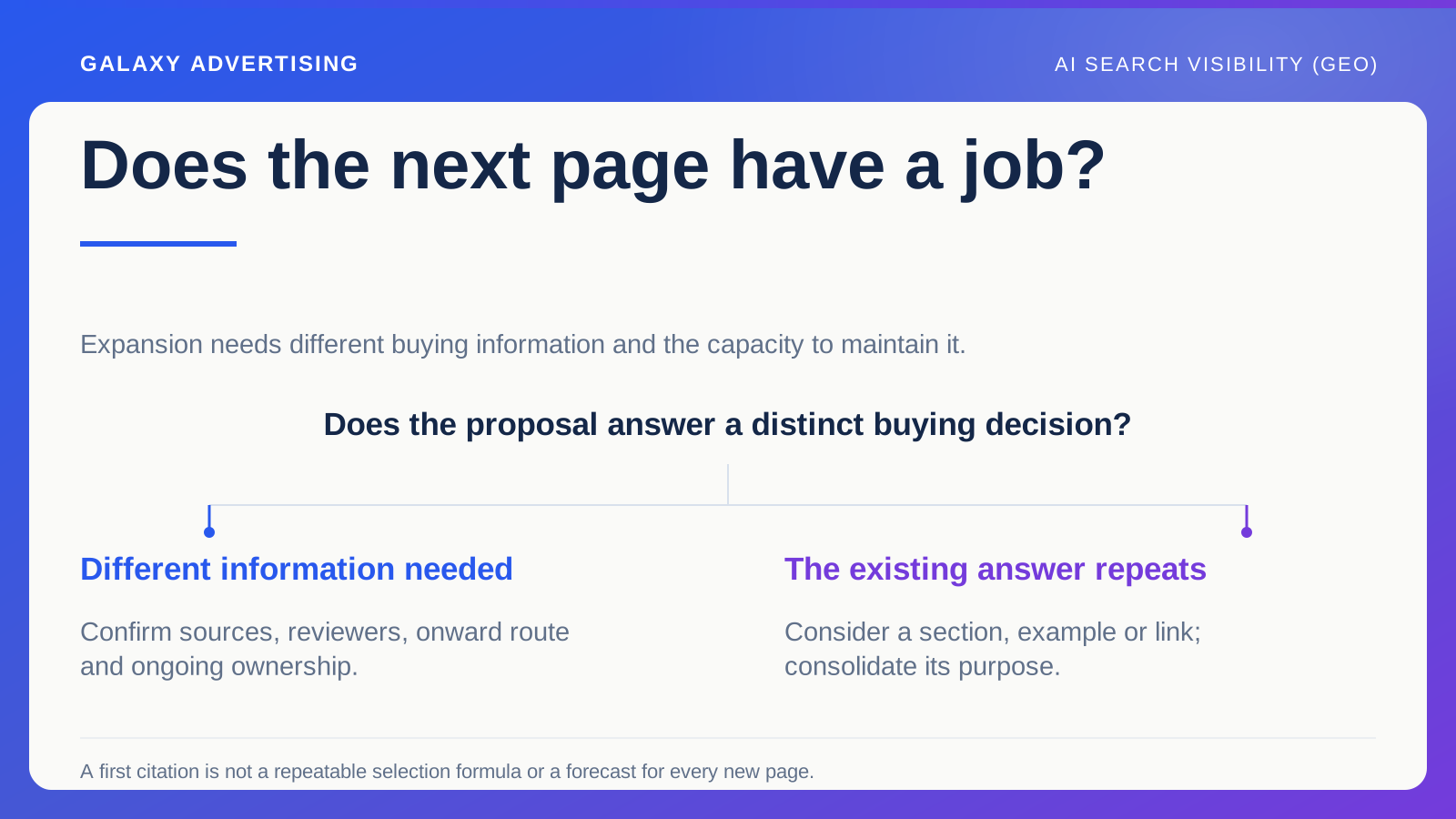
Record the question the guide answers and the commercial route it supports. A later editor can then understand why a detail exists, rather than remove something useful because its original role has been forgotten.
Name who initiates a review when relevant changes happen. They don't have to write every correction. They do need a dependable way to obtain verified information and arrange implementation. Ownership means ensuring the review gets somewhere.
Plan for staff changes too. The person commissioning the page may leave without the page's purpose disappearing. Retain references and reasoning behind important recommendations. The next editor shouldn't have to reconstruct the guide's history from private conversations before they can maintain it responsibly. Give them enough context to continue the work.
Let business changes trigger the right review
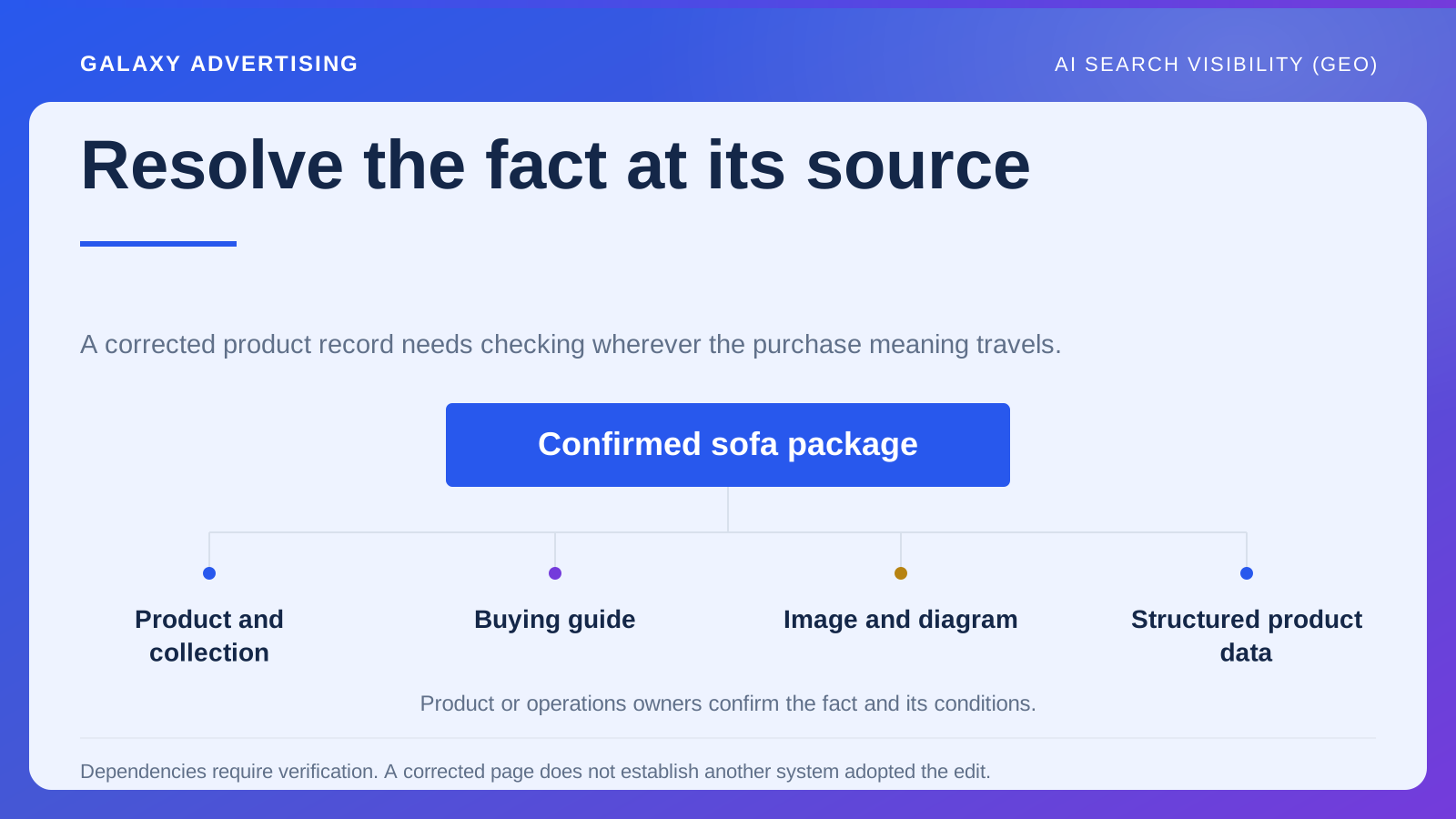
New configurations, revised services and discontinued packages can justify targeted attention. Identify dependent pages and diagrams when those facts change. Don't wait for a general content audit to stumble across a contradiction already known elsewhere in the business.
For a hypothetical wardrobe guide, removing an internal arrangement can affect a comparison table, image and collection link. Updating only the product page leaves the wider explanation inconsistent. Follow the changed fact through its important uses.
Keep the response proportionate. Not every small catalogue update needs a complete editorial rewrite. Ask whether it changes what the customer understands or what they should do next. Correct the affected explanation and verify the route afterwards. The aim is a coherent buying experience, rather than a larger editing task than the change requires.
Decide what an old example still does
A discontinued product can remain a useful illustration if its status is clear. Don't imply it is still available to order. Decide whether the reference continues to help with the original task before automatically replacing it.
When providing a current alternative, explain the relevant difference. Similar appearance doesn't establish equivalent dimensions, package contents or service conditions. Quiet substitution can change the meaning of advice a returning reader remembers.
Avoid sending every unavailable link to the homepage. You can discard useful context and leave people confused about how to continue. Choose according to the task: perhaps a relevant collection, clear status explanation or revised example. The destination needs a reason connected to the question, rather than merely being a live page your site can redirect people towards.
Read it as somebody coming back to decide
Open the guide with a specific remembered question. Can the returning reader recognise the product or comparison they investigated? Are changes understandable without knowledge of your internal catalogue history? That's a useful way to test continuity.
Follow onward links on a phone. A freshly maintained paragraph can still lead to an obsolete option or unfocused catalogue. The guide's usefulness depends partly on what happens after the explanation has done its job.
Review images and captions alongside the text. A diagram of an old package can shape expectations after the written list has been corrected. Maintenance needs to preserve the impression of the whole page. Checking separate paragraphs isn't enough if their pictures continue to describe another offer beside them.
Record maintenance without inventing a performance story
Keep a note of what changed and why. Fixing an inaccurate package description establishes an information improvement. It doesn't prove that any later movement in citations, visits or sales was caused solely by that edit. Preserve that distinction in reporting.
Use defined observations to investigate the route while keeping their reach clear. A new citation can reflect several factors. An unchanged sample doesn't make a factual correction unnecessary. Accuracy has a purpose beyond producing a favourable movement in a monitoring report.
Avoid superficial freshness work whose only purpose is making a page look recently edited. Cosmetic changes add little when the answer is still useful and accurate. Where the offer changes materially, an updated label alone may conceal a much larger revision that is actually needed. Match the maintenance to the meaning of the change.
Keep customer service in the loop
Ask whether recurring questions expose a new ambiguity or old assumption. People handling enquiries can see where the guide no longer supports the conversation customers need to have. Their observations can give the review a specific starting point.
Turn that into a task with a verified source and owner. Don't append every question to the bottom. Some answers belong in product information or service explanations linked from the guide. Preserve the page's purpose rather than letting it accumulate unrelated additions.
Retain an example of a resolved recurring question in the page record. If a revised configuration diagram reduces confusion over supplied shelves, note what changed and its current supporting source. Don't claim a quantified reduction without evidence. Preserve the reasoning so a later redesign doesn't remove the useful detail as clutter.
Maintenance protects answers that work as well as replacing wrong information. A dependable answer lets returning customers continue their decision. An old URL still receiving visits cannot do that job on its own.