Does the next batch of AI content answer a new customer question, or just put different product names into the guide you've already published? Your first comparison may be helping people. Dozens of near copies could give you repetition, uncertain facts and a maintenance bill instead.
The useful question is which distinct buying decisions remain unanswered and whether you can support the answers accurately. A good first page teaches you about the work behind it. It doesn't prove that its structure belongs on every topic you can name.
Work out why the first page helped
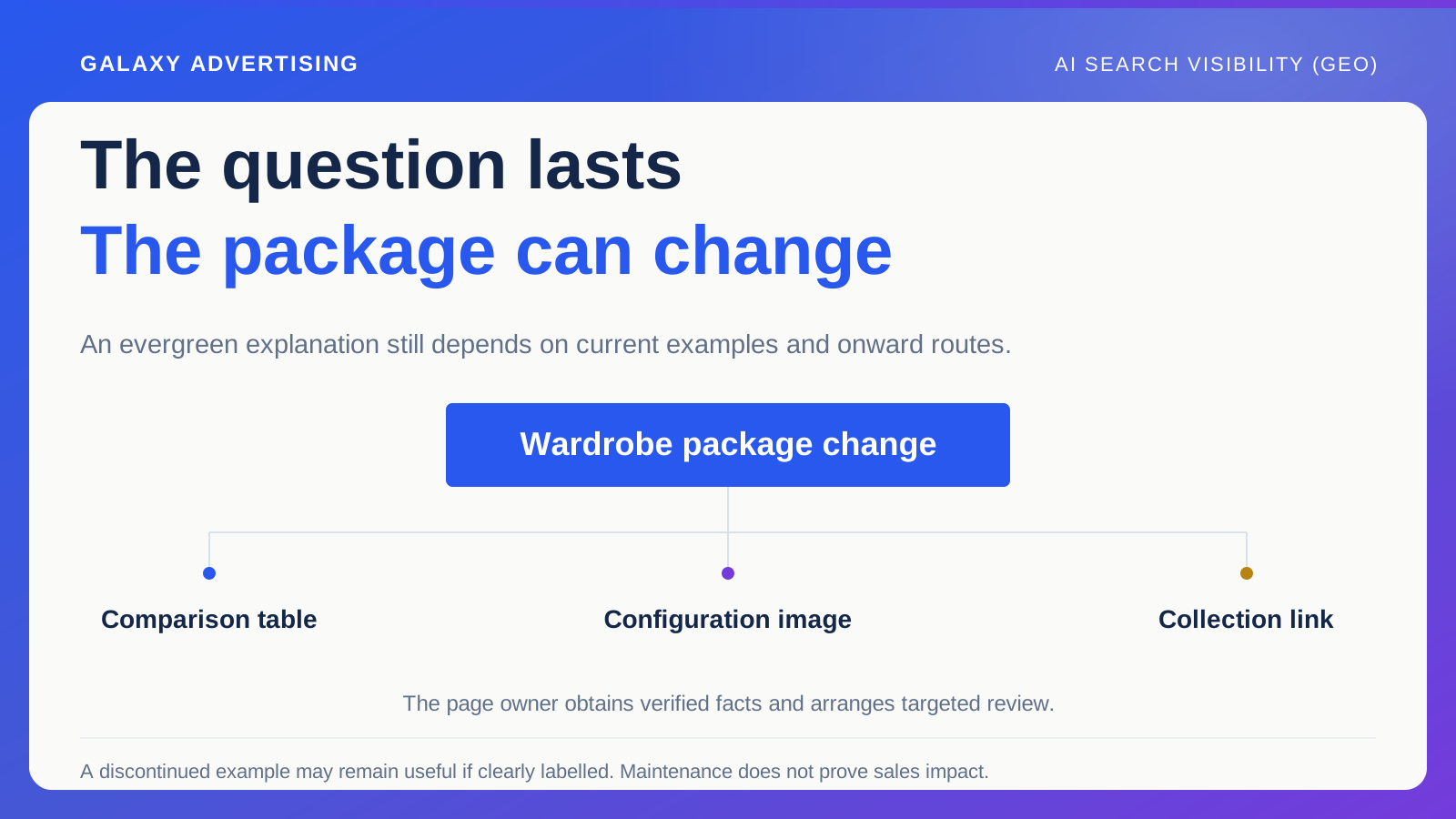
Look at the customer's task, the verified information and the route onwards. Was it a clear comparison, an accurate diagram or a package distinction that finally made sense? Be specific about what did the useful work before asking a writer to reproduce it.
An observed citation doesn't establish why the page was useful or reveal a formula for getting selected again. You can inspect the role of your content without claiming to understand another system's entire response process.
Keep the operating conditions in view as well. Perhaps a knowledgeable product owner or an unusually reliable source made the first article possible. You'll need to consider those resources when judging whether the next group can reach the same standard.
Find a different decision, not a different phrase
Collect unresolved questions across the range and sort them by their practical role. A size question might need a product fact. A different use case might deserve a comparison or a guide of its own. Those are different editorial jobs.
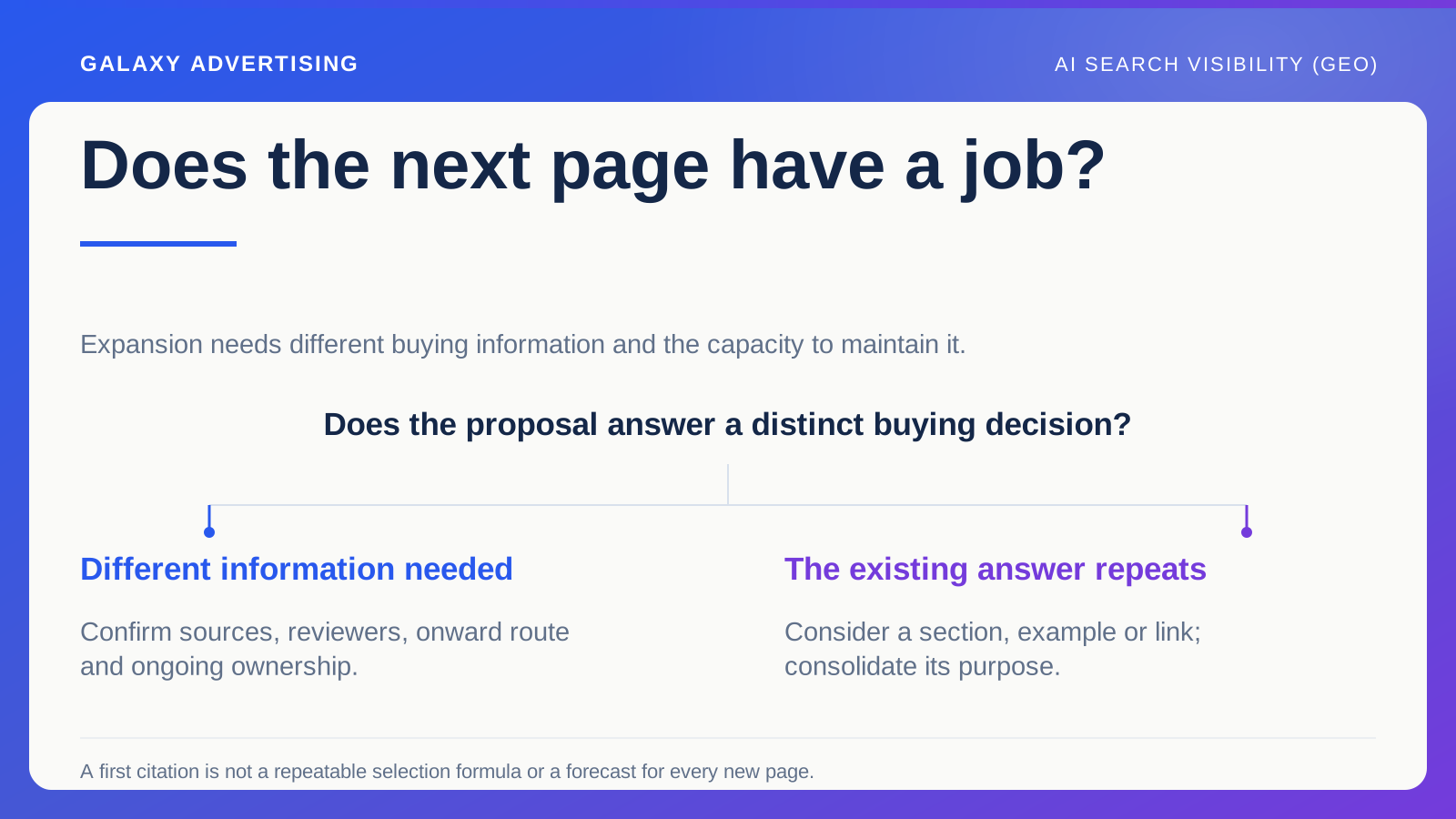
If the answer amounts to the existing explanation with a few nouns swapped, reconsider the scope. It could be a section, an example or a product link. Giving it a separate page doesn't automatically give it a separate purpose.
Ask whether a customer needs materially different information or judgement. More keywords or prompts don't, by themselves, establish more useful editorial opportunities. You're trying to make the portfolio more helpful, rather than simply more numerous.
Check you can support the next answers
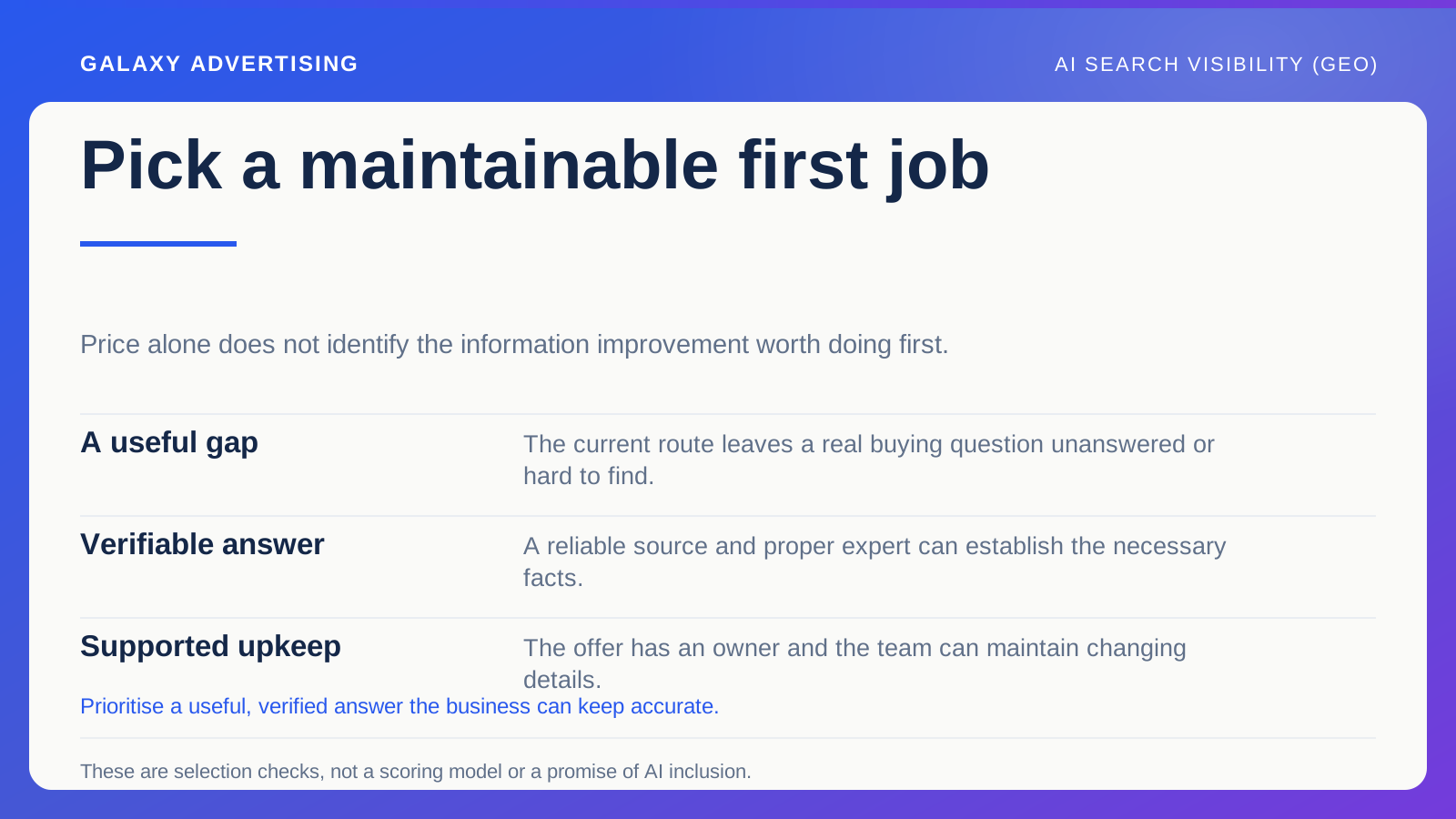
Identify the sources and reviewers each proposed topic will need. A writer cannot sustain the quality of a comparison based on direct product knowledge if equivalent knowledge isn't available for the next range. Good wording cannot manufacture that missing foundation.
Mark factual gaps before commissioning full drafts. You may need manufacturer clarification, product references or an operational decision. Resolve those dependencies first and there's less pressure to plug the gaps with explanations that sound plausible but aren't supported.
Respect specialist boundaries as you expand. Explaining one product distinction well doesn't give you authority to provide structural, electrical or safety advice. Stay within your documented knowledge, or clearly identify the appropriate external source for the next topic.
Include the upkeep in the budget
Every new article adds examples, links and claims that can change. Who will own those dependencies? How will a material update reach the published page? Make those answers part of the publication decision while the work is still manageable.
Several pages maintaining the same product fact independently can gradually disagree. Where possible, use a reliable source and a clear dependency record. Expecting every writer to remember every earlier mention isn't much of an operating process.
Maintenance isn't optional work to fund once the publication target has been met. If you can't keep the next group accurate, narrow the release. A smaller dependable resource can be more useful than a broad collection whose important details conflict.
Give the group a set of distinct jobs
Review the proposed pages together before publication. Look for repeated introductions, conflicting advice and destinations competing to answer the same question. Individual briefs can look reasonable while the whole group contains a great deal of overlap.
Give each page a clear purpose and connect it to the appropriate product or related explanation. An internal link should advance a decision. Adding links merely to increase the connections between articles gives the reader no particular reason to follow them.
Check the group on a phone too. Vague headings and diagrams that need desktop viewing can make useful information awkward to navigate. Expansion needs to preserve the customer's ability to find and use an answer, alongside your team's ability to publish it.
Try reviewing the proposals with the planned publication count hidden. Ask the product team to describe the different decisions each page helps resolve. If several descriptions become the same task, consolidate before writing proceeds.
Different titles and topic phrases can conceal the overlap. This exercise also sharpens the internal linking brief: the next page should supply a missing decision or verified detail, rather than repeat general advice under another commercial category.
Judge the new group on its own evidence
Record what this addition was meant to improve and which observations you'll use to review it. Keep information quality, defined visibility samples and identifiable commercial response separate. They tell you different things about the work.
Don't turn the first page's apparent performance into a forecast for every new article. Different questions can produce different behaviour and have different relationships with a purchase. Similar formats don't remove those differences.
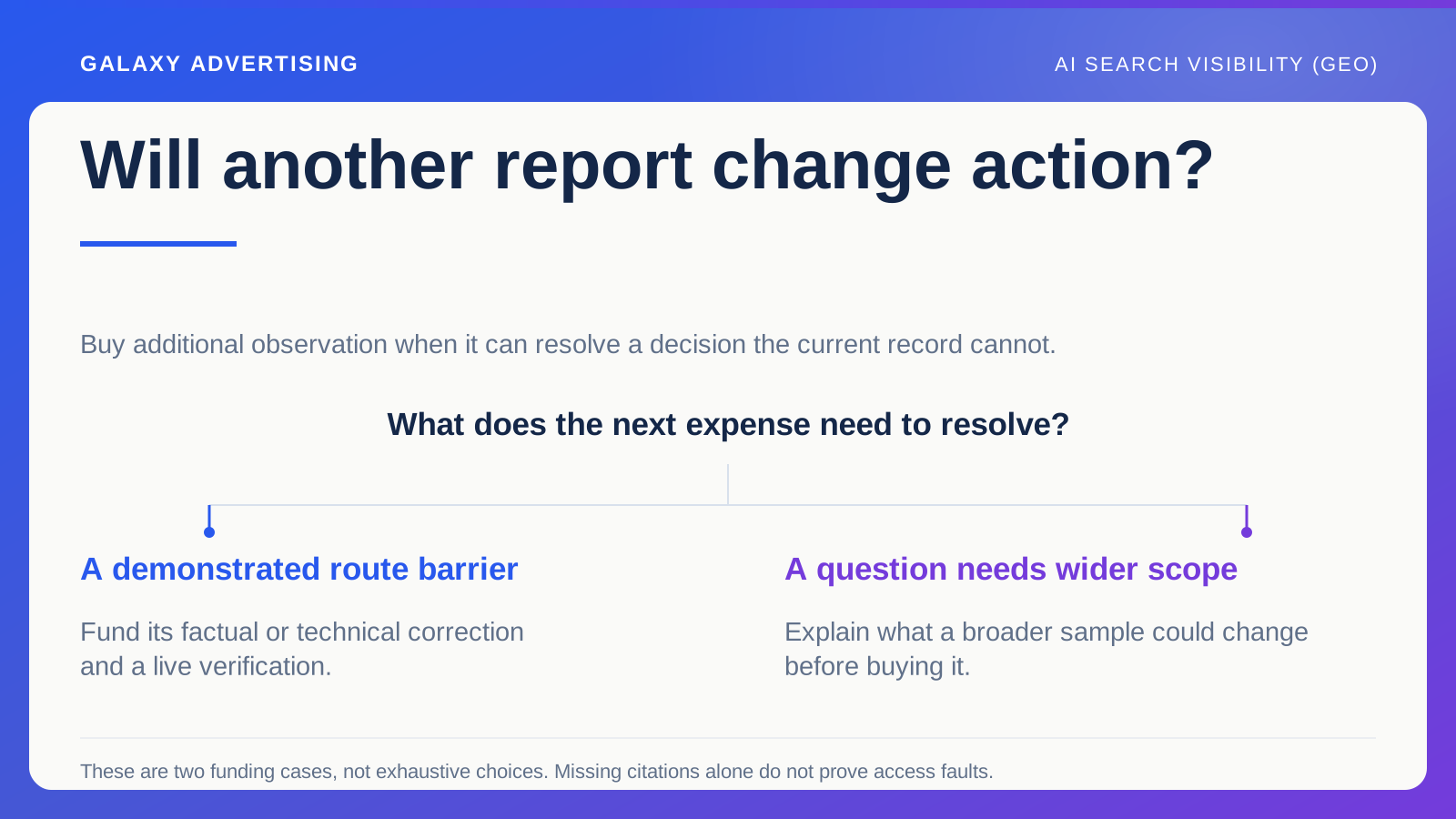
If the addition disappoints, inspect the customer task and the conditions behind delivery before ordering another large batch. Clearer product information or a narrower topic selection may be the useful response. More volume funded in the hope that something works isn't a diagnosis.
Leave an idea unpublished when it has no clear job
Keep unresolved ideas in a backlog without treating every entry as a promise to publish. Some questions are too similar, lack sufficient evidence or belong elsewhere on your website. Deferring them can be a considered editorial decision.
Record why an idea is waiting. A missing fact can be resolved later; a duplicate purpose may need consolidation. That distinction lets the team revisit the backlog without having to reopen the same discussion from the beginning.
The judgement that made your first guide valuable needs to survive the expansion. Let the structure change when the customer's task changes, and maintain the answers you've already added. Page count can then follow useful coverage, instead of deciding what you publish before you've understood the question.