 ChatGPT Ads
It's easy to polish “exceptional quality” and “timeless design” until they feel like a reason to buy. Put them beside premium storage furniture, though, and the customer still doesn't know what to investigate. The same words could sit beside several unrelated products and mean just as little.
A useful proposition connects a customer task to a difference you can support. It helps someone recognise the offer and find the right evidence. And it remains visibly your commercial statement. Paid visibility should never quietly turn into a supposed recommendation from the assistant.
Choose the difference that could change the choice
Start with a question the product can meaningfully answer. A hypothetical storage cabinet might have a documented internal arrangement suited to a particular collection of items. It might offer a clearly defined package different from another configuration, meaning another available arrangement.
Separate that from the adjectives you prefer for your brand. “Premium” can express positioning. It doesn't establish why someone should inspect this offer rather than the next one.
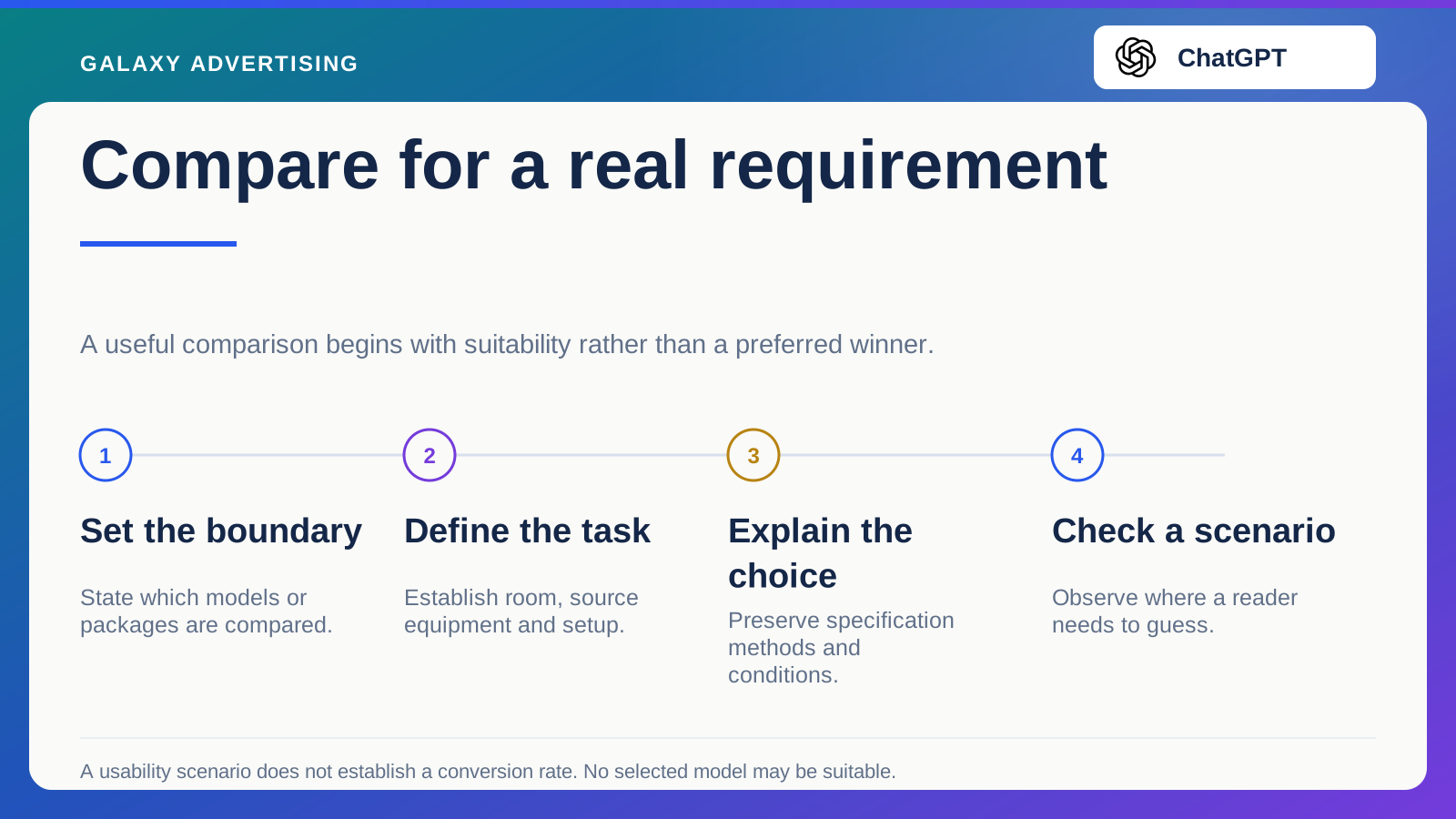
Ask what they need to compare. Dimensions? Components? Give them a clear route to those facts. If the claimed difference can't survive a plain description without persuasive music or imagery, the proposition may need more substance before you begin production.
Find the evidence before polishing the line
Identify the source supporting your difference. Manufacturer information could verify a dimension or material. Your own operation needs to verify a package or service promise. One reference cannot necessarily establish both.
Keep conditions that change the meaning. A feature restricted to one configuration mustn't become a claim about the entire range. A service offered only in particular circumstances needs those boundaries preserved in the customer's route.
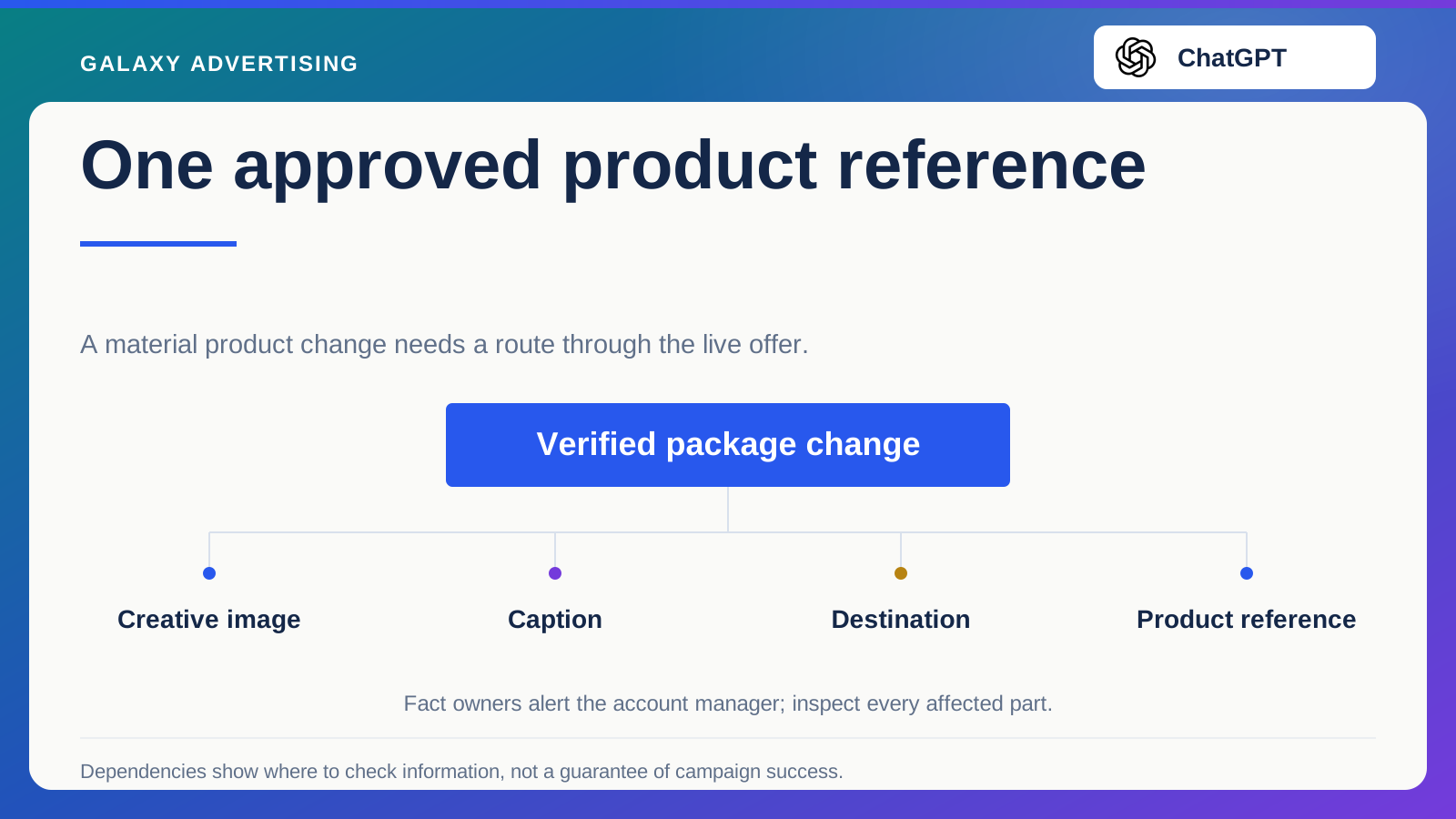
Look at the imagery as part of the claim. Optional cabinet fittings can look included, even when the caption never explicitly says they are. Ask the writer and product reviewer to consider the overall impression. Individual sentences being technically defensible won't resolve a misleading package picture.
Make it obvious which business is speaking
Your advert needs to identify the business making the offer. Appearing in the experience doesn't mean ChatGPT has independently selected, approved or ranked your retailer. The presentation shouldn't imply that it has.
OpenAI's advertising policies distinguish advertisements from the product interface and prohibit misleading affiliations. Carry that boundary into both the copy and the imagery you commission. You don't need a simulated assistant answer to explain a useful product difference.
Ask someone unfamiliar with the draft who they think is speaking. If they attribute your claim to the assistant, revise it. You can check that understanding before any campaign performance evidence exists. It is a practical comprehension question, not something to leave until the results review.
Give the limitation room to be understood
Concise doesn't have to mean incomplete. If your offer depends on a particular size, package or service area, make that condition intelligible. An inconvenient footnote is no help if it contains the distinction that changes the purchase.
Sometimes you need a narrower proposition. A “complete storage solution” may be difficult to support. A clear description of one arrangement you supply could help a suitable customer assess the purchase far more responsibly.
Don't assume qualifications always weaken persuasion. They can help the right customer recognise the offer and prevent inappropriate enquiries. The aim is useful demand for your actual product, rather than the largest response to a more attractive product the creative team has imagined.
Check understanding before you test persuasion
Show the draft to someone who didn't prepare it. Ask what is being sold, what makes it different and what they expect after clicking. Let them answer without coaching. Their interpretation is the thing you need to inspect.
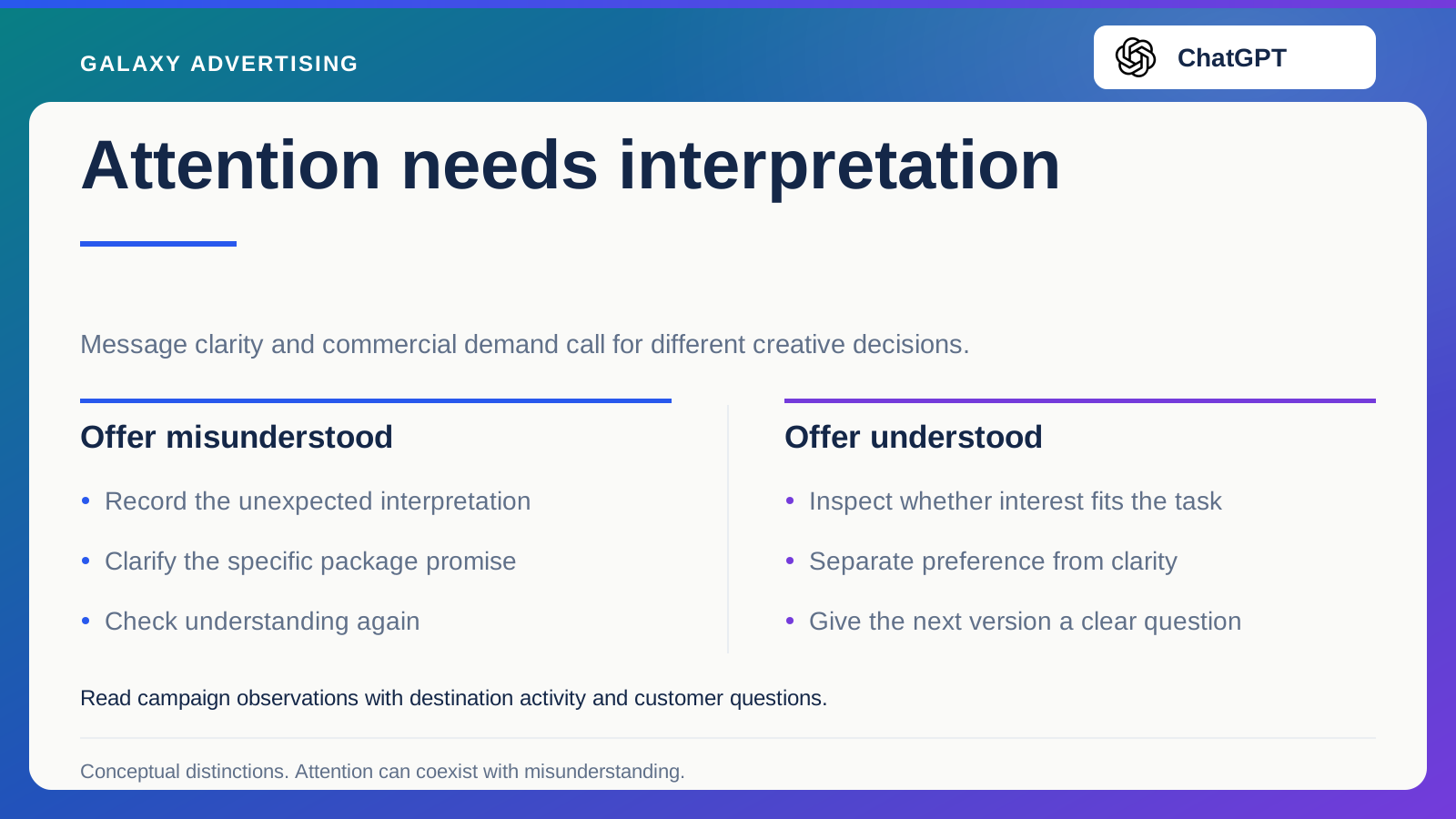
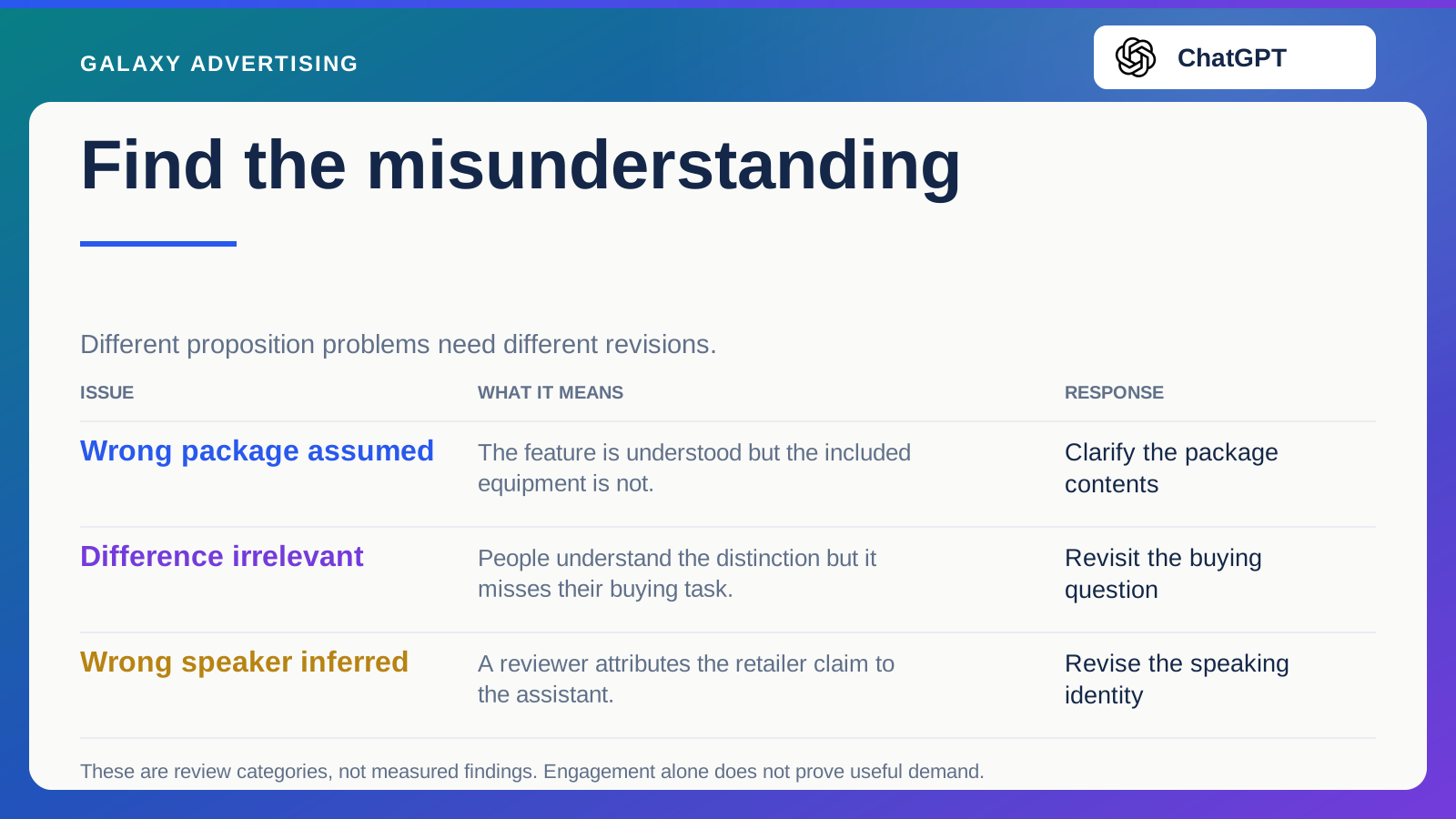
They might understand the feature but assume the wrong package. Or recognise the package without seeing why the difference matters. Those problems need different revisions, so record the ambiguity rather than simply marking the copy as unclear.
Ask which alternative they would compare it with. That can reveal an unintended category or price context. A premium accessory described too broadly might be mistaken for a complete system. Correct that impression before searching for a more exciting adjective: the customer's comparison determines what the difference appears to be worth.
Record the misunderstood phrase and the revised interpretation. The next writer then has a factual boundary to retain, rather than an invitation to polish the same ambiguity into another execution.
Judge the response by more than engagement
After launch, examine the available campaign observations alongside relevant product exploration, enquiries and orders. Did visitors reach the intended configuration? Did they ask informed questions about the difference? Were the purchases commercially suitable?
Engagement doesn't prove worthwhile demand. An informed enquiry can also be useful without becoming an immediate order, particularly in a considered purchase. You need enough context to distinguish those situations.
Keep your interpretation bounded. This is evidence about a particular proposition under actual conditions. It doesn't reveal each customer's private conversation, and it doesn't establish that one phrase persuades everyone across the category.
Give the next version a specific problem to solve
If people still misunderstand the package, clarify the contents. If they understand the difference but it is irrelevant to the enquiries you receive, revisit the buying task. Another execution of the same argument won't necessarily address that.
Retain the product source, approved claim and reason for every material revision. That gives later production a usable memory. It also reduces the risk of a future edit exaggerating a statement that somebody has carefully qualified.
A relevant, inspectable difference gives a suitable customer something to work with. It doesn't need to imitate the assistant or inflate an ordinary product fact into a sweeping promise. The useful next step is a clearer decision about whether the real offer suits them. Let the proposition make that decision easier to investigate.