 ChatGPT Ads
A range can show as available while the size, finish or package your customer needs is missing. That's a problem worth finding before you put the whole catalogue into a first ChatGPT Ads experiment. More products give you more to mention, but also more purchase journeys and fulfilment conditions to untangle.
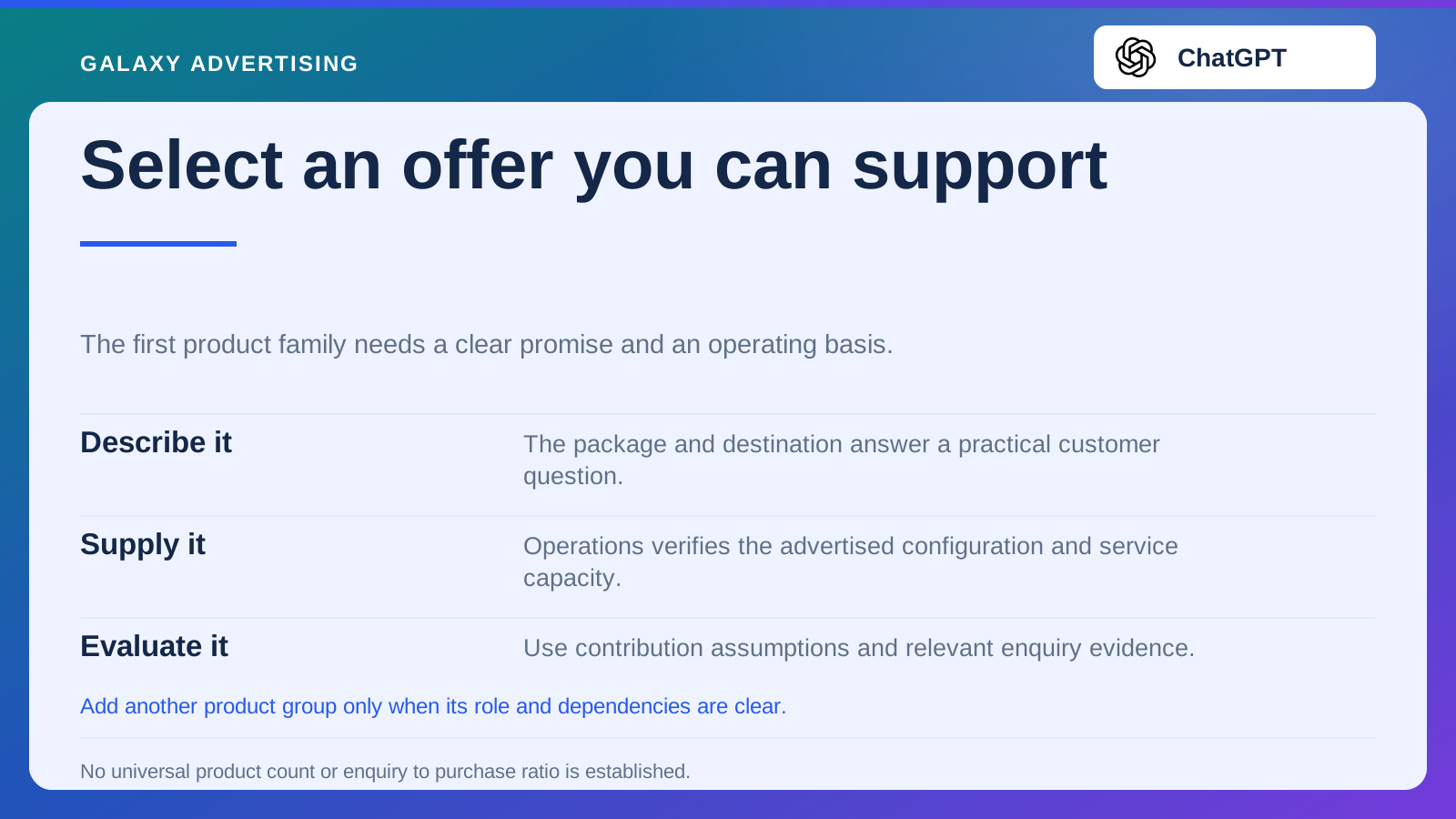
Choose a family that makes learning manageable without making the test commercially trivial. You need to explain it accurately, supply it under a credible promise and assess it consistently. A handsome image or high selling price cannot establish any of those things alone.
What useful question does this product answer?
Start with a practical customer decision. A hypothetical premium coffee machine range might help someone compare compact models and the equipment needed to begin using them. That gives the offer a job beyond simply attracting attention.
Choose a question your business knows enough to answer. Enquiries and sales conversations can reveal useful distinctions. A few examples don't justify a confident claim about what every buyer wants, so keep that limit visible.
Write the route from question to offer. If the product doesn't resolve the uncertainty your advert raises, change the proposition or destination. Paying to raise a question you cannot responsibly answer on the page or through your service is a poor starting point for a useful test.
Availability belongs inside the promise
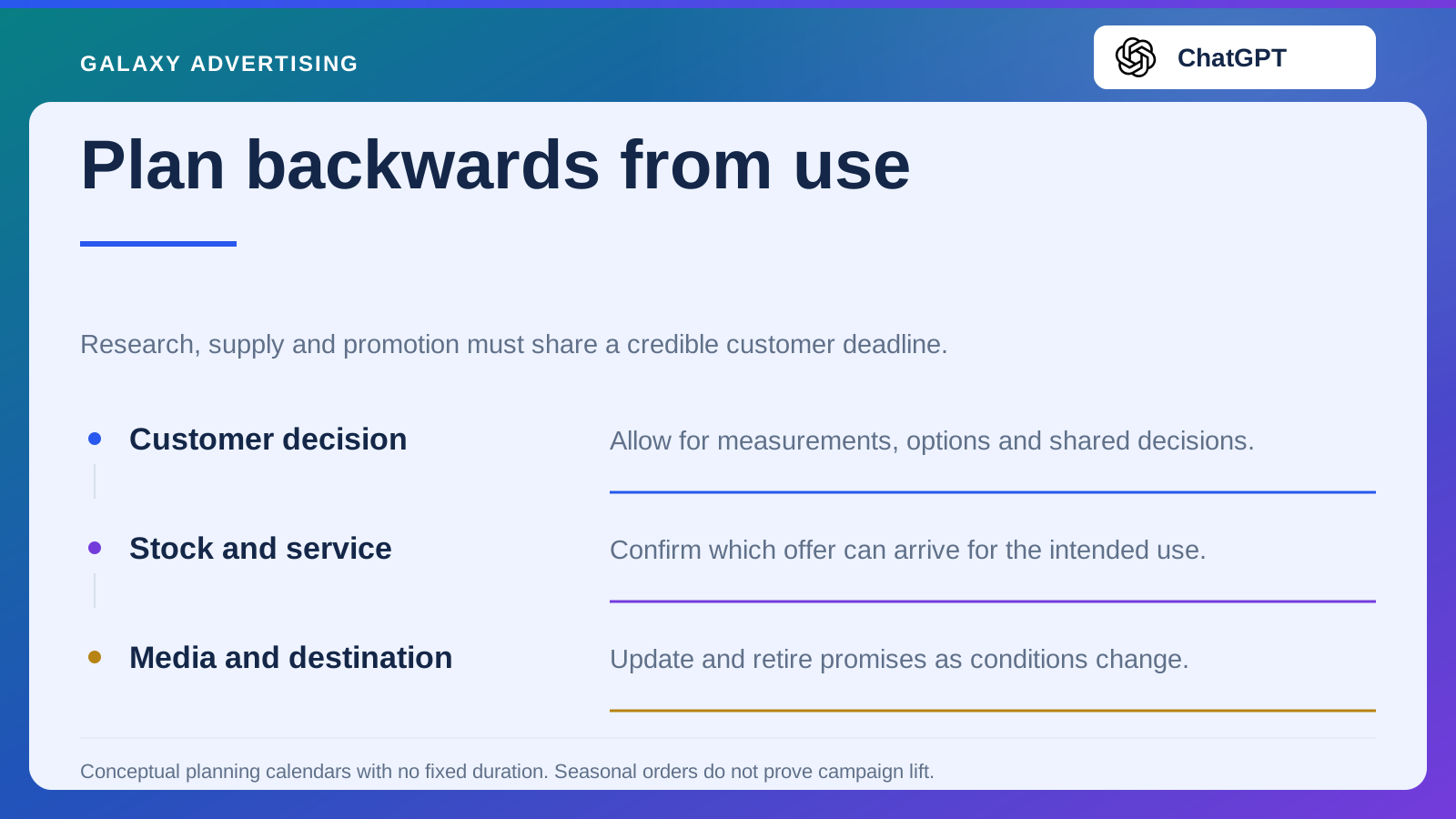
Check which configurations, meaning the actual combinations of product options, you can supply. A range-level stock label can hide the absence of the relevant size, finish or package. A historical best seller label won't tell you whether today's offer is ready.
Ask operations to verify the service arrangement. A particular delivery requirement can create a very different buying route from a stocked accessory supplied through your ordinary process. Treat that difference as part of the selection.
Name whoever will tell the account team about material changes. Your choice needs to stay accurate when stock or service capacity changes after launch. Initial approval is a point in time. It doesn't replace an update process.
Make the package clearer than the starting price
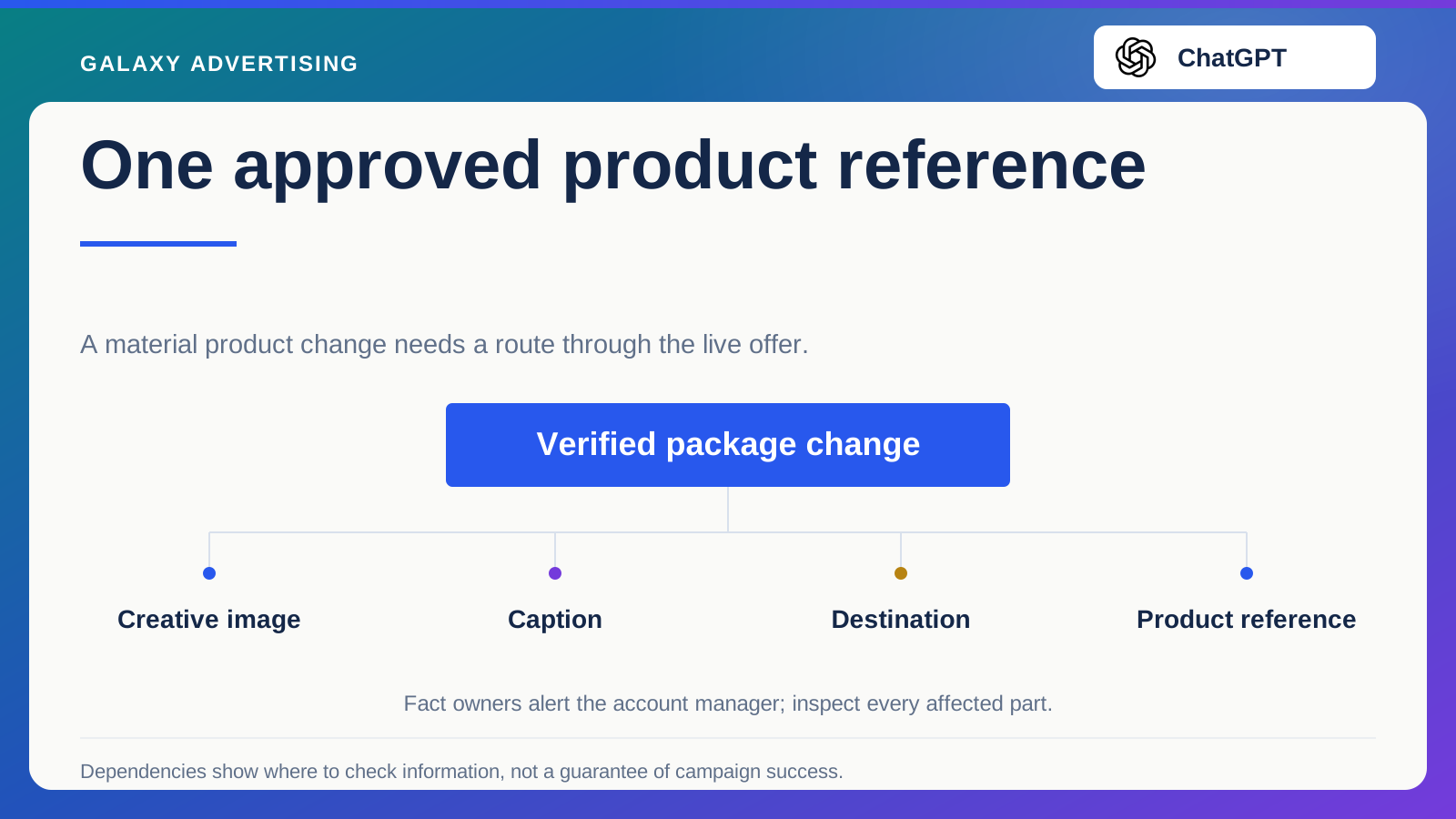
List what the customer gets. Separate optional equipment from styling props. In the hypothetical coffee machine example, a photograph could show a grinder or accessories that aren't part of the quoted package. The image still helps shape what someone expects to receive.
Check the real destination and selected option, on a phone as well as a desktop. A clear advert can become confusing when the page opens on another configuration or uses unfamiliar labels to explain the package distinction.
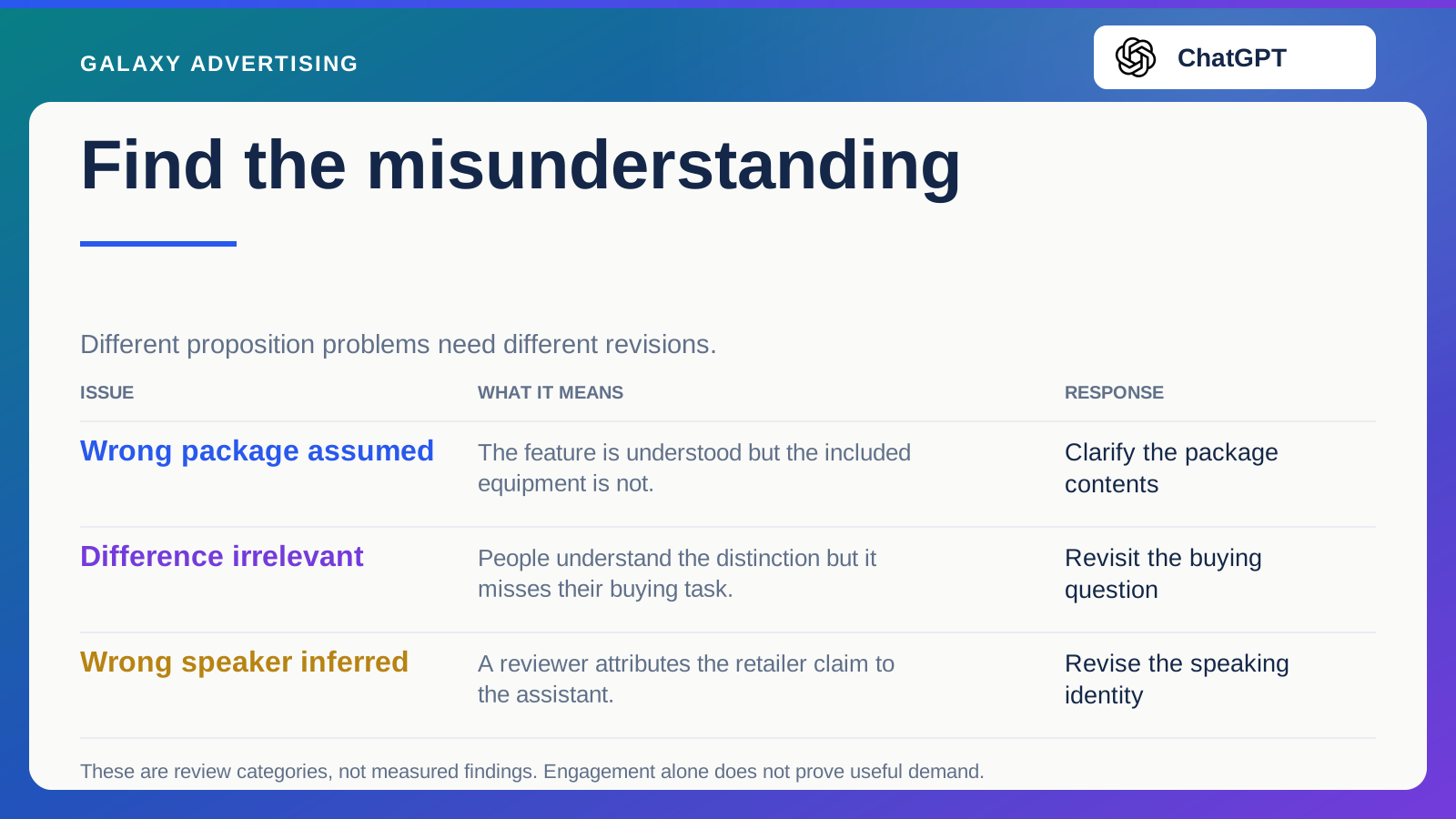
A low starting price isn't enough reason to choose a product. If most of the presentation shows a materially different arrangement, the resulting interest could reflect a misunderstanding. Resolve that before comparing campaign responses. Otherwise, the apparent strength of the offer may belong to a package you aren't actually selling at that price.
Can the order support the work it creates?
Assess the range using your relevant contribution assumptions: the money remaining after the costs included in your calculation. Revenue alone doesn't show how much advertising or support time a worthwhile order can fund.
Consider the questions the product creates. A complex configuration could bring relevant enquiries that need specialist time before an order. That can make commercial sense when the economics support the work and your team has capacity to respond properly.
Don't invent a universal enquiry-to-purchase ratio to make selection easier. Use the evidence your business has and label the uncertainty. You're trying to make a defensible first commitment. Replacing missing information with convenient assumptions only makes the forecast look precise.
Keep the first range deliberately manageable
Include enough variety to investigate a meaningful proposition, without combining unrelated commercial questions. There is no ideal product count for every test. Your retailer, product differences and evidence needs determine the scope.
Before adding an excluded model, say what it would contribute. Perhaps it introduces a genuinely different use case. Perhaps it adds complexity while answering the same question as something already selected. Those are different reasons for expanding.
Use selection to check the operating process as well. Can merchandising identify current stock? Can the writer distinguish each package? Can customer service answer the expected questions? If not, the difficulty isn't simply the number of products in the campaign.
A smaller range that passes those checks can produce more interpretable evidence than a wider one described approximately. Range discipline helps when it clarifies responsibility and comparison. Fewer products aren't automatically better merely because they're easier to count.
Read the response alongside the offer you actually supplied
Review product exploration, enquiries and orders alongside campaign reporting. Did visitors understand the offer? Did their questions fit the intended buying task? Could you meet the resulting demand under the advertised conditions?
Keep the awkward observations. Attention accompanied by repeated package confusion might call for better information or a different proposition. More budget or a louder call to action isn't automatically the answer.
Separate product suitability from channel potential. One poorly prepared offer doesn't settle every future use of ChatGPT Ads. One encouraging product doesn't justify opening the entire catalogue immediately either. Let the evidence set the size of your conclusion.
Make the next product group earn its place
Record what the first selection established and what remains uncertain. Use that record to choose the next family, including the product facts and operating dependencies it needs resolved.
Don't carry the result across without checking conditions. A different package, margin or delivery process can change the investment even when two products look related in your catalogue. Similarity on a category page isn't enough.
Your strongest first offer is one you can describe, fulfil and evaluate coherently. That gives the customer an intelligible route and gives you evidence you can use. Uploading inventory is an administrative action. Choosing what deserves the first commercial test requires a reason you can still explain when the enquiries arrive.