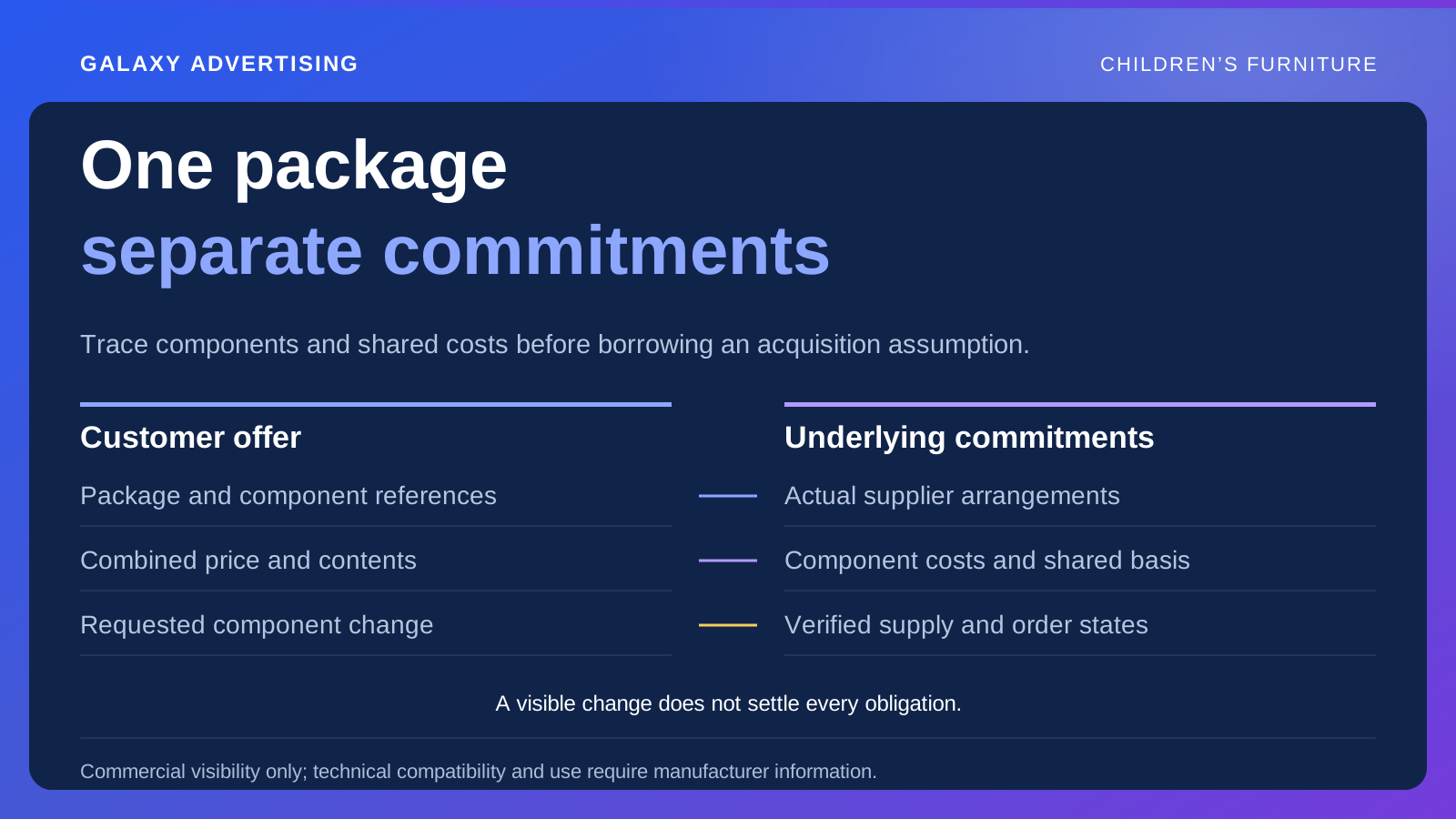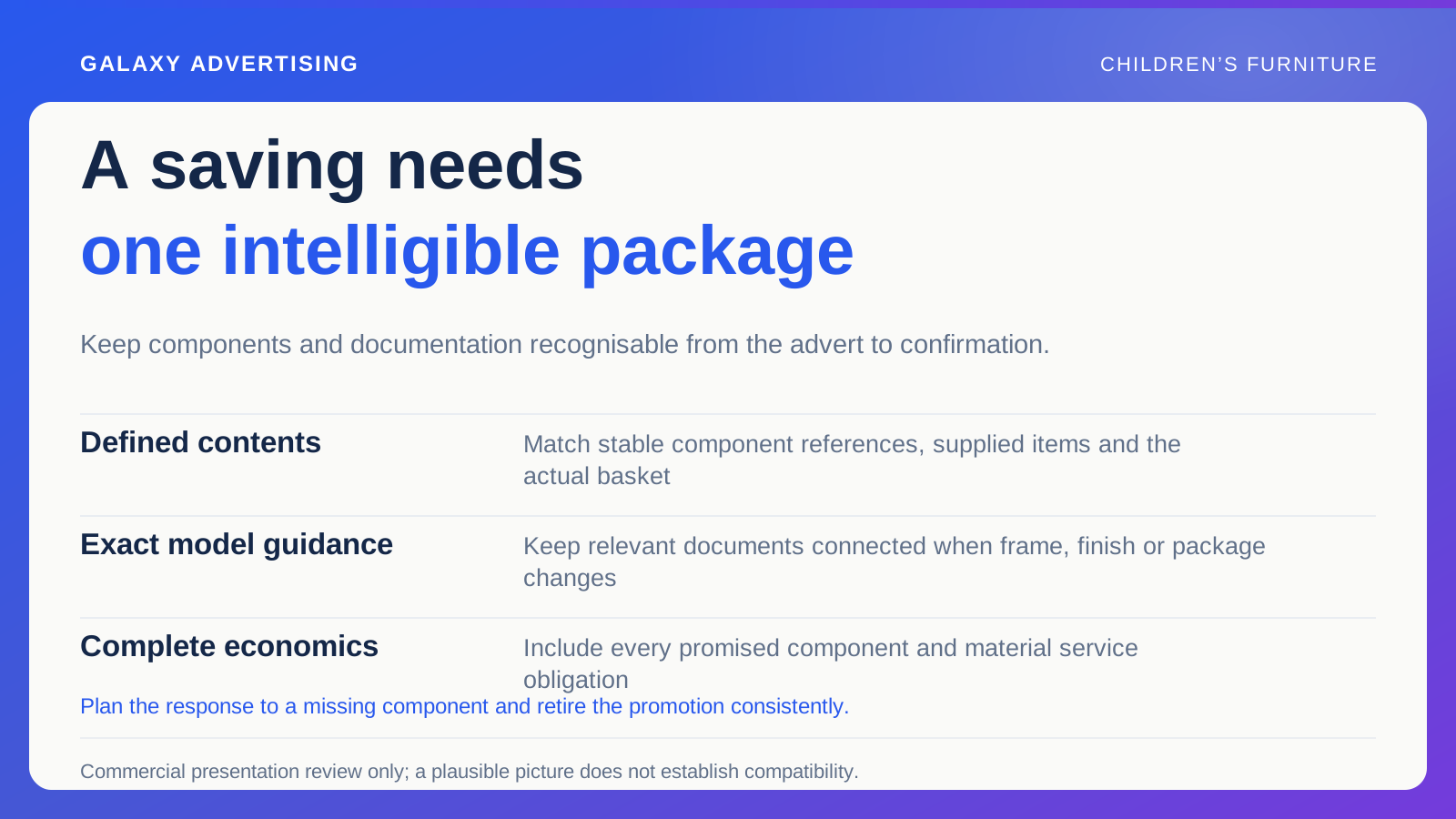
A bedroom bundle photograph can show a bed, mattress, drawers and desk while the basket contains only some of them. The saving may look attractive, but the adult still hasn't been shown one intelligible purchase.
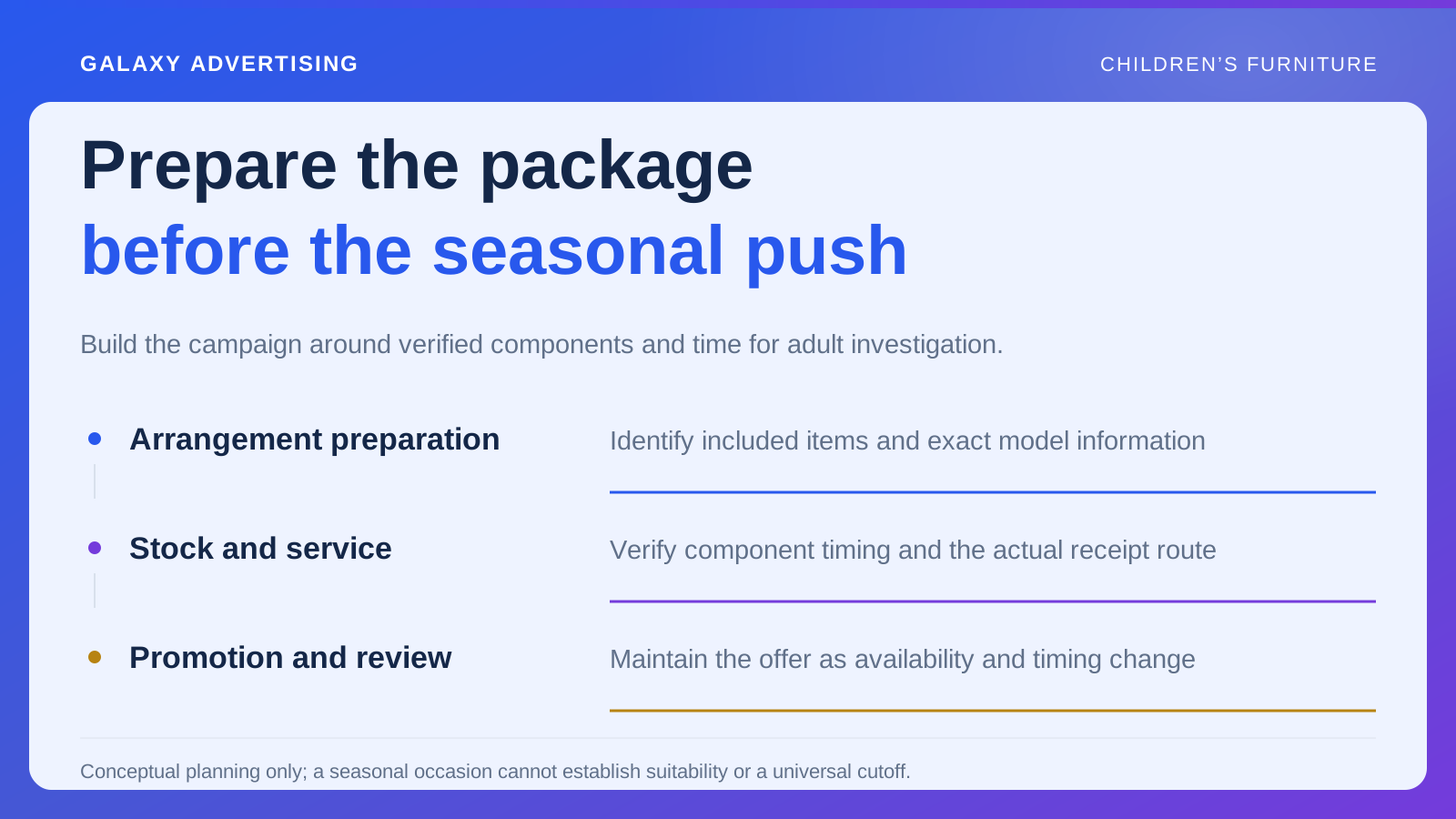
A broad mattress selector without the guidance relevant to the chosen model adds another gap. Start with the components and their verified relationship. Then decide whether a discount, a defined bundle or another benefit serves a useful commercial purpose.
Put a reference against every included item
Identify the frame, selected options and additional furniture using product references. Separate supplied components from optional additions and styling. The package title rarely settles those boundaries by itself, however familiar the name is inside your team.
Check the actual basket against the creative. An item can belong in the room without belonging to the quoted offer. Where that affects understanding, explain it in the main presentation rather than expecting somebody to inspect every small caption.
Be careful with names suggesting the whole room project is solved. If essential decisions remain outside the package, don't imply completeness you haven't established. An offer can be helpful without promising to be the entire answer.
Keep exact product information attached
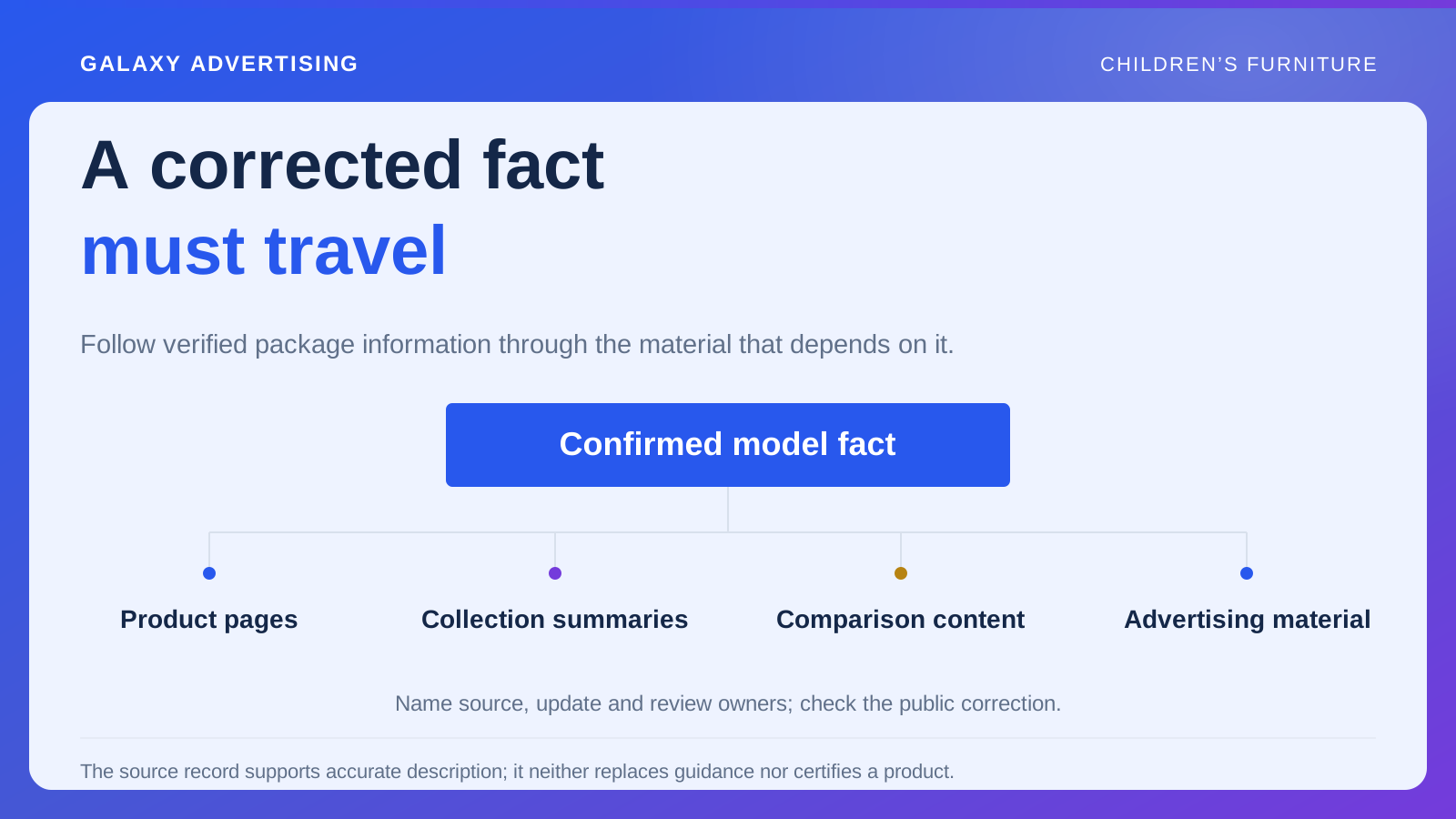
The bundle still needs manufacturer information for the exact model and configuration, meaning the selected arrangement, accessible before purchase. A promotion changes the commercial invitation, not the relevance of the product guidance.
Products sharing a familiar size label or appearing together in a picture are not automatically compatible. Where a mattress or accessory needs verification, use the responsible product source. Marketing should not fill the missing answer because the combination looks plausible.
This is a review of commercial presentation, not a technical product assessment. Your operating requirement is to preserve verified information and give an adult a dependable route to investigate the actual purchase. Keep that scope clear throughout the promotion.
Say what the bundle is meant to achieve
Perhaps you want a commonly chosen arrangement to be easier to understand, a prepared range to reach buyers or a worthwhile product mix to receive attention. Choose a purpose specific enough to judge. More sales alone doesn't give you that.
Use actual buying questions where available. If people repeatedly ask whether drawers are included, clearer labels might be needed before a larger discount. Bundling can simplify a decision when the components have a coherent purpose.
Don't add loosely related items just to enlarge the apparent saving. They can complicate assessment and create availability or fulfilment obligations. The commercial advantage needs to remain convincing after you explain exactly what the customer receives, without relying on a bigger looking discount.
Calculate what the whole order leaves behind
Use the business's agreed revenue and relevant cost basis. Include every promised component and material service obligation, rather than calculating around the frame and allowing the other promises to disappear from view.
For a hypothetical example, compare two proposed offers selling at the same price but carrying different storage and fulfilment costs. Their contribution, meaning the money remaining after the costs included in the calculation, can differ even when the headline values look equivalent to a customer.
This illustrates the method, not a universal target. Keep estimates visible and agree what the business needs to retain after promotion and acquisition. A recurring delivery obligation or included item cannot be left outside the calculation merely to make the bundle appear successful.
Try the ordinary choices inside the promotion
Follow what happens when someone changes the finish, frame or package. Any consequences for price, contents and availability should remain understandable. A broad promotional banner must not obscure the materially different purchase now selected.
Keep relevant document links connected as the configuration changes. People should not read guidance for an earlier choice while a different model sits in the basket. The visual update is only part of the selection.
Test the route on a phone and inspect the final summary. Names can shorten and options disappear between an accurate page and an unclear order record. The package needs to remain recognisable from advert to confirmation, rather than merely look coherent at the start.
Plan for a missing component and a finished promotion
Agree what happens if an included item cannot be supplied on the original terms. Don't improvise a substitute that changes the package without an explicit commercial decision and a clear explanation to the customer.
Assign status updates across adverts, pages and staff replies. A correct basket price cannot fix a live image still showing an expired arrangement. Customers can encounter any of those versions before asking what is available.
Define the promotion's end too. Retire its purchase invitation and conditions wherever they remain active, preserving useful product information. Saving attractive creative in several campaigns should not leave a finished bundle appearing available indefinitely.
Before launch, ask the person handling package questions to inspect the final summary. They may spot a shortened component name that is technically accurate but difficult for an adult to connect with the pictured arrangement. That is worth discovering while you can still make the explanation clearer.
Review what people understood as well as what they ordered
Look at order mix, contribution and customer questions together. Did adults understand the components? Did staff keep explaining the same ambiguity? Were the promised items and services recorded clearly enough for fulfilment?
Attributed orders are not proof that the offer caused additional purchases. Some people may already have intended to buy, and available records may not resolve that question. Keep the distinction visible while still using what the review can establish.
A clearer package, different component choice or narrower promotion can all be useful decisions. The order needs to be worthwhile for you and recognisable to the customer. A large saving cannot compensate for furniture that seems to change identity between the photograph and the basket.