Does the desk come with this bed, and who can give you an answer you can trust? The page says yes, the supplier photograph shows a larger room set, and an older brochure lists the desk separately.
You have enough material for an attractive page. You do not yet have agreement about the purchase. Choosing the nicest sentence cannot settle it. Each important fact needs a traceable connection to the exact model, current documentation and somebody authorised to clarify it.
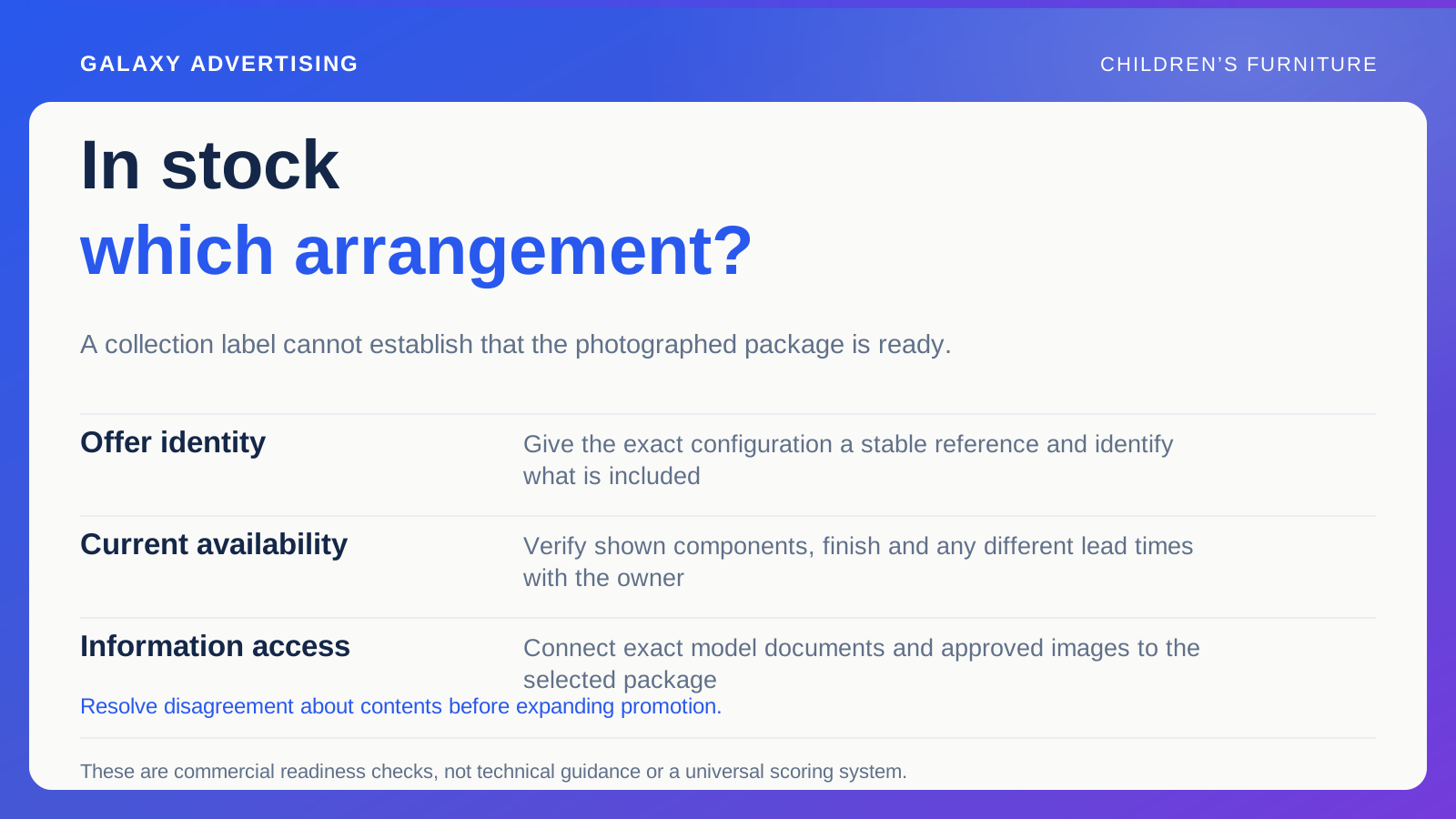
Start with the package someone can order
Identify the product and package you actually intend to sell. Record the component references, rather than trusting a family name that covers several arrangements. Otherwise every later description begins on uncertain ground.
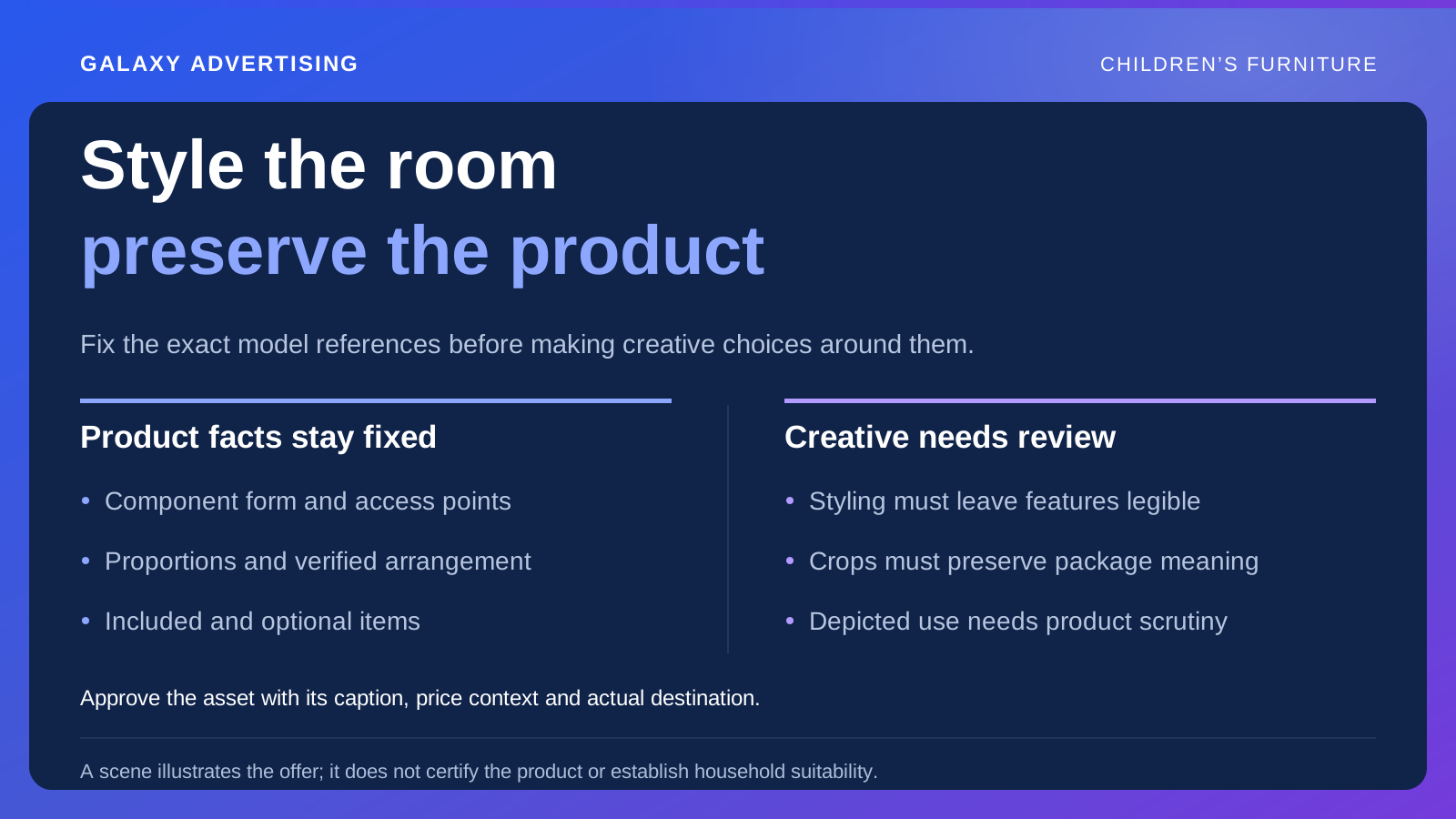
A photograph might contain a bed, storage unit, desk and decorative objects. Before that becomes public copy, the record needs to distinguish supplied components, optional products and room styling. The picture alone cannot make those distinctions for you.
Keep configurations, meaning the different arrangements offered, separate when their contents differ. A convenient combined summary can accidentally describe a package the supplier doesn't sell. Clear identity prevents copy sliding between products that happen to look similar.
Give every fact a dependable source
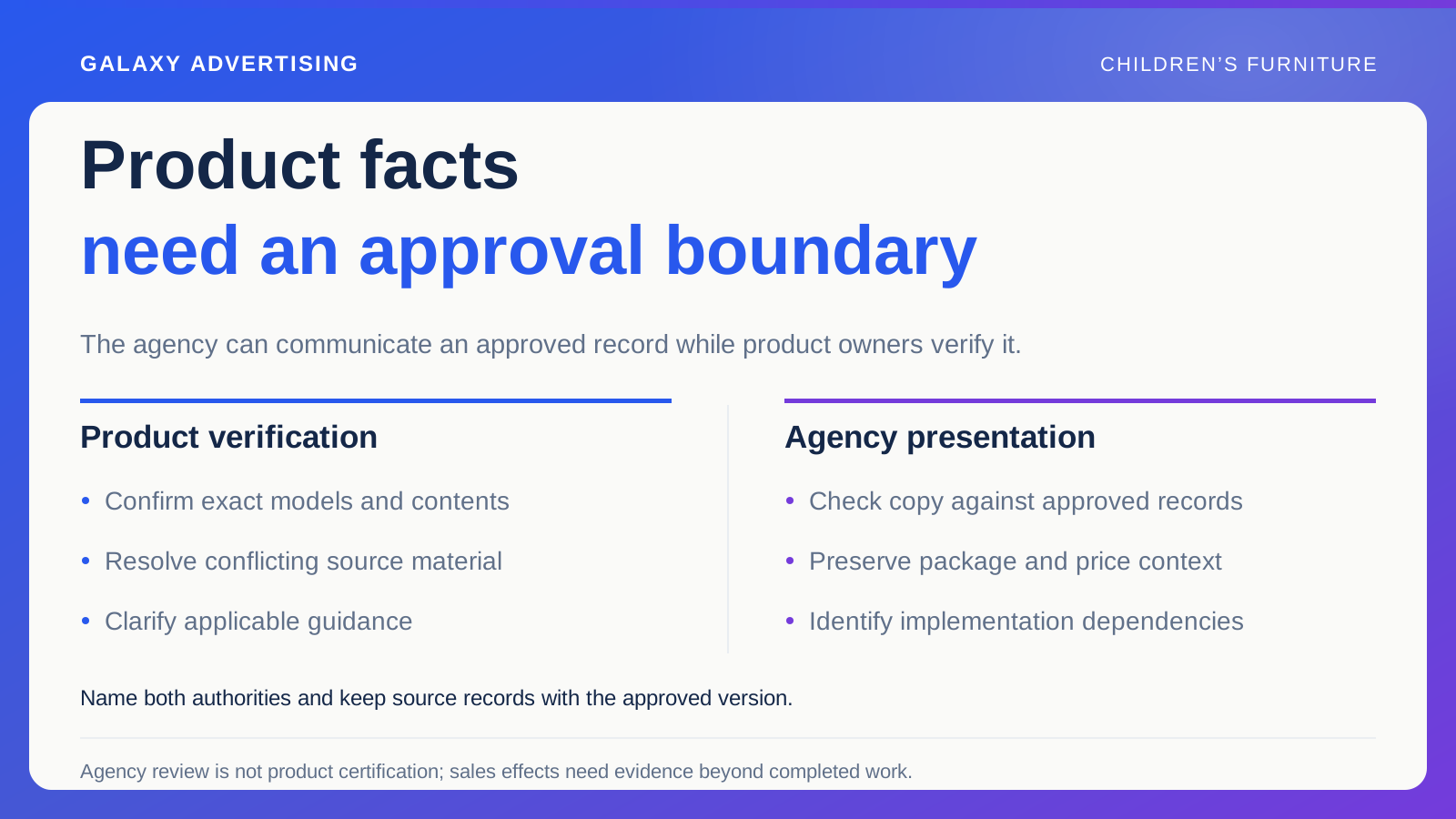
For dimensions, arrangement details and manufacturer guidance, identify both the source and the exact model it covers. A familiar range name is not proof that an older document applies to the version you now stock.
Make approved information accessible to the people maintaining the page. A link buried in a long email exchange isn't much help when a customer is waiting. The record should give staff a dependable route to the answer.
Keep retailer services separate from specifications. Delivery contents, assembly and enquiry handling might belong to your business or another provider. The supplier's product sheet does not automatically establish what your own service package includes.
Let a disagreement stay visible until it is resolved
Record the disputed fact and ask the responsible product or supplier contact to confirm the right statement. Include the reference and conflicting material. A narrow question is easier to answer than a general request to check the listing.
Resist broad reassurance as a substitute. Saying the arrangement suits every room doesn't resolve a doubtful dimension or unclear configuration. It adds another unsupported claim to the original uncertainty.
If clarification remains outstanding, consider whether the statement or product is ready for promotion. Make that commercial decision with the uncertainty visible. Don't leave a writer or account manager guessing which wording seems least likely to cause trouble.
Shorten the wording without changing the answer
Concise pages help people find important information. But cutting words must not remove the conditions and distinctions needed to understand this exact product. Readability and accuracy need to travel together.
Questions about intended use, restrictions and compatibility should lead to the relevant manufacturer information and appropriate qualified route. Marketing should not turn those documents into universal advice for every household.
Store approved wording alongside its source. When a later editor wants to simplify it, they can inspect the meaning rather than borrow comforting language from another product. That leaves room for readable copy without sacrificing the detail that matters.
Follow a corrected fact wherever it appears
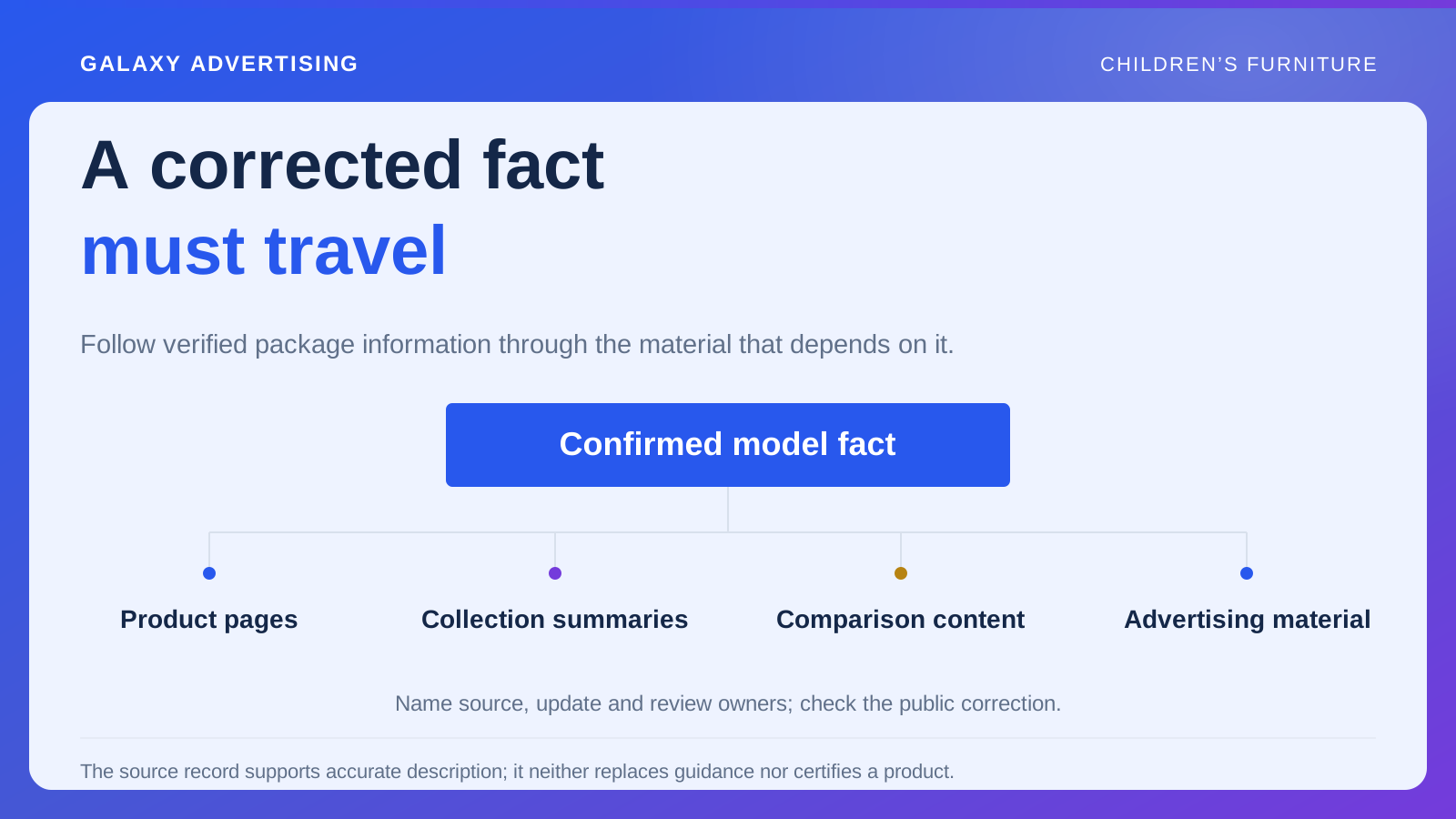
List the important places using the information: product pages, collection summaries, comparisons and advertising material. Changing one doesn't establish that the others changed with it. This is where otherwise sensible corrections can stop short.
Give the update an owner and specify how it will be verified. If package contents change, for example, check the description and any image caption presenting that arrangement. Both can shape what someone thinks they are buying.
Keep the affected version. Staff may need to explain why an old advert differs from the current page, or answer a question about an earlier presentation. Records support that conversation more reliably than somebody remembering how it used to look.
Ask an ordinary question of the record
Choose a plausible enquiry about the exact package. Ask somebody outside the original listing team to find the answer using the record. You are testing whether the information works, rather than whether the team knows the range by heart.
Several possible answers suggest a source distinction to investigate. A correct fact with no clear connection to the selected arrangement suggests an identity problem. A missing answer needs a specific question for the source owner. Each finding leads to different work.
One successful sample does not prove every record is complete. Use it to establish a standard you can maintain, then check other configurations and known exceptions proportionately.
Give an unresolved fact its own exception record
Suppose, hypothetically, a supplier update changes whether storage belongs to a package. Mark the affected statement for clarification and identify every dependent page and advert. Don't spread the uncertainty into another summary while waiting.
Name the exact arrangement, conflicting sources and responsible contact in the exception record. Once the answer arrives, inspect what customers actually see. A revised document landing in your inbox isn't the same as a corrected offer reaching the website.
That final check keeps information ownership connected to the household's buying route, rather than ending the process at the supplier's reply.
Bring information questions into trading discussions
Review unresolved source questions alongside stock and campaign plans. Furniture can be technically available while still being difficult for your team to explain responsibly. Availability alone cannot settle readiness.
Classify recurring enquiries. Are facts missing, answers hard to find or descriptions contradictory? Those point respectively towards supplier clarification, page organisation or corrections across dependent material. A general instruction to improve the copy could miss the actual problem.
Your source record does not replace manufacturer guidance or certify a product. It gives the business reliable ground for describing the offer and helping an adult reach relevant information. When someone asks what they were shown, the answer should live in dependable records, rather than whoever happens to remember the brochure.