What if the drop between product views and basket additions comes partly from how your website counts a view? You could commission a new purchase panel to fix behaviour the chart has not described consistently in the first place.
One template might record a view every time someone changes an option. Another might count it only when the page opens. The labels match; the actions do not.
A useful measurement plan tells you what was observed, where the records came from and what you can conclude. You do not need to record every possible interaction. You need dependable evidence for decisions your team actually intends to make.
Choose the question before naming the event
Start with a specific decision. Do you need to know whether customers find the correct delivery information before checkout, or whether a payment form accepts a valid address? Those questions require different evidence.
Describe the observation in ordinary language first. “A visitor opened delivery information for the selected product” gives everyone something understandable to discuss. A new dashboard label is less helpful if nobody has agreed what it means. Check whether the website can genuinely establish the action you want to observe.
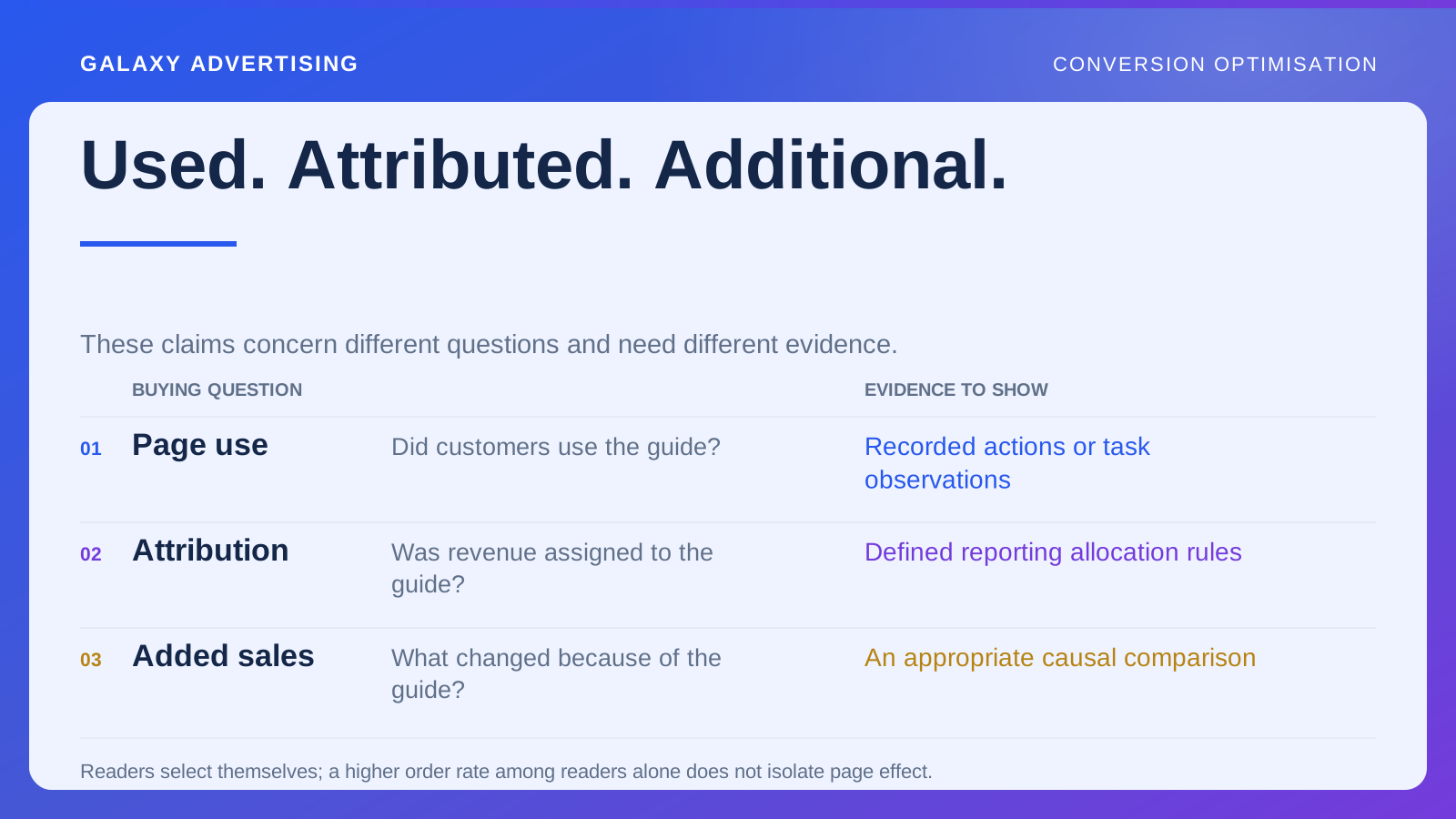
Keep supporting interactions separate from business outcomes in both implementation and reporting. Reading information could help explain a buying route. It is not a purchase, and recording it more accurately does not automatically generate demand.
Write definitions someone can look after
For each important event, record its trigger, relevant product reference, permitted parameters and implementation owner. Say when it should not fire too. Changing quantity, refreshing a confirmation page and returning through browser history can all expose ambiguity.
Use a consistent definition across the templates you intend to compare. Technical constraints might require different implementations. If so, document how the resulting records remain comparable. A shared name cannot do that work for you.
Keep this event dictionary manageable. A small set of understood actions is usually more useful than a long list nobody checks after a theme update. Every event needs a purpose and somebody who can explain how it supports a decision.
Follow recorded purchases back to store orders
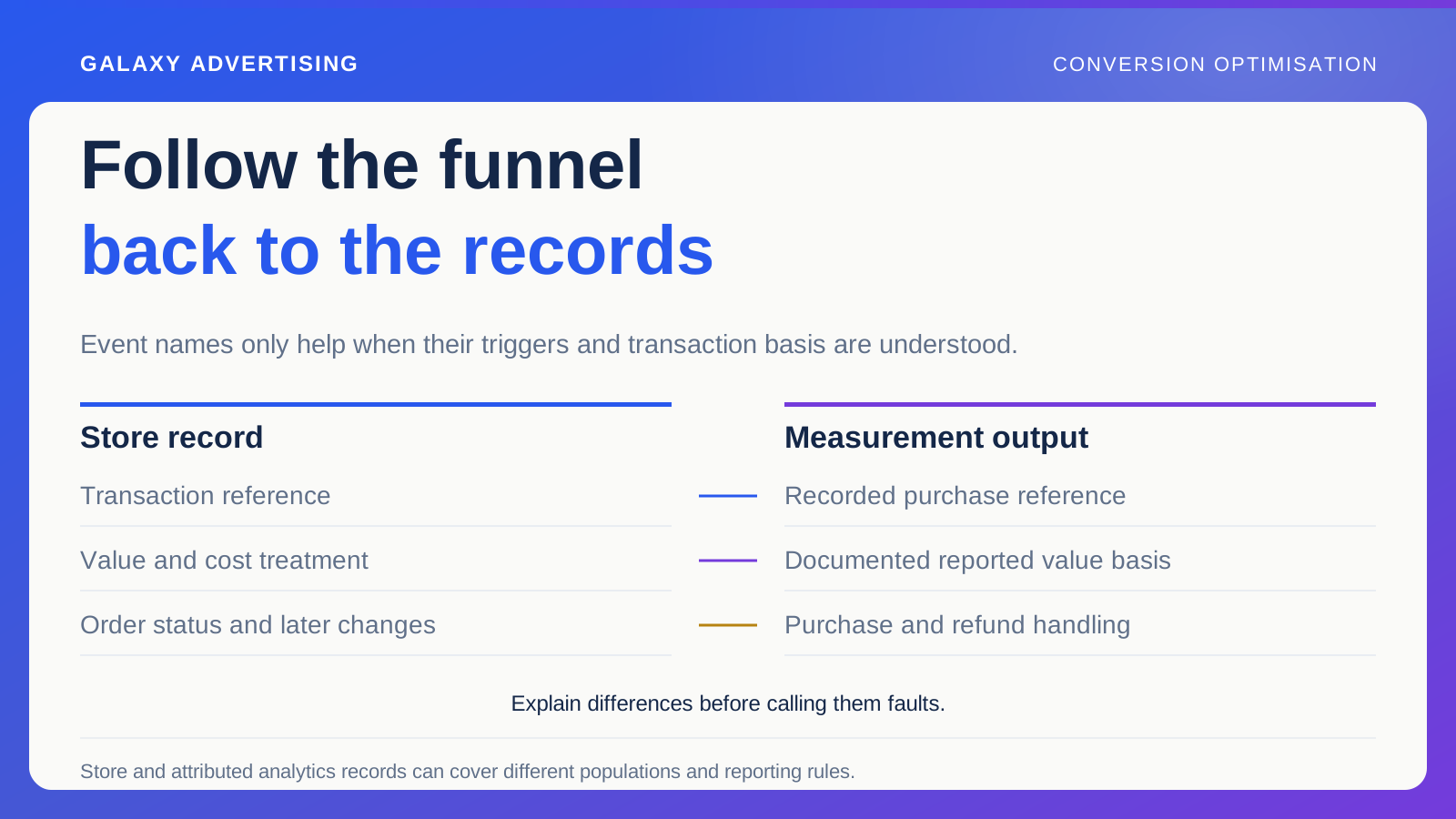
Take a transaction sample and trace the reference, value and status from the store into the measurement output. Establish how tax, shipping, discounts, cancellations and refunds appear. A difference could be expected, incorrect or simply not understood yet.
Google's Analytics documentation describes purchase and refund events and the role of transaction references. Use the current documentation for the implementation you are reviewing. Do not invent your own meaning for a field just because its name feels familiar.
The aim is not to force every source to produce the same total. Store orders and attributed analytics records can reflect different populations or reporting rules. Explain the differences and identify genuine faults requiring correction. Matching numbers without understanding them is not reconciliation.
Repeat the actions shoppers actually take
Follow representative routes through product selection, basket changes and checkout. Repeat actions likely to create duplicate records, including moving back to an earlier step and reopening a confirmation. Check the results against the event dictionary.
Include relevant devices and template differences. Testing the main product template does not establish that a specialist configurator behaves the same way. Give priority to commercially important routes and those affected by the proposed change.
Record the coverage and what stayed outside the sample. The analyst can then judge the check properly. A small test cannot establish that every possible route works correctly, but a visible limitation is something the business can manage. An unstated assumption is much harder to spot.
Say what the records cannot tell you
An information click does not establish understanding. A pause does not identify an objection. No recorded action does not prove no interest. Keep these limits visible beside the observations they qualify.
Use appropriate task reviews and customer questions alongside the numbers. The sources can challenge one another. If the report suggests nobody uses a specification tab while customers repeatedly ask about missing dimensions, inspect both the content and the measurement before settling on an explanation.
Agree the collection approach with the people responsible for privacy and implementation. More intrusive collection is not justified merely because it could make a future analysis convenient. Let the commercial question guide what you need, without using it as a reason to collect unrelated information.
Check whether a redesign changes the meaning
A design change can alter event triggers as well as behaviour. If a hidden delivery panel becomes permanently visible, counting its openings may no longer describe the same task. Fewer opening events could be an intended consequence of the improvement.
Identify measures that will change meaning before release. Agree how reporting will handle the transition, and keep the implementation note with the release record. Otherwise useful work can look like a sudden customer problem.
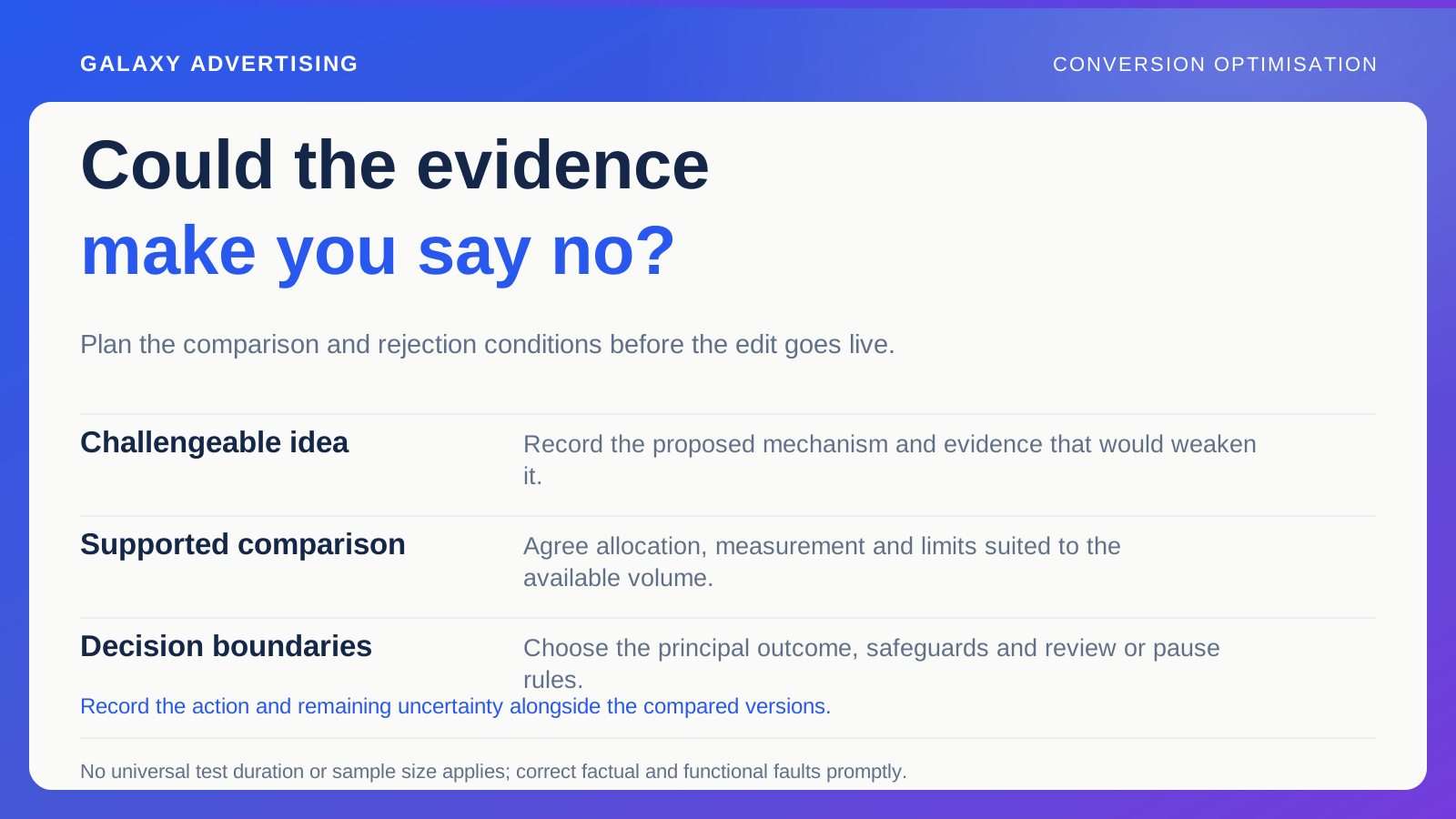
Verify the technical recording separately from business effect. An event firing correctly establishes that the measurement works. It does not establish increased conversion. Commercial evaluation still needs an appropriate comparison, enough evidence and an account of other changes in the period.
Keep a short record you can use later
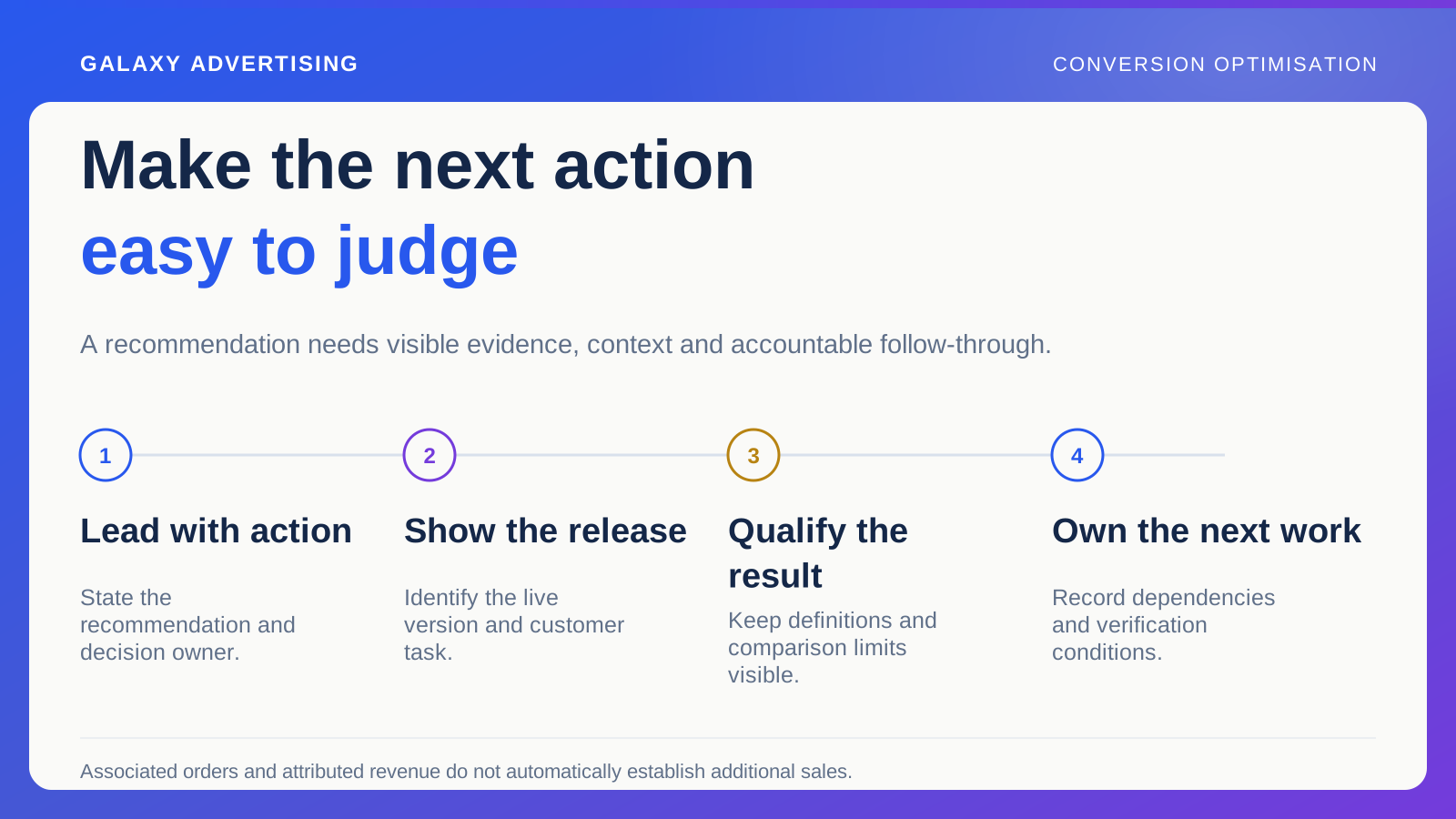
The acceptance record should state the question, definitions, verified routes, transaction sample and remaining limits. Name the measurement approver and the person responsible for investigating a later discrepancy.
Give analysts a clear date or version boundary in internal working records, even where public editorial pages have no dates. Chronology helps distinguish implementation changes from commercial movements. It should make the definition easier to interpret, rather than bury it inside a lengthy technical log.
Reliable measurement narrows uncertainty. It gives you a defensible statement about which part of the buying route was observed and what that observation supports. A persuasive funnel becomes useful when you can explain the actions behind its labels, before letting those labels decide where your redesign budget goes.