A household finds an integrated washing machine at an appealing price and adds it to the basket. Then come the questions: will it reach the right room, will the old appliance be removed, and will anyone install the replacement? The product looks suitable, but the purchase still needs explaining.
That hesitation can resemble a checkout problem. It may be an incomplete offer. You're often selling a route from a household problem to a working replacement. Show which parts of that route your business provides before assuming the basket needs a redesign.
Say what the product price includes
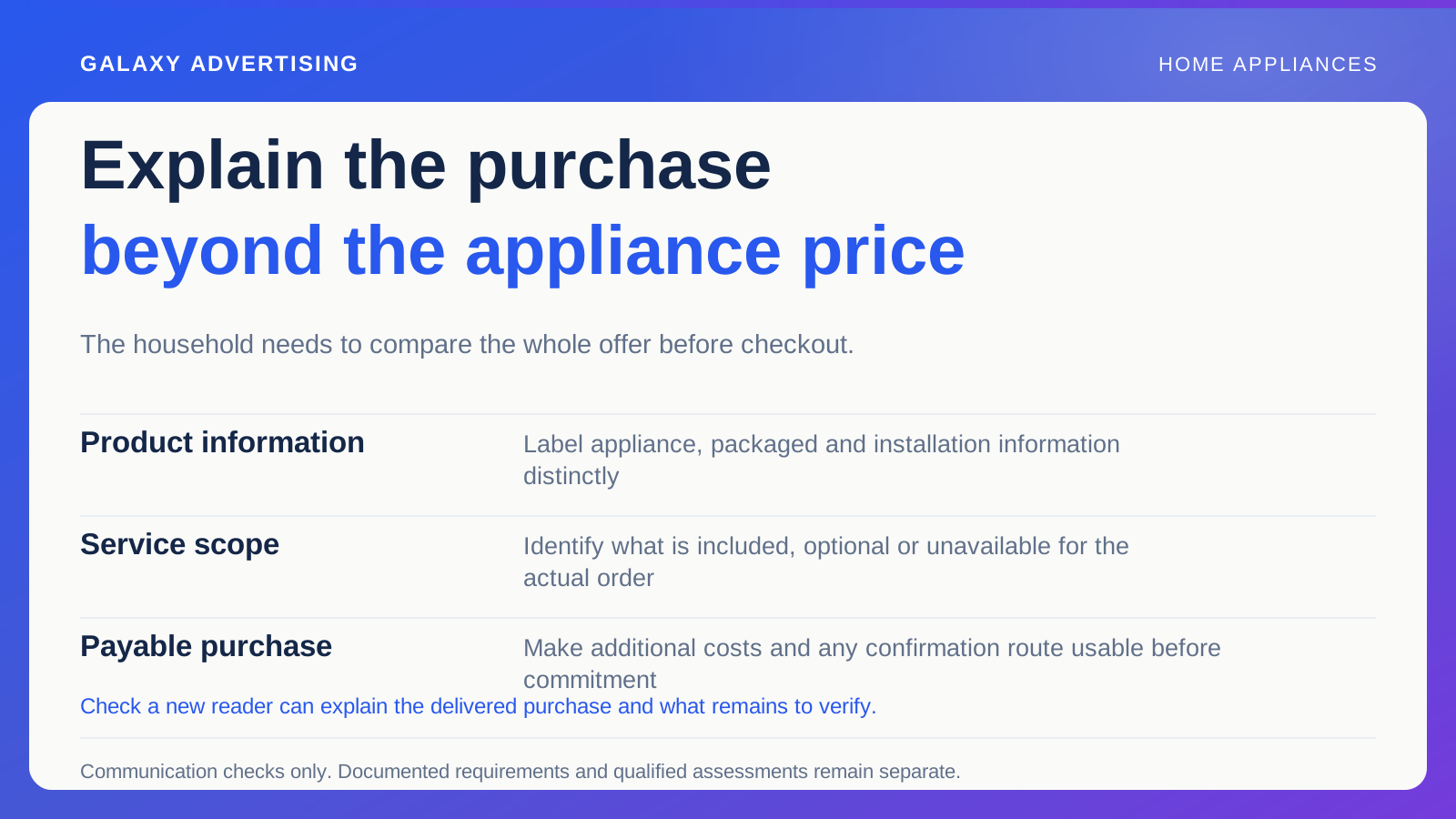
Separate the appliance price from delivery, installation and any other services you offer. Identify what's included, optional and unavailable for the order under consideration. The customer needs to know which arrangement the displayed purchase represents.
Delivery is a particularly easy word to leave unexplained. Bringing a package to an address differs from moving it to a room, unpacking it or connecting it. Don't expect each household to supply the definition your operations team uses.
Keep the terminology consistent across product page, basket and checkout. An accurate service can start to look ambiguous when its name changes between steps. The arrangement may be unchanged internally, but the shopper still has to establish whether they're seeing the same offer.
Label the measurements the customer needs
Appliance dimensions, packaged dimensions and installation requirements aren't interchangeable. Present relevant manufacturer information with clear labels, so people can check the space and access route they're actually considering. A bare set of measurements leaves too much interpretation to the buyer.
For an integrated appliance, don't imply a category label establishes compatibility with every existing arrangement. Point to the model's documented requirements and provide a reliable route for questions that remain unresolved. That distinction matters even when products look similar.
A simple diagram can help if it represents real measurements. Adding arrows to a polished image with approximate proportions doesn't make it a measurement guide. The visual should support the documented facts rather than lend unwarranted precision to an attractive picture.
Explain installation within its real scope
Describe the installation service you actually offer. Show where to check applicable requirements, limits and preparation information. The customer needs a practical explanation of the arrangement, rather than a broad promise with an unclear boundary.
Don't improvise technical instructions or suggest every household setup can be accommodated. Marketing connects people to documented guidance and explains the service. It doesn't replace a qualified assessment where one is needed. Keep that role clear while making the relevant information accessible.
If installation isn't offered, say so plainly. Discovering that only after ordering can create disappointment that acquisition efficiency won't offset. The absence of a service is a meaningful part of the purchase someone needs to assess.
Reveal additional costs while they can inform the choice
Where costs depend on an order, location or selected service, give people a usable way to establish them before committing. Explain what information the calculation needs without hiding the existence of the charge. They need to understand both the process and why a total may change.
Remember that someone can add to basket simply to discover the total. That isn't necessarily evidence they were nearly ready to buy. Keep that possibility in your interpretation of the behaviour, especially before calling the next step the problem.
If you test a new presentation, distinguish earlier cost clarity from changing the actual price. Those are different interventions. Changing both at once makes it harder to know what influenced the decision, even if the combined route produces a different result.
Keep the campaign aligned with fulfilment
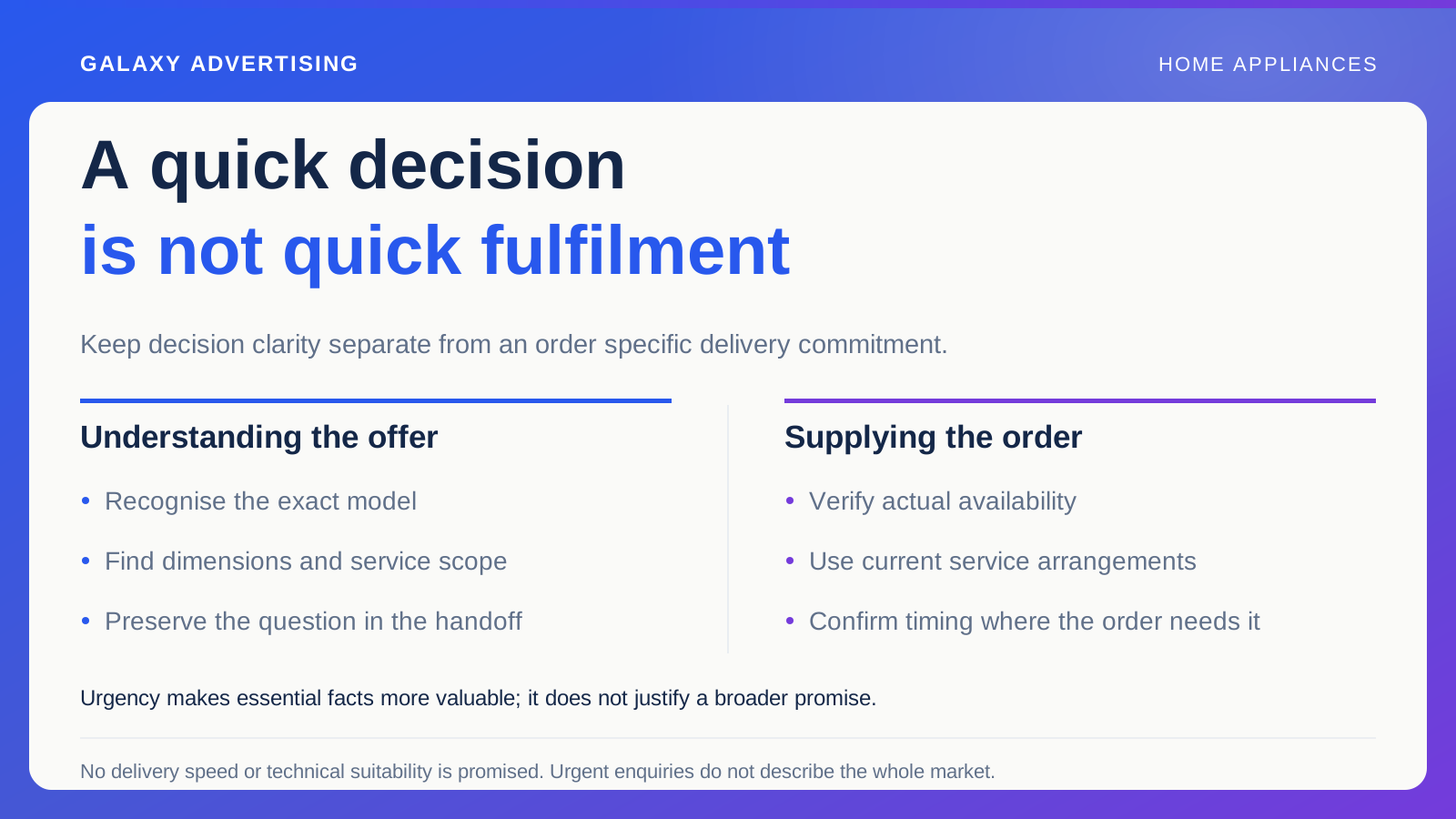
A promotion emphasising a delivery proposition needs to match current capacity and service conditions. Agree how changes reach the people maintaining creative and destinations. The promise should move with the arrangement it describes.
Stock alone doesn't establish readiness. You might have the appliance while a service or delivery arrangement is constrained. The practical offer needs to reflect both. A stocked product isn't automatically the complete purchase your campaign invites.
When something changes, inspect connected locations. Updating the main description or checkout doesn't establish that a banner or saved asset has stopped promising the old arrangement. Follow the expectation back to the places that create it and correct the relevant communication there.
Help people compare the full proposition
Other retailers can offer different packages around the same model. Explain your own contents without making unsupported claims about a competitor's service. Useful differentiation starts with facts you can verify about the purchase you supply.
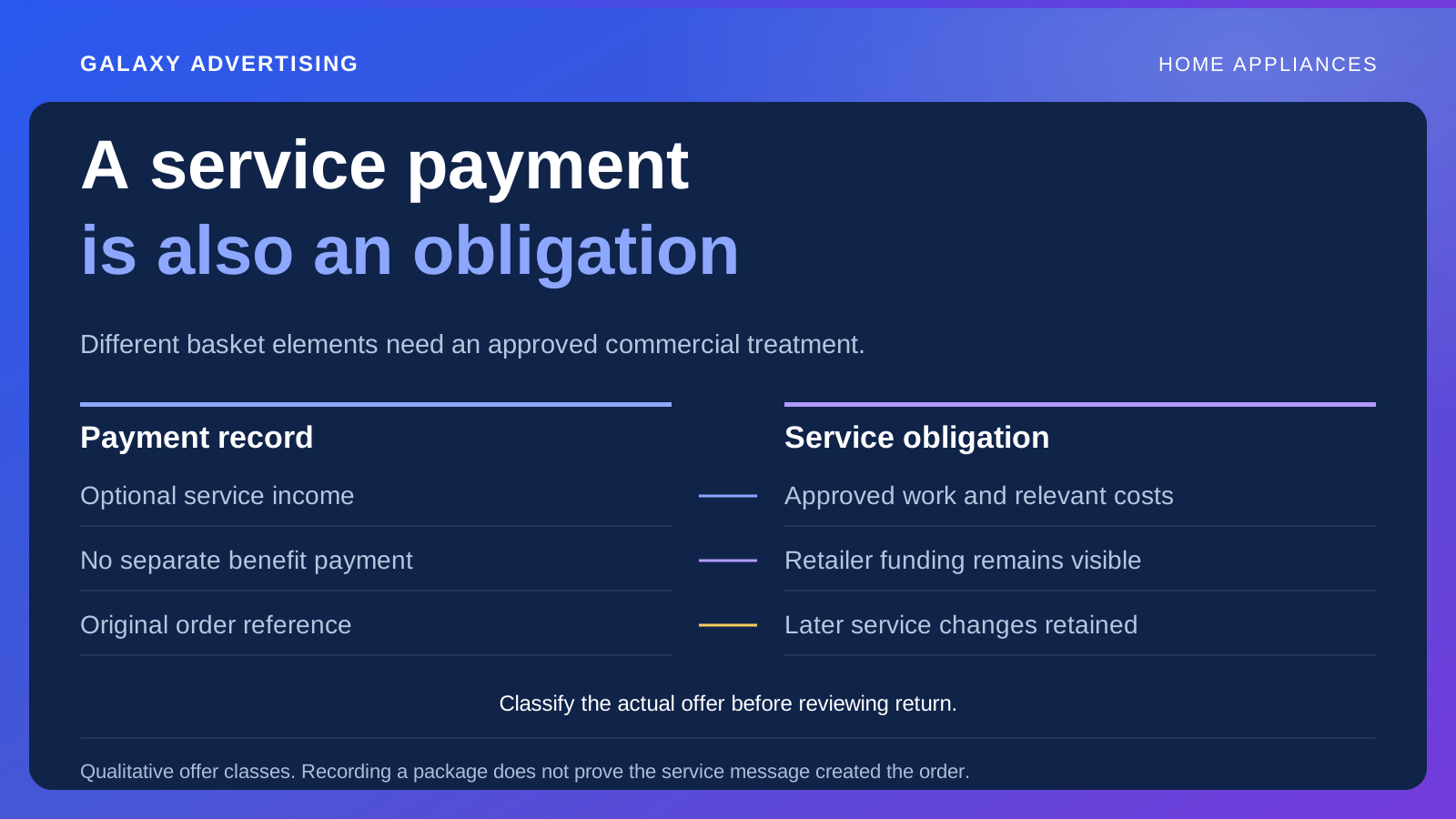
Describe optional services through scope and cost, rather than relying on a premium label. If a buyer doesn't need the service, they should still understand the appliance offer. Keep the extra value assessable without making it obscure the basic purchase.
That gives your team specific service facts to communicate and a clearer value proposition than making every sale depend on the lowest visible product price. Let customers see what they're comparing, including where their requirements differ.
Ask someone to explain the delivered purchase
Give a colleague the live route and ask what the household receives for the displayed total. Can they distinguish the model, delivery service, optional installation and selected assistance? Then ask which preparation or compatibility checks remain the customer's responsibility under the relevant documentation.
If the answer relies on information unavailable before checkout, investigate earlier presentation. Record the missing statement, confirm it with operations or the product team, and check the correction reaches relevant destinations. That's a factual task, rather than a general redesign request.
The exercise doesn't replace individual technical advice. It checks whether your website explains the actual offer clearly enough for a customer to recognise what still needs verification before ordering. The distinction keeps the review useful and within its role.
Let support questions reveal the next correction
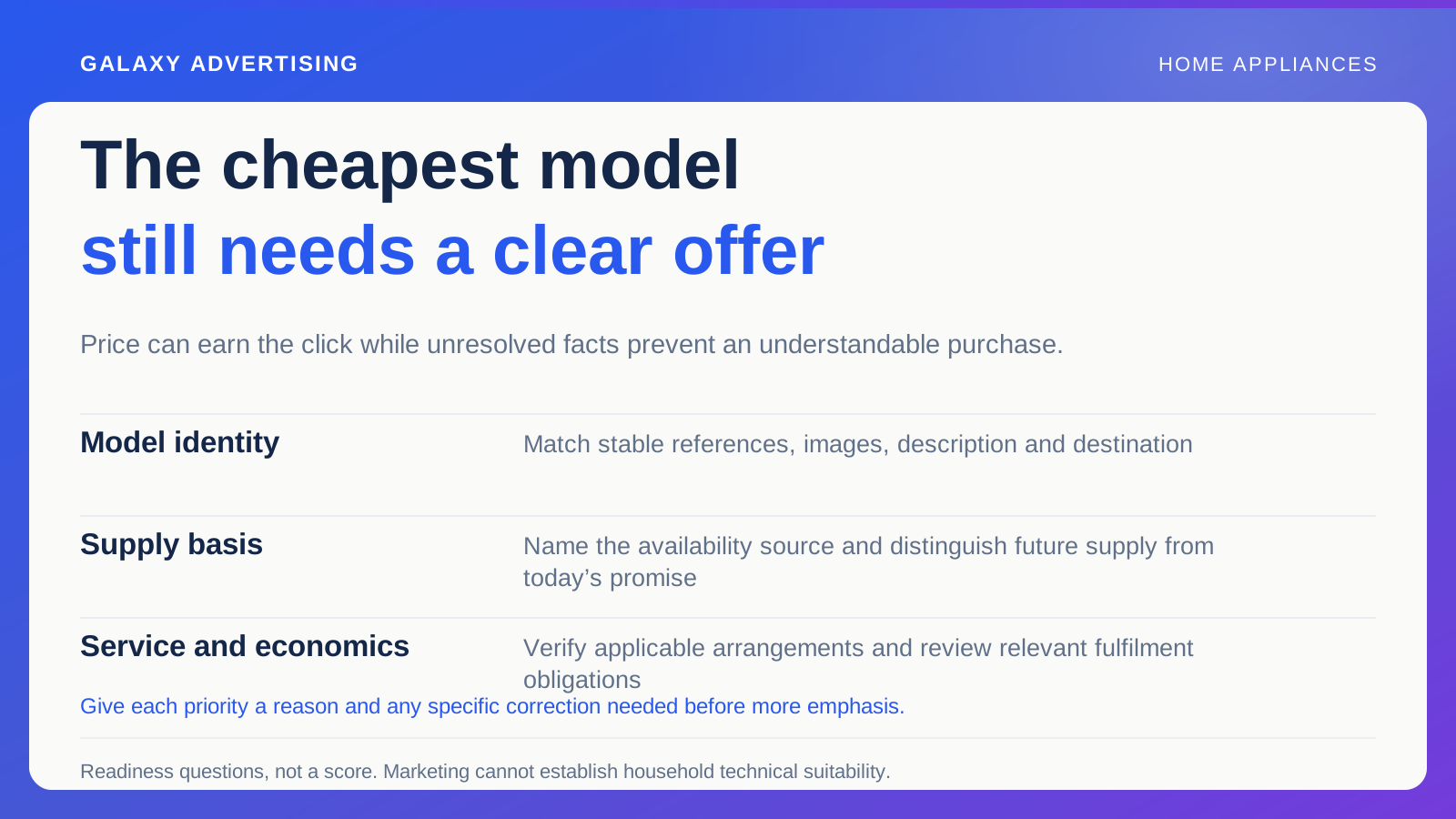
Group recurring questions about fit, service contents, preparation and cost. Check which answers are absent and which are merely difficult to find. Give each factual correction to someone able to verify it.
Include confusion after ordering, especially repeated misunderstandings about delivery work. Judge improvements with actual order and fulfilment evidence. More orders are useful when you can deliver the offer accurately and retain acceptable contribution after relevant costs, meaning the money left on that basis.
Your price gains meaning when the household understands what arrives, what assistance exists and what remains to check. That's the purchase they need to compare.