It is easy to greet a returning shopper before helping them recover the decision they were making. Another broad brand introduction can get in the way when all they want is the armchair they were discussing.
Imagine someone spending an evening comparing two armchairs and fabric options with a partner. They return later without remembering the model names. A promotional overlay and another welcome leave them rebuilding the shortlist before they can ask their next useful question.
A return visit does not prove readiness to buy. Help people recover information, reconsider an option or continue a conversation through dependable references and understandable routes, without pretending to know their identity or intention.
Find out which context people need back
The missing piece could be a model, selected finish, comparison or unresolved practical question. Relevant enquiries and task observations help you identify the continuity that matters for your range.
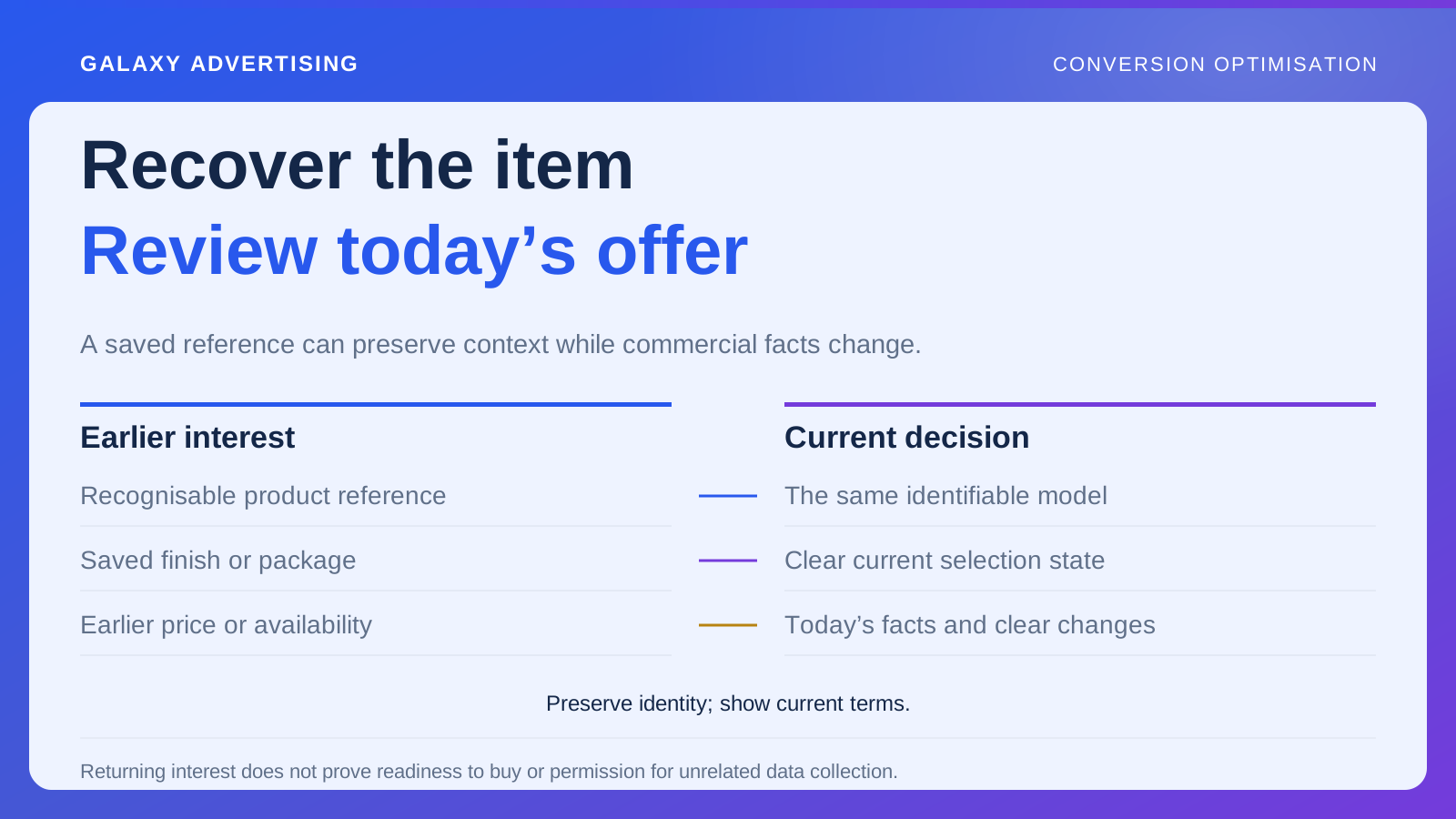
Remembering an item is different from preserving a valid offer. A saved product can still help after its price or availability changes, provided its current state is clear. A stale package presented as unchanged creates a fresh problem.
Look at existing routes first. Recognisable model names and stable links could solve the task without a complex new feature. An account system is not automatically the first answer when customers simply need to identify the chair they viewed before. Establish what they need to recover before choosing how to provide it.
Give the product an identity people can carry
Use consistent references across product pages, helpful content and appropriate enquiry replies. Someone should be able to match a saved item to the current offer without relying entirely on its photograph.
When a link identifies a specific configuration, check that the destination makes it understandable. A silent default to another finish or size can make the shopper wonder whether they have found the same product.
Make names useful outside the internal catalogue. An unexplained code might identify the item reliably for your team while meaning little to a customer. A clear model name and relevant option references can serve both needs. That does not require turning product identity into an elaborate tracking system.
Be clear about what a saved choice means
A saved shortlist or configuration can reduce repeat work if the site can maintain it appropriately. Define what it saves, how the customer recognises it and what happens when the underlying offer changes.
Agree the implementation and privacy approach with the responsible people. Wanting continuity commercially does not establish permission to collect unrelated information or make assumptions about a household's circumstances.
Where the feature needs customer control, make that understandable. A visible choice should not leave someone guessing whether it is a saved state, today's default or a promotional suggestion. Continuity earns its place by reducing ambiguity. It should not become another layer that a shopper must interpret before they can understand what is available.
Preserve identity when the facts change
If a product becomes unavailable or its price changes, retain its identity while explaining the current offer. Silently replacing it with something superficially similar does not establish that the original requirement is satisfied.
Explain meaningful differences in suggested alternatives. A model with a comparable appearance could still have different dimensions, materials or service arrangements. Those differences may be exactly what matters to the returning customer.
A hypothetical saved furniture package might lose an optional component from the current range. Help the person understand that change and inspect verified alternatives. The earlier package should not appear purchasable simply because its saved image remains appealing. Keeping context is useful only when current facts remain honest.
Let the next question move the decision forward
A returning shopper may already understand the introductory proposition. Make specific detail, comparisons and relevant support easy to recover without another general brand tour.
Choose content that advances the task. A guide can address a room measurement question while the product page establishes the selected configuration. Links should preserve that relationship rather than lead through unrelated material.
Earlier interest does not automatically call for a stronger sales message. The person may have discovered the product is unsuitable. Useful continuity supports an accurate assessment, including another option or no purchase at all. Helping them resume is different from assuming they have already decided to buy.
Test a return after an ordinary change
Where appropriate, use a controlled review environment to save a realistic product reference, change a relevant price or availability condition, then return through the saved route.
Can the shopper distinguish their previous interest from today's offer? A feature that works while nothing changes can become confusing as soon as commercial facts move.
Record intended behaviour and source dependencies. Development and merchandising then have something they can verify without relying on one demonstration by somebody who already knows the outcome. The check concerns an understandable next action for the customer, rather than whether a familiar team member can navigate the feature.
Separate recognising an item from restoring every option
Someone might want to recognise an earlier product without automatically restoring all previous choices. Define which behaviour the feature provides and make that clear.
A shortlist could retain a product reference while showing current price and availability. A saved configuration might need review when its components change. Do not turn these different tasks into one promise to remember everything.
Have the responsible teams define handling and customer controls, then test the ordinary return route. Accurate continuity means people recover useful context while understanding which facts are current and which choices they need to make again. It can save work without implying an unchanged offer or a purchase commitment they never made.
Look for useful work resumed
Assess whether people can identify the item, recover information and continue an appropriate task. Supporting interactions can show usefulness without proving the feature caused every eventual order.
Read enquiry and commercial evidence alongside offer and acquisition changes. A shorter route is not automatically better if it hides current conditions or encourages the wrong configuration.
The useful return experience gives context back while keeping the customer's control and the offer's accuracy intact. It removes avoidable reconstruction and leaves the decision open. That gives a shopper something more practical than another welcome asking them to begin again.