Should you increase spending on the winning shoe campaign when its useful sizes are disappearing? The revenue ratio looks encouraging, but recent exchanges have not yet been reconciled either. More investment might be reasonable; the headline alone cannot tell you.
A useful report brings those dependencies into the decision. It explains the offer behind the result, the work completed and the evidence's limits. You need a defensible next action, rather than another set of charts whose commercial meaning you must work out for yourself.
Put the decision before the detail
Lead with the most consequential issue and the proposed response. Perhaps a model deserves another bounded investment, a depleted offer needs less emphasis or a measurement definition needs correcting. Tell the reader where the decision sits.
Explain the evidence in ordinary language before the detailed account metrics. Nobody should have to reach the end of several pages to discover that the recommended product no longer has a useful range of sizes. That fact changes the conversation.
Keep the recommendation proportionate to what you know. A few customer questions can justify checking a model label without proving the whole website needs redesigning. Make confidence visible through the scale and specificity of the action you propose.
Say what the order and value figures describe
Show your approved revenue and contribution basis. Contribution is the money remaining after the costs included in that calculation. Include the relevant treatment of discounts, fulfilment, exchanges and refunds, and avoid giving the measure a broader commercial name than those included costs justify.
Connect the initial order to what happened later. Dispatching another pair does not automatically mean acquiring another customer. When records do not yet support a retained outcome, say what the current figure does describe rather than leaving readers to assume it is final.
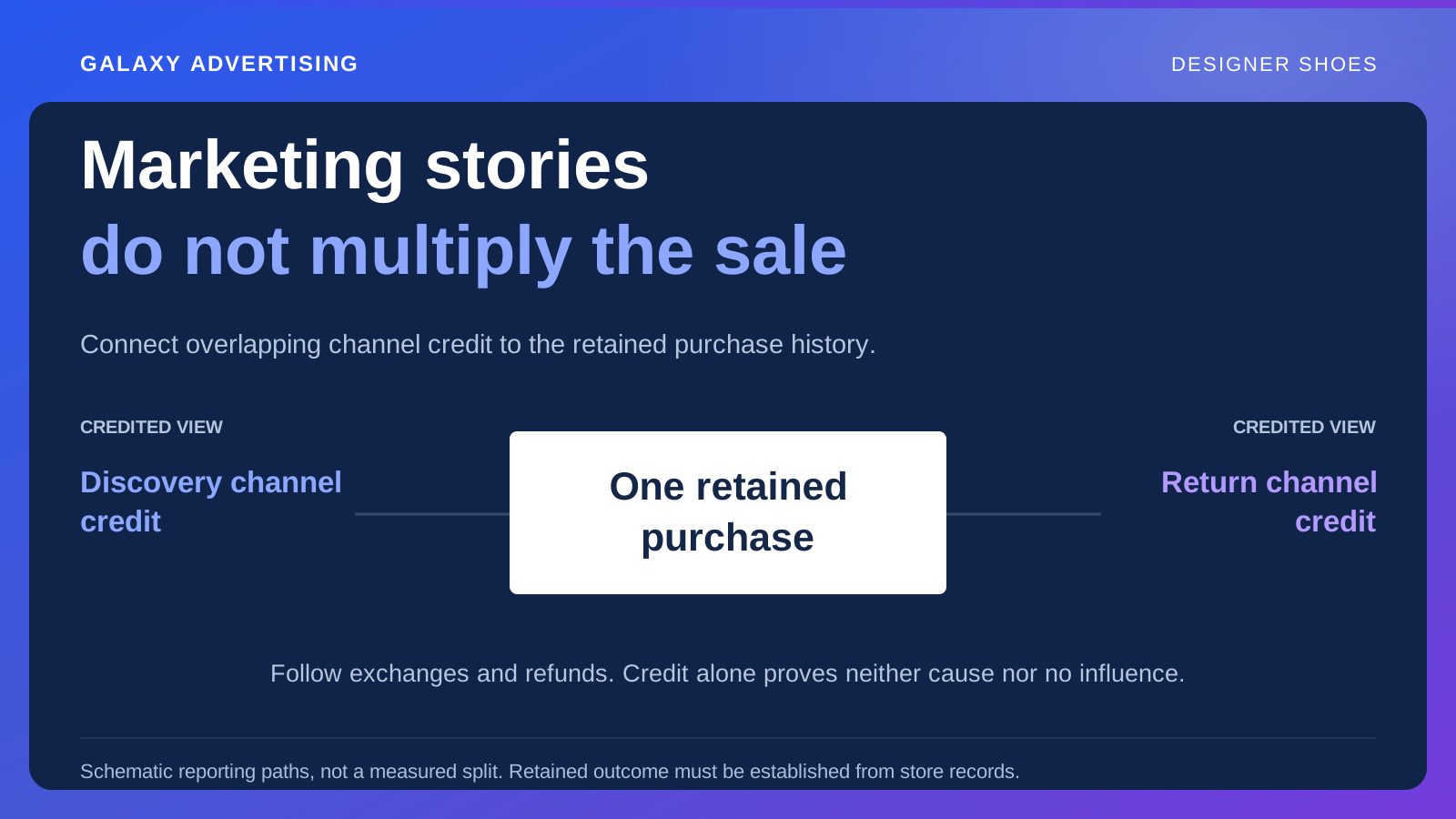
Keep actual store transactions separate from channel attribution claims. Several systems can claim a role in one order. Adding those claims does not create more purchases, and arbitrary allocation does not make different reporting conventions meaningfully agree.
Show the models and sizes within the average
Choose groupings that can change a practical decision. A model, documented product family or clearly defined offer can merit separate attention when its availability and economics differ materially from the wider range. Make the grouping understandable.
Dozens of tiny rows are not automatically informative. When evidence is thin, label the observation as something to investigate rather than a confident ranking. More segmentation can give a report more detail without giving the reader more knowledge.
Add stock and promotional context. A result can change because the purchasable range narrowed or the offer changed, while the creative and campaign settings stayed familiar. Without that product history, the comparison is harder to interpret fairly.
Explain what the creative was meant to answer
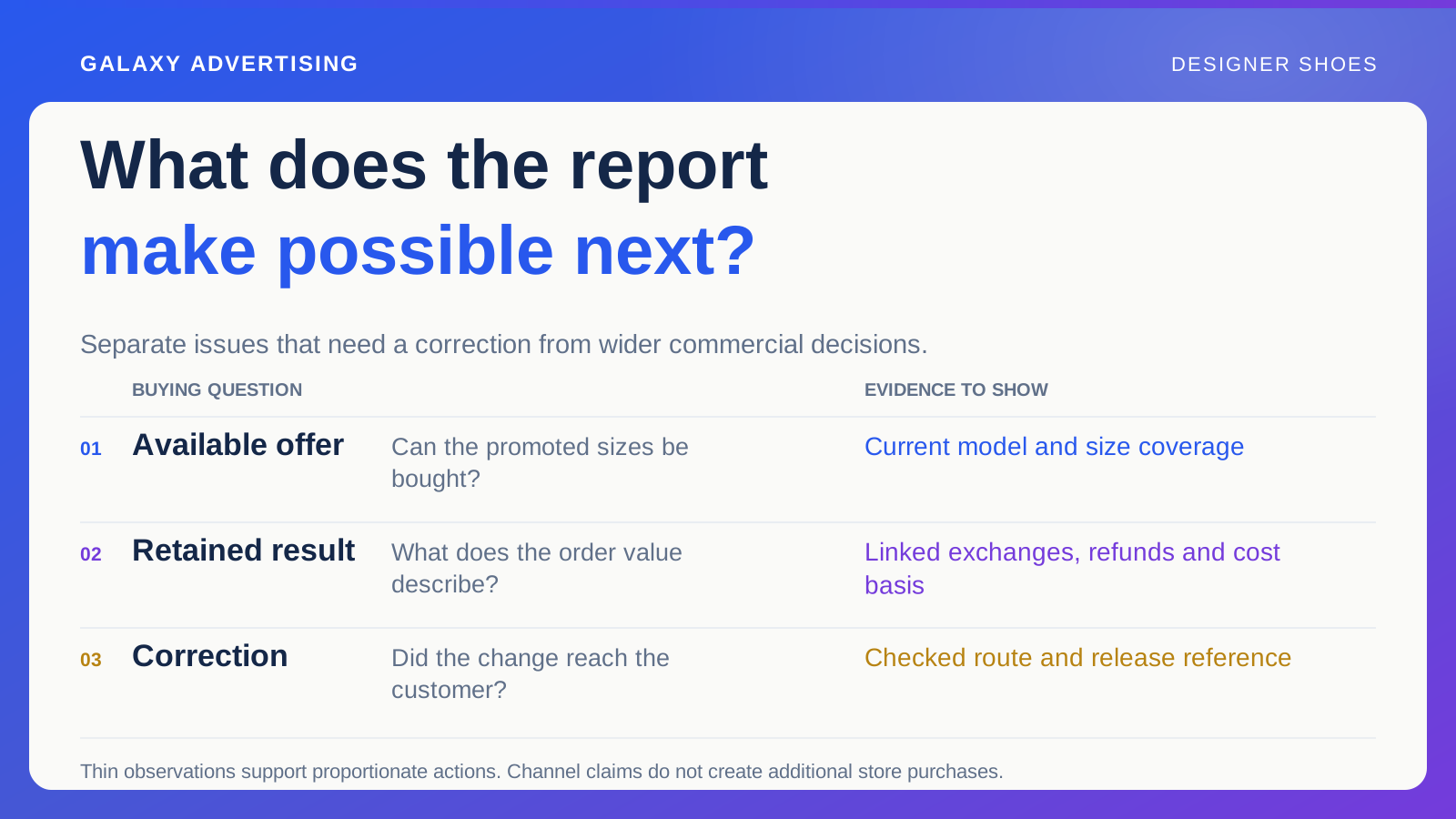
For meaningful production or testing, identify the buying question, the evidence shown and the observation available. A list of winning images leaves the next commissioning decision largely unexplained. Say what the team was trying to learn.
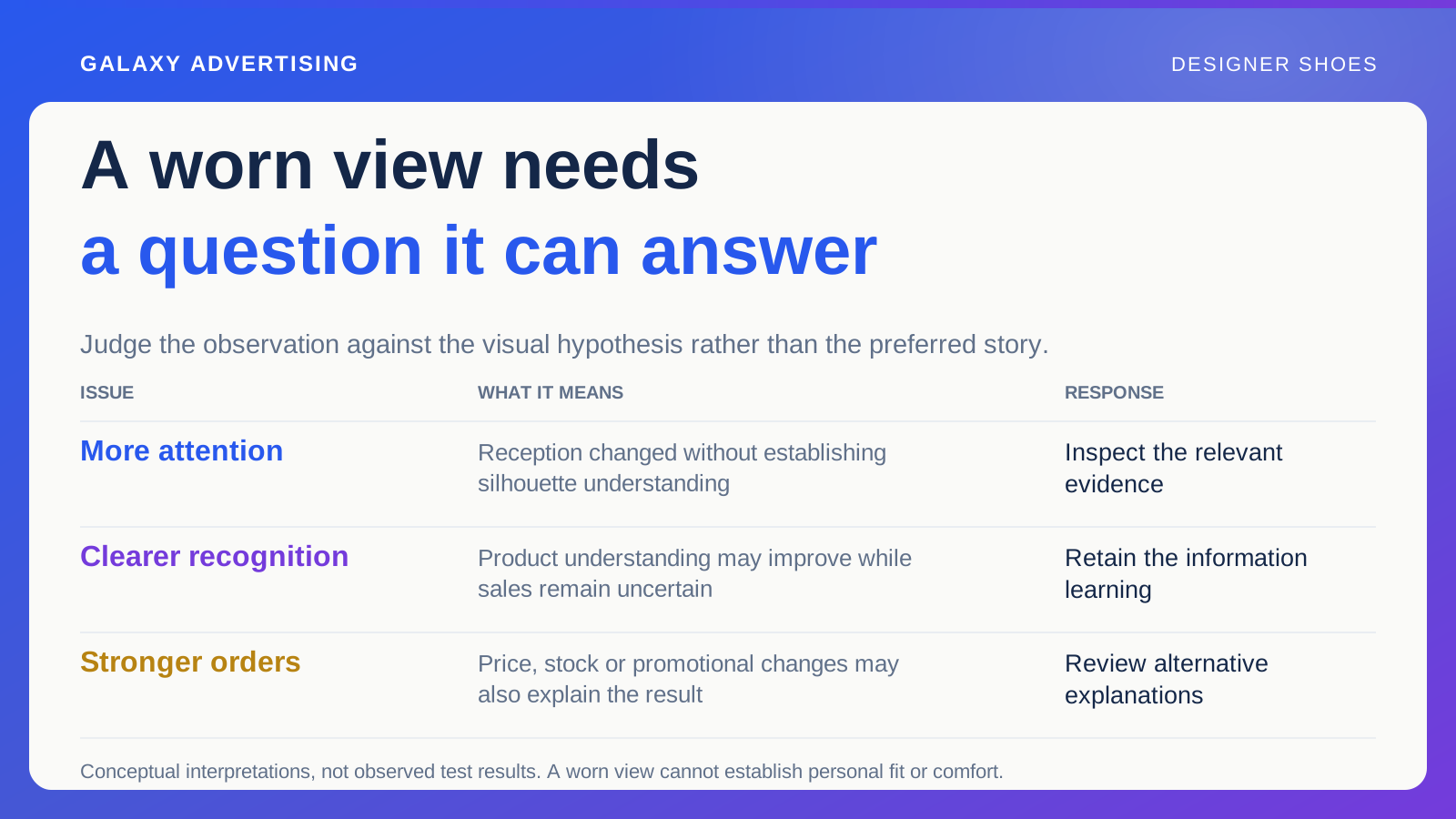
Distinguish the argument from an adaptation of its presentation. A clearer worn view explores a different question from a background colour change. Both can be worth attention, but the conclusion needs to describe the comparison actually made.
Keep inconclusive outcomes and their practical implications. You may need to narrow the question, improve the observation route or stop paying for an uninformative comparison. Removing uncertain work can make the report look decisive while taking away the very learning the next brief needs.
Follow important corrections through to the customer
Include material differences between the advert and the current offer. An obsolete finish image, an unavailable demonstrated size or an inconsistent purchase condition changes both the customer experience and the meaning of the result. Those are commercially relevant exceptions.
Show whether a correction was requested, implemented and verified. A completed task label says little if the customer still sees the old reference. Connect the work with a checked change in the actual route.
Keep minor detail out of the main narrative when it does not affect a decision. Supporting records can remain accessible without turning the review into an exhaustive catalogue. The purpose is focused judgement, not proof that everyone has noticed a great many things.
Give customer questions the right weight
Summarise recurring questions about model recognition, sizing references and purchase conditions. Separate a verified misunderstanding from a wider theory about why people do not buy. Both can deserve attention without being the same kind of evidence.
Anecdotes cannot explain every nonpurchase. Their value often lies in exposing one specific gap worth inspecting. Say what the observation supports and leave the wider uncertainty visible.
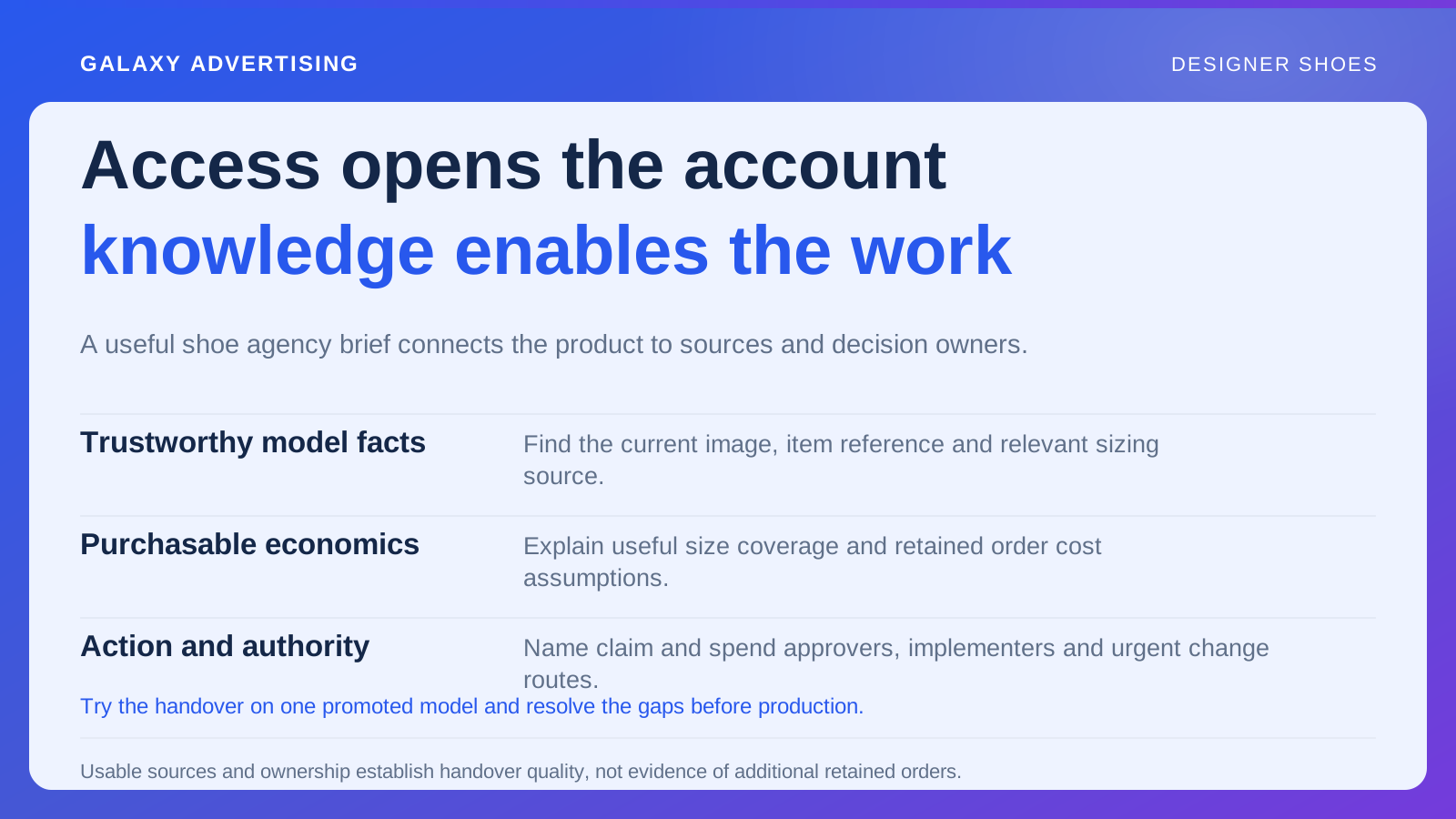
Send the issue to someone who can resolve it. Product sources need a person who can verify them; selector faults need implementation; service conditions need the relevant business decision maker. Asking generally for more customer confidence gives none of those people a usable brief.
Keep the checked version or release reference beside a material correction. Later reviewers should be able to distinguish the request from what actually reached customers. Otherwise an issue can appear solved simply because it has featured in several activity summaries. A concise record can still support a fair assessment of delivery and verification.
Carry the decision into the next review
Close the review with a small set of actions, owners and review conditions. Separate urgent factual fixes from wider experiments so their purposes and authority remain clear. People should know what they can act on now.
Bring earlier commitments forward. If the previous review agreed a sizing correction, show its checked outcome or the dependency still blocking it. Reporting should preserve operational memory rather than start the story again every month.
A footwear report earns its place when people can use it to make and complete a better decision about the offer customers could actually buy. The dashboard can support that conversation. The commercial judgement still has to happen around it.