Your new agency opens the shoe image folder, then asks which sizing reference it should trust. It has campaign access, but no clear answer about suitable models, useful size availability or what exchanges do to your target. The keys have changed hands; the knowledge has not.
A useful handover transfers the facts and responsibilities that change decisions. It gives the specialist room to question assumptions and spot dependencies without guessing at product claims or service promises. That is where accountability starts.
Tell them which problem matters now
Define the range, the customer's intended task and the commercial outcome you want. Suitable first orders, repeat purchases and a better role for a depleted collection need different thinking. Make the immediate question clear enough for someone to challenge it constructively.
Share the evidence and its limits. Order records, campaign reports and customer questions all have a place, but they may use different definitions and support different conclusions. The agency needs those boundaries alongside the information.
Avoid handing over a fixed activity list detached from the problem. If product information or measurement is the demonstrated constraint, the specialist should be able to recommend that work. A brief that assumes more adverts are the answer can oblige everyone to stay busy around the real issue.
Give each model a trustworthy reference
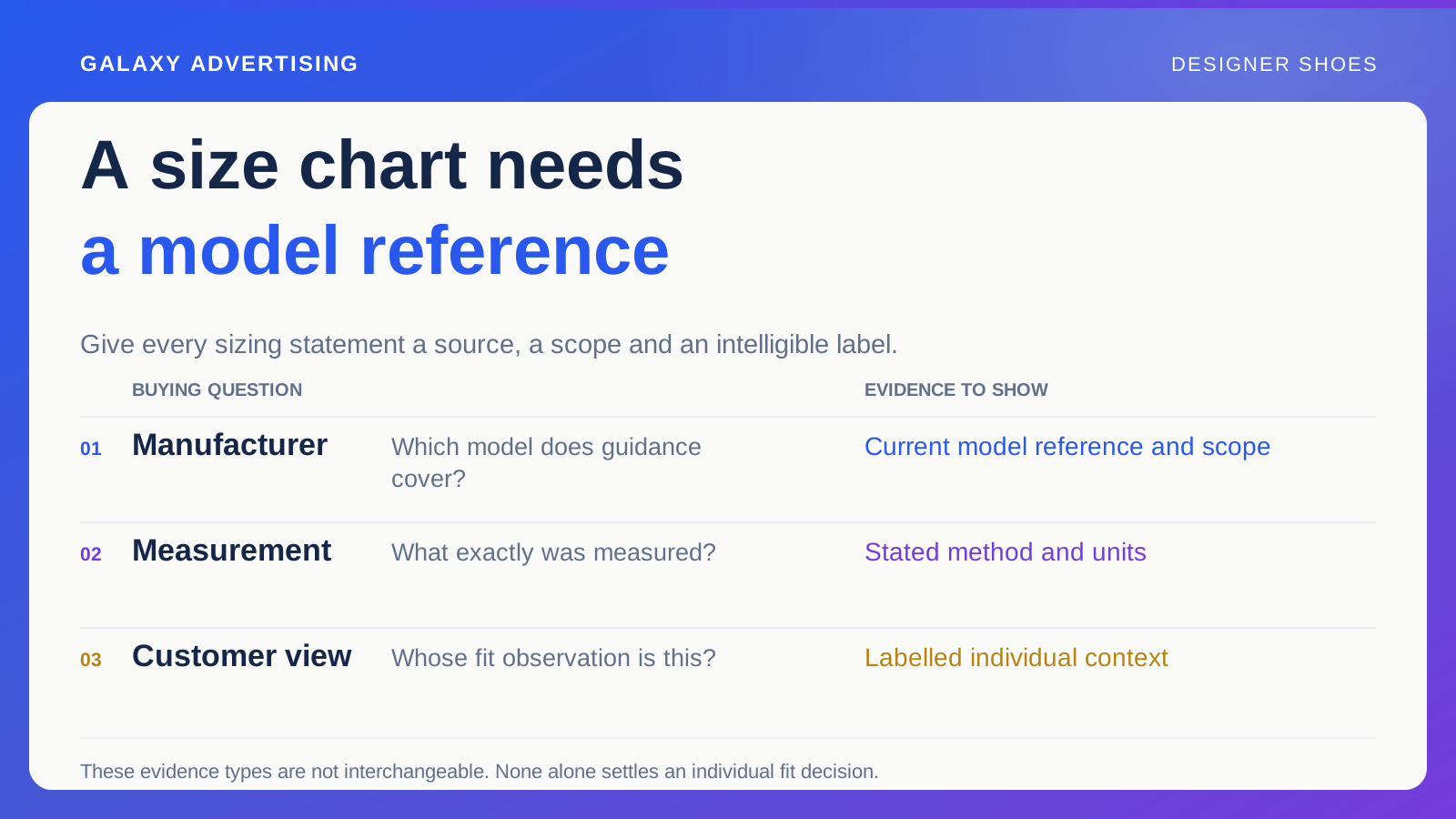
Provide current product names, finishes, images, relevant specifications and the authoritative source for model specific sizing guidance. Separate manufacturer facts from your own descriptions and individual customer observations. Those sources do not all support the same claims.
Keep the item references linking assets, product pages and store records. Two similar looking models can otherwise create a convincing handover in which the photograph shows one pair and the wording describes another. Plausible is not the same as accurate.
Write down what remains unresolved. If nobody can verify a fit or construction statement, the agency should narrow the proposition or seek the right source. A looming production deadline does not make a stronger unsupported claim acceptable.
Show what is actually ready to promote
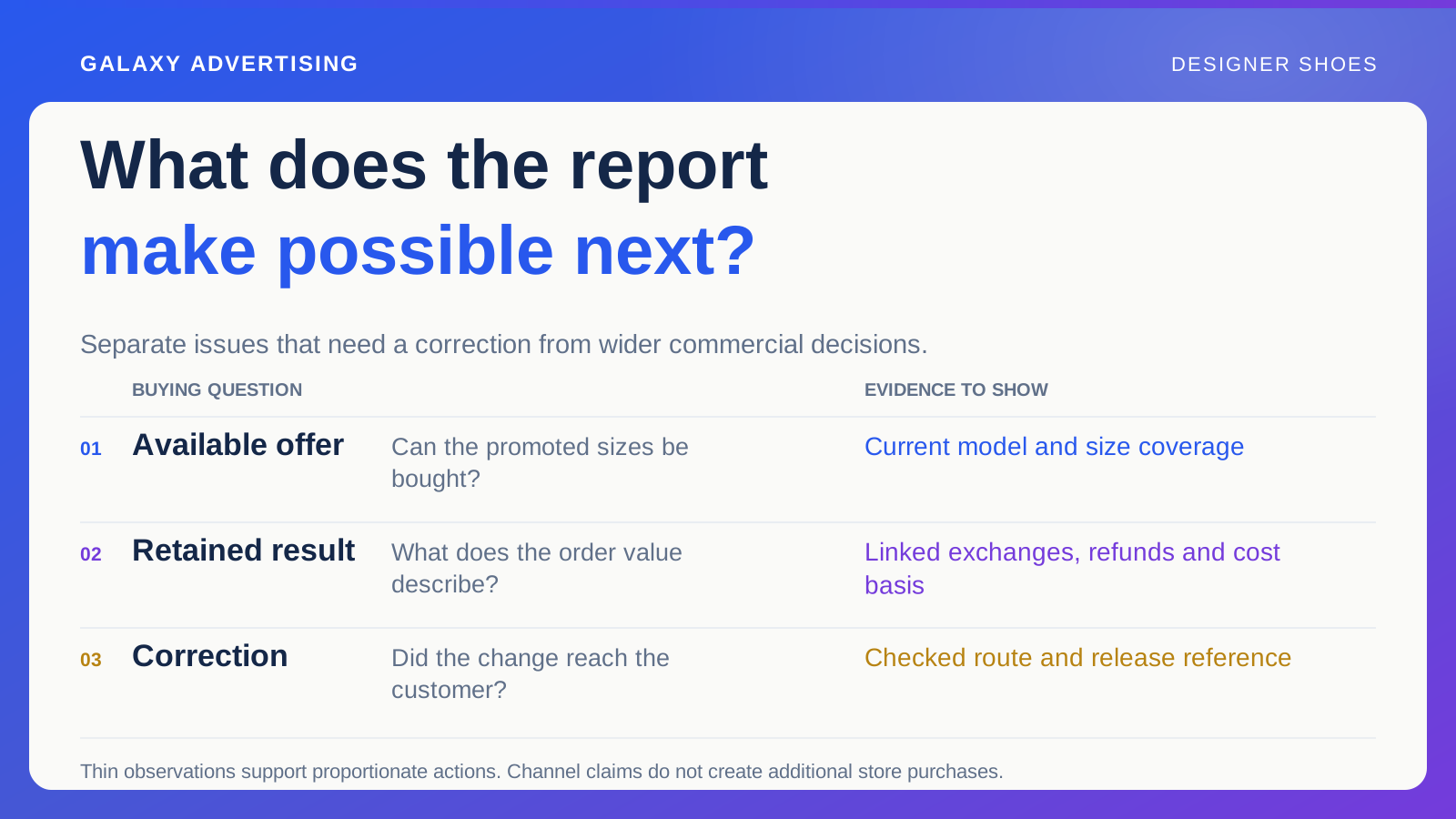
Share current useful size coverage for the models under consideration. A bestseller list cannot tell the agency enough if its strongest pair offers almost nothing the intended customer can purchase. Promotion needs a purchasable offer behind it.
Name the person who confirms supply changes, then explain how those updates reach the campaign owner. Give them a real information and response route. Asking everyone to communicate better leaves the practical question unanswered.
Describe credible alternatives and their limits. Another pair might serve a similar styling task but still need its own product and size guidance. Establish that distinction before a substitute offer implies that two models are equivalent when the evidence does not say so.
Explain the money behind your target
Provide your approved definitions for revenue, retained orders and relevant variable costs. Explain how exchanges, refunds, discounts and fulfilment affect what you can afford to spend on acquisition. Otherwise the target arrives without the reasoning that makes it useful.
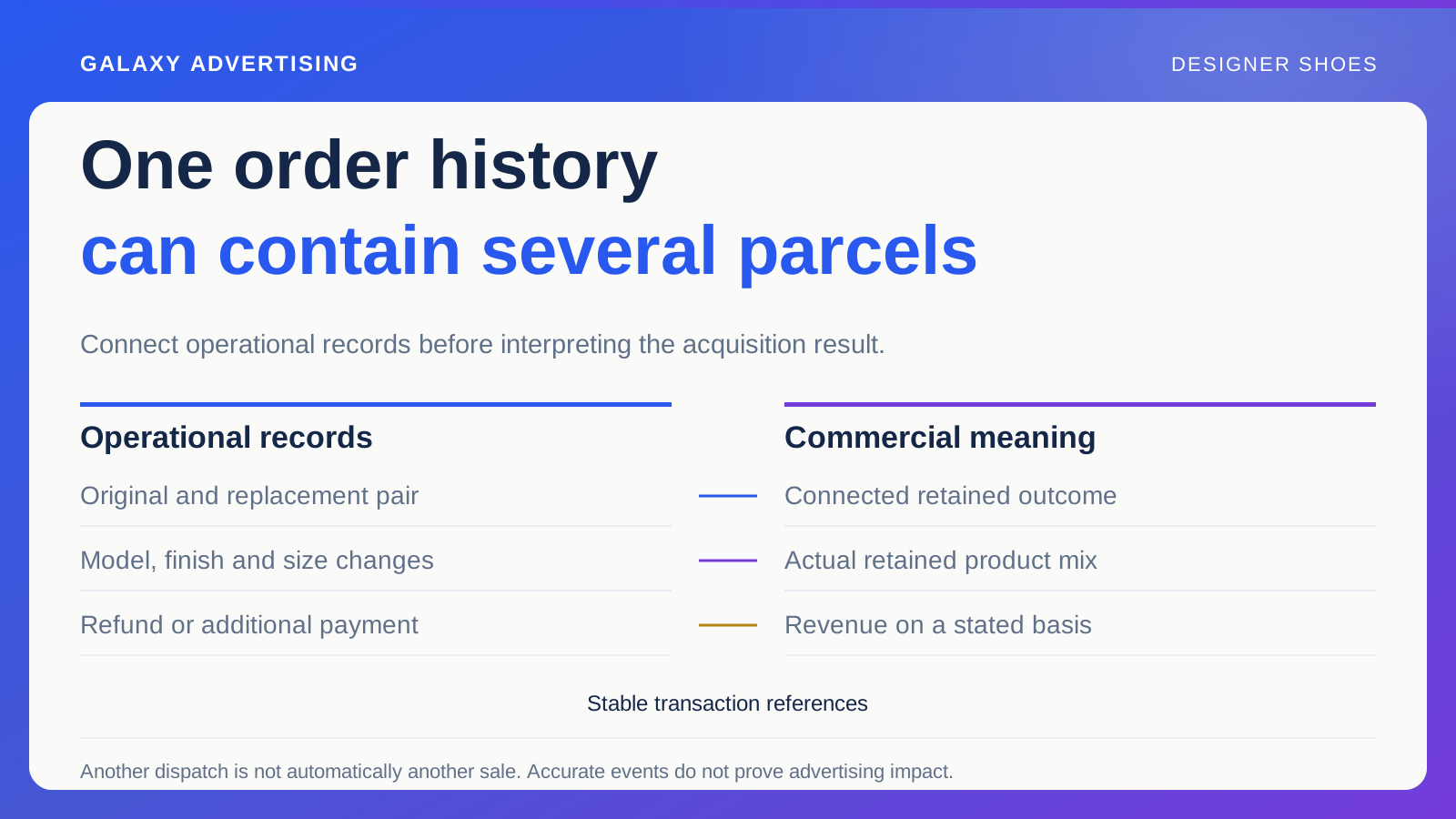
Use a small worked transaction history to show those definitions in practice. A replacement parcel is not automatically another acquired customer or full sale. A concise example can make that clear faster than an unexplained spreadsheet total.
Identify who updates cost assumptions when the range or offer changes. Your target should remain a working commercial reference rather than survive untouched after its calculation has become obsolete. Share the relevant information through the business's approved access arrangements, keeping the access appropriate to the task.
Make it clear who can say yes and who can act
Name the approvers for product claims, creative, promotions and spend. Also identify who can change the product page or order system when a recommendation depends on another team. Approval and implementation may sit with different people.
Use stable version references and keep final approval with the actual file, caption and destination. A comment approving one image should not quietly approve a later edit showing another finish or promising more. The approval needs to travel with what customers will see.
Agree where uncertain facts and urgent offer changes go for a decision. You need a workable route, not such an elaborate chain that people improvise around it. When stronger evidence cannot arrive in time, keep a narrower accurate proposition available.
Pass on the thinking behind the creative
For important assets, explain the buying question, the available observation and the main limitation. A performance ranking and a file name do not tell the next team why something was made or what it taught you.
Include inconclusive work when it can prevent repetition. An asset might have unclear model identification, poor size availability or too little evidence for a firm judgement. Keep those explanations separate. They call for different next steps.
Let the incoming specialist challenge the interpretation. A handover supplies context, not permanent rules. Ranges and commercial conditions change. The partnership needs space to reconsider a conclusion without casually discarding the evidence behind it.
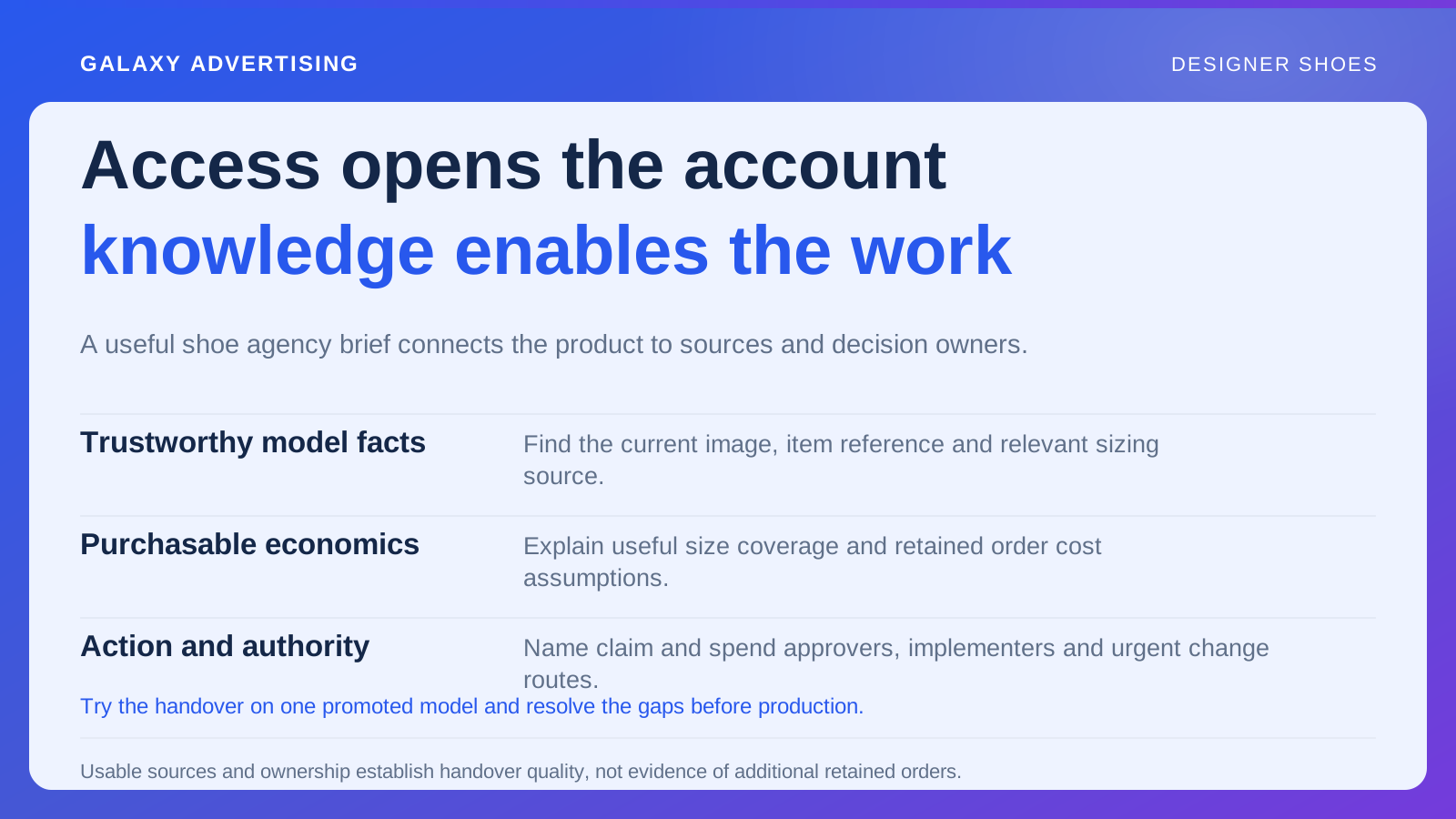
Test the handover with one promoted model. Ask the specialist to find the current image, locate size information, identify the commercial assumption and name the person authorised to resolve a change. Hesitation points to a useful gap before production starts. This checks whether the sources work in practice, rather than merely exist somewhere in a substantial shared folder.
Agree what a useful review should deliver
Ask the agency to connect completed work with commercial observations and a recommended next action. You should understand what needs your approval, what another team must implement and what the agency can do itself. Those distinctions make responsibility usable.
Separate evidence of delivery from evidence of impact. A new asset proves that work was delivered. Additional retained orders need another basis of judgement. Equally, uncertain attribution should not erase a verified improvement in product accuracy.
The strongest handover removes avoidable guessing while leaving room for specialist judgement. When a model's information, purchasable range and economics have clear owners, both parties can assess the work fairly. Account access opens the door; the transferred knowledge determines what the agency can responsibly do once inside.