The writer opens your brief: a keyword, a word count and three competitor links, followed by a request for a definitive guide. Your product facts are missing. So is the buying decision the page should help someone make.
The resulting copy could sound fluent while its central answer rests on an assumption. That is a difficult foundation for useful search content, however polished the introduction.
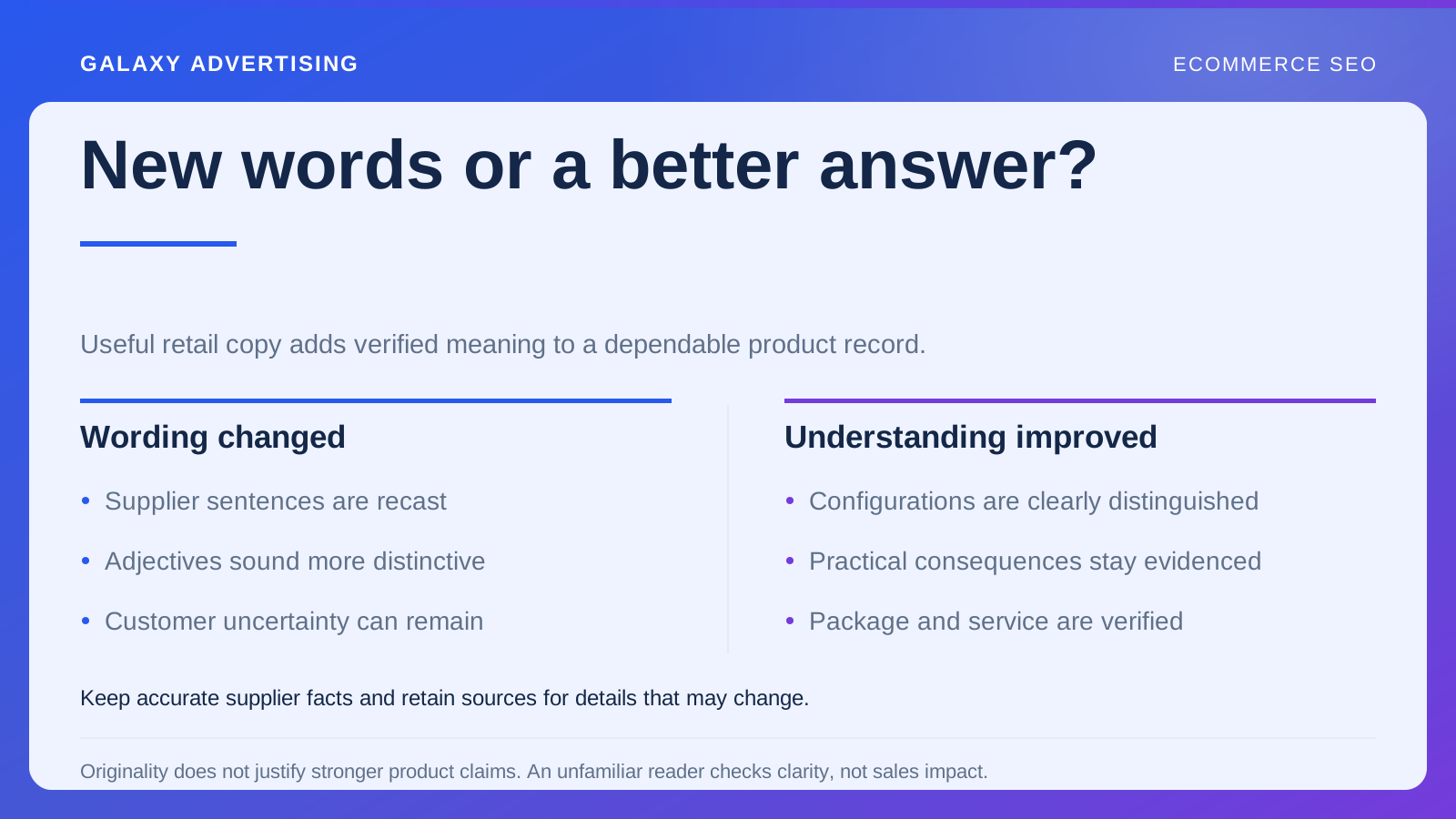
A stronger brief defines the information readers need and the evidence you can supply. It creates room for useful judgement, rather than asking the writer to rearrange familiar headings and dress an unsupported conclusion in better adjectives.
Give the page one job a reviewer can recognise
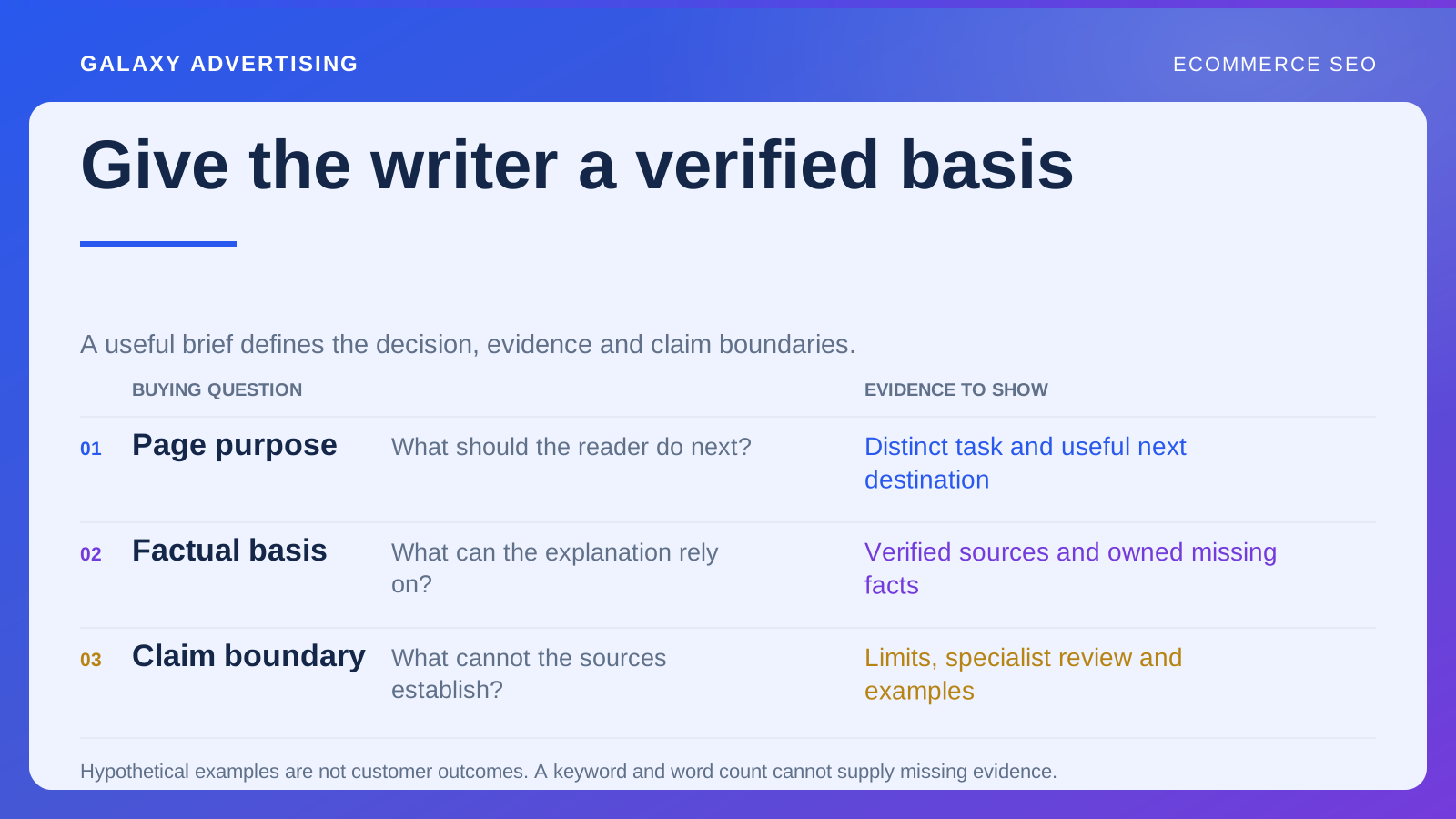
Describe what the reader should be able to do. A guide could compare fixed and extending tables, identify dimensions needed for further investigation or explain what a service includes. Those are tasks you can actually review.
Distinguish the guide from the collection and product pages. Explain why a separate article helps and where it should lead. If it only repeats a commercial page at greater length, reconsider whether you need another URL at all.
“Educate customers” is too broad to tell an approver whether the answer is complete. Explaining the differences that affect choosing between particular configurations gives writer and reviewer a practical standard. Make the task specific enough to use.
Assemble the facts the explanation depends on
Identify the relevant product attributes, service conditions and supporting references. Separate information already verified from details still awaiting confirmation. Both belong in the brief, with their status made clear.
Give missing details an owner. A deadline does not authorise the writer to infer a specification from a photograph or repeat a claim from another retailer. You can identify a gap honestly without pretending it has been answered.
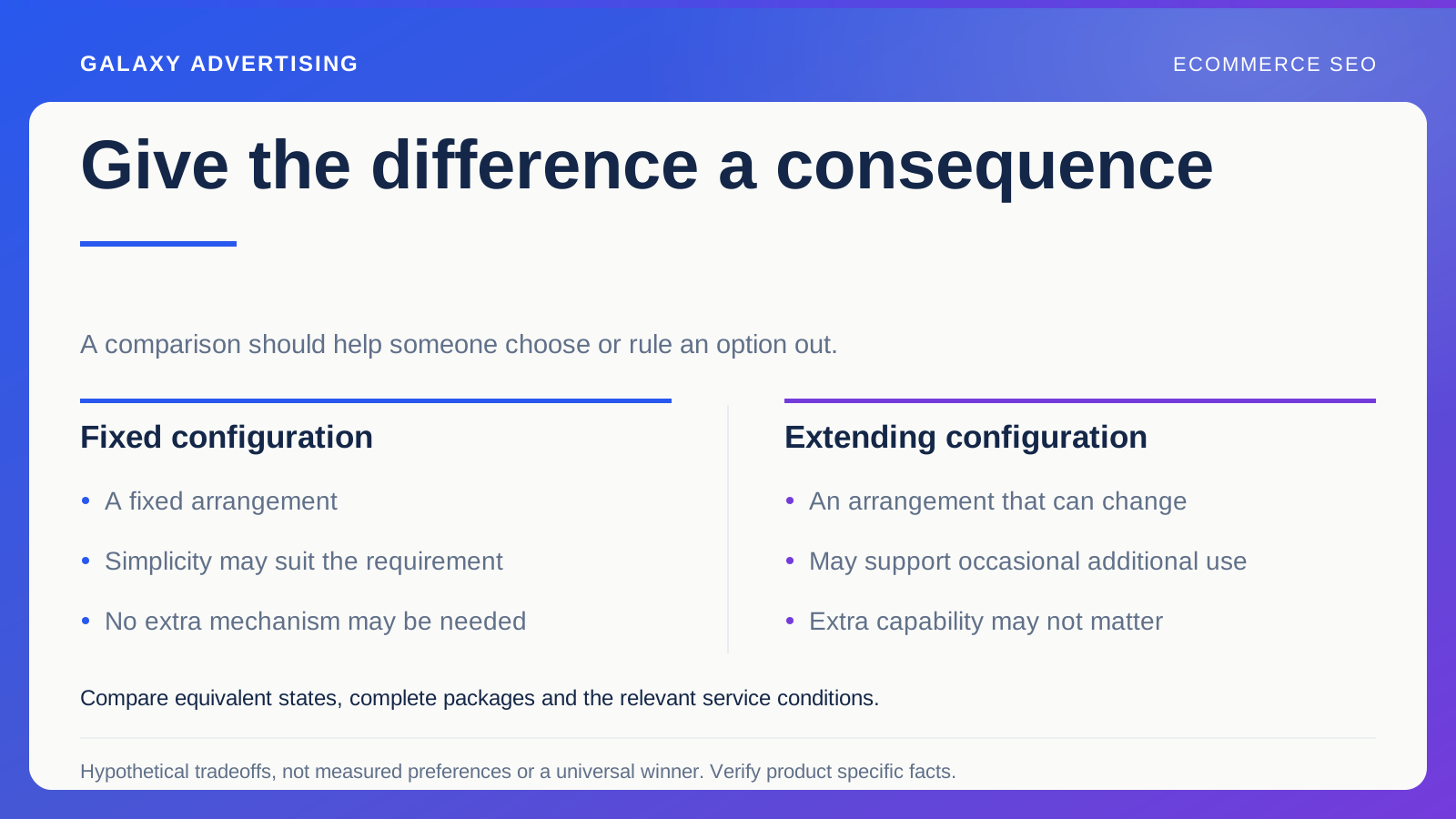
For a hypothetical table comparison, supply actual dimensions and mechanism references for the promoted models. The writer can then explain meaningful differences while keeping documented information distinct from their own editorial recommendation. Evidence makes that judgement possible without blurring what is known.
Be clear about the claims they cannot make
Record important limitations around the product and its intended use. Technical, safety and compliance questions may call for manufacturer information or another qualified reviewer. Marketing judgement is not automatically enough to settle them.
Clear boundaries strengthen the explanation. They prevent apparently helpful copy becoming an unsupported promise. Your writer can send someone to the correct verified information without filling every uncertainty with a reassuring sentence.
Distinguish a general comparison from an individual recommendation too. The guide can explain differences and what readers should investigate. It cannot establish that a product suits every reader when their individual circumstances have not been assessed.
Ask for an example that reveals the tradeoff
Commission a worked example that makes the choice concrete, rather than an anecdote added for decoration. Label hypothetical examples so readers do not mistake them for client outcomes or measured customer behaviour. The assumption should remain visible.
In the table guide, one hypothetical household might value flexibility while another prefers a fixed arrangement. Show why the feature matters in those circumstances. Do not turn the example into a claim that the more expensive option is universally superior.
Avoid giving every article a reusable story skeleton. Different questions deserve different examples and reasoning. Shared, accurate product references and reliable review can make the work efficient without publishing the same argument under different product names.
Plan evidence in the pictures and purpose in the links
Say which image or diagram would help someone assess the answer. A configuration comparison may need labelled views of the real products, rather than a generic room photograph that leaves the distinction unexplained.
Provide the references and say what the visual must preserve. Where visual tools are used, proportions and included components need to stay accurate. Your writer should not have to reconcile a technically correct paragraph with an invented illustration.
Choose links around the next task. A product, collection or supporting guide should help the reader continue the decision. Requiring a fixed number of internal links without explaining why can encourage distracting connections instead of a coherent buying route.
Separate checking a fact from preferring a sentence
Give the factual reviewer a checklist based on the brief’s references and claims. Give the editorial reviewer clarity, completeness and the page’s relationship with the site. One person may hold both roles, but the distinction remains useful.
An incorrect specification and a preference for another opening require different responses. The writer needs to know which feedback calls for verification and which concerns presentation. Otherwise a substantive correction can get lost among stylistic preferences.
Review the substantial draft before polishing every detail. A final proofread cannot fix a central comparison or page role that is wrong. Challenge the answer while there is still time to improve its evidence.
Before the full draft, ask the writer to flag any central conclusion the supplied sources cannot support. A short query now can stop a whole explanation growing around an uncertain premise. You can obtain the missing fact, narrow the question or remove a claim the business cannot responsibly make. Better foundations preserve editorial depth more effectively than requesting confident prose around a gap.
Leave behind a page somebody can maintain
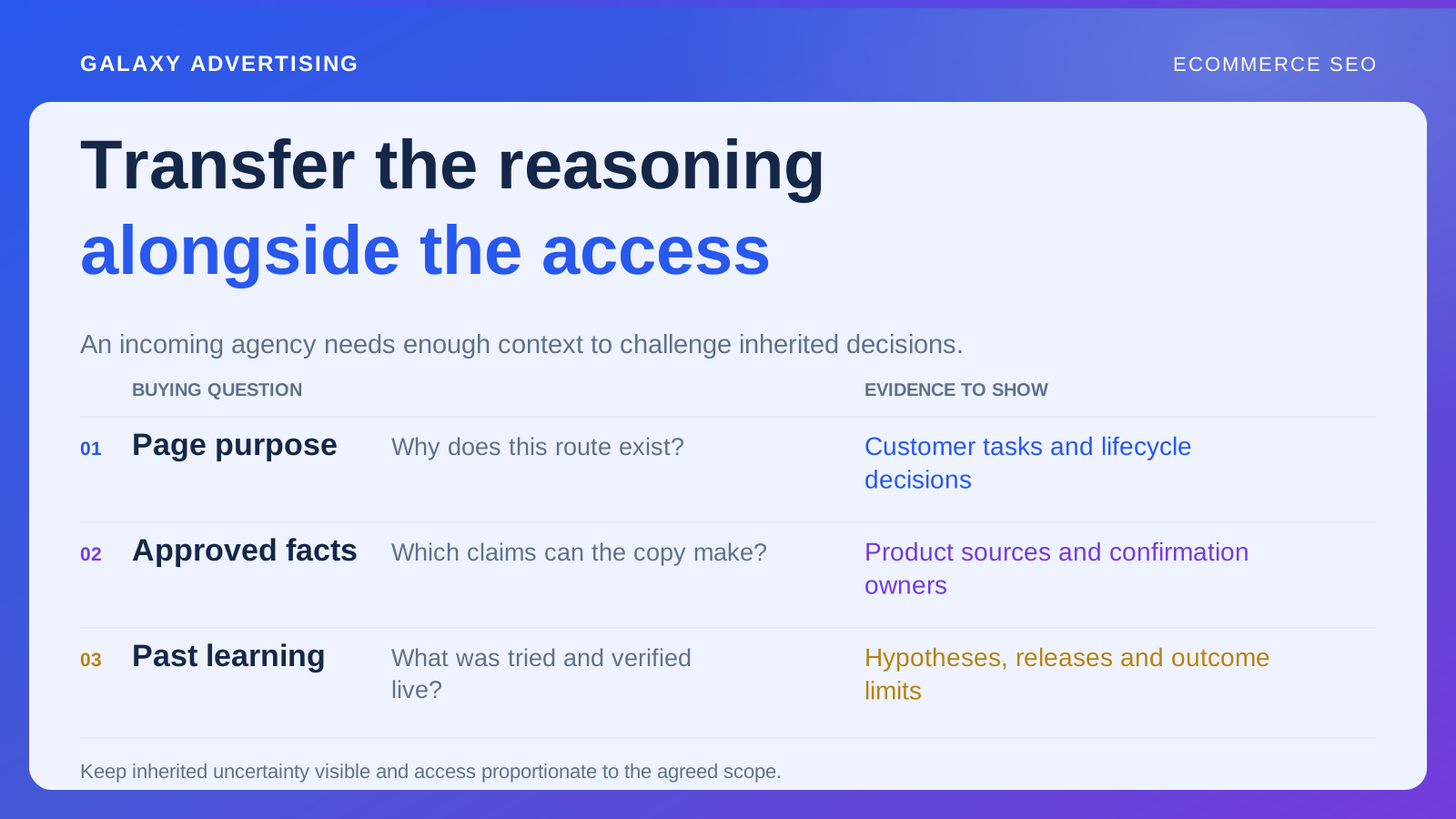
Retain approved sources, item references and ownership of information likely to change. The next editor should know which statements depend on a current configuration or service arrangement, rather than having to reconstruct the research.
Verify the implemented page, including links and images. Even a correct draft can become confusing when its destination differs from the approved plan or its visual evidence is omitted. Review what readers encounter.
A useful brief makes writing accountable while leaving room to explain clearly. It identifies the answer, evidence, boundaries and next decision. That is a more dependable basis for content than a word count and an instruction to beat pages whose assumptions your business has never checked.