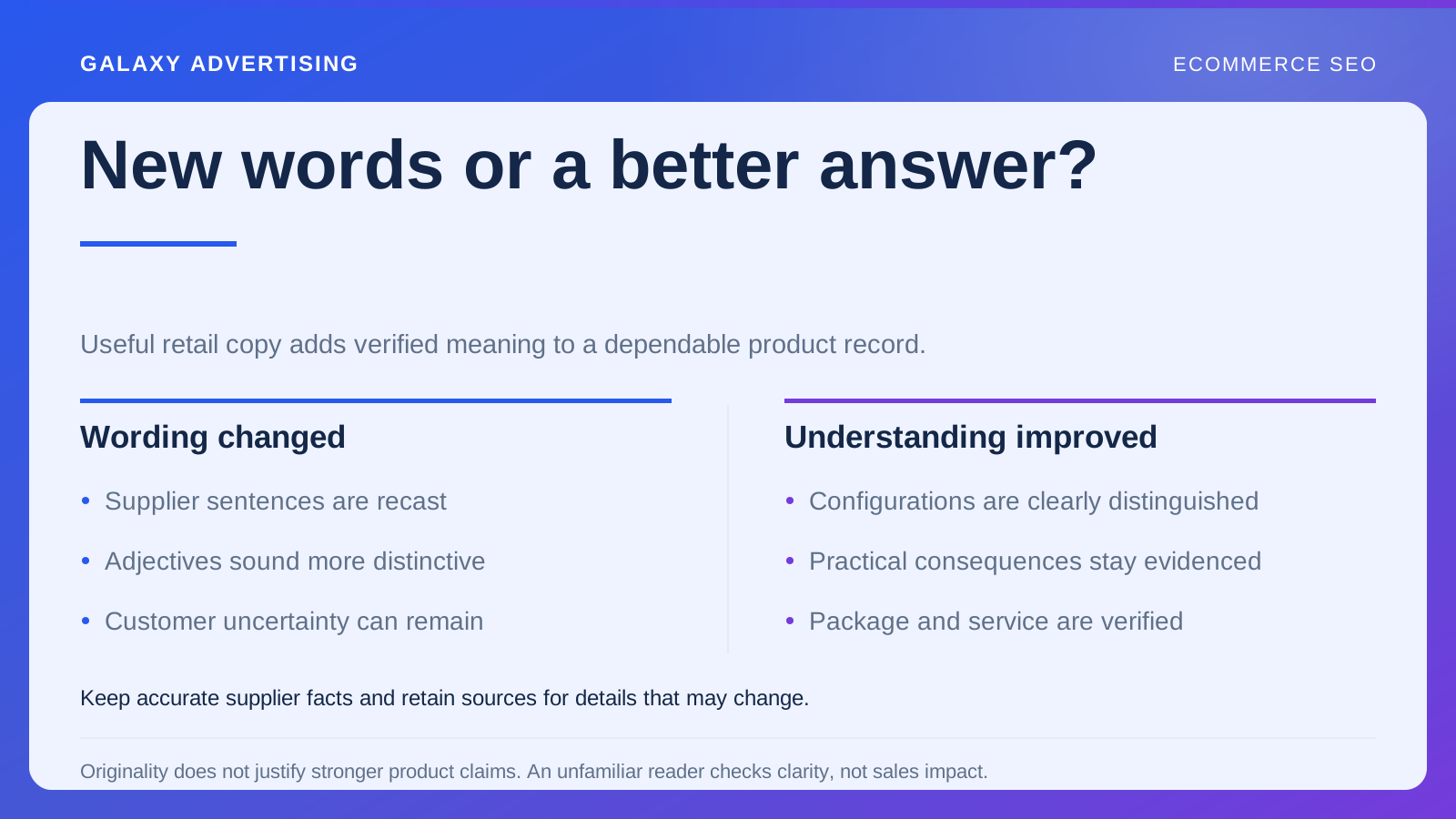
The mistake is counting every rewritten supplier sentence as a useful improvement. You can make a table description sound completely different from the other shops selling it and still leave a customer unsure which configuration they need or what your offer includes.
Different wording is only part of the job. Useful differentiation adds accurate information or explanation that helps someone assess the purchase.
You can keep the supplier’s verified facts and still contribute something valuable. Originality does not require you to invent a stronger product than the one you sell.
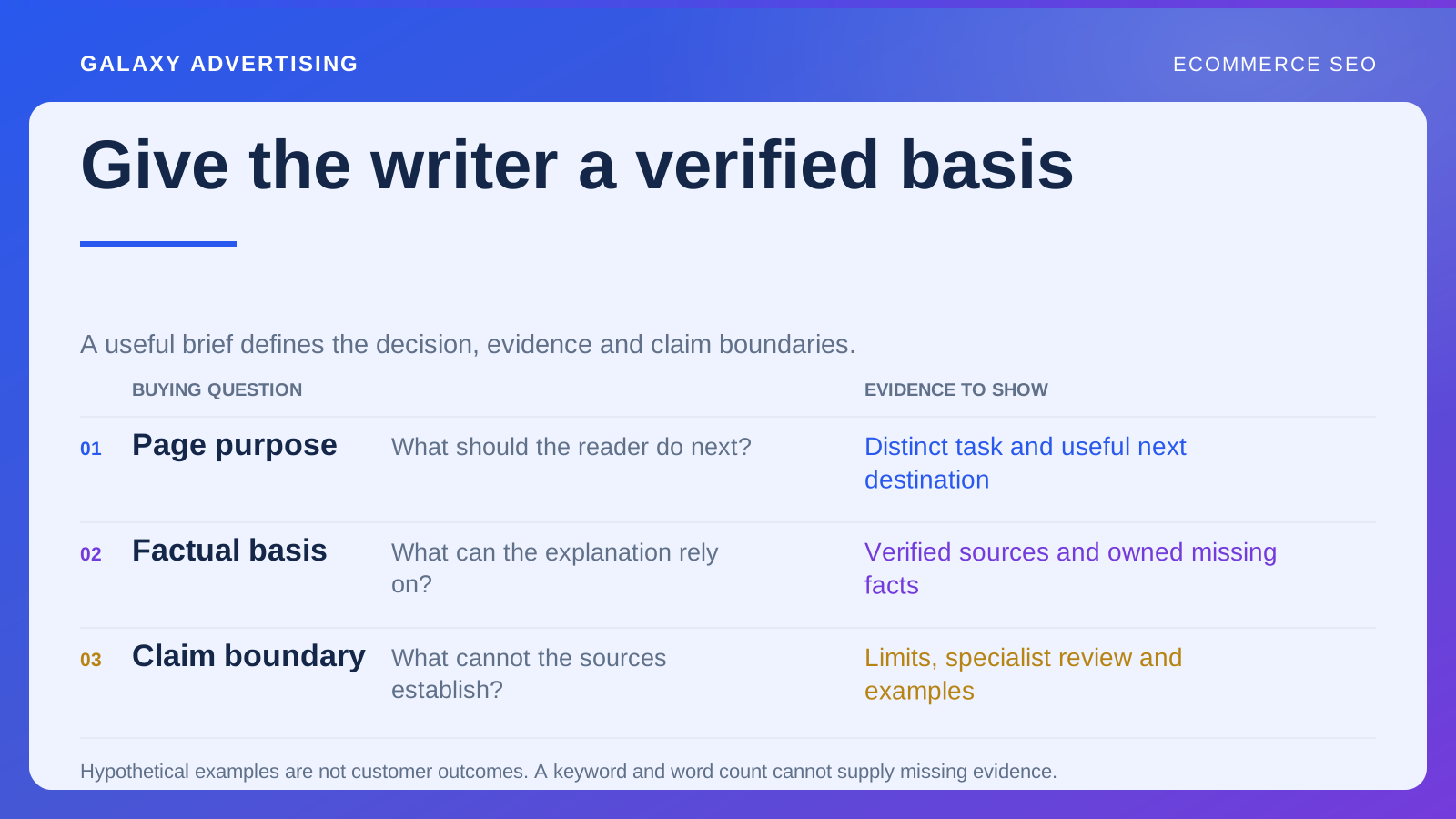
Keep the facts that make this item what it is
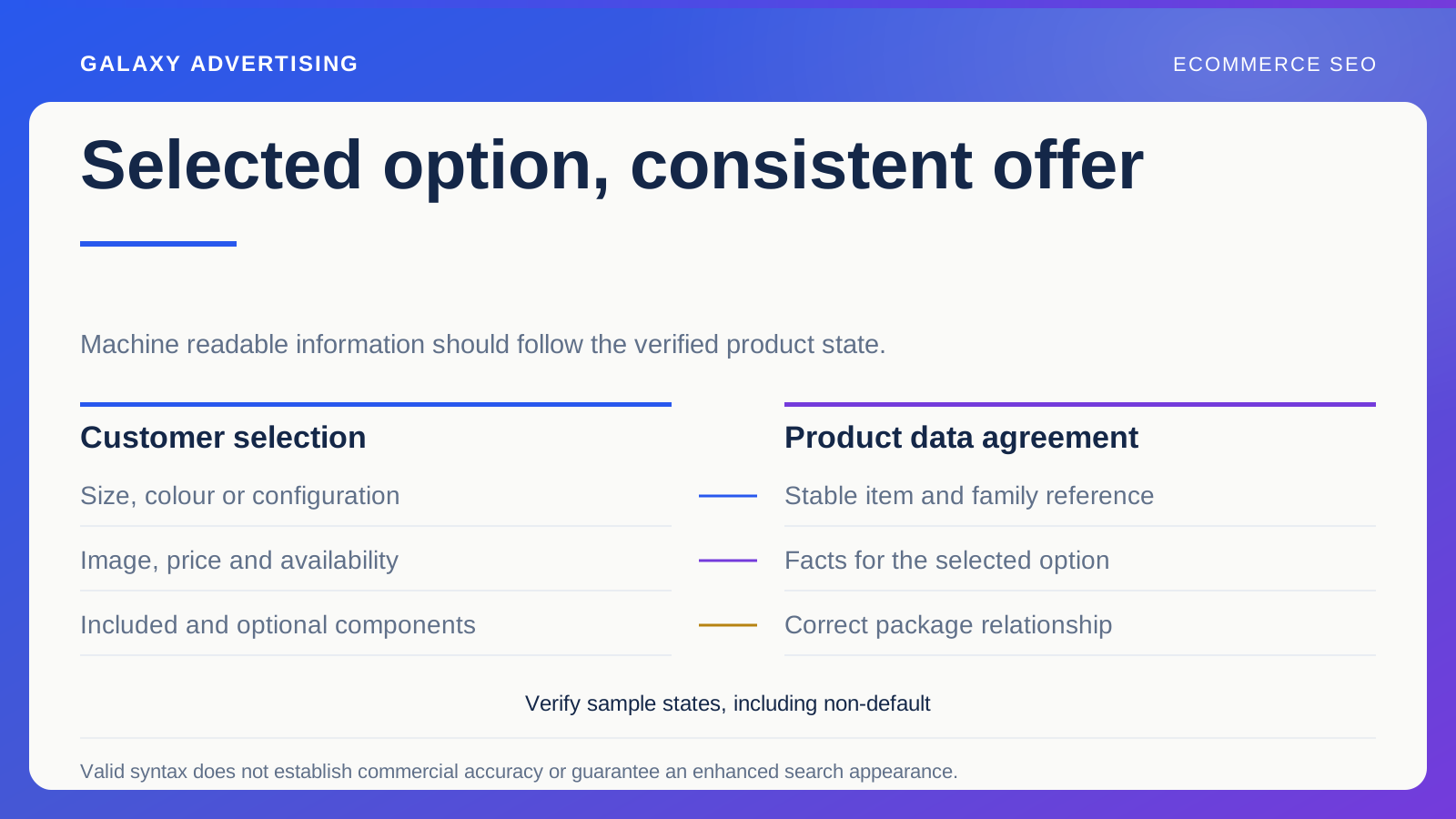
Establish the model, dimensions, materials, configurations and included components from reliable, current references. Keep them consistent across product data, the website and supporting guidance. The same item should not acquire different specifications as the visitor moves around your content.
Be careful when replacing technical language with something more attractive. Clarity can improve while meaning changes for the worse. If a specification is uncertain, seek clarification rather than interpreting a photograph or borrowing a claim from another retailer.
Keep a source record for significant details. When the supplier updates its range or another editor revisits the page, they should know where the information came from. A distinctive voice belongs on a dependable product record, rather than in place of one.
Explain what a feature changes for the buyer
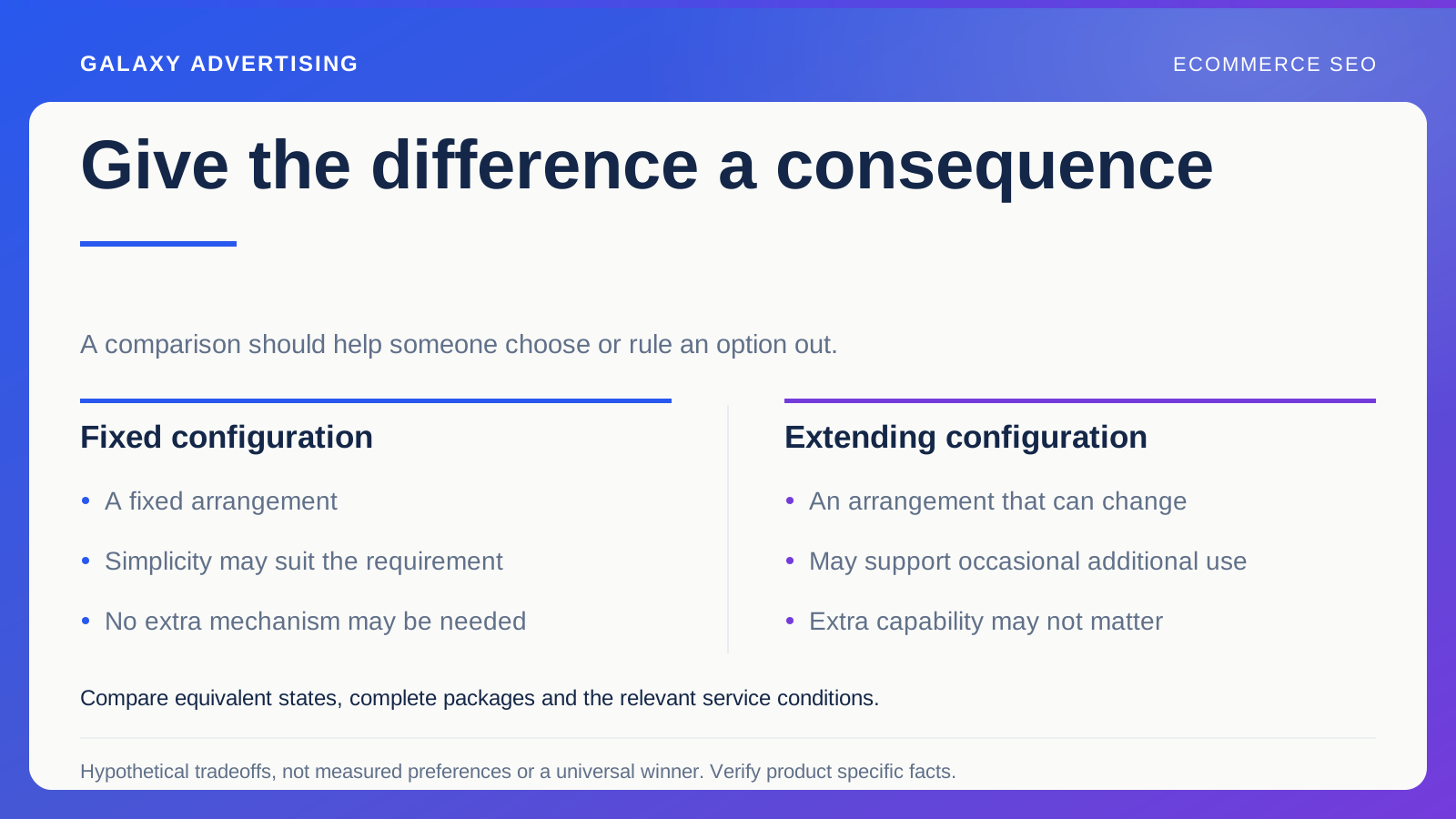
Choose a difference that affects selection and explain its practical consequence plainly. An extension arrangement may change how someone uses the table. A dimension may affect which spaces they need to investigate before choosing it.
Do not ask a modest fact to support a universal promise. A larger surface does not establish suitability for every family. An appealing finish does not prove durability in every condition. Keep the conclusion within the evidence you actually have.
For a hypothetical dining table, you could clearly distinguish its fixed and extending configurations, with the relevant dimensions for each. Those measurements might come from the same supplier reference other stores use. Making the distinction understandable still adds practical value for the reader.
Tell them what buying from you actually includes
Explain the services and conditions your business provides for this item. Availability, package contents and relevant delivery arrangements can be meaningful differences even when the underlying product is widely sold elsewhere.
Verify those details with the operational owner. A general statement on the site may not cover every location or configuration. Do not borrow a more reassuring service promise from another part of the range simply because it makes this description read better.
Make included and optional elements distinct. A pictured accessory or installation service can alter someone’s understanding of value. Resolve that relationship in the copy, rather than leaving the customer to discover the difference later in checkout.
Start with questions people actually ask
Ask your sales and service colleagues what needs clarification before people choose this product. A recurring question may expose information the supplier description takes for granted but the retail customer does not know.
Investigate the answer before publishing it. Installation or compatibility questions could require manufacturer confirmation. The fact that somebody needs an answer does not make marketing qualified to improvise technical advice on the page.
Preserve the enquiry’s context too. An answer useful for one configuration may not apply to its whole product family. Your editorial job is to make that distinction clear, rather than stretch every helpful response into a confident claim about the entire catalogue.
Let the images provide evidence
Accurate photographs and diagrams can explain features that are awkward to describe in prose. A labelled configuration view may help a customer more than another paragraph praising the product’s versatility. Choose the evidence for the question it resolves.
Keep the image connected to the purchasable offer. Identify a particular finish or optional arrangement when it appears. An elegant room scene should help someone assess the item, rather than leave them uncertain about what arrives.
Review generated or substantially edited visuals against real product references. Improving the scene must not alter proportions, controls or components. Give the writer and image reviewer the same approved facts. Otherwise polished copy and polished imagery can quietly contradict one another on the finished page.
Keep the product page and the guide doing different work
The product page should concentrate on the item and the decisions needed to assess it. A broader guide can explain questions spanning several products, as long as it gives the reader a useful route back to the relevant range.
Repeating the same long explanation on every product page simply to increase content volume adds little. Present genuinely shared information consistently, then link to further detail where that helps. The customer should not have to work through the same article on every item.
Nor should every product destination become a guide to the whole category. Purpose gives you the distinction. Specific facts and a clear offer come first on the item page. Broader editorial judgement belongs where it serves a real decision across products.
In your source record, distinguish temporary retailer facts from enduring product details. A delivery estimate or promotional package may expire sooner than documented dimensions. The maintenance owner needs to know which statements to confirm when the offer changes. Richer copy should remain a maintainable asset, rather than become less dependable with each update to the range.
Ask what the new version helps someone understand
Give the revised page to an unfamiliar reader and ask what it adds beyond the supplier description. Can they name a meaningful distinction, a clearer condition or a practical route to their next decision? That tells you more than counting replaced words.
Check accuracy and maintenance alongside originality. A distinctive page can still make unsupported promises or depend on temporary details nobody owns. Neither is a successful improvement.
Your contribution is informed selection and clear communication. Explain why the product belongs in your range, how its configurations differ and what the purchase actually includes. That gives the page something useful of its own while keeping the verified facts a responsible buying decision depends on.