It's tempting to brief an electric bike video with a city street, a country path and an impressive distant landscape, then call the whole thing freedom. The edit moves beautifully. The viewer still knows little about the particular model, the equipment shown or the practical task it helps them consider.
You can keep the visual appeal. Start with one recognisable situation and decide what the camera must establish. The useful discipline is to show the actual product clearly while keeping technical performance and individual suitability within what the evidence can support.
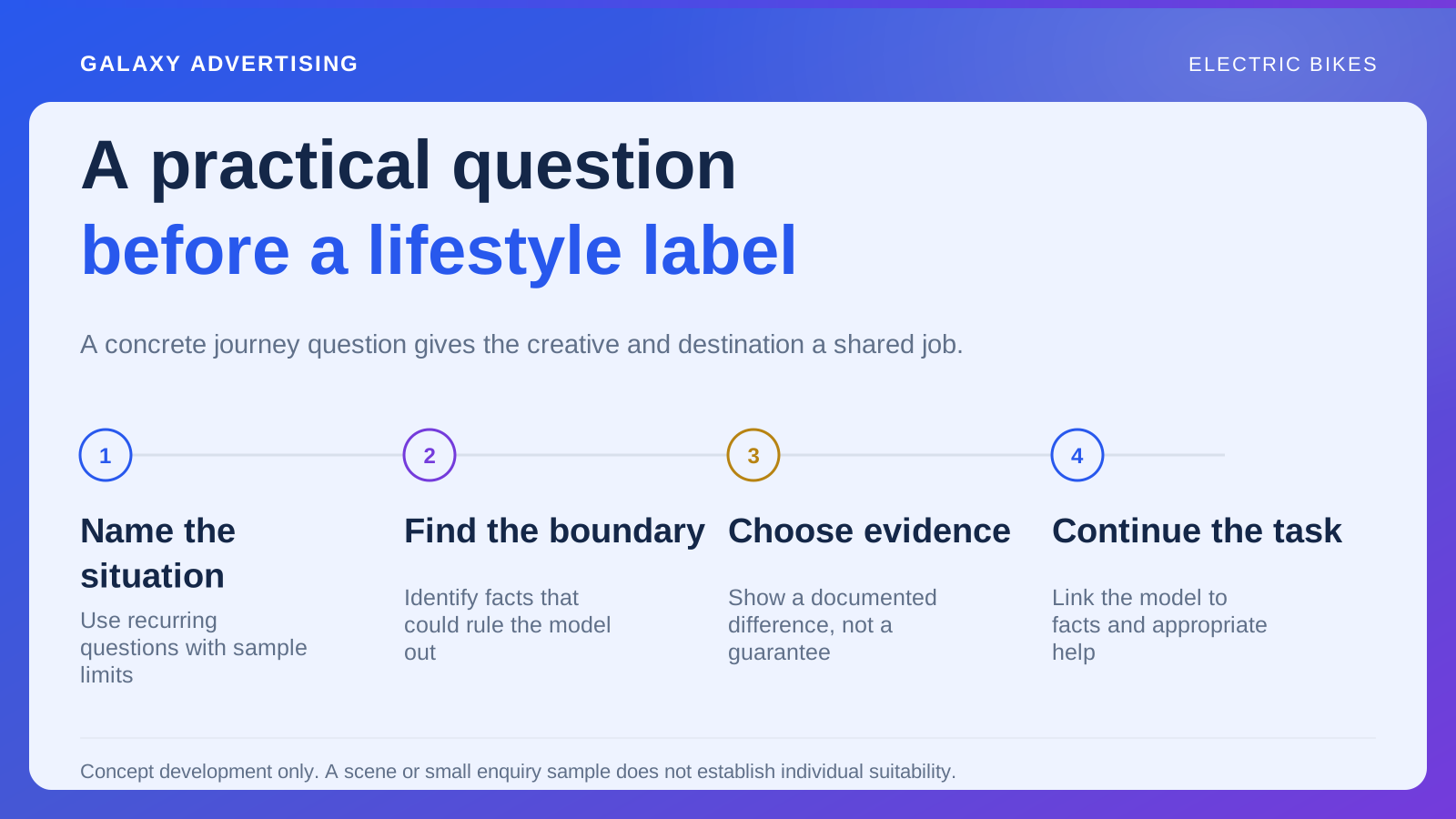
Choose a question worth showing
Select something your retailer encounters and the product information supports. It might concern physical scale, included carrying equipment or the arrangement of a documented feature. Give the demonstration a question it can genuinely help answer.
A short advert can't settle every detail of someone's intended use. Some decisions need more information and appropriate assistance. Creative can introduce the question and direct people to a credible way of resolving it, without pretending the footage completes the assessment.
For a hypothetical storage concept, show the model in a clearly represented space and put the relevant dimensions at the destination. Keep the boundary clear: a convenient filmed arrangement doesn't establish that the bike will fit every household. Let viewers check their own circumstances.
Say what each shot must make clear
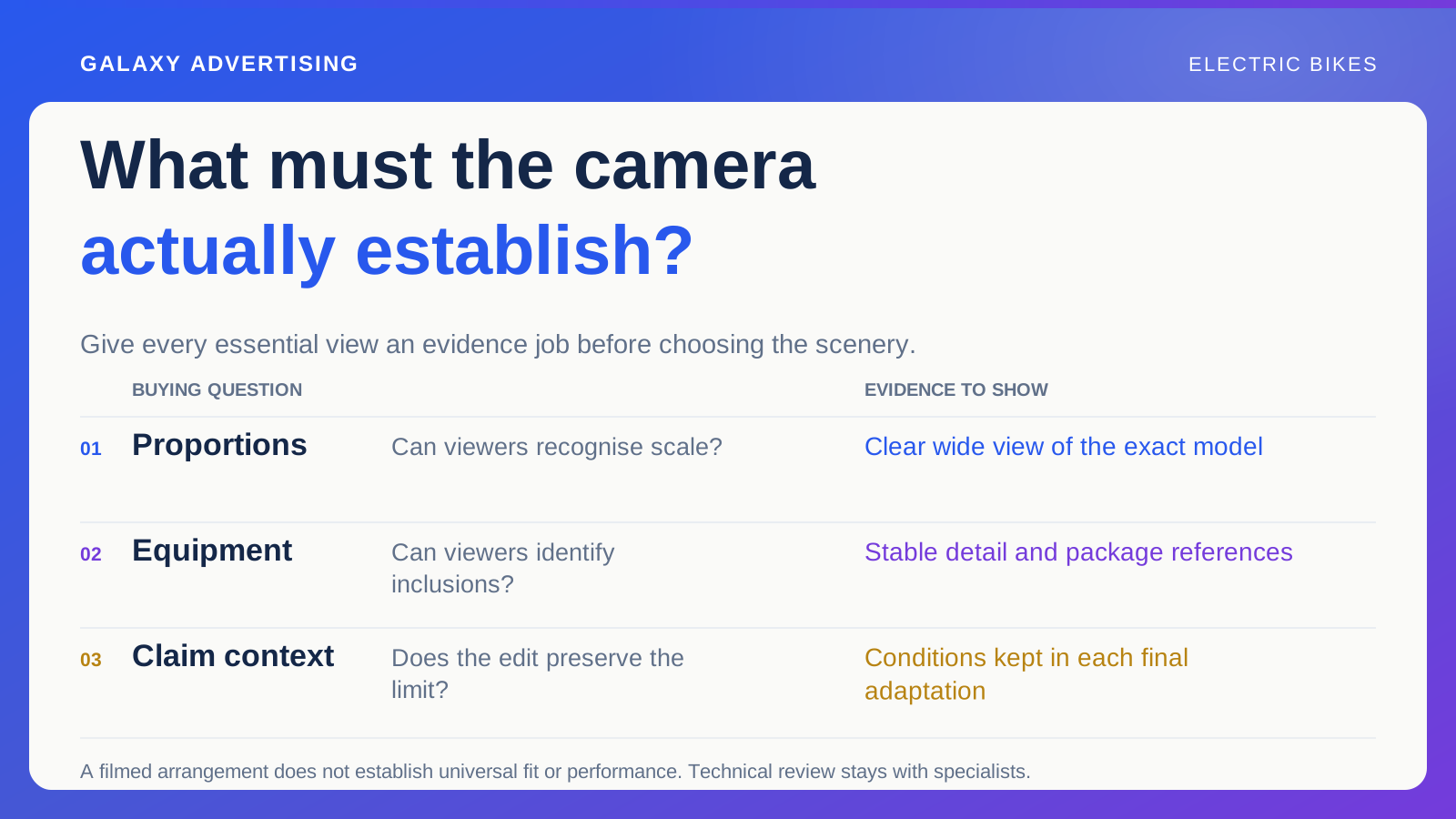
Give the producer a small set of essential evidence requirements. A wide view can establish proportions. A stable detail can identify included equipment. Where appropriate, a sequence can explain a documented action. Each should contribute a useful observation.
Separate that essential material from optional atmosphere. The landscape can support the story, but it can't replace a clear view of the item you're asking somebody to consider. A memorable scene still needs an identifiable product within it.
Think ahead to edits that could remove context. Smoothly cutting between different versions can make the package unclear. Prevent the confusion in the brief, before an editor has to make sense of a folder of visually similar footage. A seamless transition isn't proof of a consistent offer.
Supply the exact references for production
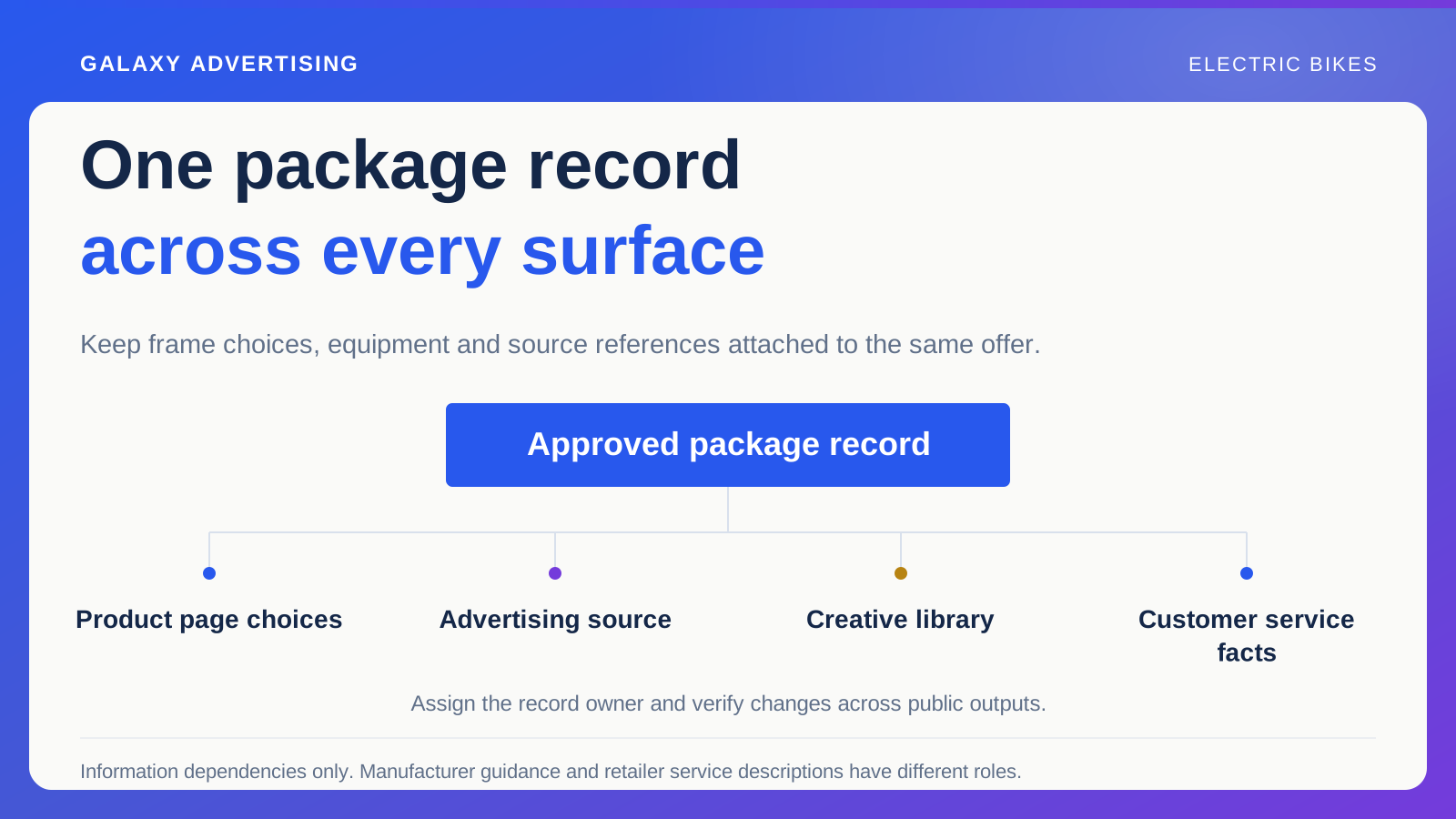
Include model and configuration identifiers, accurate images and manufacturer information relevant to the scene. Label optional accessories so they don't become an accidental promise about what the quoted price includes. Production needs to know where the package ends.
Have someone with appropriate product knowledge verify those references. A creator shouldn't need to infer technical distinctions from small photographs or settle conflicting supplier descriptions during filming. Resolve those questions through the right source.
For generated imagery or visual effects, specify which characteristics must remain unchanged. Review proportions, visible controls and included equipment separately for accuracy. An image can be convincing while depicting a version you can't supply. Visual credibility and product accuracy still need their own checks.
Keep the conditions behind the promise
Identify statements that depend on documented circumstances. Keep the supporting source and relevant qualifications available to copywriters and edit approvers. They need to know what the claim means before deciding how to express it.
Don't let an attractive route imply an unconditional performance promise. Filming a scene doesn't establish that customers will get the same result in different conditions. The visual implication deserves the same scrutiny as the sentence beside it.
Use an appropriate production process and competent people where activities require that expertise. The marketing brief defines the communication; it shouldn't improvise instructions for operating or modifying the bike. Refer technical and safety questions to relevant documented guidance and responsible specialists. Keep those responsibilities clear rather than expecting the creative plan to answer them.
Treat each adaptation as a whole advert
Identify the formats your campaign team plans to use and check current requirements for the intended placements. Don't assume one crop preserves the meaning of every scene. The final viewer sees an output, rather than the original master you approved.
A narrower or shorter edit could lose a scale reference or qualification. Review what somebody seeing only that version would understand about the model and offer. Important context cannot help them if it has been cropped away.
Keep essential text readable on a phone. If an idea needs a dense paragraph of corrections to avoid misleading people, revise the idea. Shrinking the words further isn't a useful answer. A simpler supported claim is usually easier to communicate responsibly than an ambitious promise surrounded by difficult qualifications.
Ask the production team which assumptions they'd otherwise make while filming. They may need to know whether an accessory is included or which configuration belongs in a close view. Settle those points in the brief so they can exercise creative judgement without guessing about the offer. An attractive but inaccurate reference shouldn't become the foundation for every adaptation.
Make approval responsibilities visible
Assign product accuracy, service promises and communication clarity to people able to review them. One person can hold several roles. The responsibilities should still be identifiable, so the team knows which question each approval answers.
Inspect a rough sequence before final finishing. An inaccurate package or missing view is more efficiently corrected before multiple polished versions reproduce the same problem. Make this a useful check while the work remains easier to change.
Keep the final asset with its caption and destination. Changes around accurate footage can alter its meaning later. Approval should identify the complete communication customers encounter, including the price and package, rather than a video detached from its offer.
Let the result improve the next brief
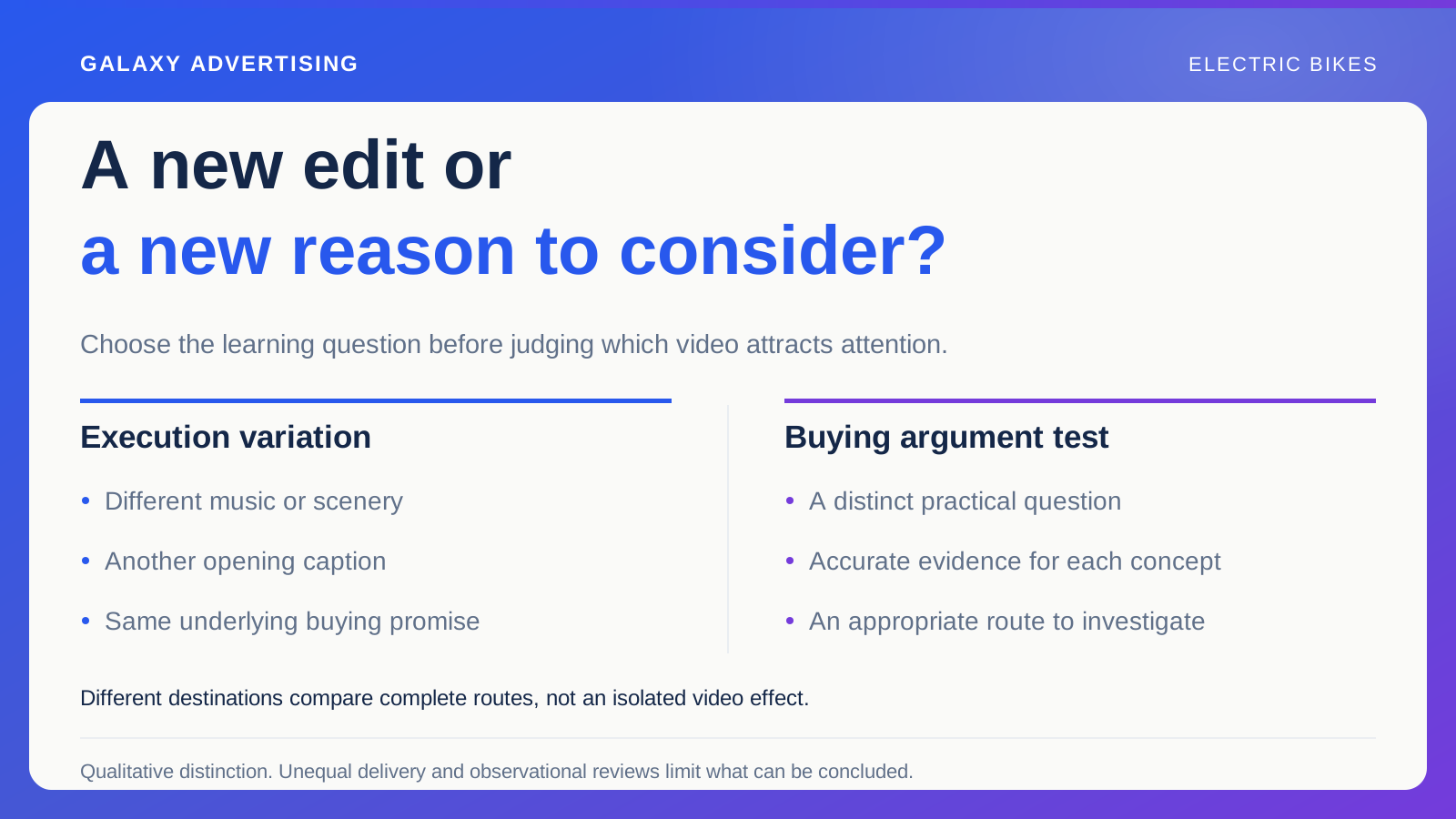
Review questions, relevant product exploration and available orders alongside campaign reporting. Did people recognise the model and understand the practical subject the scene was meant to explain? Those observations help you inspect the original argument.
Separate a delivered brief from commercial confirmation. An accurate, clear asset can still reveal that the buying argument was less useful than expected. Your next decision may concern the proposition rather than the editing style.
Record why you're creating each new concept: an overlooked detail, another customer task or a destination breaking the story. That builds deliberate arguments instead of more similar journey montages. The camera can make a supported idea visible. It still needs you to give it a clear offer worth showing.