Your team is looking at a projector category page, with a new button colour on one proposal and an explanation of room and equipment differences on the other. Both involve changing the page. Only one starts with a question your customer may be struggling to answer.
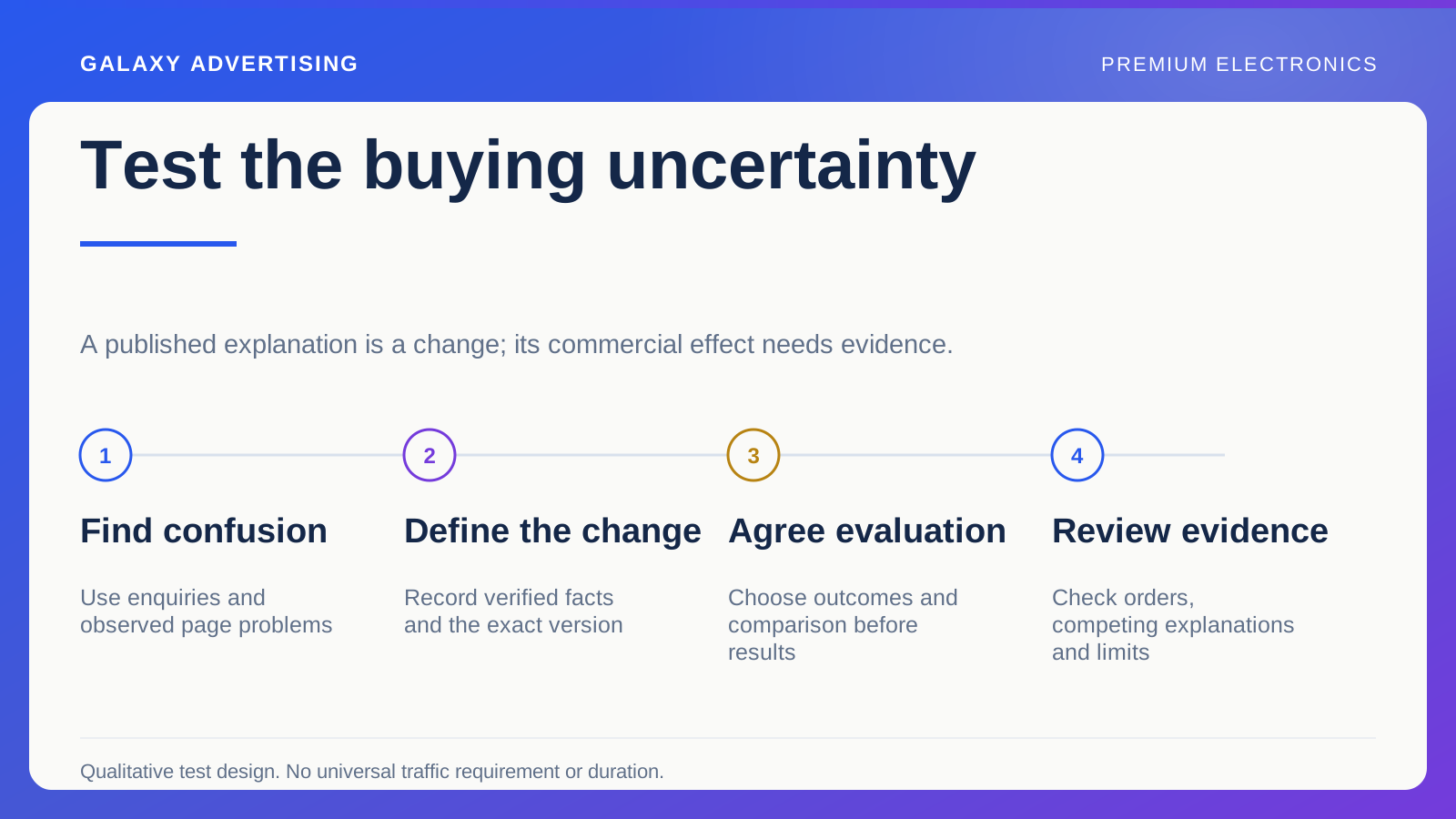
That makes the explanation worth considering if you have evidence of the confusion. It does not make it a guaranteed sales improvement. The useful reframe is to test a buying uncertainty, rather than approve some clearer copy and credit it with whatever happens next.
Find the misunderstanding first
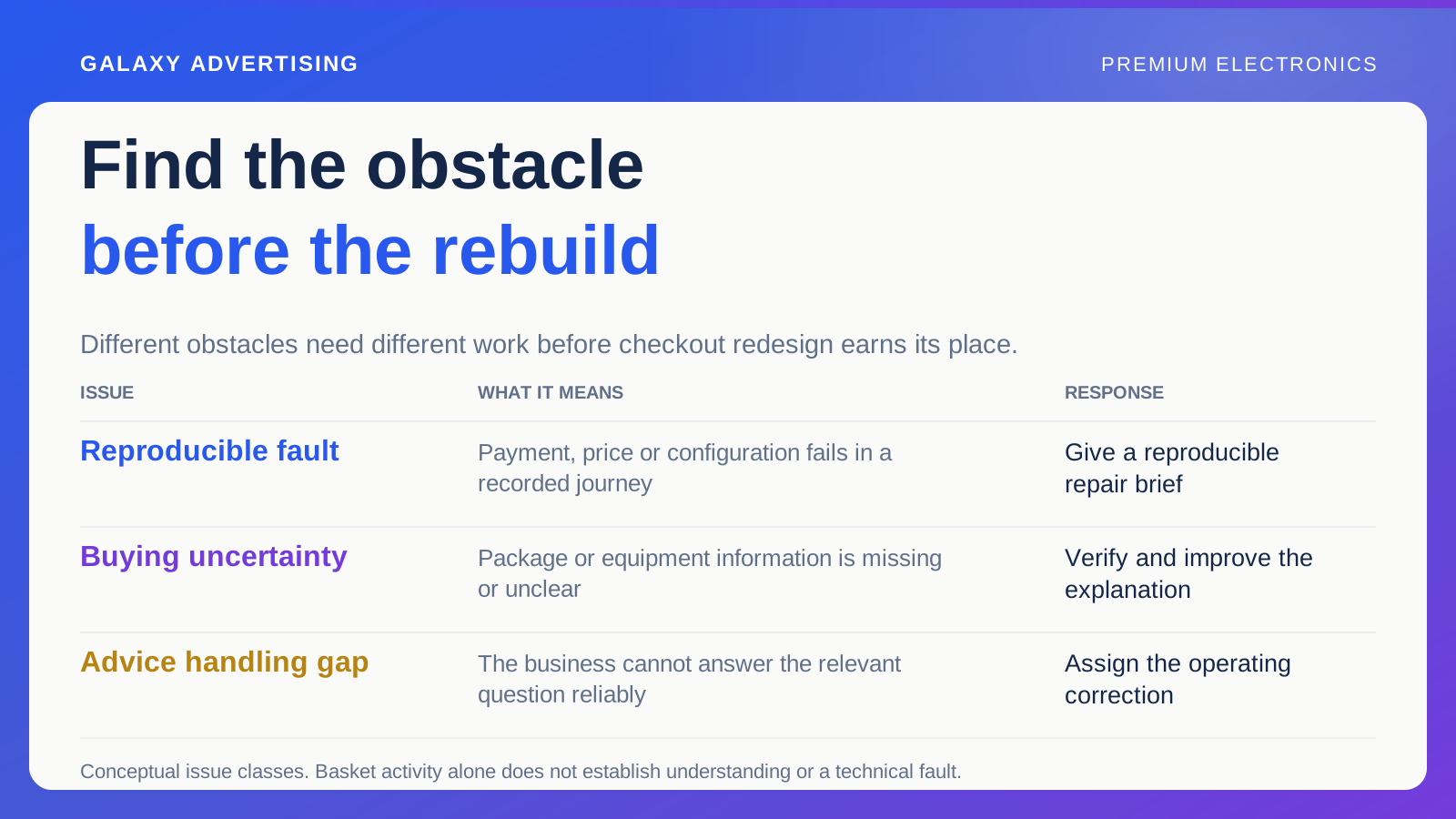
Start with recurring enquiries, observed problems on the page or other evidence of a specific uncertainty. Saying the page needs more detail gives your team neither a useful job nor a sensible way to judge it.
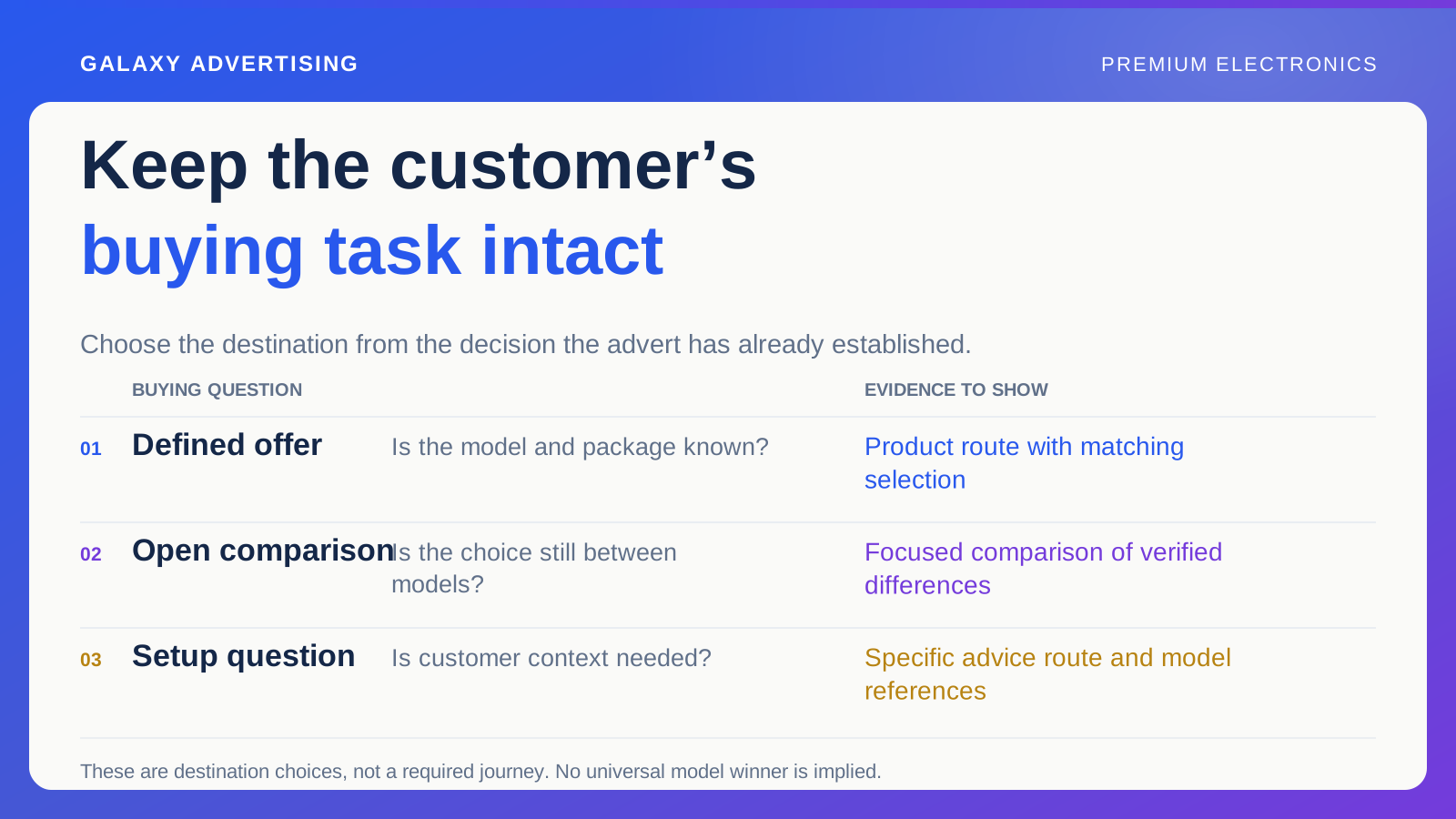
Perhaps shoppers cannot tell which model references suit their intended room arrangement. Address that directly. A general essay about projectors could make the page longer while leaving the original question untouched.
Keep the scale of your evidence honest. A handful of enquiries can reveal a genuine problem without telling you how many visitors share it. Finding out how much the problem matters can be part of the test. You do not have to pretend you already know.
Be precise about what you are changing
Write down what the explanation will say, where it will sit and which verified product facts support it. Use the exact models and references people will compare.
Keep unrelated design and commercial changes separate where you can. Replace the range, change prices and launch a promotion at the same time, and working out what the explanation contributed gets much harder.
You need not freeze useful work indefinitely. You do need a record of what changed. If several changes must happen together, describe them as a combined intervention. Do not later give one sentence all the credit because it was the easiest part to point at.
Measure the choice you want to help
Your main commercial outcome should connect to suitable orders and the economics you have agreed for the business. Supporting observations might show whether people reach the relevant model details or ask more specific questions.
Choose those observations because they help answer your question, rather than because they produce a pleasingly large number. Opening a comparison panel shows attention. It does not establish a better choice or higher revenue.
Look for evidence against the idea, too. Does the explanation confuse people, send them towards unavailable models or create avoidable enquiries? Be prepared to respond. A test built only to find encouraging signals is really a presentation with extra steps.
Pick a comparison you can trust
Choose a testing arrangement that fits your traffic, systems and question. Where statistical analysis is needed, involve someone qualified to design it. There is no universal visitor count or test duration that sensibly fits every store.
If you cannot run a controlled comparison, say what a before and after review cannot establish. Stock, promotions, media mix and ordinary demand variation can all affect the result. Recording them will not remove every competing explanation, but it helps you challenge an overconfident conclusion.
Agree the decision process before results arrive. What would justify keeping the explanation, revising it or accepting that you still lack enough evidence? Set that out while nobody has an inconvenient early result to explain away.
Check what actually went live
Make sure the intended visitors can see the new information, in the right place and clearly on a phone. Successfully publishing content does not prove the buying explanation reached the people it was meant to help.
Follow every link and variant selection the change introduces. A variant is the selected configuration. If your comparison opens a different package or hides a required condition, you have added an accuracy problem to the test.
Save the version you are assessing. Small edits during a test can materially change the explanation. You need to connect the result to something recognisable, rather than an evolving page nobody can reconstruct afterwards.
Ask a colleague who knows the products to check the question your shorter explanation now answers. A cleaner comparison might lose a distinction that matters to a smaller group. Make that tradeoff visible. Tidier information is not automatically better information for everybody.
Look at the orders as well as the totals
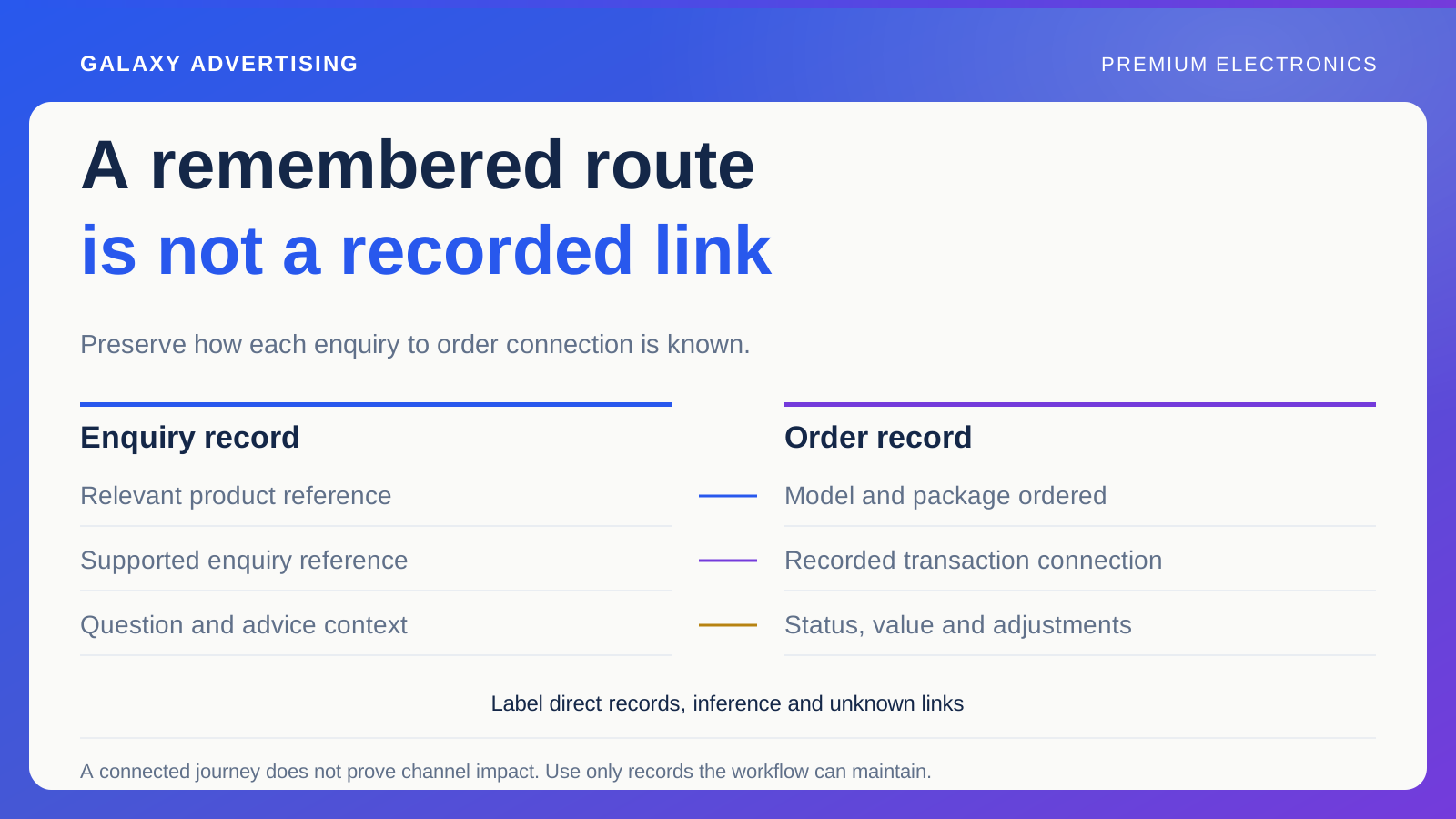
Review a manageable sample of relevant enquiries and orders beside your aggregate measures. Did people choose models consistent with their intended use? Did the explanation address the uncertainty you started with?
This practical review supports appropriate quantitative analysis; it does not replace it. An interaction measure can conceal an awkward consequence. A page can work technically while encouraging interest in a model you cannot supply or support profitably.
Keep useful observations separate from proven causes. Clearer enquiries might justify improving your information process even if you cannot confidently claim additional revenue. Match your recommendation to both the strength and the type of evidence you actually have.
Keep the reasoning when the test ends
Record the original problem, the exact change, the evidence and your decision. Include limitations and conditions that still need watching. That gives the next category team something useful to work with.
Resist copying the winning explanation straight across unrelated products. Camera buyers and projector buyers can need different distinctions, even when both pages involve technical comparisons. Reuse the way you investigated the problem, rather than a paragraph that made sense somewhere else.
The lasting value is understanding what a customer needs to assess before placing a suitable order. A button colour records a design preference. A well judged information test can leave you with a better question to ask about the next product, and a clearer way to answer it.