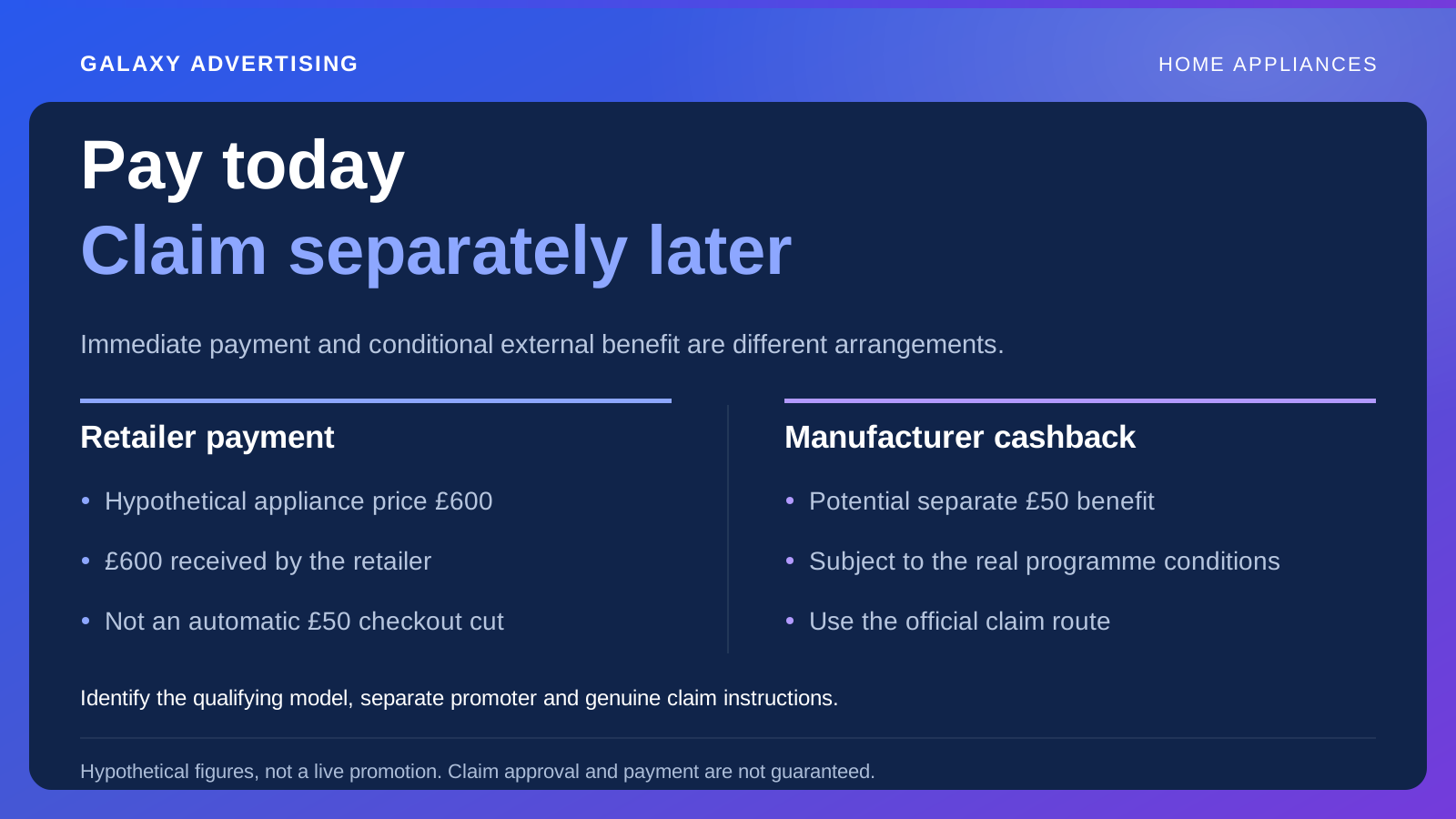
Does the customer pay £600 today, or does your advert make it look like £550? In a hypothetical offer with a £600 appliance and separate £50 manufacturer cashback, the retailer receives £600. The customer may receive £50 later if the real promotion's conditions are met.
These illustrative figures are not a live promotion. They expose two different arrangements: your appliance sale and another party's conditional benefit. An attractive effective price needs to explain that relationship, rather than leave the immediate commitment behind the headline.
Identify who supplies each part of the offer
Record your model, selling price and services separately from the manufacturer's promotion. Identify the organisation responsible for the incentive and the official information governing it. Everyone approving the campaign needs to know whose promise they are describing.
A supplier's general announcement does not establish eligibility for every appliance you stock. Verify the relevant model, purchase arrangement and other material conditions against the actual programme. Do not let the campaign's scope grow beyond that verification.
Agree who answers eligibility questions. You can explain your own price and service without inventing a promise about another party's approval or payment process. Clear ownership makes the offer easier to maintain when customers ask what happens next, rather than encouraging each department to infer its own answer.
Keep the qualifying model reference intact
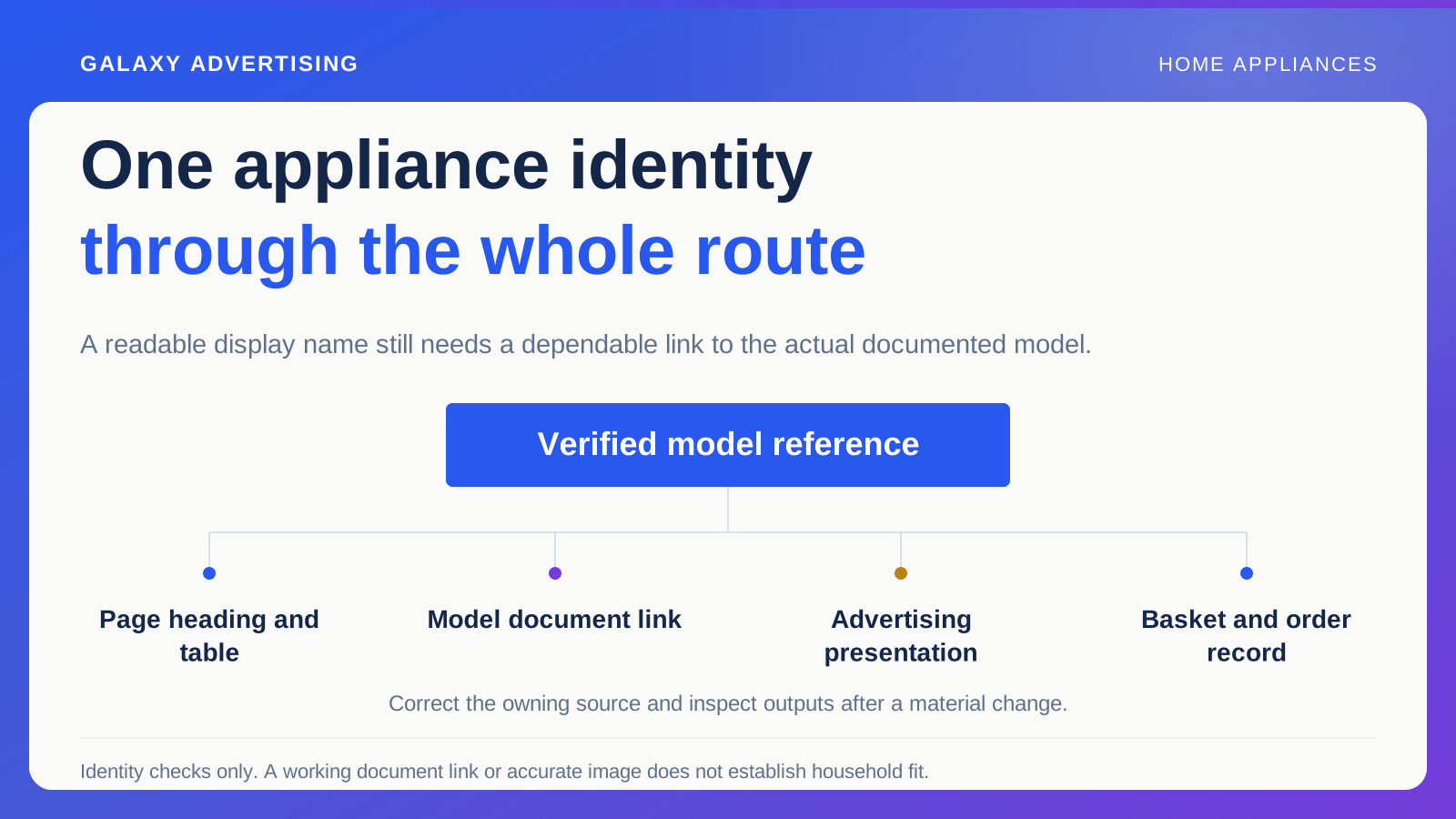
Check the complete identity in the promotion against your listing and advert. A similar family name or photograph does not prove that a different configuration qualifies. The full reference matters to the claim you are using.
Retain the official source and product owner's confirmation in the release record. This helps when copy is prepared before the final stock selection, or when a model is substituted while the promotion is running.
If qualification concerns a package rather than one standalone appliance, show that boundary clearly. Someone investigating a single replacement should not infer eligibility from a picture of a broader qualifying arrangement. Match the proposition to the purchase you are actually introducing, not simply the most attractive image available.
Separate today's payment from the later benefit
Explain what the customer pays your retailer and what depends on a later process. Keep material conditions close enough to the headline for the overall impression to remain intelligible. Clarity elsewhere should not have to undo the first impression.
In the hypothetical example, £600 is the retailer payment. The £50 is separately described potential cashback. If the real arrangement works that way, the wording must not imply an automatic £50 reduction at checkout.
Review advert, product page and basket together. A clear explanation in one place may not repair an incompatible price display elsewhere. Ask an unfamiliar colleague to describe the amount payable now and the further action involved. Let them explain it without coaching them towards the answer the brief intended.
Use the real programme's claim instructions
Take the customer's actions and destination from the actual published instructions. Evidence requirements and timing conditions should come from that source, rather than a remembered promotion that seemed much the same.
Do not import one manufacturer's process into another campaign. Programmes differ, and an old claim form does not establish the current arrangement. The person approving the offer needs to verify the reference the campaign actually uses.
Make the handoff explicit where customers must continue through the promoter's route after buying. Your ordinary contact form should not look as though completing it necessarily submits a valid promotional claim. Those are different actions, even if both involve contacting somebody for help.
Check which purchase documents your ordinary process supplies and how customers obtain them. Compare those documents with the real offer's evidence requirements. Do not promise that any generic receipt will necessarily suffice.
This is an operational readiness check, rather than an eligibility interpretation on the promoter's behalf. If the connection is unclear, obtain clarification before building the campaign around an apparently frictionless claim experience nobody has verified. The promise needs to follow the process, including where another organisation takes over.
Offer help within a clear boundary
Decide what your team will help with. That could mean locating order information, directing people to official instructions or correcting your own documents. Describe the assistance accurately so customers understand what your retailer can do.
Answering purchase questions does not let you guarantee a successful claim. The promoter's actual conditions and decision process remain relevant. Keep helpfulness separate from an assurance your business cannot establish.
Give staff a reliable escalation route when something is uncertain. Advertising, sales and support should not provide different assurances because each has interpreted the banner independently. A short approved reference helps reduce inconsistency without asking colleagues to interpret another organisation's rules for themselves.
Review the commercial arrangement that occurred
Separate your own discount from a manufacturer funded benefit. Reducing the retailer price changes your transaction differently from an external conditional rebate. The review needs to know which arrangement happened before judging its commercial implications.
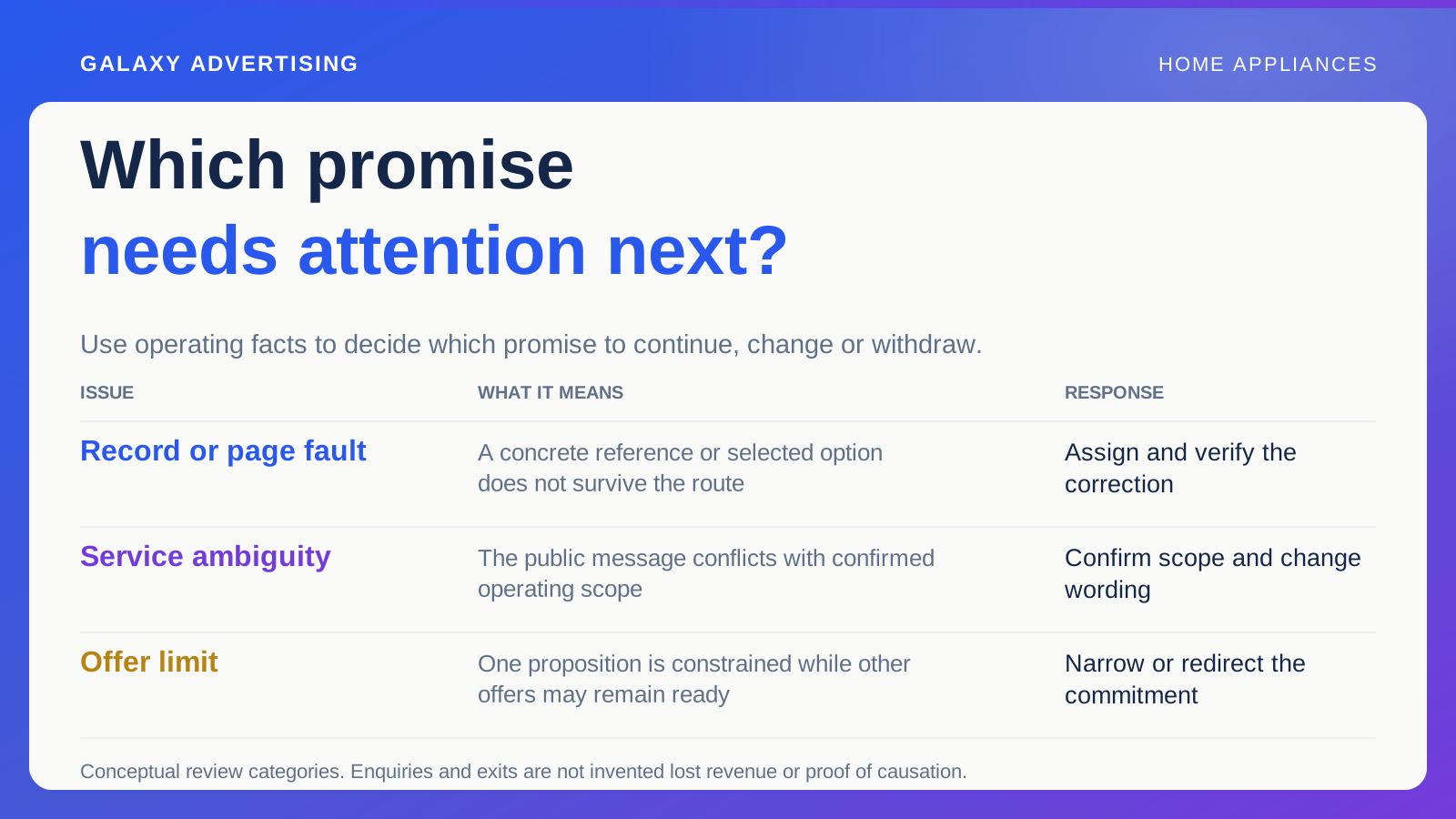
Look at the demand produced. Are people choosing the intended appliance and understanding the immediate payment? Or do enquiries repeatedly have to correct a misunderstanding your campaign created? Those observations tell you something different from attention alone.
Do not count the anticipated rebate as additional retailer revenue. Nor should every promoted order be assumed additional demand. Review the actual offer and recorded transactions within the limits of the available comparison, rather than assembling an appealing headline from unrelated amounts.
End acquisition without losing the claim route
Distinguish the end of promotion for new purchases from existing purchasers' continuing need for relevant official instructions. Use the real programme's conditions to guide that distinction, rather than assuming both tasks end together.
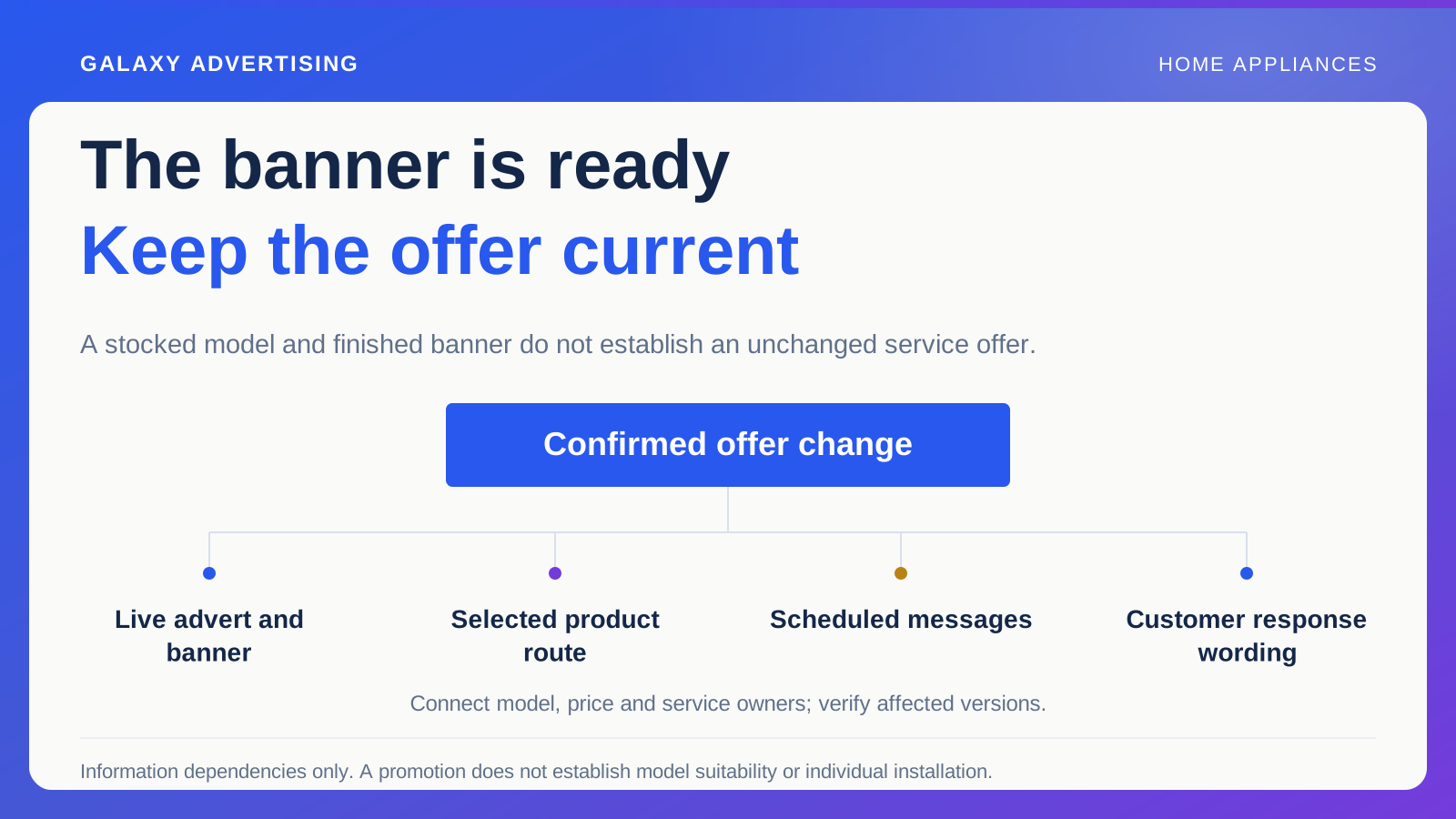
Assign owners to remove obsolete acquisition messages and preserve accurate support. Stopping the advert does not establish that every banner or saved landing page now describes the ordinary offer correctly.
A cashback incentive can support a clear buying proposition when the customer can identify the model, immediate payment, separate promoter and genuine claim route. The useful result is an understandable arrangement from advert to claim, rather than a tempting price shortcut that leaves the uncertainty until after purchase.